A Feminism-Fueled Performance
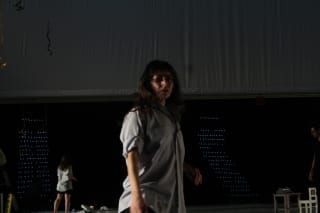
"Snake Telegram"
Heart Stück Bernie
Dance Place
Washington, DC
July 22, 2018
When it comes down to performing about feminism, it is tough to get it right. Performances with this heated topic at the forefront can come across as malicious and accusatory, lacking a level of civility that can easily grow uncomfortable in a theatrical setting. Usually, the wants and whims of the spectators are the main concern of a choreographer. Nonetheless, if an artist wishes to successfully tackle the issue of feminism, their performance must be designed and implemented completely for oneself, not for the viewers. Only then can a feminist show be received as meaningful and sincere. This past Sunday at Dance Place, "Snake Telegram" managed to toe this fine line between authenticity and spitefulness with grace and comedy.
Presented by Heart Stück Bernie, "Snake Telegram" is an involved, intimate solo performance starring Sarah Beth Oppenheim. As the chief creative mind behind the show, Oppenheim's humorous attitude and bold personality dominates the stage, ordering around her fellow performers, the backstage crew, and even her audience. The show is a compilation of three years worth of Oppenheim's research on herself and how she interacts with contemporary womanhood. To demonstrate her findings, she presents multiple characters with various quirky personalities.
Oppenheim is a fluid and vivacious mover. Technically challenging movement phrases seem to bend to her will as she unfolds and then recoils her body, forming elegant, classic lines later broken by sharp, modern angles. Her ability to dance is compounded by her capacity to act. In “Snake Telegram,” she embodies a variety of dynamic and unexpected roles, from a German gynecologist named Dagmar, who possesses painfully slouched posture and a perpetual frown, to a youthful, mute postal worker called Dusty Sucker, who reveals her feelings through overdramatic gestures and excessive hair whipping. Each of these characters has a place in her performance, never veering too far off no matter how outrageous they become. There is still a part of her behind each character she exudes, and that is what keeps the show honest.
Oppenheim introduced new segments of her intricate show without much explanation. Although this tendency can be a bit dizzying, with new ideas and discoveries being revealed left and right, the method was justified within the context of the performance. With a show so deeply personal, it was significant for Oppenheim to demonstrate that the path to self-discovery is not always logical and understandable.
While the show did not start out with expressed political views, it steadily evolved into a narrative laced with startling satire focused primarily on the current administration. I do not usually enjoy pointed, Trump-based satire in dance performances. It tends to be overdone and often comes across as rather ridiculous, but I could see a purpose behind Oppenheim’s decision to include it. Her observations on contemporary womanhood involves the ways in which women respond to authority, especially with recent pushes for women’s reproductive rights and sexual assault awareness. As a result, Oppenheim incorporates her views on those in power and how they relate to modern feminism in her dialogue.
Overall, “Snake Telegram” reflected on powerful female attributes as well as the fears, leaders and perceptions that can influence a woman’s perspective on the modern world. Oppenheim’s performance highlighted her technical abilities and natural humor all while examining her identity as a woman. This feminism-fueled dance performance merged movement, theater and satire to expose what it means to be a woman today, drawing from personal experience to offer genuine commentary.
copyright © 2018 by Arielle Ostry



