A Boy and His Horse
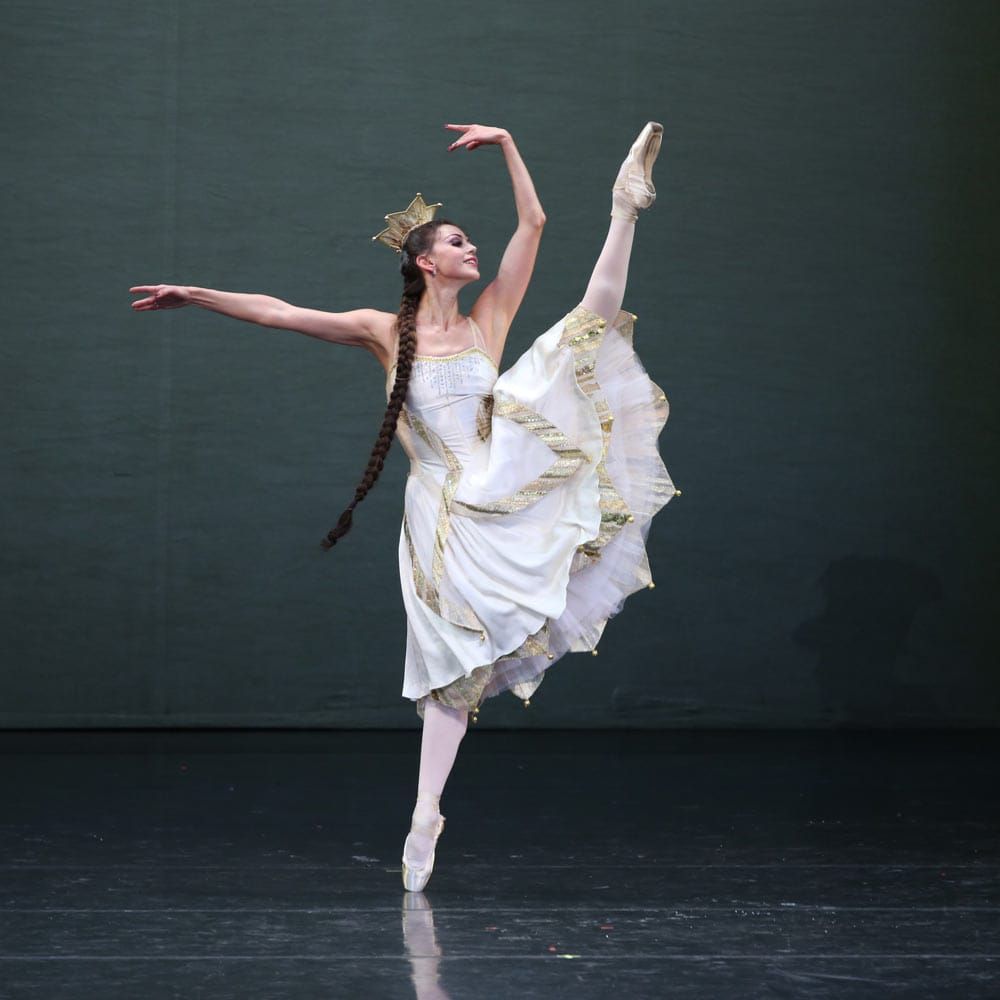
“The Little Humpbacked Horse”
The Mariinsky Ballet
The John F. Kennedy for the Performing Arts
Washington, D.C.
Tuesday, January 31, 2017
It’s not at all unusual to enjoy great performances from the Mariinsky Ballet, but it’s rare for any company to give us dancing as full of happiness and zest as we saw from that troupe Tuesday night. The company seemed to love dancing Alexei Ratmansky’s endearing “The Little Humpbacked Horse” (created for the Mariinsky in 2009) and its joy was infectious.
“The Little Humpbacked Horse” has been in the company’s repertory since Arthur Saint-Léon, then ballet master, choreographed it for the Mariinsky in 1854. The work was news making at its premiere, as it was the first ballet to use a Russian folk tale as its base. (Ballet was an imported art form in 19th century Russia, and most of the ballets and the ballet masters came from France.) The story of the current production is basically the same as that of the 1854 version, but both Saint-Léon’s choreography and Cesar Pugni’s score are no longer danced.
The old folk tale (first written down in 1834) has long beguiled both choreo- graphers and audiences. There have been many revisions and revivals under different hands in both St. Petersburg and Moscow. A new version (by Alexander Radunsky) to a new score (by Rodion Shchedrin) was created for the Bolshoi Ballet in 1960, with a very young Vladimir Vasiliev as Ivanushka, the youngest of three brothers who is given a little humpbacked horse that will save him from disaster many times until he fulfills all requirements and wins the hand of the Tsar Maiden (the great ballerina Maya Plisetskaya) and becomes the new Tsar. The Horse back then was a tiny young woman, very frisky and cute, based on a performance captured on film (now available on DVD) in 1962.
When Ratmansky revives an older ballet, he may update or clarify something here, omit something there, and add doses of contemporary virtuosity throughout, but he always retains the ballet’s soul. That’s definitely the case here. Ratmansky has caught the sweetness and fun that underlies a story that’s a staple of fairy tales: a simple young man does incredible things and, it turns out, is the real hero, the wisest of them all.
In Ratmansky’s version of “The Little Humpbacked Horse,” the Horse is male, and a kind of pal to Ivan the Fool, as he’s called here. They spell each other in virtuoso solos, which are not as much competitions as the friskiness of young males having fun. Ivan is simple and innocent, though not helpless, and the Horse is a helpful partner rather than a savior. As Ivan, Vladimir Shklyarov was as high-spirited and charming as can be imagined and made the character utterly endearing; Yaroslav Baibordin’s bravura dancing made it clear that Ivan was lucky to have drawn him as his horse. One of the many surprises in this production is the last scene, which seems to turn into a rehearsal, with Ivan engaging in a mimed conversation with the audience. There are repetitions in his final big solo and Ratmansky turns this into a joke: Ivan keeps forgetting his steps, as the audience laughs sympathetically; Ivan glares at them. After a few tries, and getting stuck in the same place each time, he unleashes a torrent of pirouettes and all ends happily (Shklyarov’s dancing was also terrific).
Anastasia Matvienko was equally sweet as the Tsar Maiden, while remaining queenly and mysterious and dancing beautifully. Dmitry Pykhachov was a very contemporary Tsar – small-souled and greedy, wanting all the attention and trying to own everything and everyone in sight, with the help of his very overbearing Gentleman of the Bedchamber (Yuri Smekalov). No one seemed very sad when the Tsar was boiled alive, but he was welcomed back for the curtain calls that closed the ballet, along with the firebirds, nursemaids and sea creatures who had inhabited the worlds to which Ivan had traveled.
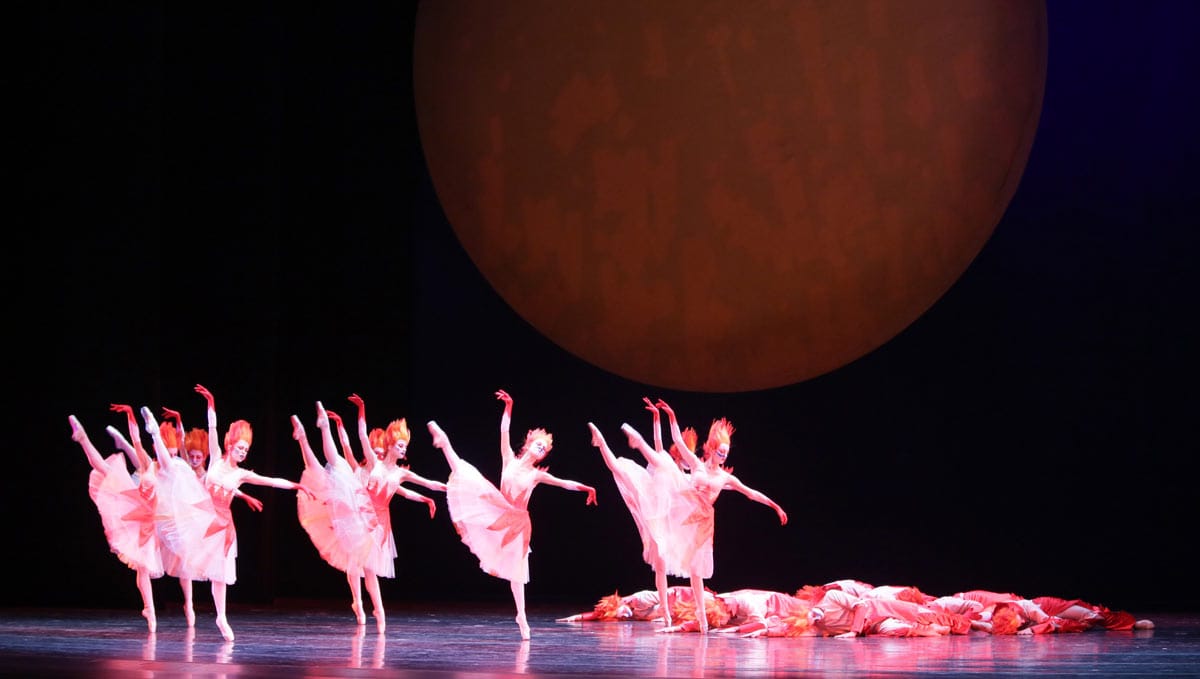
There are lots of group dances, especially in the first act, that are both familiar and unconventional (a nod to Saint-Léon critics who complained that that choreographer was only comfortable making solos but couldn’t produce the beautiful patterned dances of his predecessor, Jules Perrot?). The trees dance, firebirds flit in and out, and the effect is a soft balance to the virtuosity elsewhere. Some of the dances at first seem a bit conventional (though exquisitely musical) but then there will be an unexpectedly arresting pose that makes one realize these forests and seas have their own magical, fairy tale lives, too.
The sets, and especially the costumes, by Maxim Isaev – white for the main characters, with huge swatches of primary colors – give the production a very minimalist, contemporary look, and are a helpful clue that this isn’t a 19th century story ballet updated by cutting mime (there’s lots of it, actually) and souping up the solos. Ratmansky’s “Little Humpbacked Horse” is really, truly new. It may be the first truly 21st century ballet that I’ve seen.
copyright © 2017 by Alexandra Tomalonis



