Women's Work
“Le Jeune,” “Dream within a Dream (deferred),” “In the Upper Room”
American Ballet Theatre
Fall Gala
David H. Koch Theater
New York, New York
October 12, 2018
Is there something specifically female in the content or experience of a ballet by a woman, besides the fact that a woman created it? In programming a Fall Gala exclusively of works by women at the start of its brief fall season at Lincoln Center, American Ballet Theatre implicitly put this question on the table. In a brief and beautiful work at the start, Lauren Lovette - the youngest of the three choreographers whose work was seen that night (she’s also a principal dancer at New York City Ballet in her day gig) - gave the answer, yes. On an evening where Michelle Dorrance’s major new commission fell flat and the revival of Twyla Tharp’s “In the Upper Room” was poorly cast and often poorly danced, Lovette’s offering was the best thing on the bill.
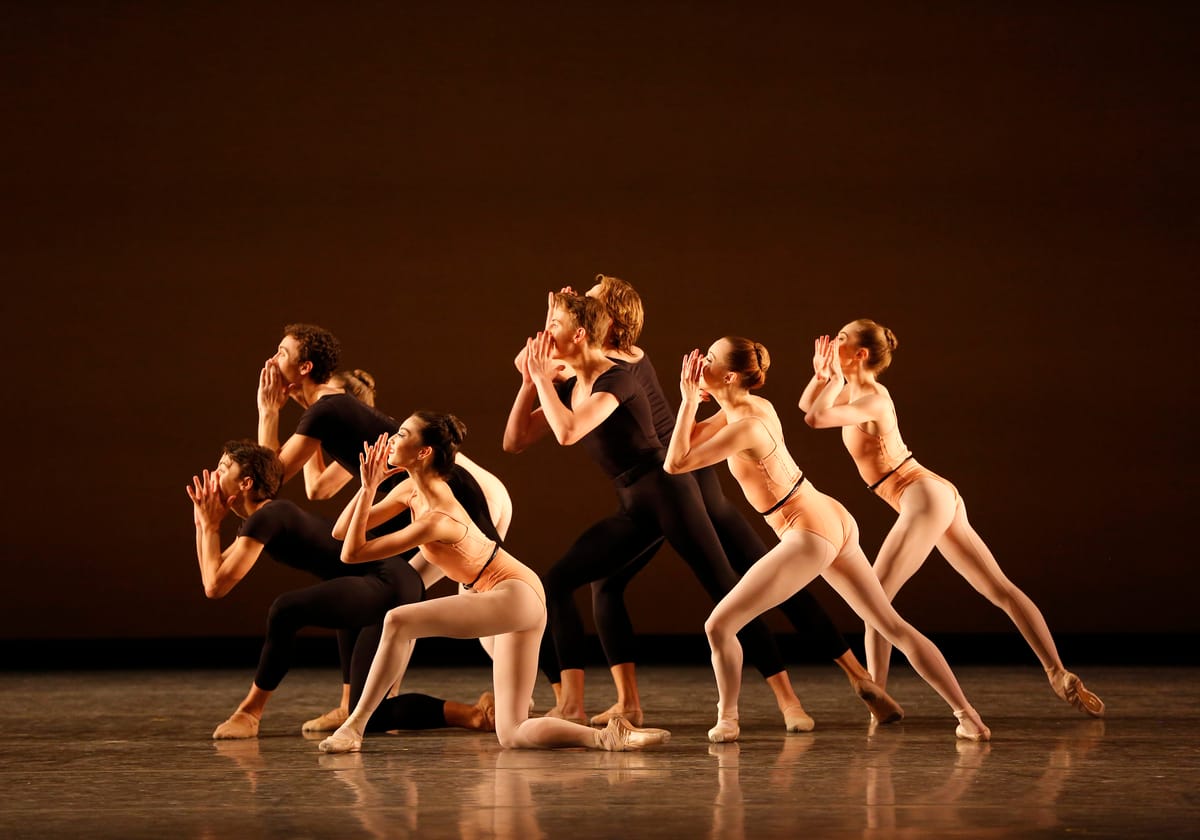
Titled “Le Jeune” (French for “The Young”), the ten minute long work premiered last spring at ABT’s studio company during a program at the Ailey Theater. The farm team danced it again here with the qualification that several of its members are by now apprentices at the parent company. Its cast of ten, five men and five women, is not exactly comprised of couples. While they may occasionally pair off, the message is community throughout. Over its three sections, each color coded and melodramatically lit, the cast alternates duets with Busby Berkeley star pattern blocking, or deploys on classical diagonals ending in poses by groups. Climaxes in the music tend to be accompanied by lifts, but at other lyrical moments the ensemble mimes with semaphore gestures of the hands. All of this is driven by Eric Whitacre’s “Equus,” a surf like bit of musical bombast that’s surprisingly danceable, reminding one of a big screen movie dance number from something like “Ben Hur” in the 1960s.
While Lovette’s press kit quotation calls the ballet “a celebration of the exuberance of youth [where the dancers] channel idealism and discover their own vitality,” something open-hearted, tender and forgiving in the relationships of the group members with each other, something redemptive and mutually supporting in the way they touched and made eye contact, gave the work a distinctly female voice, at least in the traditional meaning of the term. The community on stage was nearly church-like; the feeling was spontaneous, in the moment and authentic. It felt like only a woman could have made this work.
Is a male critic entitled to say this? Wading through the politics of gender these days is like tip toeing through a minefield. But the statement is made in the narrowest sense. The values traditionally called feminine that you sense in Lovette’s work (and that are also the preeminent Christian values) – empathy, maternal goodness, kindness, creativity, etc. – would rightly be considered historically oppressive if applied to the feminine identity as a unique and constrictive woman’s role. But on stage this evening in this age of Trump, and in a theater named for David H. Koch, I found them very good things indeed; and in hundreds of hours spent over decades watching dance in the theater I have seldom felt them reflected as strongly in a piece of dance. Lovette is a woman and her voice lets you know it.
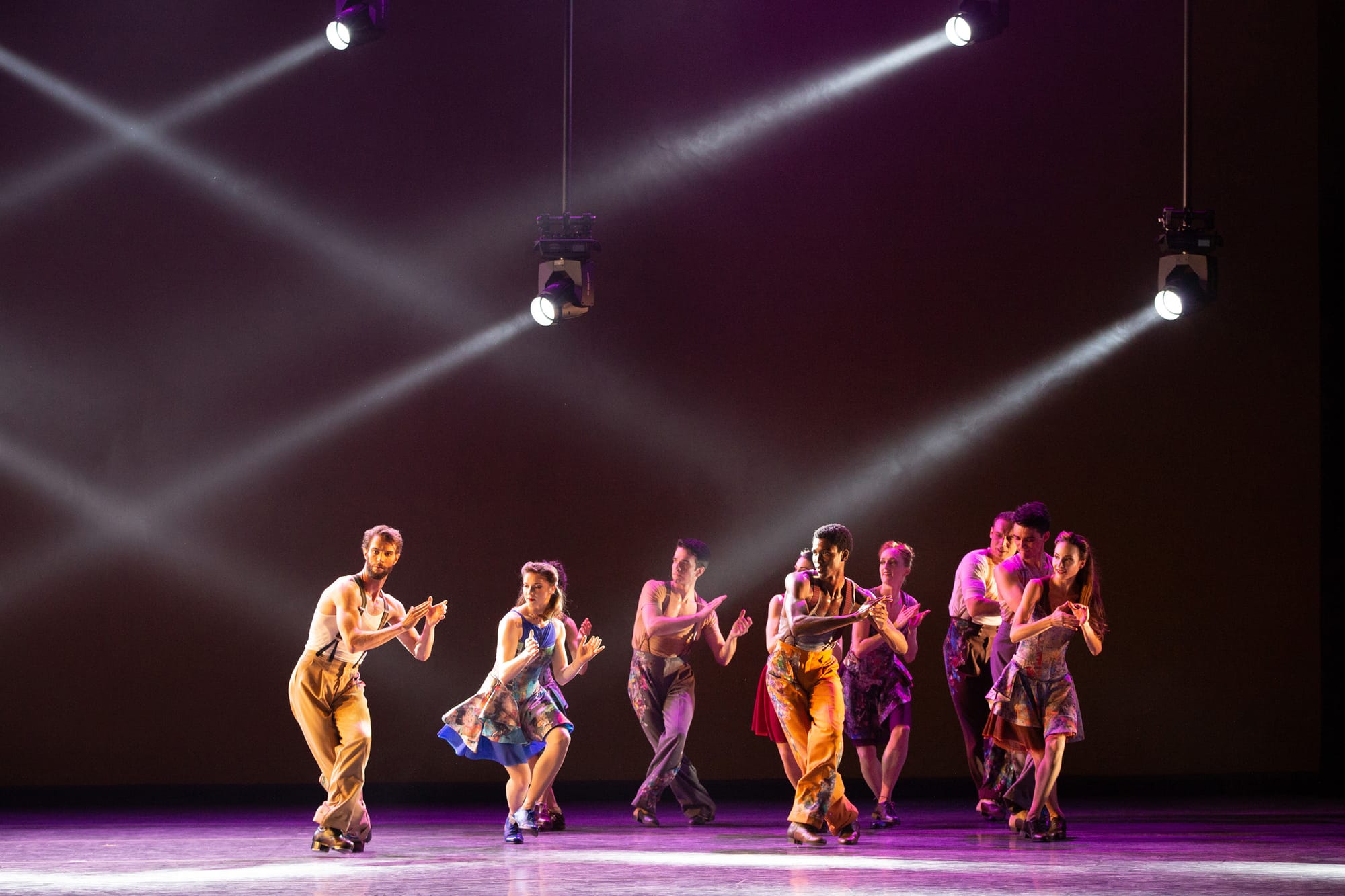
Michelle Dorrance’s new work – “Dream with a Dream (deferred)” - by contrast, was far less specific in either gender or personal creative voice. Thirty minutes long, it too had a cast of five men and five women, here dancing to a series of Duke Ellington numbers. Hinting at a bit of plot, Calvin Royal III and James Whiteside began as a prominent couple, interrelating strongly. But each was also paired with a woman, as Christine Shevchenko and Gillian Murphy seemed to separate the two men at times by asserting their relationships. While it felt for a moment that this might actually be a theme in the piece, it wasn’t followed up.
A series of jazz dances broke the work (costumed by Linda Cho in colorful chiffon jazz dress for the women, Massine pants, T shirts and suspenders for the men) into sections, as the ensemble performed a Lindy Hop, Fox Trot, Jitterbug or other such number in succession. In the penultimate section, Royal briefly performed a mournfully plastic solo full of backbends and stretches, alone on the stage, to a recording of a 1940’s ballad, as if faintly heard in the distance. In the finale Dorrance let herself go into a large scale, stomping and clapping tap dance number of the kind she’s become famous for.
While Dorrance interestingly broke new ground for herself in this piece by working mainly in a ballet and social dance vocabulary, that also turned out to be the work’s great weakness. For if she showed an eye for these dance forms, it was clearly an amateur’s. Had this been a work by Paul Taylor, it would either have had some historical irony attached or been a joke. But Dorrance was serious. The audience was being asked to watch while she learned to choreograph in a non-tap idiom and you expect more than this in a finished commission on a major stage.
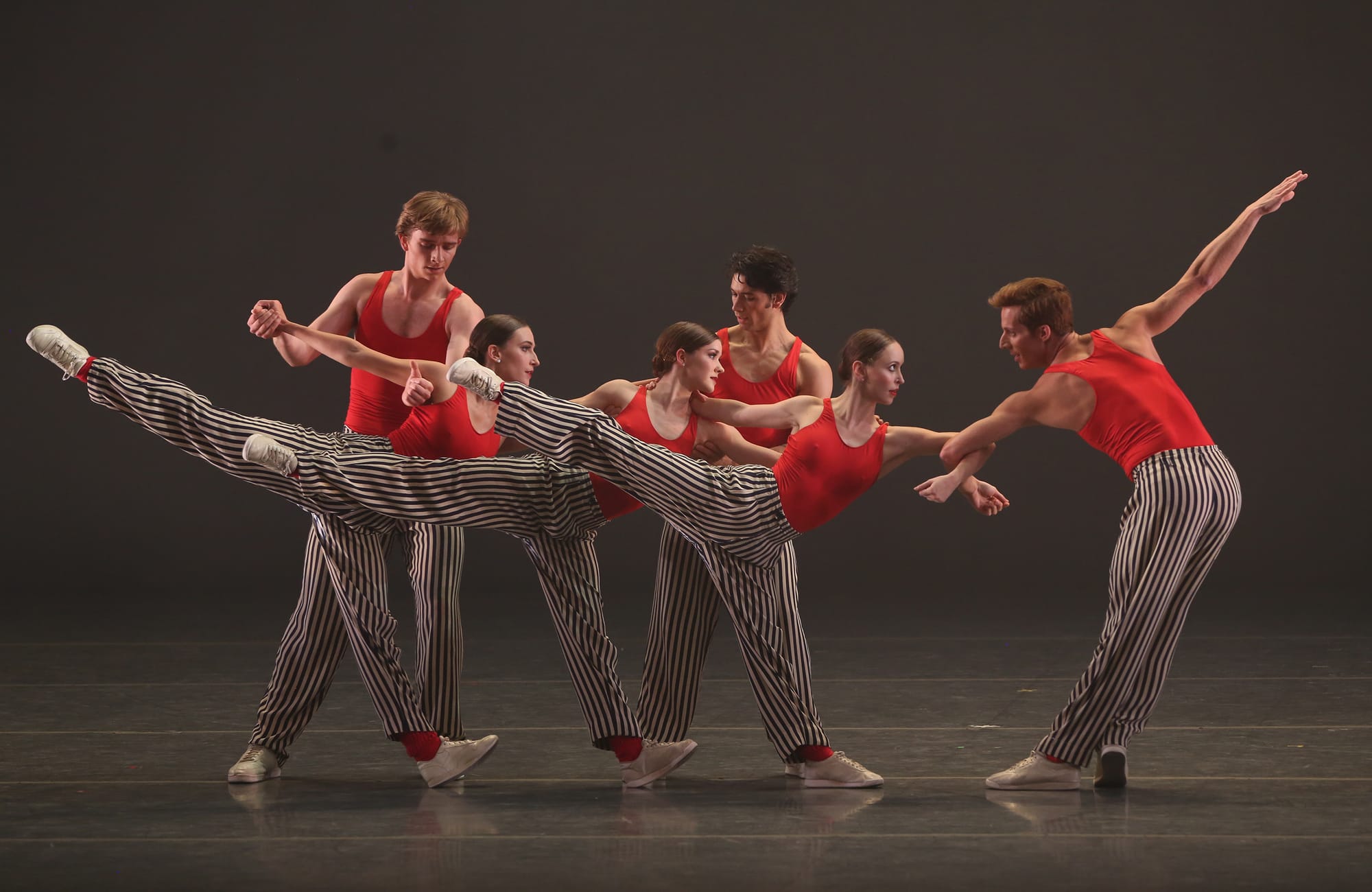
Ending the evening was Twyla Tharp’s “In the Upper Room.” With the possible exception of her “Nine Sinatra Songs” it's probably her most familiar work for the large stage. But the rave-up closer to Philip Glass’s pulsing, ecstatic score, with the dancers emerging from and disappearing into a mist of dry-ice smoke, got less than an Ideal performance here. The casting of the trio of women in pajamas and sneakers who open the work with the smaller Cassandra Trenary and Skylar Brandt alongside the taller Devon Teuscher took much of the scope out of the lanky, rangy movement of their roles. Meanwhile Isabella Boylston, in the central toe shoe part, looked both under rehearsed and as if she were mentally stopping every few bars both to readjust herself and return to some kind of mental plumb line in the middle of the phrases. The result was no flow. Aran Bell, Blaine Hoven and Herman Cornejo briefly brought things to life in the shirtless section and Katherine Williams, above all, danced as if she had an idea of the piece. But overall the performance was stiff. Did Tharp’s piece feel as if only a woman could have done this? The result was in the middle. She’s here a strong woman choreographer, blazing a non-traditional trail for herself.
Copyright © 2018 by Michael Popkin