Women’s Stories
“Radeau/Raft,” “Hex,” “Las Desenamoradas,” “Exhibition”
Alpha Omega Theatrical Dance Company
Ailey Citigroup Theater
New York, NY
November 7, 2025
The tantalizingly brief run of modern dance works by Alpha Omega Theatrical Dance Company proved a rare gem – blink and you'd miss it. Those fortunate enough to attend were treated to Eleo Pomare's once-daring and still-potent choreography, alongside a new work by the company's Artistic Director Enrique Cruz DeJesus, and the evening became an exploration of women’s roles and struggles in a way that felt particularly contemporary.
The opening piece, Pomare's 1994 "Radeau/Raft," chronicling the struggles of Haitian women, emerged as the most moving work of the program. Three women – Donna Clark, Shauntée Henry and Natasha Schmid – began huddled at center stage, one tracing the audience with her eyes, establishing an intimate portal into their journey. They watched the horizon and began to move, sometimes pulling each other in different directions, the middle dancer torn between the opposing forces of her sisters. Their small joys, which had them rolling on the floor in momentary abandon, were repeatedly overshadowed by suffering. The sound of rain prompted them to cover their heads with one hand, turning powerlessly. Even less shelter awaited when ominous voices ushered in scenes of sexual violence – the women collapsed on the floor, legs bent at the knees with urgently flexed feet, hands pressed between their legs, desperately pushing away invisible threats.
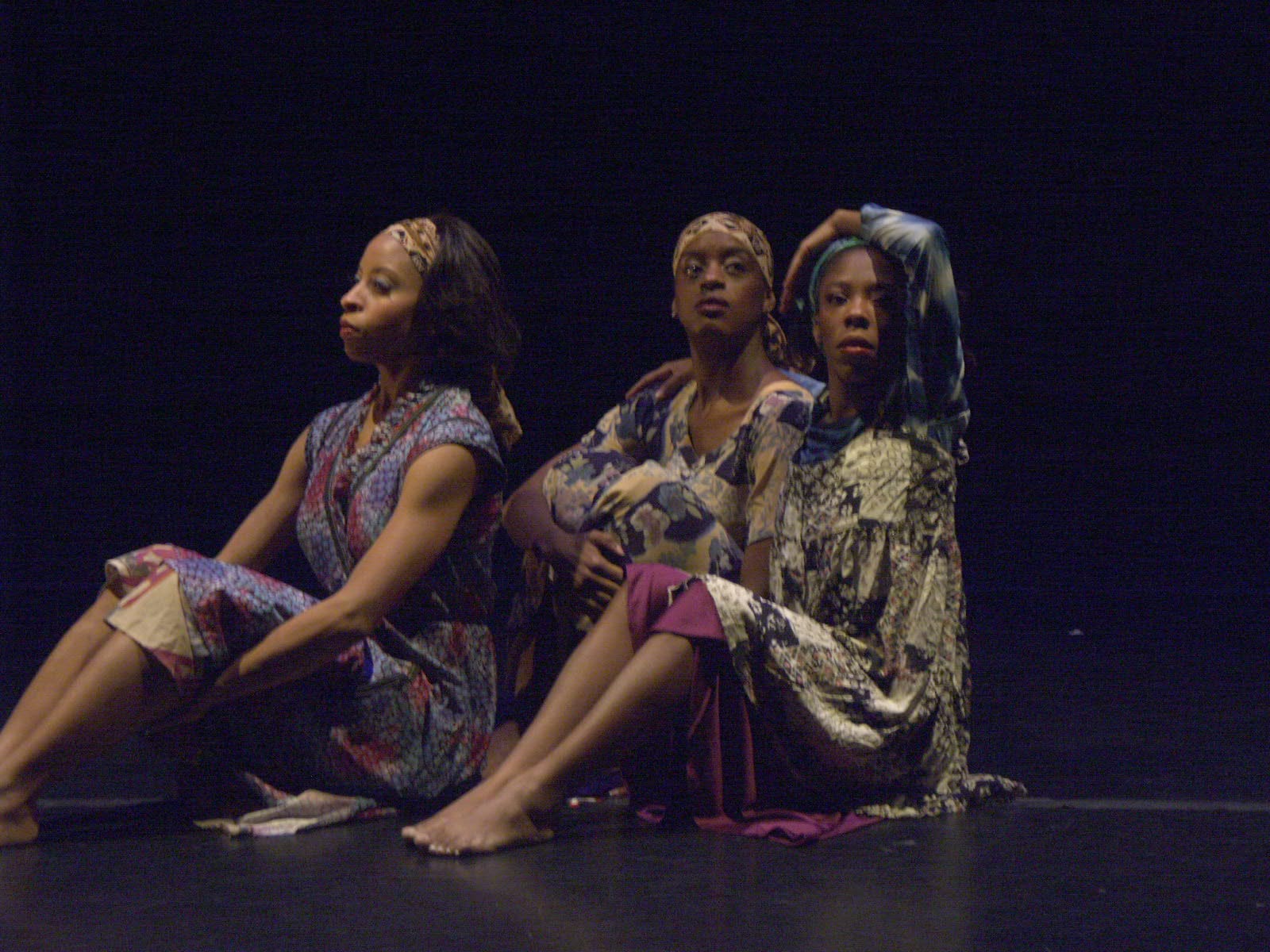
The storytelling and the expressions on these eloquent dancers' faces made one ache to reach out and offer comfort. Indeed, that is the solace the dancers offered each other, cradling heads and bodies in various protective configurations. Despite the fear and distress, this was a fierce sisterhood trapped in a cycle of survival punctuated by stolen moments of joy. The work ended with the dancers' scream – a moment that resonated with the audience's own growing and contained desire to end their torment and offer them sanctuary.
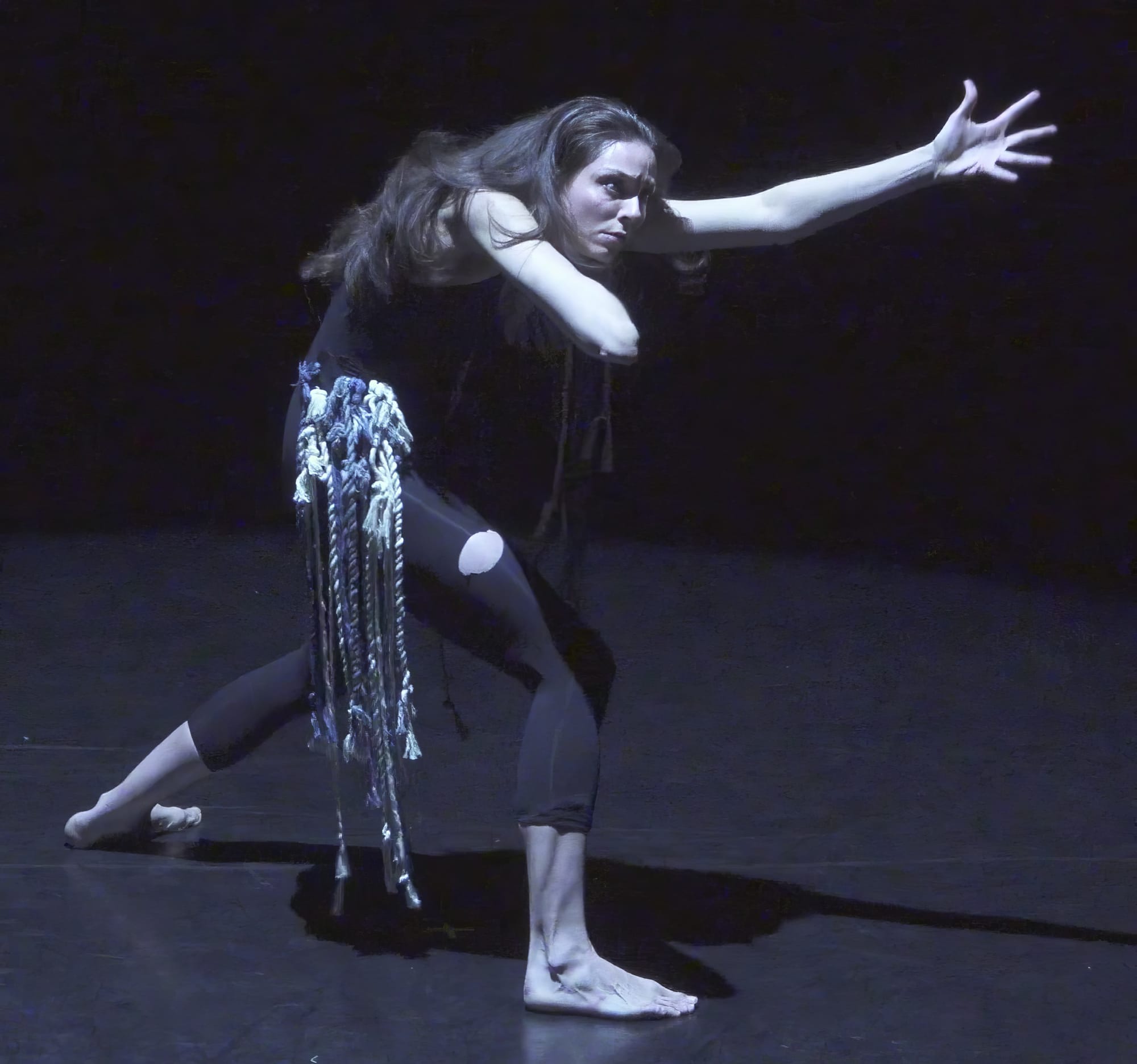
Less narrative-driven was "Hex," Pomare's 1967 solo danced by Leann Gioia. Depicting a woman transfixed and possessed by hidden forces, for most of this work Gioia remained anchored in one spot at the center of a spotlight. Hair concealed her many movements, some of them jerky, some of them fluid. Harry Partch's score accompanying the dance bordered on disturbing with its periodic screechiness, but the discomfort it created paired perfectly with the choreography and the sense of a spirit struggling to escape Gioia's body. As the work drew to a close, Gioia's body convulsed, turning with arms splayed and bent at the elbows, forearms dangling lifelessly.
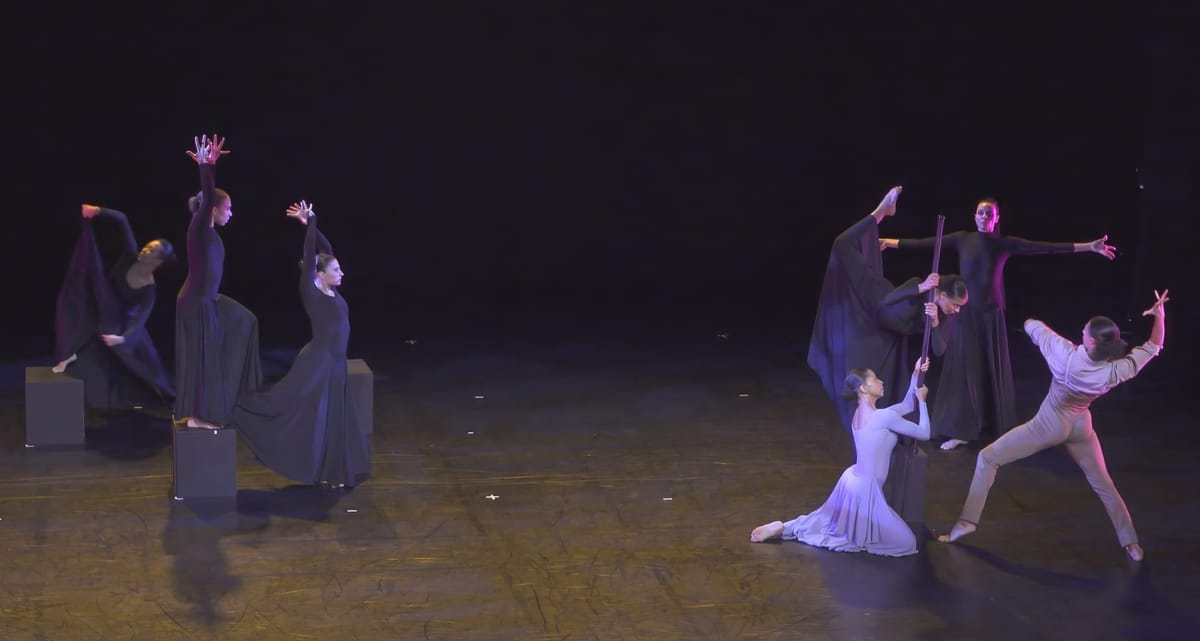
After a brief pause to set the stage with several stools, the company presented the drama-filled "Las Desenamoradas" ("The Unloved") – Pomare's distillation of García Lorca's tragedy "The House of Bernarda Alba." In Lorca's original, a tyrannical widow forces her five unmarried daughters into an eight-year mourning period, sequestering them from the world – a prison of propriety that inevitably becomes a powder keg of thwarted desire. Too often when the literary work contains much detail, the dance suffers. Pomare though managed a potent meditation on how patriarchal values, even when enforced by women, become instruments of destruction, with just enough detail and power to be coherent and resonant.
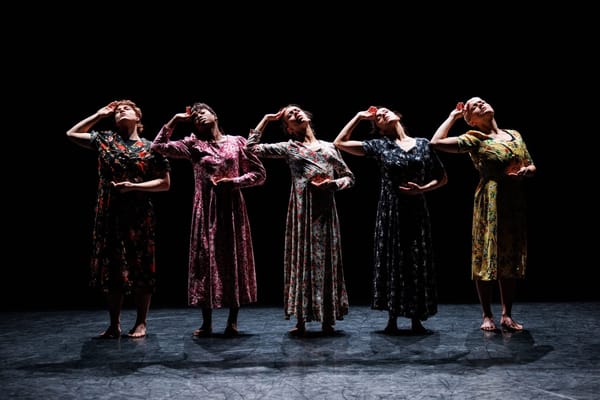
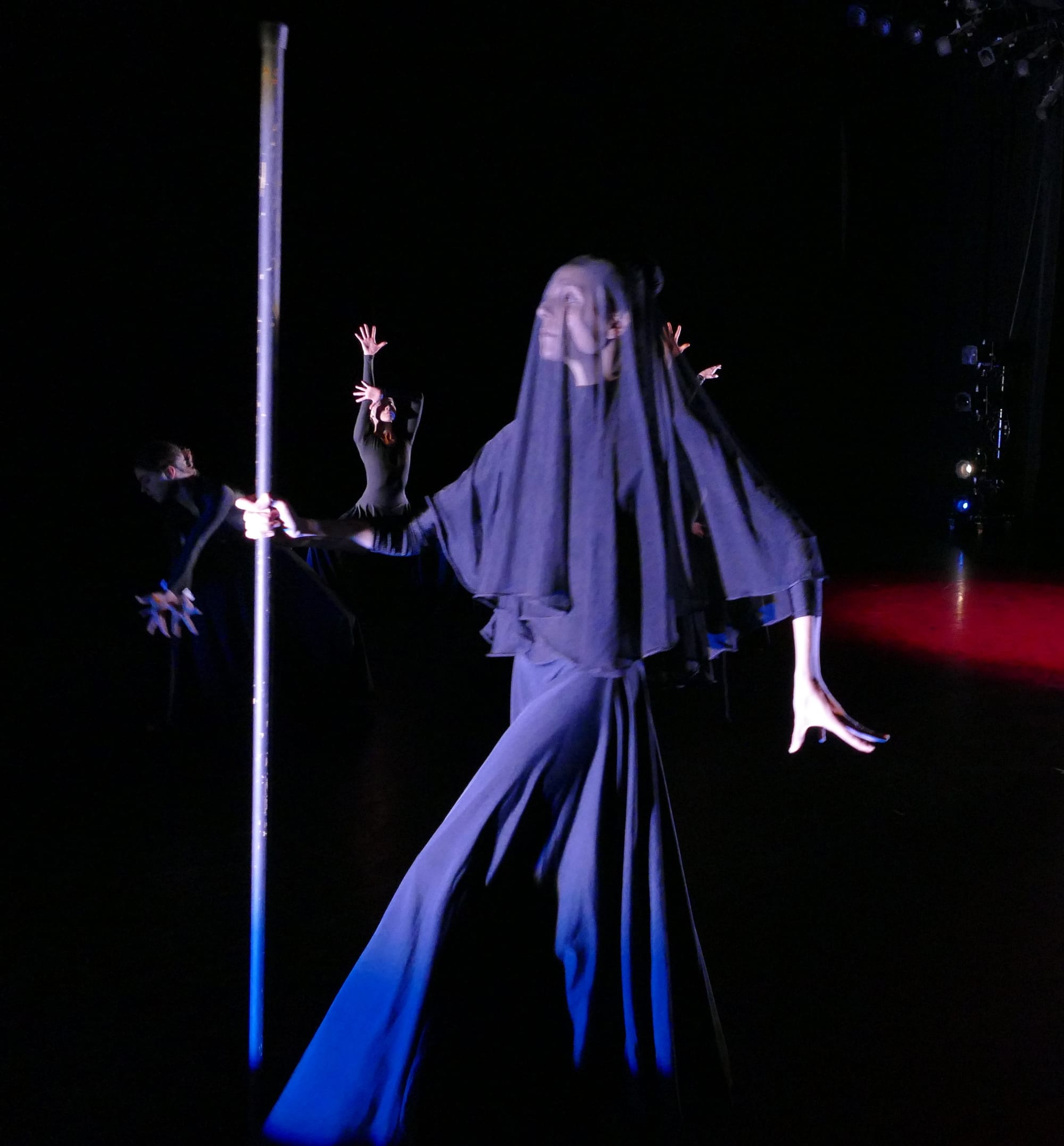
Gioia returned as the despotic matriarch, menacingly stomping her staff on the stage with such force one half-expected the floor to crack beneath it. Her presence was suffocating, and every strike of that pole was a reminder of the iron grip she maintained over her daughters' lives. The five daughters were danced with eloquence: Marlowe Zimmerman as The Loved, Natasha Schmid as The Hunchback, Sabrina Petrelli as The Watchful, Adele Carlson as The Defiant (channeling the rebellious youngest sister Adela, who dares to pursue forbidden love with her sister’s suitor), and Clark as The Daughter To Be Married. Each dancer embodied her character's inner turmoil, and Pomare's quite brilliantly captured this claustrophobic world by giving the women extended reaches, self-embraces, twists of the body, but also constraint in how much space they were allowed to occupy. At one point, the women danced on top of stools, without losing any of the movement phrasing but clearly on small and shaky footing.
Of the men, three – Mikey Comito, Jamod Parham, and Nathan Podziewski – portrayed The Imagined, figures of desire made visible but unattainable, and never dancing with the women. The one man who did, as the Suitor, got around. Ricardo Passera as both the suitor and the cheat performed with magnetic pull of masculinity that didn’t leave one guessing how he could upend this household's fragile order. Lorca's play ends in violence when the youngest daughter's affair is discovered, ending in a suicide, and here the dancing painted with broad strokes. There was a noose, but mercifully it never got around Carlson’s neck – the implication was enough.
The evening's sole non-Pomare work was the world premiere of "Exhibition" by Cruz DeJesus. Set to music by several composers, including Astor Piazzolla, with lovely live piano accompaniment by Polly Ferman, the dance turned away from women’s torment and instead celebrated their strength with joy. It opened with men seated behind tables as though at school desks, reading and leafing through books. After a brief blackout, the men were replaced by women in similar positions -- but without books. Gradually, dancers moved the furniture offstage, school being out and the women free to find their paths.
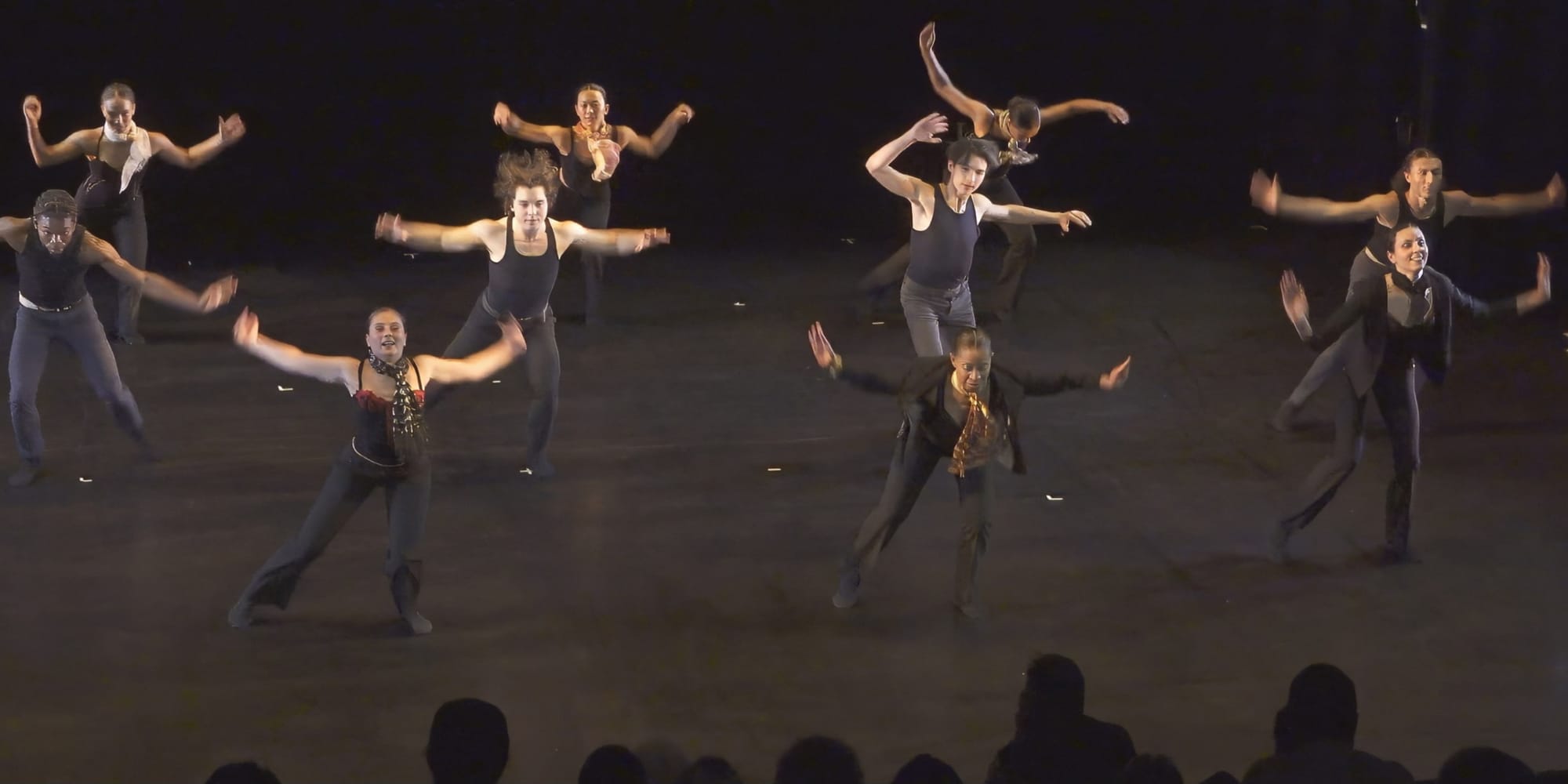
Launching into movement, the dancers displayed a rocking quality that blended jazz and modern techniques. They then exited, returning in pants instead of skirts for a decidedly tango-flavored section, then duets and more. There was even spoken word, as one dancer, noticing a jacket and hat on a hanger, questioned, "Whose jacket is this?" before gently donning both items and giving the garments life while dancing a tango solo.
It was a worthy ending to an evening of historically important works, providing an uplifting counterpoint to Pomare's darker visions. Though women's struggles remain, at least their lives now contain freedom, and expressive fun.
copyright © 2025 by Marianne Adams