Welcome Back One More Time
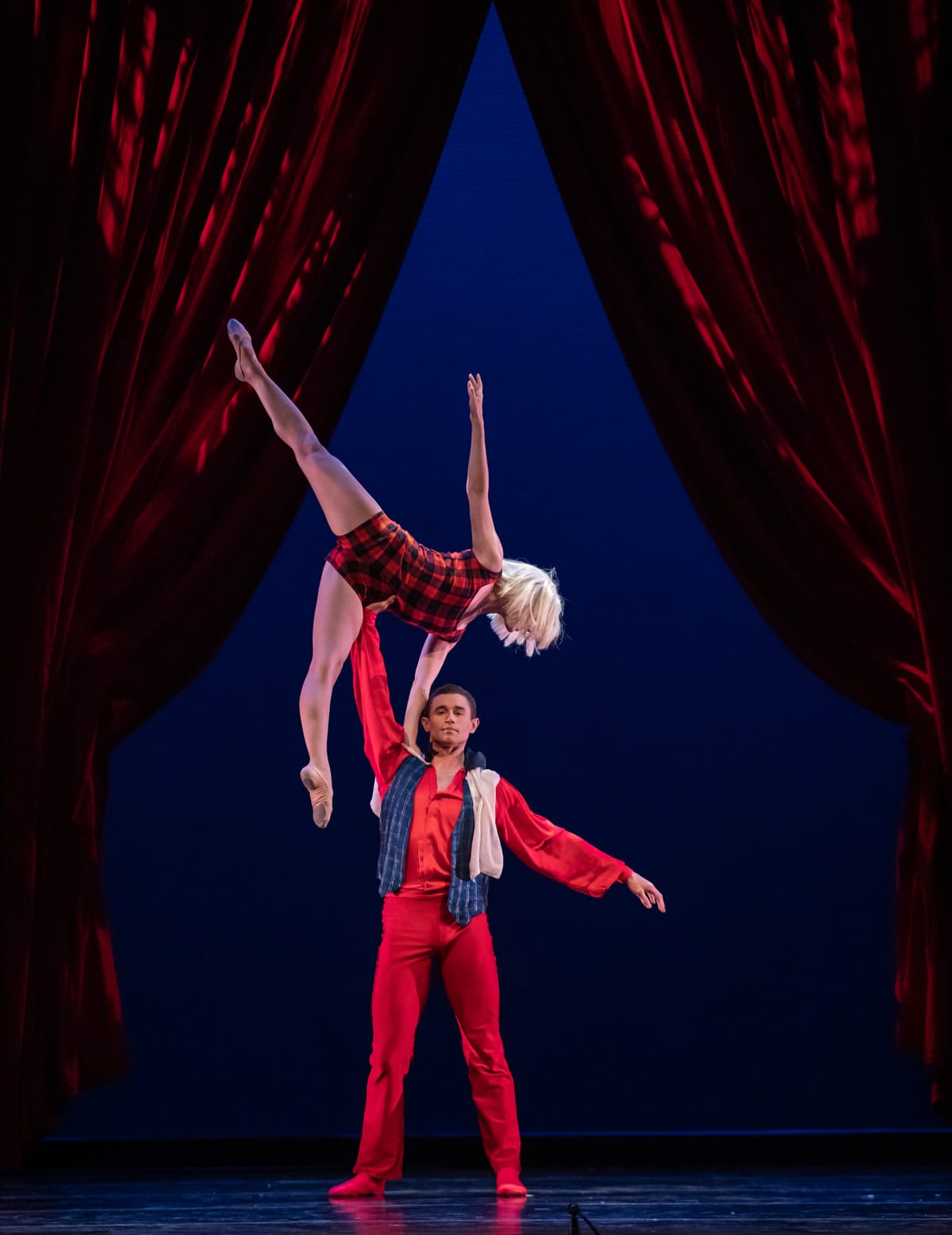
"Christmas Ballet"
Smuin Contemporary Ballet
Yerba Buena Center of the Arts
San Francisco, CA
December 21, 2019
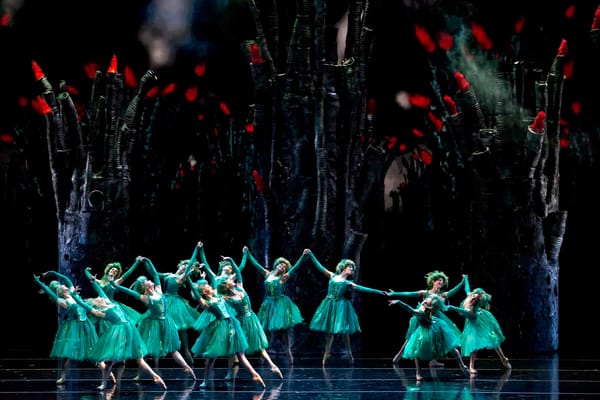
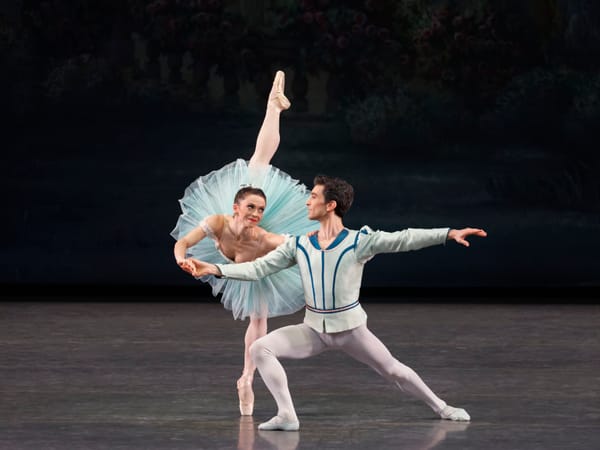
Next year the late Michael Smuin’s 1995 holiday ballet, “Christmas Ballet” will hit its quarter-century mark. Divided into two sections, 'Classical Christmas', performed primarily in white and toe shoes, and 'Cool Christmas,' with lots of red and as much pop as you like, has grown on me. Maybe, despite myself. There is something to be said for a show that has survived for as long as this one. The primary reason for “Christmas’” popularity belongs to Artistic Director Celia Fushille. She has grown this sixteen-member ensemble into a disciplined, excellently performing troupe. At the beginning of this last incarnation of “Christmas”, she asked for first time-audience members, which showed a lot of hands, but also from those who had been there the in the beginning, not a few, yours truly included.
Some of “Christmas” is kitsch; it helps if you can follow Smuin’s lead and forget the context of some of the grander music. The opening 'Magnificat' became an invitation for a glorious earthly celebration with swirling capes and soaring lifts. Yet in the 'Zither Carol' Cassidy Isaacson’s pointe work had an almost folkloric quality to it. 'Hodie Christus Natus Est' could have done with fewer of the lifts so beloved by the late Smuin, well done as they were by Lauren Pschirrer and Ben Needham-Wood. 'Domine’s' back and forth almost looked as if Isaacson and Maggie Carey wanted to get to know each other, and 'Veni, Veni Emmanuel', fortunately, has lost none of its searching quality for all of the simplicity of a woman’s line dance. Amy Seiwert’s intricate and soaring, gliding double duet for 'Sleigh Ride" just about took to the air. Amy London’s new walking lullaby 'Still, Still, Still' captured the tender intimacy of the music and wonder of young parents.After a spirited, though somewhat ragged company-stepping to 'The Gloucester Wassail”, Smuin switched gears. Hard as she tried in 'Light Bensh’, Tess Barbour couldn’t snare avman. But with Peter Kurta in the catch-me-as-you can duet can of 'Dobra Notsch ‘Sleep Well,’ love was restored.
“Christmas Ballet” includes around thirty individual numbers with many interchangeable parts that can be shelved or unwrapped as needed. The all-male 'Droopy Little Christmas Tree' looked lumpy years ago, let’s shelve it again. When Fushille danced it – with some help from Earth Kit – her own suave sexiness onto 'Santa Baby'. At the very least, Brennan Wall deserved a new feather boa. Despite Louis Armstrong, the choreography for the 'Christmas in New Orleans' hat-dance looked tired. 'La Calandria' had been a break-through for Linda Ronstadt; it’s a tough little song about women’s self-assertion. Whether Pschirrer’s crawling out of her serape to show off her body's athletic lines quite made the point remains to be see. A star turn, not delivered as well since Shannon Hurlburt originated the role, was Tess Barbour in 'Bells of Dublin.' Relaxed arms, finely varied and top speed taps spiced with straight leg kicks, this was Irish stepping at its very finest — and demanding.
The men impressed on their own. Val Caniparoli’s latinate choreography for 'Jingle Bells Mambo' tested three of them, Needham-Wood, Joao Sampaio and Max van der Sterre excelled in athletic leaps, rolls and balances without spilling a drop of their Martinis. Needham-Wood’s 'Drummer Boy' sent off enough sparks for a July 4th. In the one-handed lifts of 'Blue Christmas' van der Sterre’s hip-swinging Elvis showed more strength that the master himself never would have managed. No wonder his women fans almost, but not quite, gave van der Sterre the blues.
Amy London’s 'Most Wonderful Time of the Year' introduced the ultimate evergreen: Bing Crosby’s 'White Christmas'; it inspired the company’s high spirit as much as the audience's; who also got some of the snow.
copyright © Rita Felciano 2019