Viennese Snapshots
"Episodes", "Vienna Waltzes"
New York City Ballet
David H. Koch Theater
Lincoln Center
New York, New York
October 5, 2022
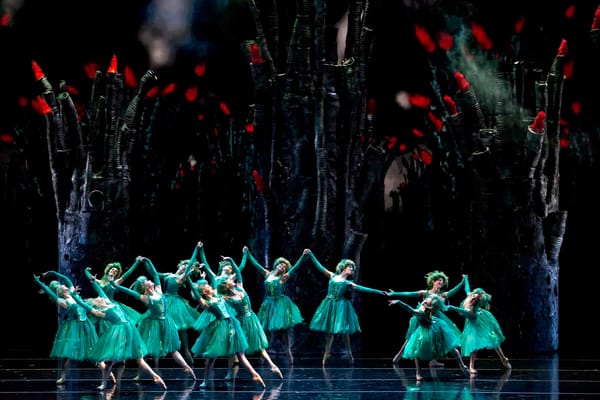
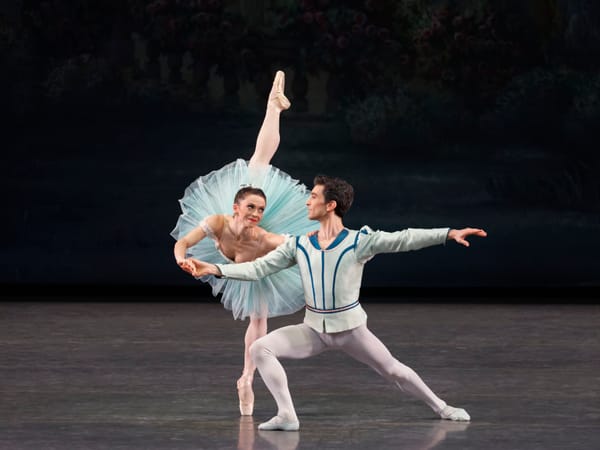
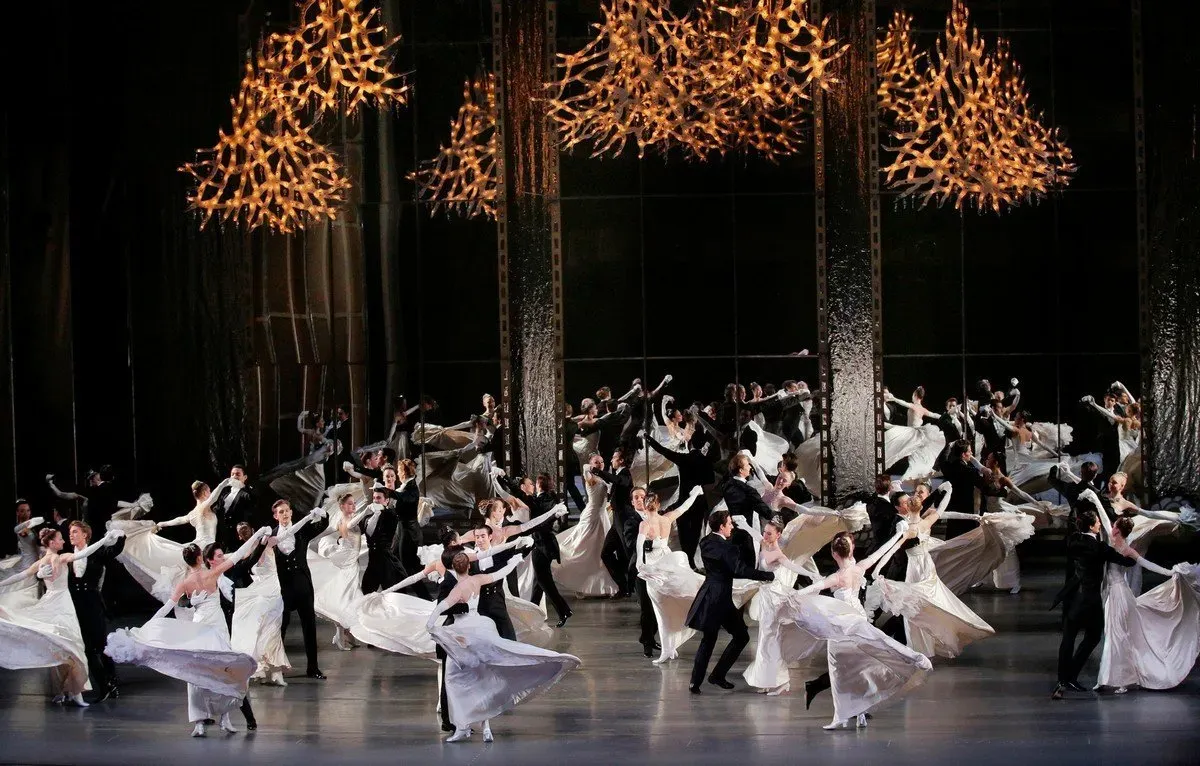
These two ballets, one so austere and the other so luxurious, are both set to Viennese-based music divided into unrelated sections of various moods. "Episodes", with its black and white leotards, luminous grey background and atonal music (selections of orchestral music by Anton von Webern), is astringent, precise, and impersonal while "Vienna Waltzes" has elaborate scenery (including a majestic transformation scene worthy of any 19th century ballet), yards of gorgeous fabric, luscious melodies by Johann Strauss II, Franz Lehár, and Richard Strauss, and semi-narratives; Balanchine had astounding range as this intriguing program showed.
Megan LeCrone and Andrew Veyette danced the first movement of "Episodes" with an impassive but not rigid demeanor. They were precise, clear, and sharp without harshness as they wove through the odd shifting shapes. The corps looked very well rehearsed and snapped out those odd rhythms with hypnotic efficiency.
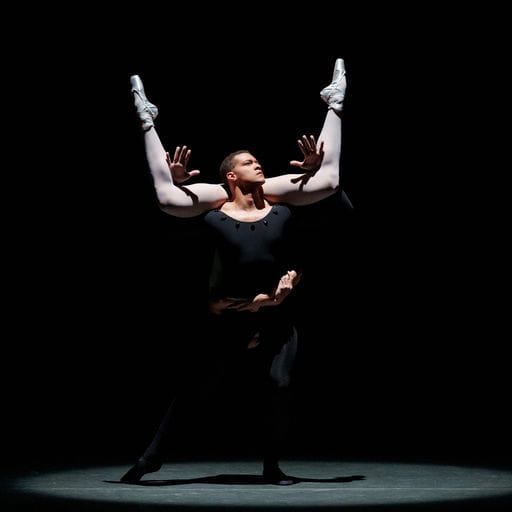
Emily Kikta and Preston Chamblee (in his debut) danced the odd interlude where two dancers, initially isolated in separate spotlights, tiptoed on an imaginary tightrope before flowing into some bizarre upside down lifts. They moved with a wry earnestness, with an impressive sangfroid and a gleam of wit. Kikta used her lush, expansive form to own the stage.
Unity Phelan in the third movement (with a dignified, gracious, and somewhat retiring Harrison all) looked absolutely beautiful in her leotard--she has a perfect body and the audience, I expect, would be perfectly happy just to see her stand there. But she is a dancer as well as a beauty and she flowed through the shapes with an unconcerned ease, clear but not cold, with occasional hints in the tilt of her head or flash of her eyes, of a human heart.

There is clearly a human heart in the final section, set to Webern's orchestration of the Ricercata from Bach's powerful "Musical Offering" and Sarah Means, with Adrian Danchig-Waring, gave an appropriately powerful performance. She was majestic, striding through the music with a serene generosity, and the final moment, as she lowered her arms, pressing the air as if in a benediction, was an exalted triumph of order out of chaos.
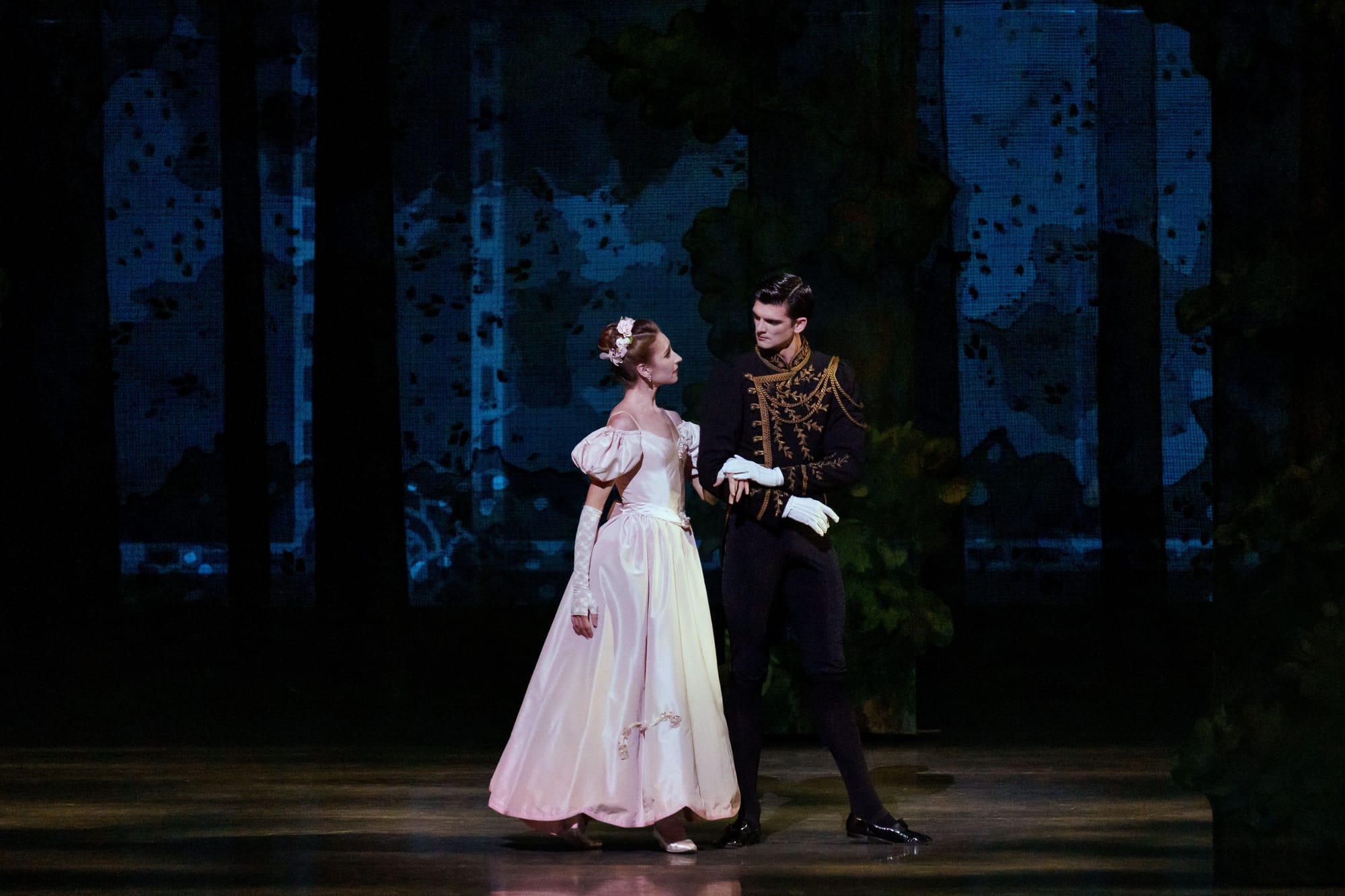
"Vienna Waltzes", for all its scenic grandeur, has a more human focus than the cool grandeur of "Episodes". Ashley Laracey and Peter Walker debuted as the young couple waltzing through the Vienna woods. Walker's soldier was a sweet-natured generous fellow, though I missed some of the Old World grandeur of nineteenth century Vienna; he moved like he was more comfortable with a cell phone than a saber. Laracey danced with a delicate and haunting unease, eyes glued to her partner, as if she could sense some future sorrow. It was like watching a prequel to "Lilac Garden", and her performance was vivid, multi-dimensional, and very moving.
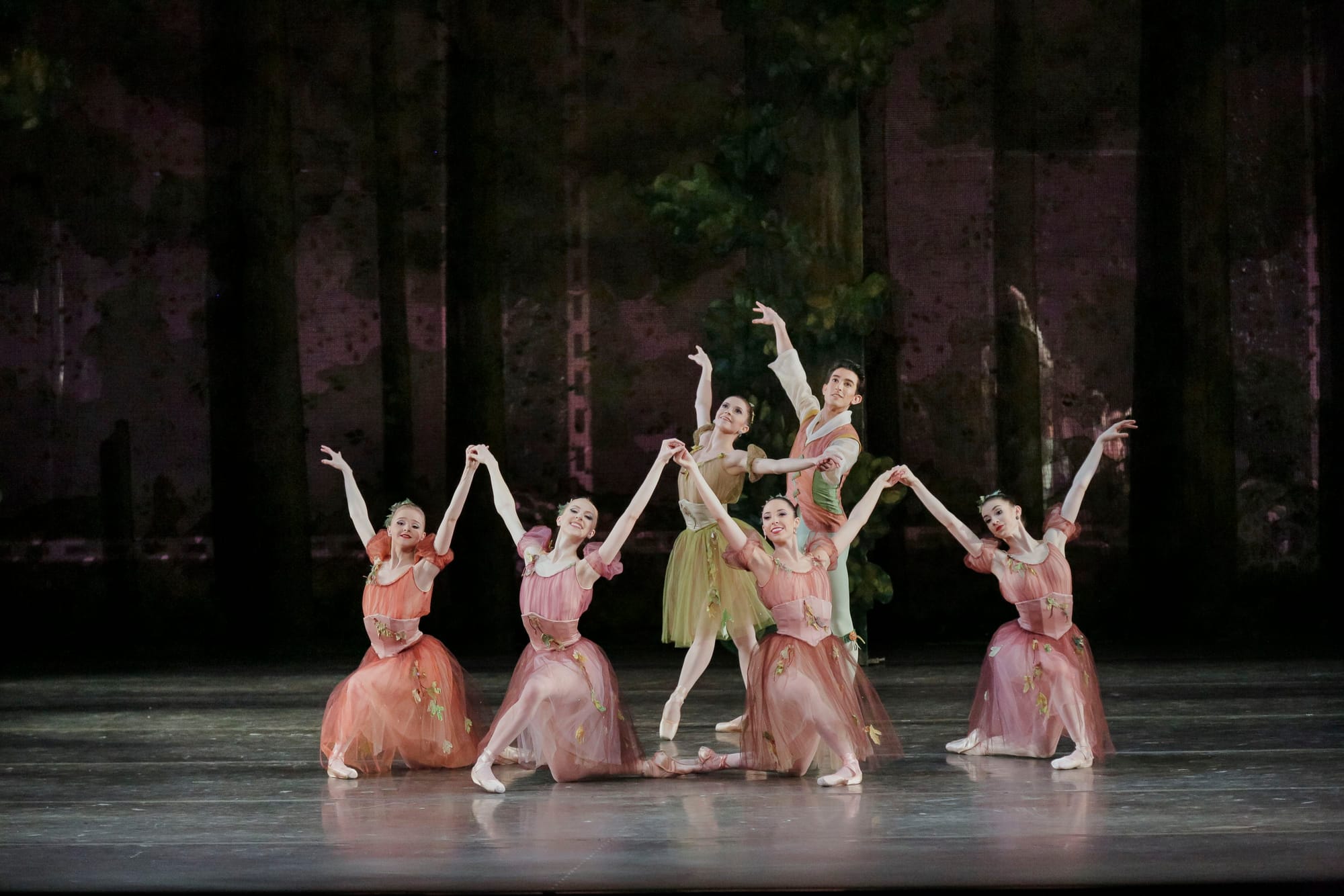
Megan Fairchild and Anthony Huxley danced the second movement, a sunny allegro romp saluting the charming nymphs and satyrs of the Romantic era. Huxley flowed through the fast footwork with a wonderful clarity and he made the partnering look easy. Fairchild danced with an airy breezy confidence; a perfect joy.
Mira Nadon and Andrew Veyette debuted as the Merry Widow and her latest conquest. Nadon walked into Maxim's with a blazing confidence, hand on hip, surveying the guests with a natural superiority devoid of any vulgarity. She was a lady with a capital "L". Veyette was a bit stiff as her captivated cavalier, and there was little sense of back story, of a renewed acquaintance. But that tuneful, slightly bitter-sweet music told its own story of true, if temporary, love.
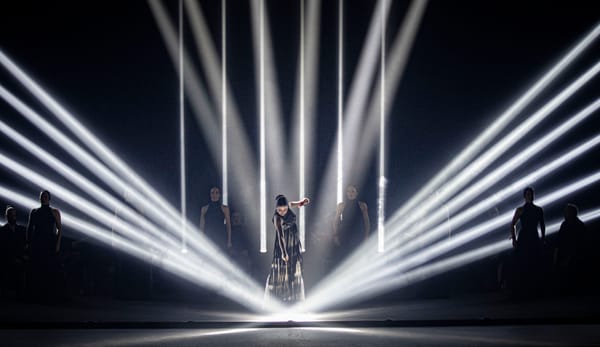
There is a backstory, too, to the final waltz in Balanchine's most magnificent haunted ballroom works and Unity Phelan and Tyler Angle debuted as the mysterious couple. Phelan gave her opening monologue a gentle wistfulness, and showed an impressive calm--there was no extraneous fluttering. At times she did seem to retreat into her dress, and the overwhelming sense of loss was not there yet. The slightly misty quality, though, had its own beauty, and she did seem to be dancing with ghosts. The moment when the lights suddenly blazed and the stage filled with white and black swirling figures was as magical as ever, a vision of a world where past lovers come to life and can dance forever.
© 2022 Mary Cargill