Two-thirds Delightful
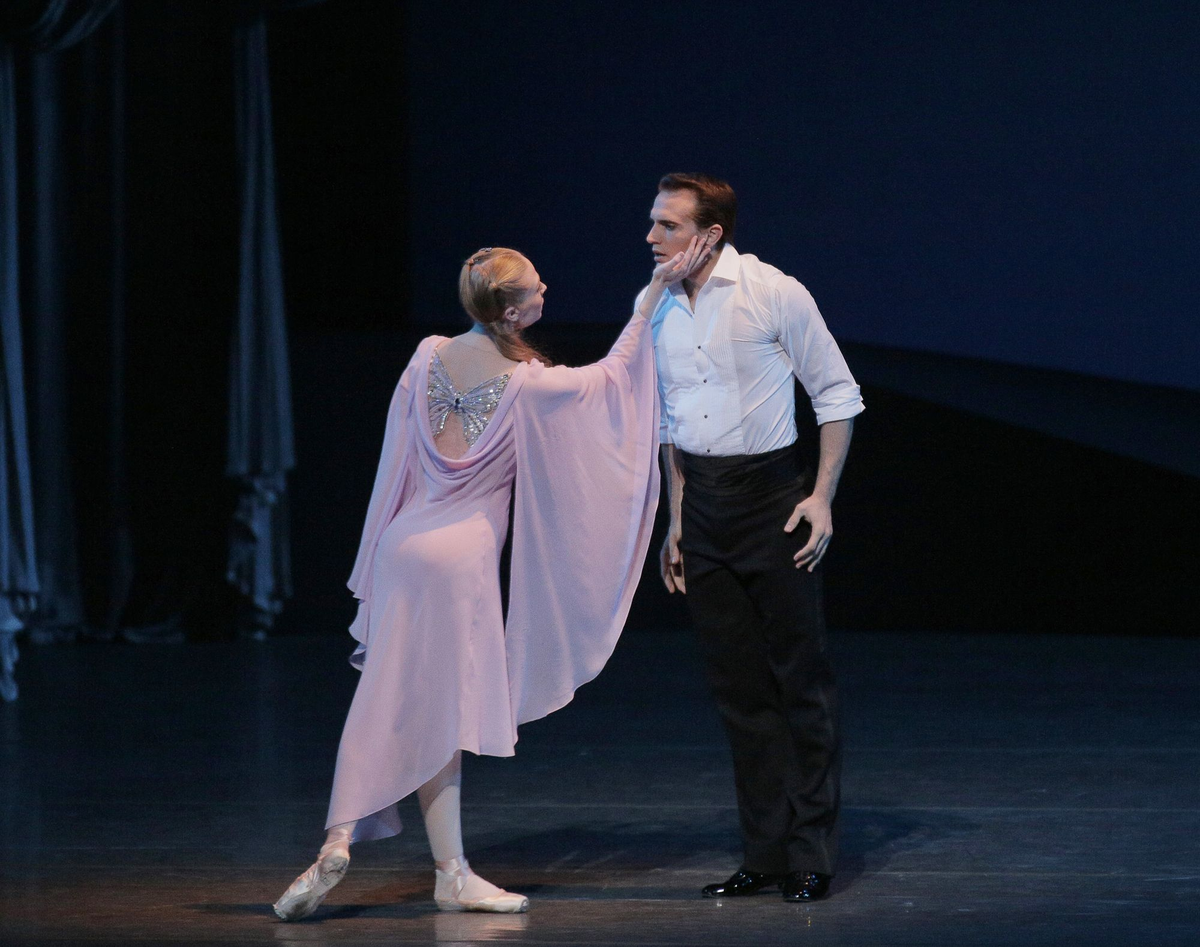
“Bal de Couture,” “DGV: Danse à Grande Vitesse,” “The Four Seasons”
New York City Ballet
David H. Koch Theater
New York, NY
February 28, 2014
New York City Ballet’s “Scenic Delights” program was a best-of-three wager – and managed to pay off. After the uncomfortable presentation of Peter Martins’ “Bal de Couture,” the next two works were winners that delighted in both content and execution.
But if two out of three sufficed for the program as a whole, it wasn’t enough for the first ballet. Neither Tchaikovsky’s music nor Valentino’s beautiful haute couture costumes could mask the lack of cohesion in the off-the-rack choreography. You could hardly blame the dancers for the similar incongruity in the quality of performance.
When the ballet opened to the Polonaise from Tchaikovsky’s “Eugene Onegin,” one of the most famous polonaises in the world, the cast lacked the aplomb that a polonaise calls for. Besides, Martins barely used any actual polonaise steps. Even wearing costumes fit for a noble ball, the dancers seemed unsure in their steps and torn among picturing themselves on a runway, stage, or ballroom. There were exceptions, notably Savannah Lowery. When she turned to face Jared Angle, opening her arms and agreeing to be partnered, she captured both the aristocratic character of the music and feel of the costumes. Lowery’s dress may not have been the prettiest of these Valentinos, but her poise, dignified positioning of the upper body and her presence were as well-tailored for a ball as the gowns.
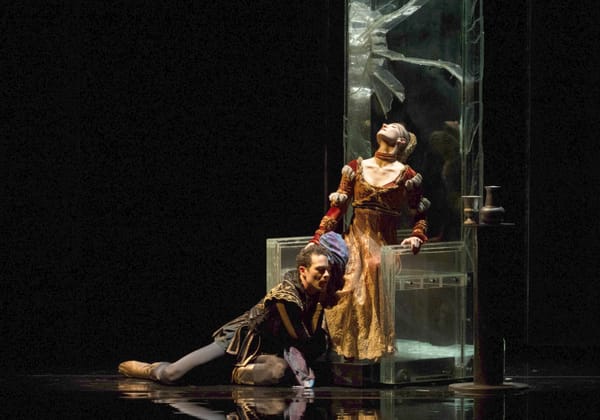
The middle of the ballet resembled a romantic scene, perhaps in an empty hall away from a ball’s main action, but Janie Taylor and Sébastien Marcovici didn’t make the opening pas de deux tender enough to seem natural. Like most of the cast, Taylor seemed uncomfortable in her role and appeared to be going through the motions. Only when Robert Fairchild appeared onstage and dipped Taylor into a deep backbend was there romance. Taylor seemed to have come alive, her movements became gentler, her eye contact no longer empty. It wasn’t enough to render the scene special, but it did make you wonder if Taylor’s initial detachment was intentional, a result of portraying the complexity of her heroine’s situation which did not fully resonate with her.
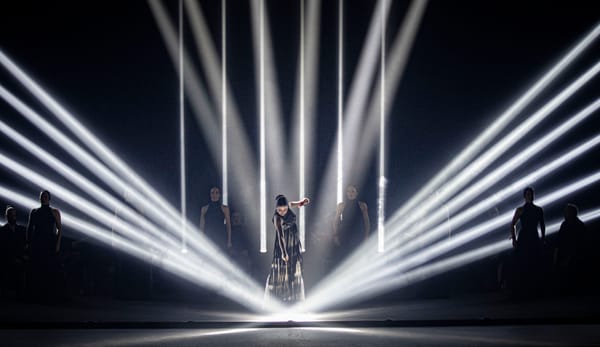
Ironically, the piece that followed this fashion-themed work, “DGV: Danse à Grande Vitesse,” showed more style. Christopher Wheeldon’s juggernaut of a work, with four duets and intricate corps patterns, all set to Michael Nyman’s hurtling score celebrating the French TGV high-speed train, had a geometrical, multi-dimensional feel, and although it’s difficult to call its modern stage-design scenic, once combined with the no-holds-barred dancing the overall effect was visually powerful.
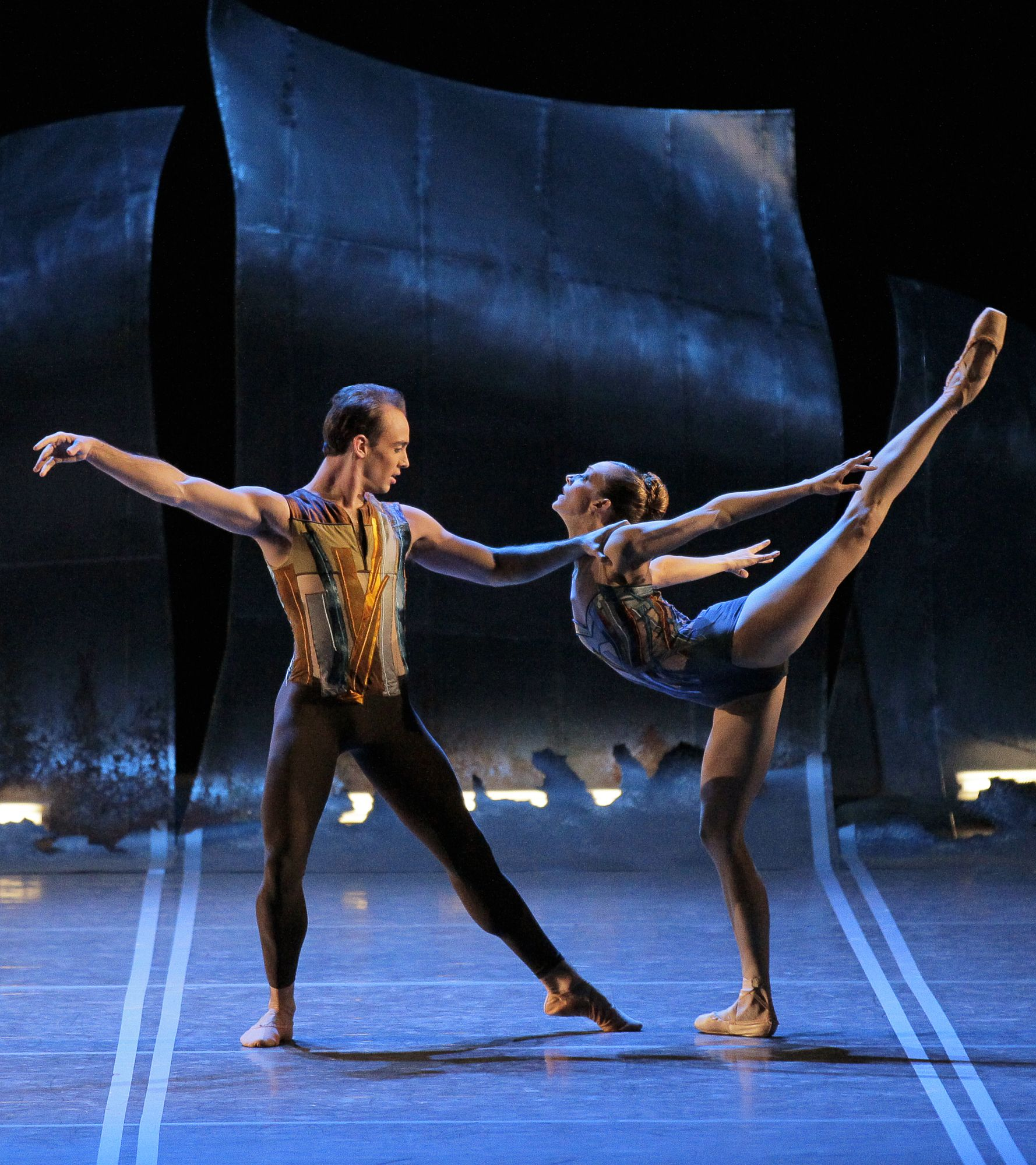
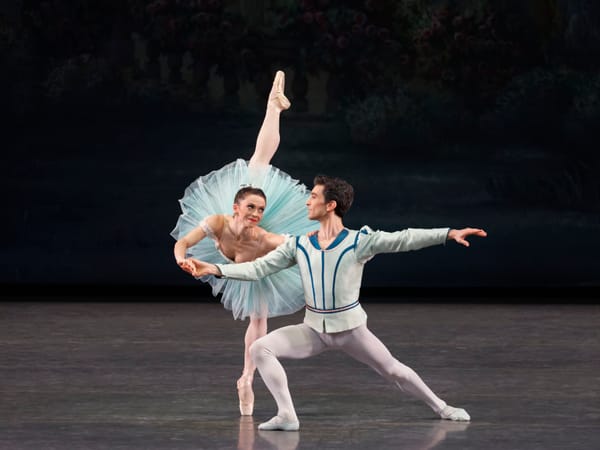
Each of the four duets offered something different. The first, with Teresa Reichlen and Craig Hall, had a fluidity echoed in Hall’s rippling torso movement that complemented the curved metal decoration in the back of the stage and Reichlen’s beautiful supple arms that looked almost boneless. Megan Fairchild and Gonzalo Garcia varied the next duo with an athletic, powerful presentation. Fairchild’s dynamic jumps looked both strong and weightless. The third duet kept Maria Kowroski airborne seemingly the entire time. All of the lifts, done by a stalwart Tyler Angle, showed off her exquisite lines and flexibility. His subtle, unintrusive partnering made the shapes of her body the focal point, but he phased into equal focus when side-by-side with her. The final couple, Tiler Peck and Andrew Veyette, made their dancing all about energy, each reach and jump appearing to go on long after their bodies stopped. Still, their dancing wasn’t as harmonious as that of the other duos and at times they weren't in synchrony with the music or each other, particularly in their jumps which differed in height and timing. Despite a solid performance it seems they haven’t yet found the key to making this abstract ballet their own.
The finale, with the entire cast on stage, invited you to test which of the four disparate couples attracted your eye most, and which of the four interpretations you gravitated to. At this performance, it was Kowroski and Angle.
The ballet that followed – Robbins’ “The Four Seasons” – could have been the only thing on the bill and the audience would have walked away fulfilled. Each section was as different as the season it represented and so well done it made you wish each lasted longer.
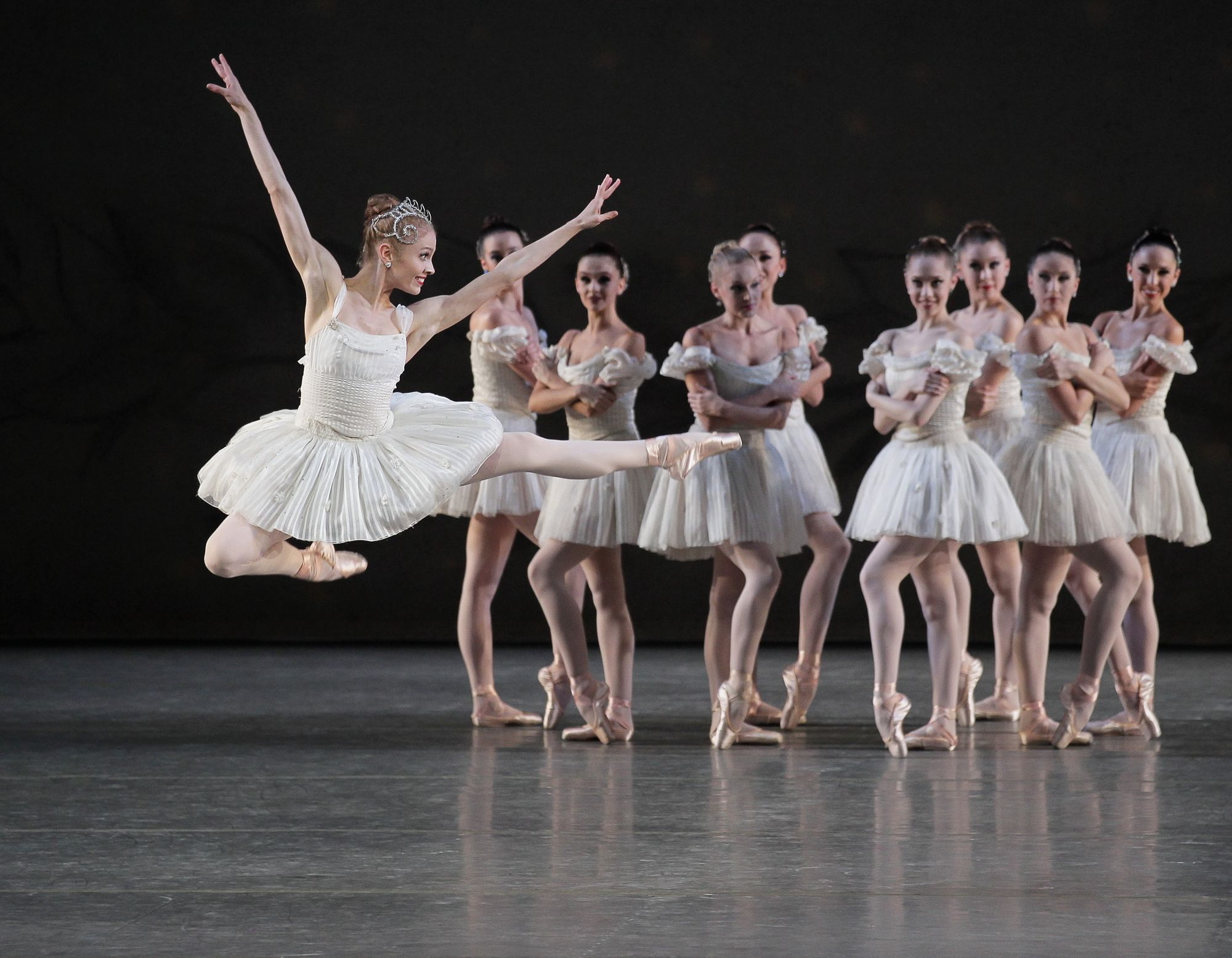
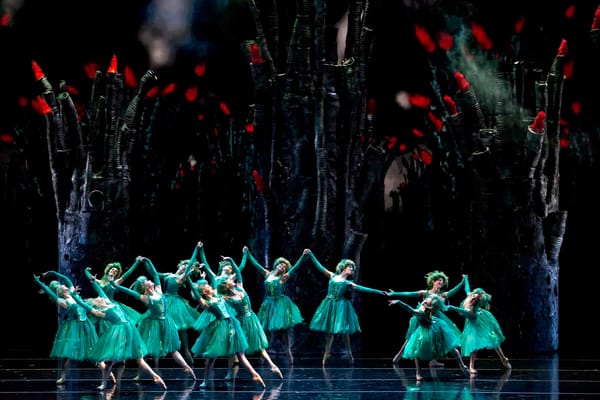
During “Winter,” Lauren King’s precision in her playful, light footwork reminded you of walking on shimmering snow. The corps gave equal weight to humor and technique, and wonderfully transitioned from “shivering” in the cold to looking like snowflakes. Although you were scarcely tired from “Winter,” Sara Mearns and Jared Angle turned “Spring” into a welcome, joyful relief. Mearns used the many broad, open extensions from à la second passing front and back to make every movement look abundant, as though sowing the seeds for a bountiful year ahead. Angle was elegantly attentive to Mearns, keeping his gaze focused on her with each offered hand. The variations weren’t as polished; Mearns was too rough in her execution of port de bras and ending poses, and Angle was too constricted, but by the coda their dancing was once again refreshing, their light jumps looking as though carried by a spring breeze.
The standout in “Summer” surprisingly was not the lead couple, Rebecca Krohn and Amar Ramasar, but corps de ballet member Dana Jacobson, as the representation of Summer that introduces the dancing. She was so strong and commanding that the mood she established remained long after her short part was over. Krohn and Ramasar made a formidable effort, but Ramasar looked subordinate to her, and his jumps appeared cut short and were meager in their pliés. “Fall” brought with it the charisma of Daniel Ulbricht, whose Faun was full of humor punctuated by high jumps. Joaquin De Luz was not to be outdone, and his jumps looked as crisp and virtuosic as Ulbricht’s. De Luz’s partner, Ashley Bouder, was equally as impressive in her chaînés of rare speed and tightness. The trio’s explosive dancing, together with the energetic corps, made the section look like a torrent of swirling autumn leaves, and gave an upbeat segue to the ballet’s concluding scene. The luscious grand finale of all the seasons, in all their varied colors, was a treat that stayed with you long after curtain’s fall.
copyright © 2014 by Marianne Adams