Throw The Book Out
“Crime and Punishment”
American Ballet Theater
David H. Koch Theater
New York, NY
November 1, 2024
As a novel, Fyodor Dostoyevsky’s “Crime and Punishment” can be deeply intellectually rewarding or torturously challenging. As a ballet, Helen Pickett’s adaptation, which premiered during ABT’s fall season, was solely the latter. Set over twenty scenes to commissioned score from Isobel Waller-Bridge, the work felt like it was based on the CliffsNotes version of the book, not the actual classic literary text. Thus, the viewing experience was reduced to a quest to find salvage in the quality of the company’s dancers.
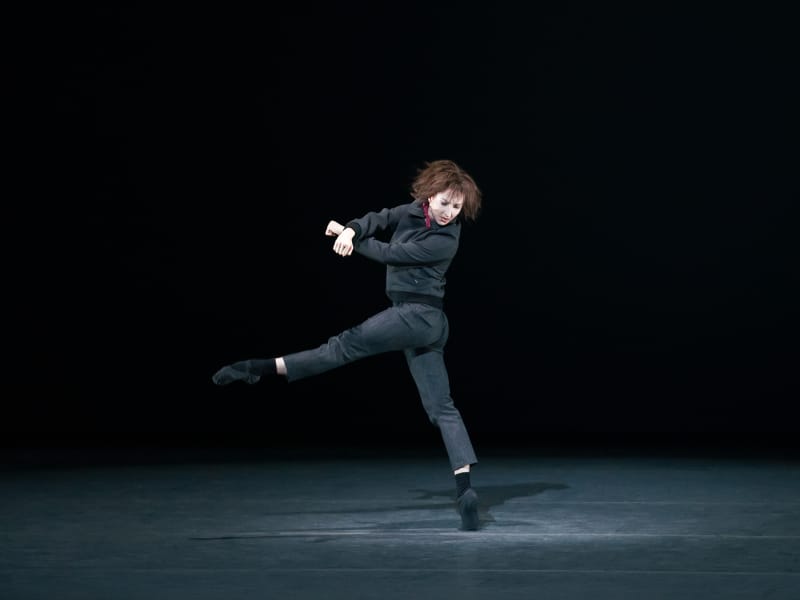
One of the key problems with the ballet, of which there were many, was that the psychological journey and attempts at justifying murder as mathematically moral by Radion Raskolnikov were diminished to unremittingly contorting and weaving steps, all in a modern and erratic style that contrasted unfavorably the more classical movements by the rest of the cast. The result was a character that did not seem intellectually tortured, but instead just mentally unstable. Of course, depicting Raskolnikov’s rationalizations and their tensions with morality is a challenging feat to attempt with dance, but the novel’s display of alternatively handled moral choices by the other characters was something that would have helped, if presented in starker ways.
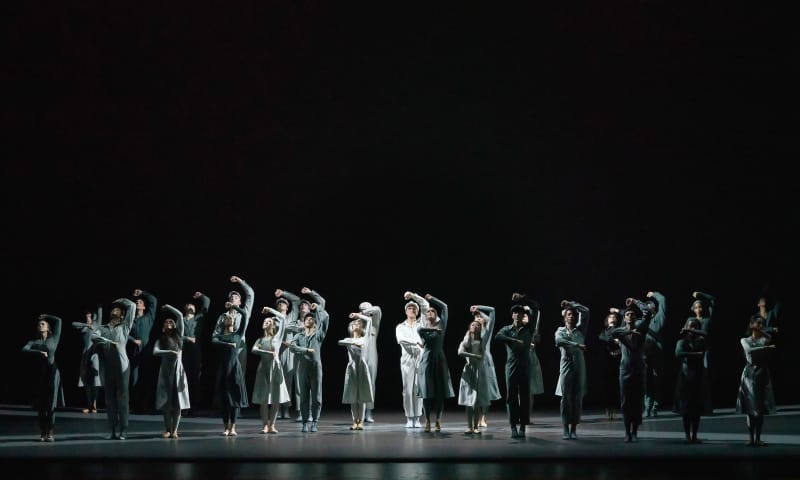
Instead, to help tell the story the ballet resorted to projecting footage by Tal Yarden of the murder victims and the spoils on a scrim, and displayed summary prompts for each scene in English on the backdrop. When the curtain rose for the first time, the crimes were already committed. A stage full of dancers as Citizens with conforming movements separated to reveal Breanne Granlund as Raskolnikov. That ABT cast a woman here and in the first cast (Cassandra Trenary had the honors on opening night), seemed a choice made for no reason other than perhaps because gender-blind casting is in vogue –- it did nothing on this night to help adequately paint the tall, lanky and handsome Raskolnikov of the book’s description.
Still, the ballet seemed promising at first, when shortly after the first appearance Raskolnikov ended up alone, leaning against a bed, chest heaving in distress. It was a telling dramatic scene, and Granlund presented it in such an intimate manner that made one wonder at the thoughts that tortured that body. If only we could see them through dance!
To move the story along, the set quickly switched to a bar scene, where we were introduced to some of the other characters, like Sonya, danced remarkably by Fangqi Li, and the other Marmeladovs. Li, a 2017 Prix de Lausanne Finalist, wasted no time fleshing out the poor daughter who has had to turn to prostitution out of financial need. Dancing elegantly, with heartbreaking fragility, her character had depth and an obvious sadness at her situation, which made her later scenes guiding Raskolnikov to redemption more believable. Another such standout was Lea Fleytoux, as the woman on the bridge attempting suicide who makes Raskolnikov determined to avoid getting caught. Without much of a narrative to tell, she leaned into beauty and longing in her movement, moving seamlessly across the stage. It was no surprise Raskolnikov couldn’t bear to see her end – no one could.
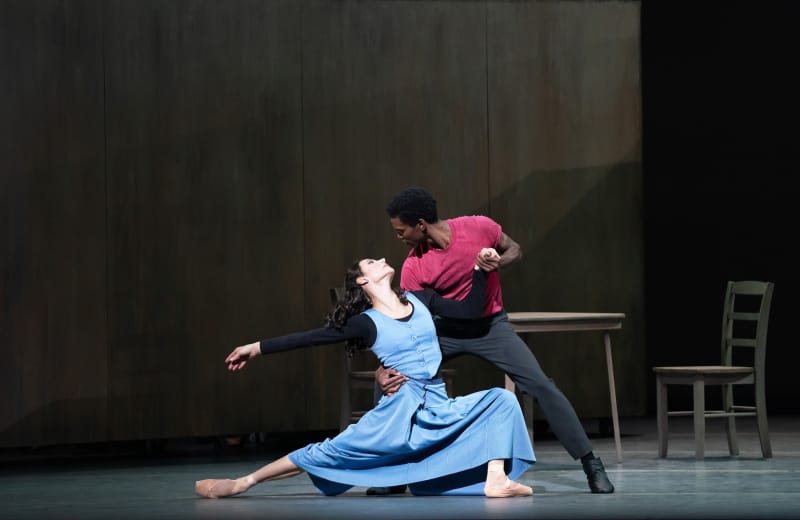
As the scenes switched quickly, décor being limited to several panels that were maneuvered to look like different settings, the dancers worked to present the fullest versions of their roles that they could within the ballet’s constraints. Christine Shevchenko as Raskolnikov’s sister Dunya had just enough spark in her dancing to show resilience shining through restraint in her character’s personality. Her rejection of James Whiteside’s Svidrigailov, portrayed as firm, though not quite as depraved as the book dictates, older man, was clearly thought-out and resolute. And her dancing only got better as the ballet went on, particularly toward the end, when dancing with Calvin Royal III as Razumikhin, after Raskolnikov’s confession. There, the music slowed down to a lilt, its persistent beat yielding to melody, and Shevchenko and Royal showed a dance full of elegant lines, beautiful lifts, and a story of a woman bringing a broken man back to life (never mind the inaccurate character treatment here).
But for this scene, despite the music’s frenetic heartbeat-like rhythm, the ballet dragged and seemed to misunderstand both the novel and Dostoyevsky. Without a faithful interpretation, a better take would have been to do an homage to the book, like ABT presented earlier this year with Wayne McGregor’s “Woolf Works.” I remain glad that ABT is experimenting, but that’s the most that can be said about this particular attempt.
copyright © 2024 by Marianne Adams