The Family is Intact
Ephrat Asherie
Works & Process at the Guggenheim Livestream
New York, NY
April 26, 2020
Even before the coronavirus crisis closed live performance in New York City, the Guggenheim’s “Works & Process” series focused as much on artistic investigation as on finished performances. But artists now have new realms of challenge in their creative processes. Like many, Ephrat Asherie is trying not only to ensure her company can eventually come back to live performance, but also can keep dancing – vibrantly – right now, even as the dangers of coronavirus demand social distancing. The company’s process of collaborative creation for “UnderScored” (still optimistically scheduled to culminate in a live commissioned performance at the Guggenheim in October 2020) was made transparent in their ZOOM event — and even joyous.
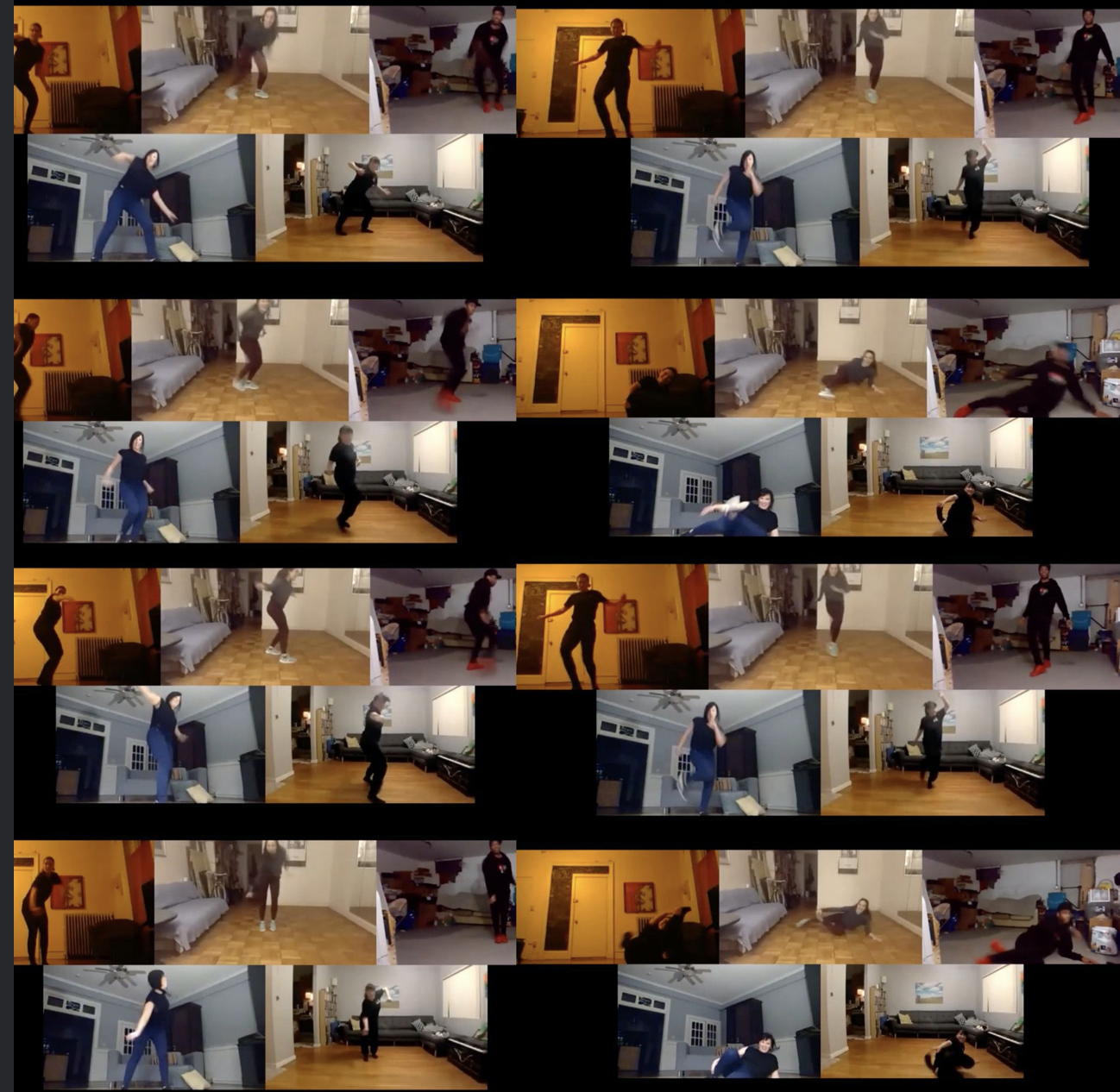
Captured on six separate screens in each of their homes, Asherie and her dramaturg, Melanie George, were joined by four dancers. George moderated the stories as the cast moved in and out of dialogue, solos, and two group dance offerings. They improvised to Asherie's choreographed movement phrases and then to their personal stories, each a building block of their collaboration.
On the ZOOM “chat” feed throughout, audience members (many of them recognized figures in the dance world, including Works & Process at the Guggenheim’s general manager, Duke Dang,) commented on the movement, in a running dialogue of appreciation. Asherie warned us of technical realities, like time lags between music and movement from screen to screen; it all became part of the process.
In “UnderScored,” Asherie pays homage and builds on New York City’s underground club scene in the 1970s and 1980s; it is the tradition that formed her and underpins her creative vocabulary. The city was an economic wasteland, but clubs were open to anyone, an egalitarian mix of race, gender, and difference all crashing together in new art forms. Asherie described the early clubs as forums for freedom and sanctuary. In unlikely places like construction sites and basements, anyone – including the most oppressed – could make dance, make music. This remarkably diverse community of openness and support was launched during the AIDS epidemic. It gained its energy by bucking society's deep divisions of racism and homophobia.
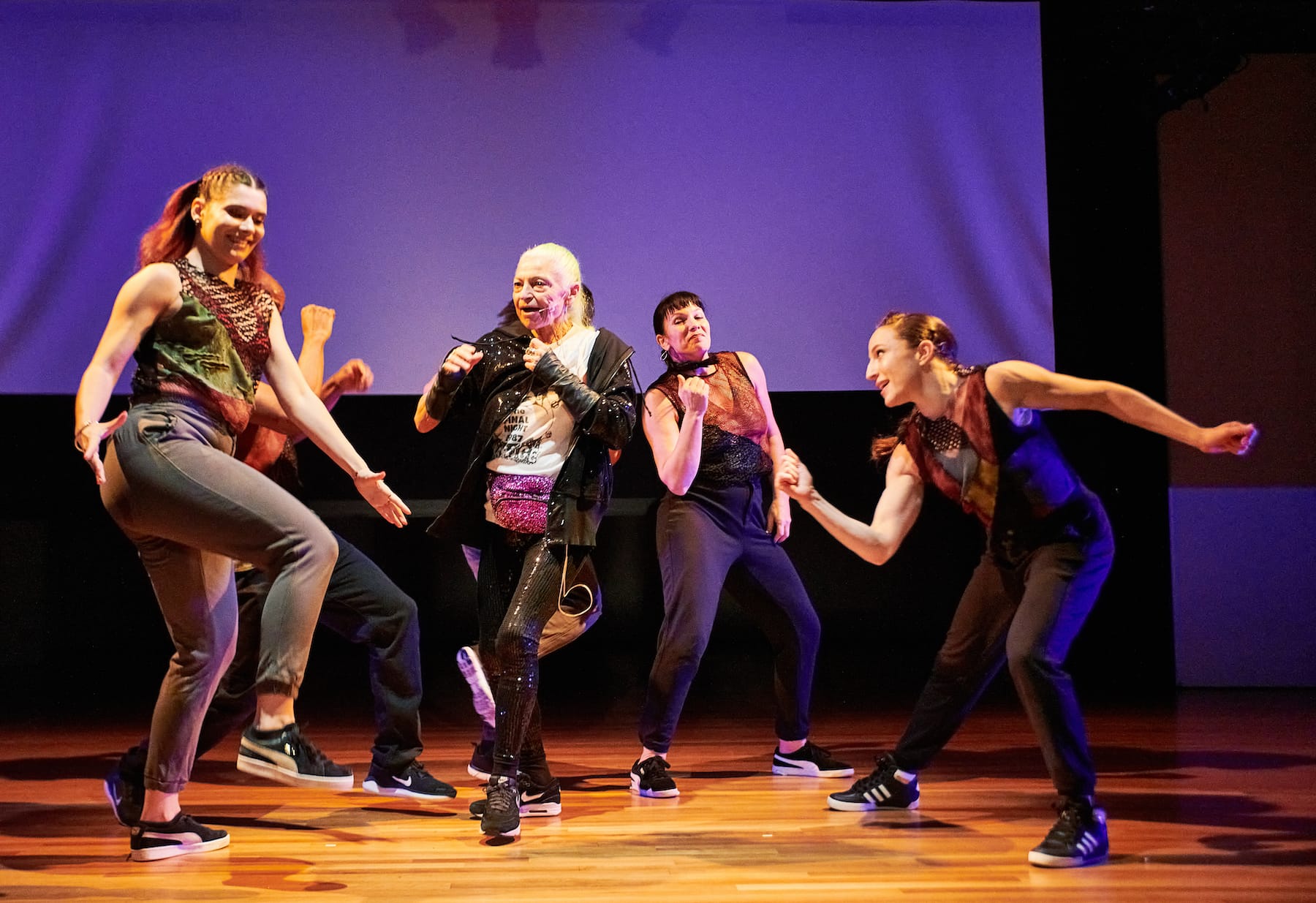
The connections and relationships from that time have lasted, and many branches of movement and music emerged from the bones of the early clubs. In her research for “UnderScored,” Asherie mined not only her own past as a wide-eyed all night participant, but she interviewed many original “legendary” clubbers. Her dancers represent the newest generation, each moving in their own ways. Some of them have joined her in early iterations of the work, like the first live showing earlier this season, part of her Works & Process at the Guggenheim commission.
The ZOOM virtual “stage” allowed each of the dancer's movement personalities to come into focus. “House dancing” here became the freedom unleashed in their own houses. After introducing themselves and their spaces, each told a story and then danced it. In his basement, dark-lit like many of the first clubs, Matthew West’s breaking acrobatics were smooth and a little cramped; his kick tried to burst through the screen, just as he described kicking to far beyond bounds, in his early breaking days. Manon Bel reminded the others that she was born in 1994 -- the same year Teena Marie reminisced about creating the butterfly, as her winglike shoulders and angled legs demonstrated.
Ms. Vee careened cheerfully around her space (claiming permission from the cat), reveling in memories of her first moves in 1998, when she got inspired by club dance in sixth grade. All five improv solos were framed in flat two-dimensionality by laptops cameras. To add a third dimension, Teena Marie was also recorded on all sides by her husband, who followed her subtle shifts from balance to off-balance, tipping and skittering around their living room.
Asherie has danced for twenty years as part of the club culture, and remembers dancing with many of the “elders.” It’s clear that she misses their in-person community; the psychological challenge is as powerful as their physical separation. But in her home-bound dance space, Asherie’s face still lit up as she moved. Her body swung into the momentum of swirling abandon, and she shifted between deep rhythms.
Throughout the dialogues, the stories, and the dancing, the ZOOM “Chat” column never stopped. This virtual “open rehearsal” was also a chance for the audience to weigh in, moment to moment. It wasn’t sophisticated commentary, but it felt clear that, in the trajectory of this medium’s evolution, audiences are making new places for themselves, too.
When the event came to a close after its scheduled hour, George and Asherie invited people to stay on for a Q&A; that’s often the time in a live performance when about two-thirds of the audience generally leave to traipse home. This crowd was already home — and most settled in to chat. I took my laptop into the kitchen to make myself a cup of tea as I listened to the ongoing conversation with six people whose faces seemed so close. The walls — of the screen, as well as of the distance between performer and audience — were cracked open in a new way, and the intimacy of the dialogue offered a different window into dance as communication. Instead of battling, this electric company added a dimension of cozy; what a new wrinkle in the “no rules” club culture that Asherie springs from.
Enforced distance is hard for all of us – in this epidemic, there is a different challenge in providing sanctuary. For dance, this most physical and body-essential art form, Asherie and her dancers are working to climb out of the darkness. Their resonant connections with each other, and their invitation to the audience was generous and generative.
Photos:
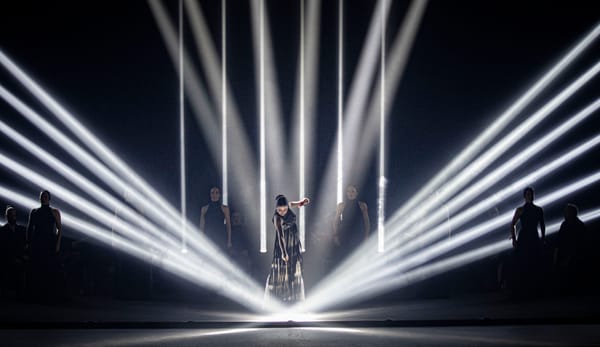
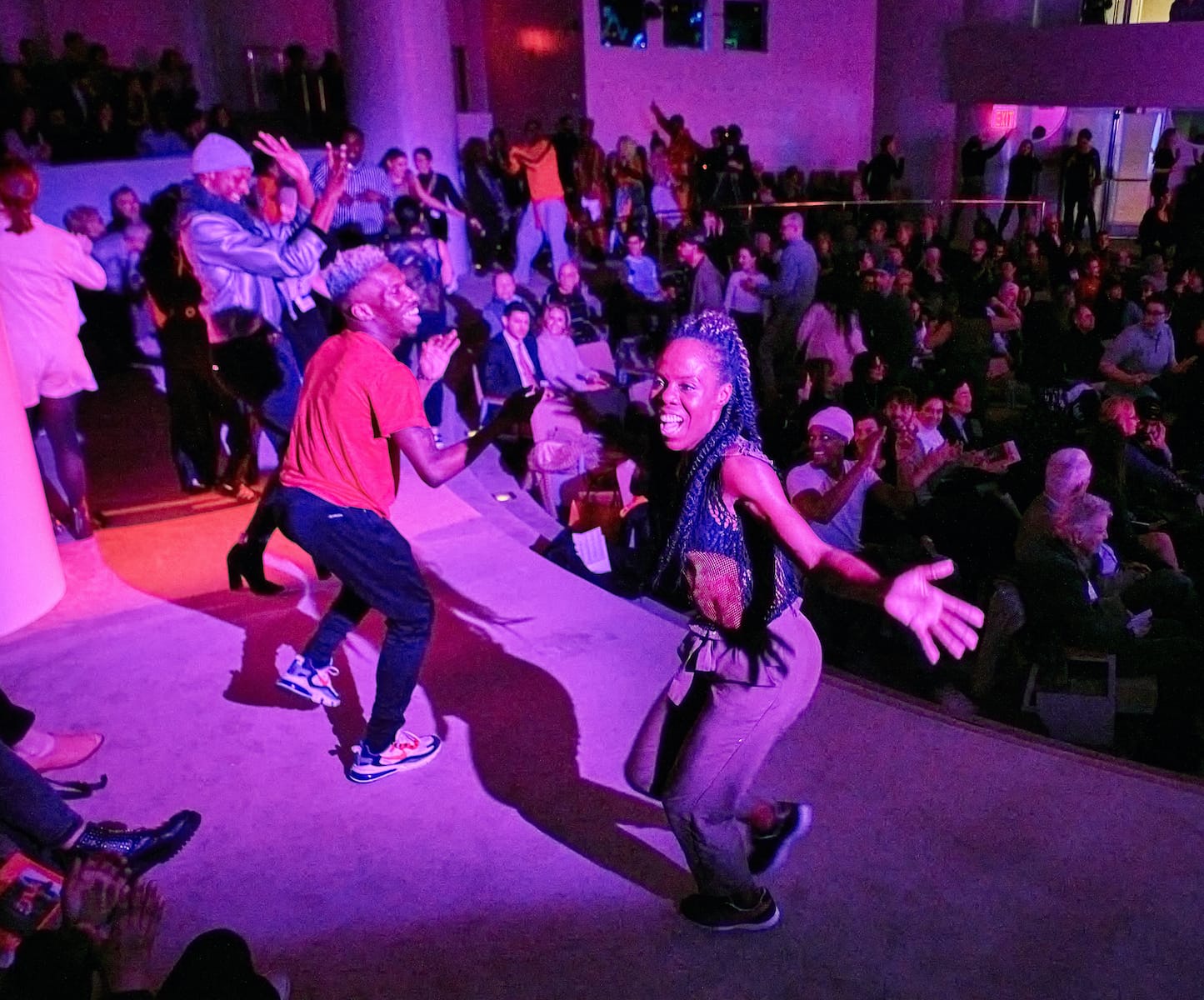
"UnderScored" by Ephrat Asherie, January 13, 2020. Performed by Ephrat Asherie Dance. Commissioned by Works & Process at the Guggenheim. Photo © Robert Altman
copyright © 2020 by Martha Sherman