Tapping Into It, the Soul of Things
American Street Dancer
Rennie Harris Puremovement
The Joyce Theater
New York, NY
November 12, 2025
There's something powerful about watching a body create rhythm and sound. Rennie Harris's company’s new program titled “American Street Dancer” offered an entire evening of such flavors in the form of a documentary-style performance that honored the African-American roots of American street dance and celebrated three distinctive regional traditions: Detroit jitting, Chicago footwork, and a now seldom performed on the streets, and dear to Harris, Philadelphia GQ. The result was an evening of electrifying artistry that educated as much as it entertained.
To Harris, street dance is slang for “community,” and yet he noted that none of the styles presented this evening really knew of each other. What connected these similarly rooted folk dances that evolved organically in different cities?
The answer may well have been in the opening scene. As the lights dimmed and a spotlight appeared on the side of the stage, a lone drummer, Brytiece Wallace, punctuated the space with soulful beats that were soon joined by Akim Funk Buddha with a physical reflection of the rhythm. Echoing African roots, the dancer’s jumps in place, hopping foot to foot, radiated untapped energy and soon enough transformed the body itself into an instrument – fists pounded and the torso vibrated as Buddha lay on the miked-up floor, his body’s convulsions being the drum stick now. This "Honoring Source" section demarcated the origins of the programming.
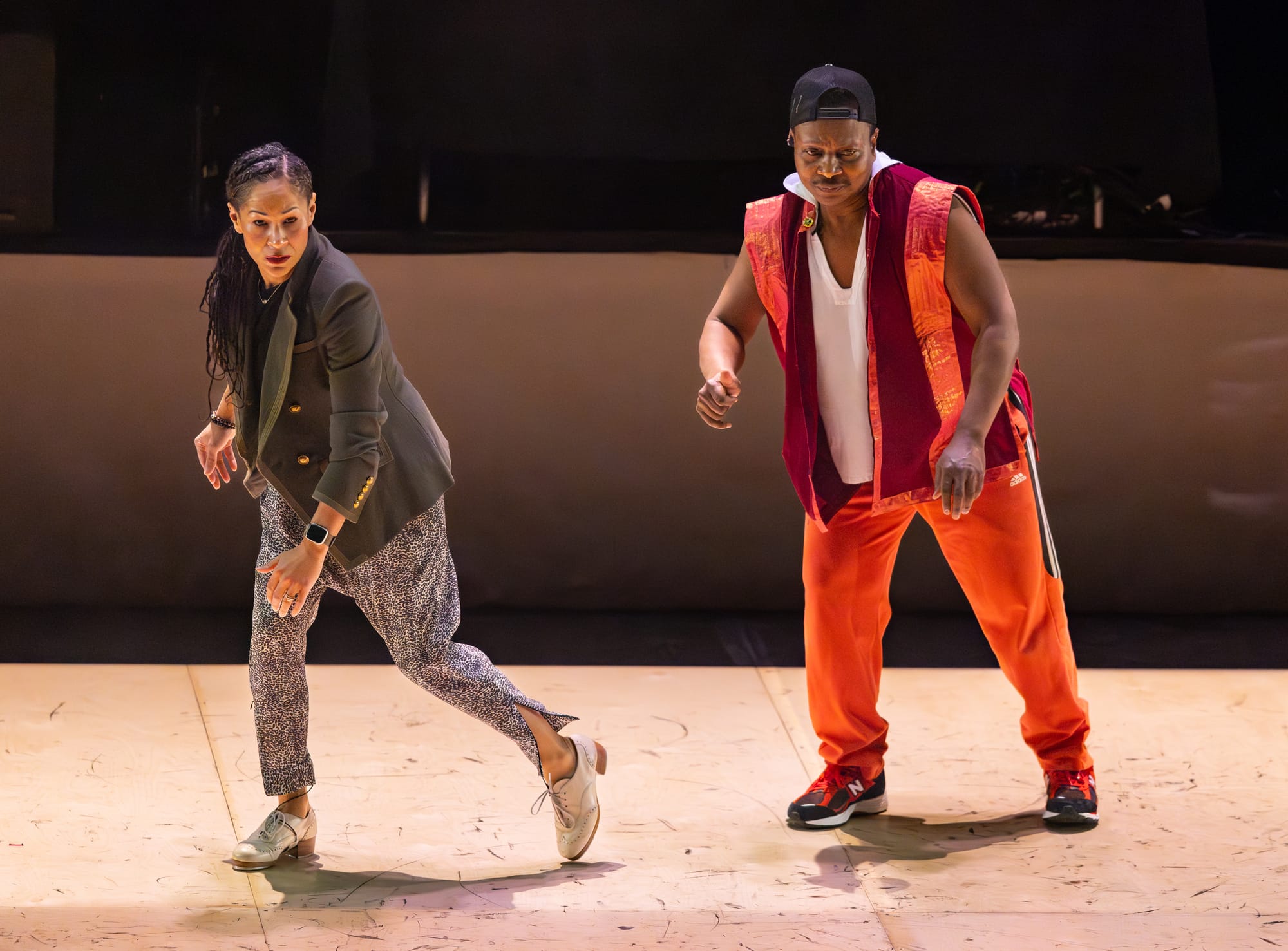
Almost too soon, acclaimed tap dancer Ayodele Casel took over, commanding the stage in "Rhythm Revolt," infusing traditional tap with unmistakable hip-hop flavor. As she performed, recorded interviews played, explaining how percussion is an extension of African culture. When bucket drummers joined her, the stage became a conversation between different forms of percussive expression, all speaking the same fundamental language, though in different dialects.
After the body, the feet, and the hands made the mark, the piece called "Make the Music W/Your Mouth Biz," featuring three exceptional beatboxers -- Funk Buddha, Alexander "Bizkit" Sanchez, and Kenny Muhammad – pivoted the rhythm expression toward expression with one’s mouth. Each of the performers had a solo, conjuring astonishing soundscapes that ranged from what sounded like a plaintive cry of a child to the mechanical precision of pistons and machinery. There was even a moment evocative of “Star Wars” and the film’s famous "I am your father" line that felt serious yet with hidden playful humor. No words were ever spoken by these artists, and yet, the beats and rhythms were a challenge to the entertainment value of any words or melody.
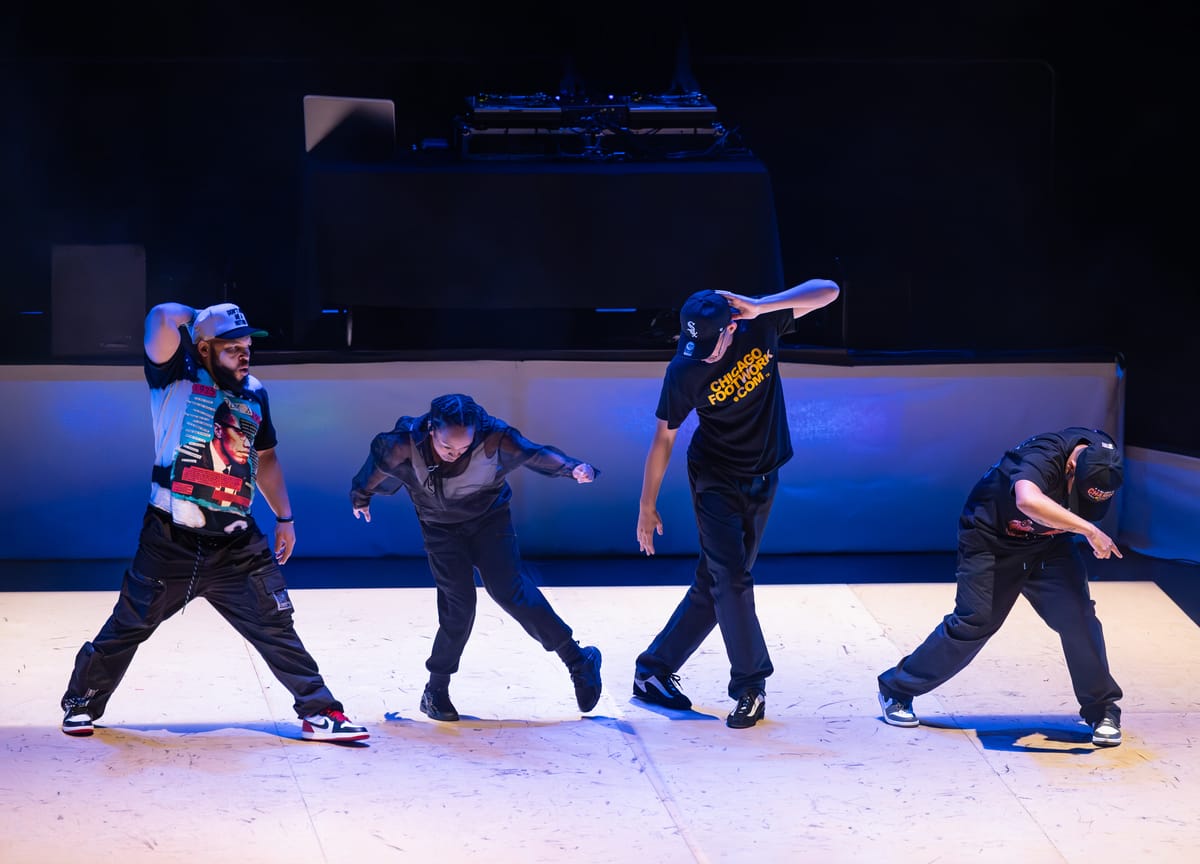
When the program turned back to dance, it was to the juke style of Chicago, and the voiceover asked the question that was hard to avoid as the dancing began: "How do you move your feet at 160 beats per minute?" The answer: "It's in my blood." The style evoked breakdancing, but on hyperdrive – the dancers’ goals seeming to be expression, rather than a show of feats. A later section of Detroit jit featured men in white shirts and suit pants executing what could only be described as organized chaos. The movements had formal precision -- legs twisting into supporting legs—but the overall effect was delightfully frenetic.
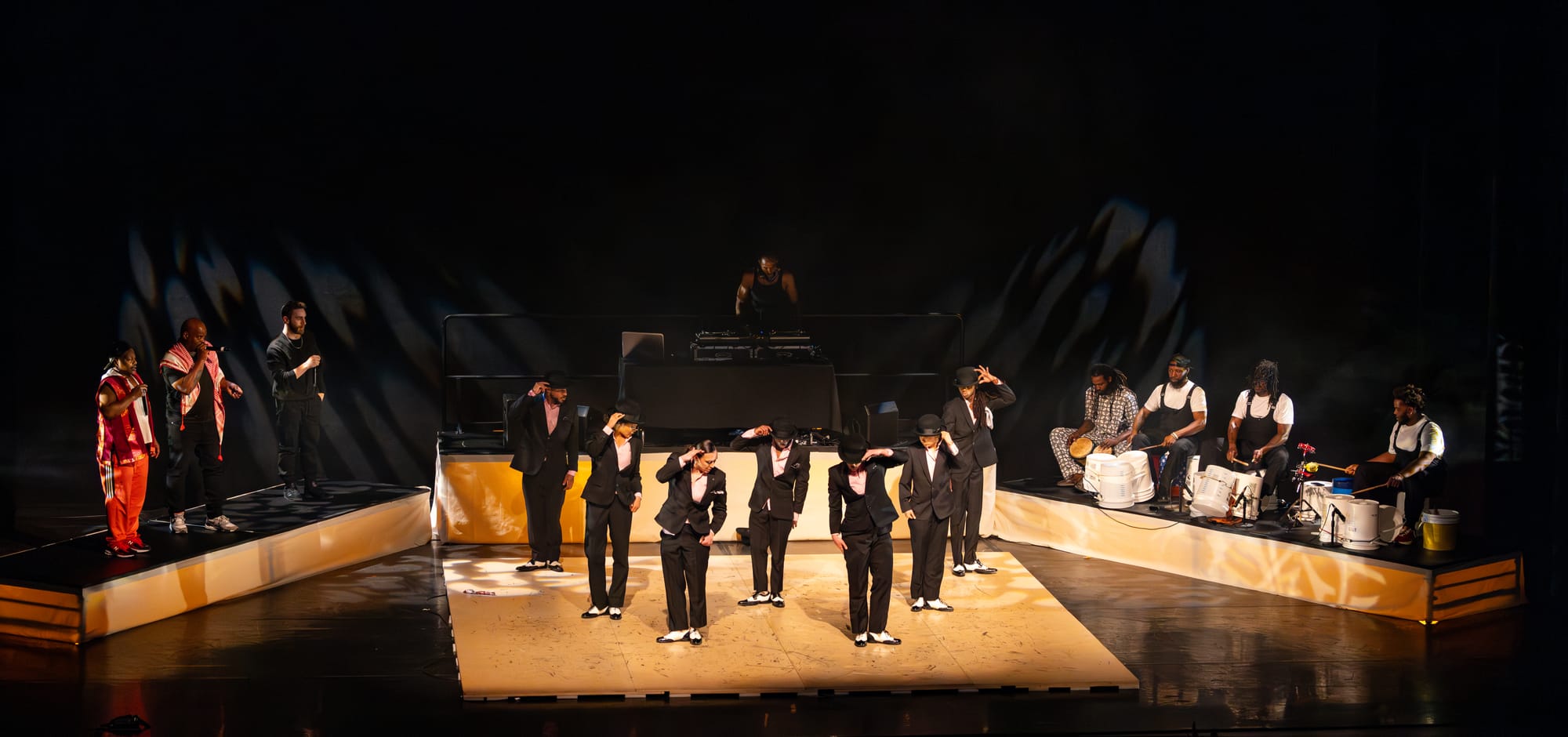
Ending the night, “The Step Masters,” featuring Harris’s origins with the unique, but now seldom performed Philadelphia GQ style, was a study in smooth sophistication. The dancers had the cool self-possession of earlier soft-shoe traditions and big-band jazz club swagger. Their movements – diagonal foot plants with slick drag-backs, acrobatic flourishes and moves that looked like falls saved in a nick of time – lent a hint to what might have been the inspiration behind Michael Jackson’s style of dancing, but with a distinctly different vocabulary.
Just how much of contemporary dance springs from these street traditions is anyone's guess, but 'American Street Dancer' revealed the roots to be deep and vital.
copyright © 2025 by Marianne Adams