Star Quality
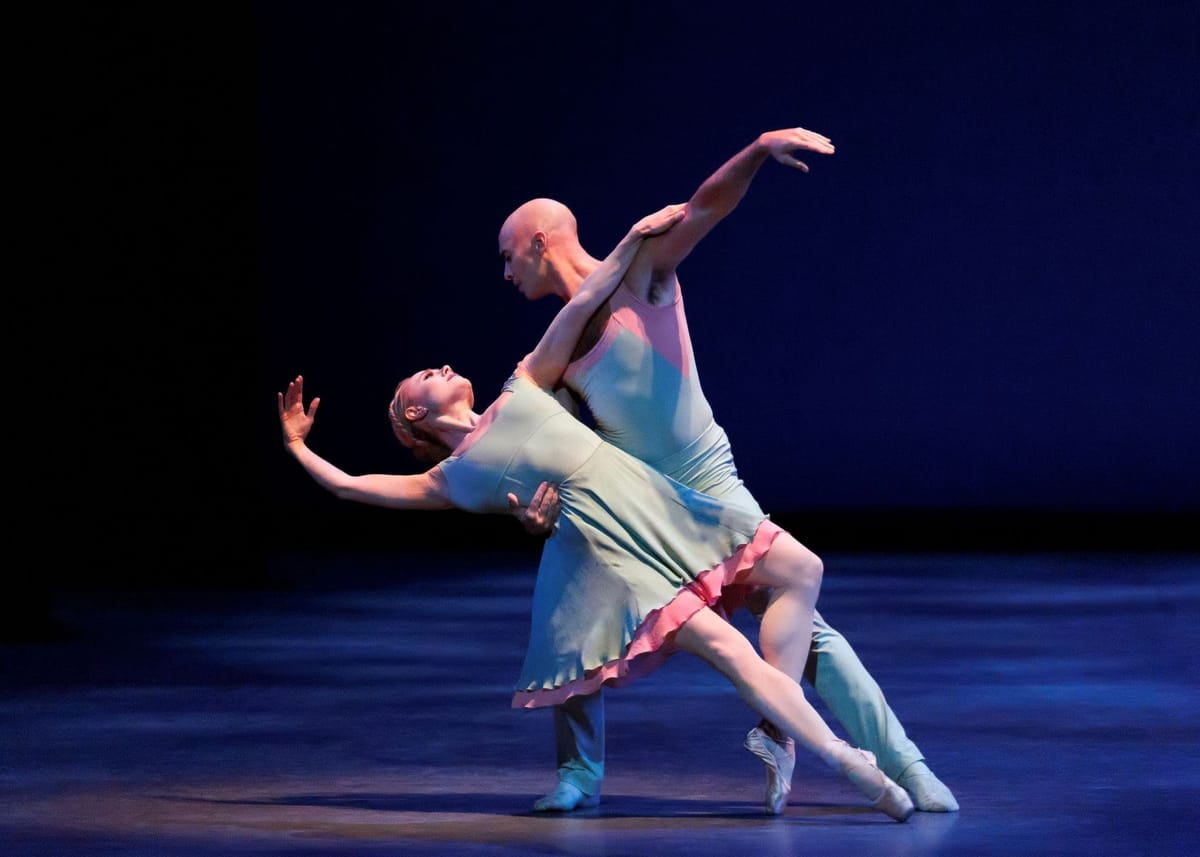
"Mozartiana", "Monumentum pro Gesualdo", "Movements for Piano and Orchestra", "Concerto DSCH"
New York City Ballet
David H. Koch Theater
Lincoln Center
New York, New York
October 8, 2024
This exciting program, called by the Marketing Department simply “Balanchine and Ratmansky”, does not need any other description to entice the viewer. In addition, it had one of the most anticipated debuts of the season, as the tall and lovely Mira Nadon danced “Mozartiana”, the final ballet Balanchine created for Suzanne Farrell. One of the most welcome innovations of the new administration is their eagerness to have former dancers back to coach and Nadon had the opportunity to work with Farrell on the role. There were other new and newish faces on the program, as corps member Victor Abreu made an unexpected debut as one of the energetic side boys in Alexei Ratmansky’s “Concerto DSCH" and Miriam Miller with Arrón Sanz and Dominika Afanasenkov with Davide Riccardo gave their second performances in “Monumentum pro Gesualdo” and “Movements for Piano and Orchestra” respectively. The company is blooming with young, talented dancers who are not just technical phenoms; they have specific and individual personalities which makes each performance a theatrical (if usually plotless) thrill.
“Mozartiana” is set to music by Tchaikovsky written to honor Mozart using themes from his music, including one which Mozart had based on music by Gluck. It is like a series of mirrors, looking backwards through music history. The ballet, too, will probably always include a glance backwards, since it is so closely associated with Farrell. Though many dancers have triumphed in it, Farrell’s ghost does hover in the distance.
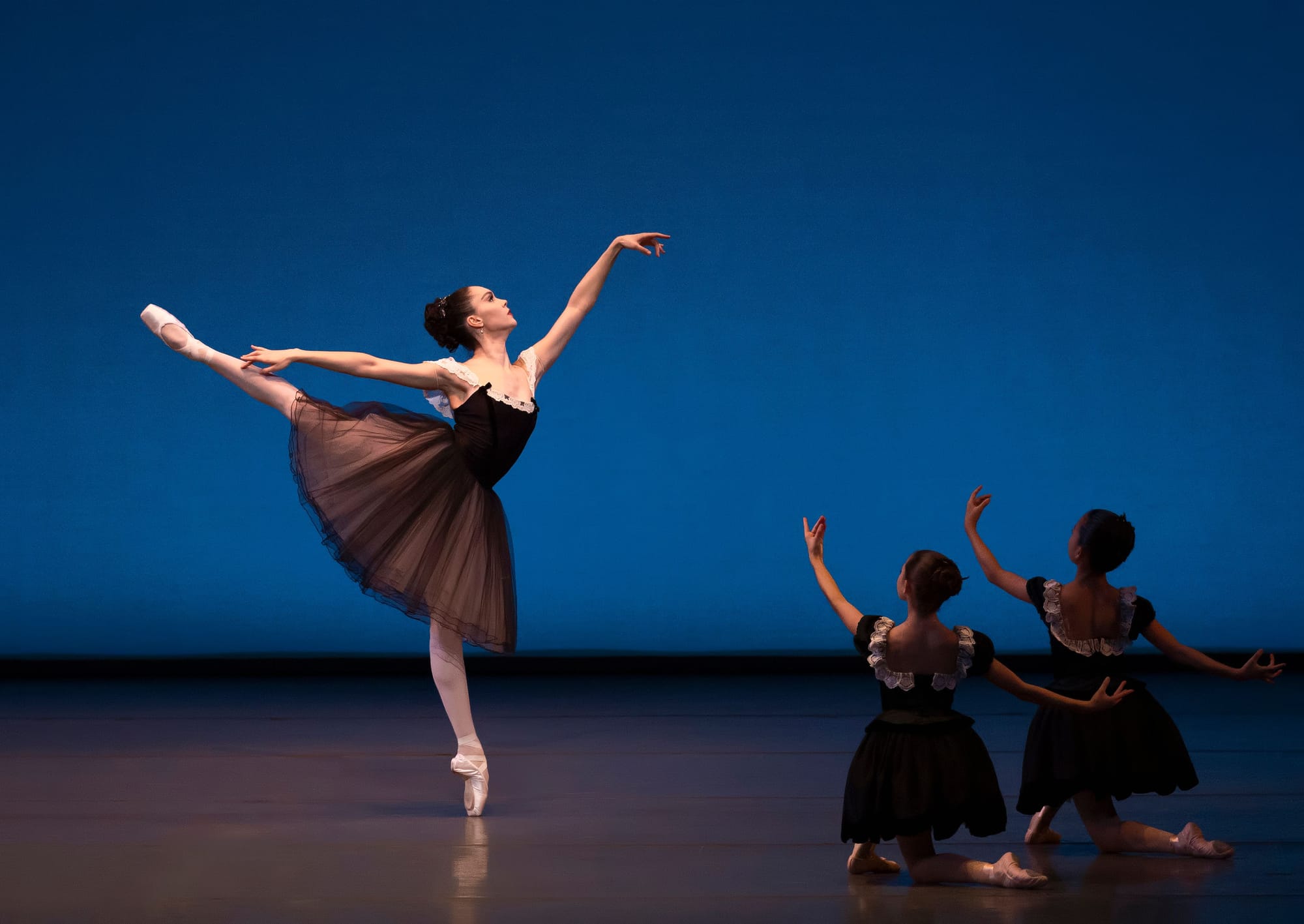
Nadon danced the opening of “Mozartiana” with a piercing serenity, as the music seemed to lift her eyes towards the sky and push her into those floating backwards bourrées. She gave the quiet opening a gentle exaltation, leaning into the music with an effortlessly flexible back. With more experience, she will undoubtedly bring even more richness and mystery to the Preghiera but it was a beautifully controlled performance without a hint of sentimentality or mawkishness.
Despite one brief stumble, the quick, witty variations, with all the unexpected changes of direction, were playful and confident, and those off center yet graceful phrases were true choreographic champagne. Peter Walker was her playmate, and he looked much more comfortable and happy in the role than he did earlier in the week, and they had a warm and friendly rapport. He still had trouble getting his long legs around the jumps and quick shifts of direction and some of the landings were a bit unsteady, but his beats were fast and elegant and his partnering secure and generous.
Sebastian Villarini-Vélez danced the gigue; he seemed a little rushed and his upper body not quite as sharp as some, but he made the role so much more than a bouncy applause generator. He did seem to be the spirit of Mozart, gesturing with pride towards the four Minuet girls, and bringing all the dancers together for the finale, which seemed to tie up the loose ends of that often quirky but fascinating ballet.
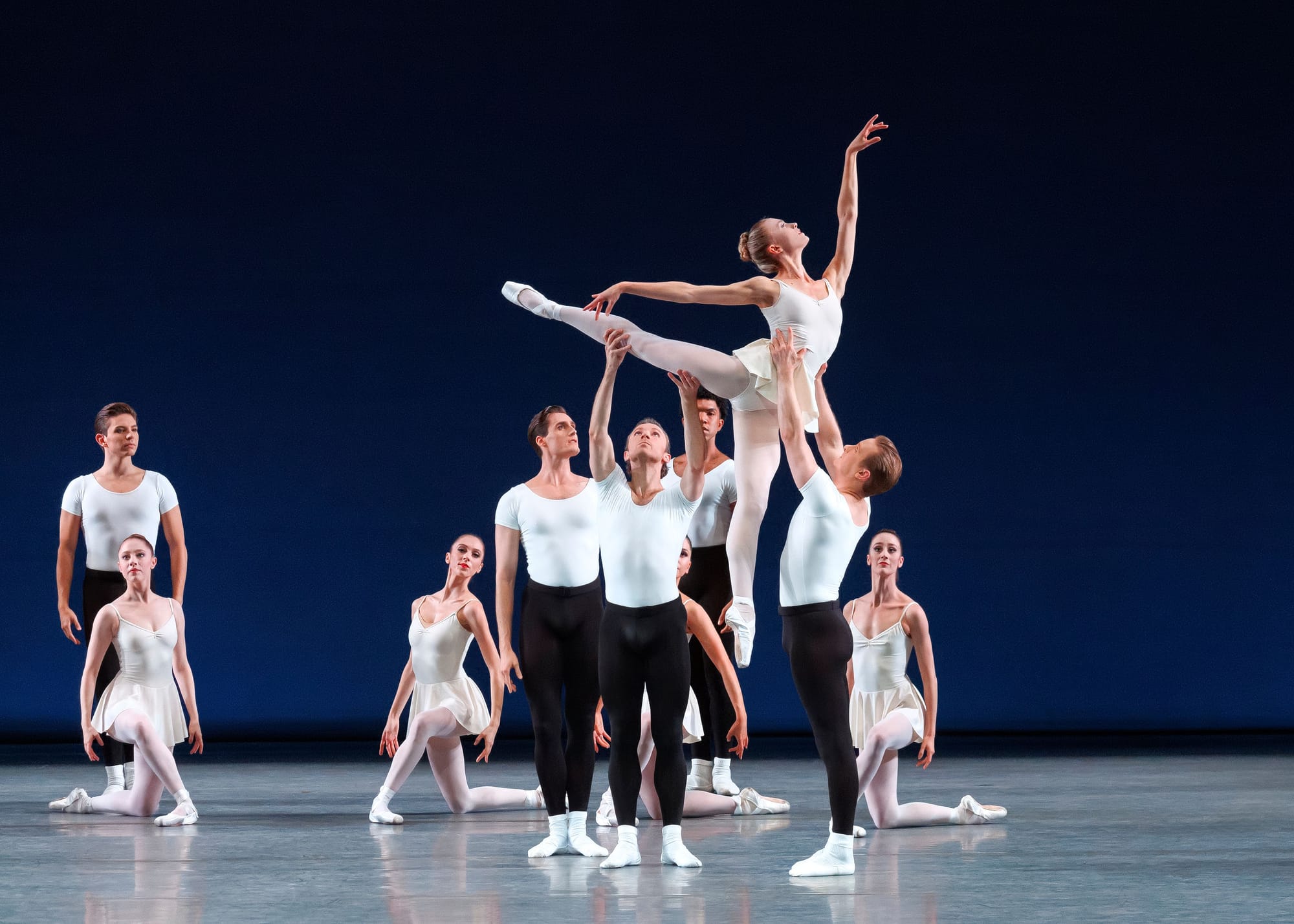
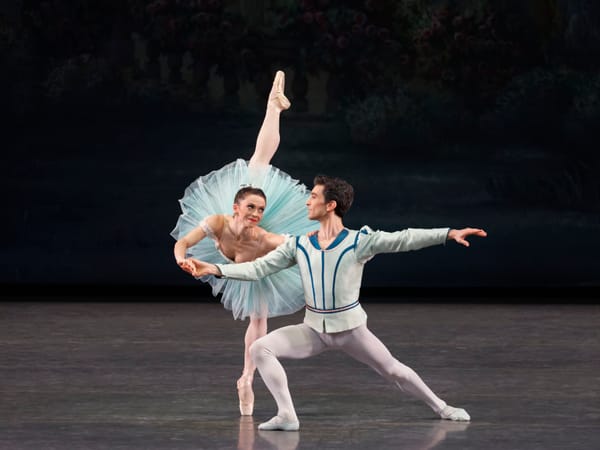
The middle pieces, usually abbreviated “Monumentum/Movements”, are both brief, abstract black and white ballets set to Stravinsky for a couple surrounded by a small corps. Though superficially similar, they demonstrate Balanchine’s range. “Monumentum” is an abstract look back at the Renaissance madrigals of Don Carlo Gesualdo, and “Movements” is an exploration of varieties of movements inspired by Stravinsky’s twelve-tone composition. Miller and Sanz were an elegant couple in the first work, evoking the cool, formal world without any extraneous flourishes. Miller’s extravagant arabesque and fearless thrust made the final throws, as she was tossed to the waiting men, breathtakingly exciting.
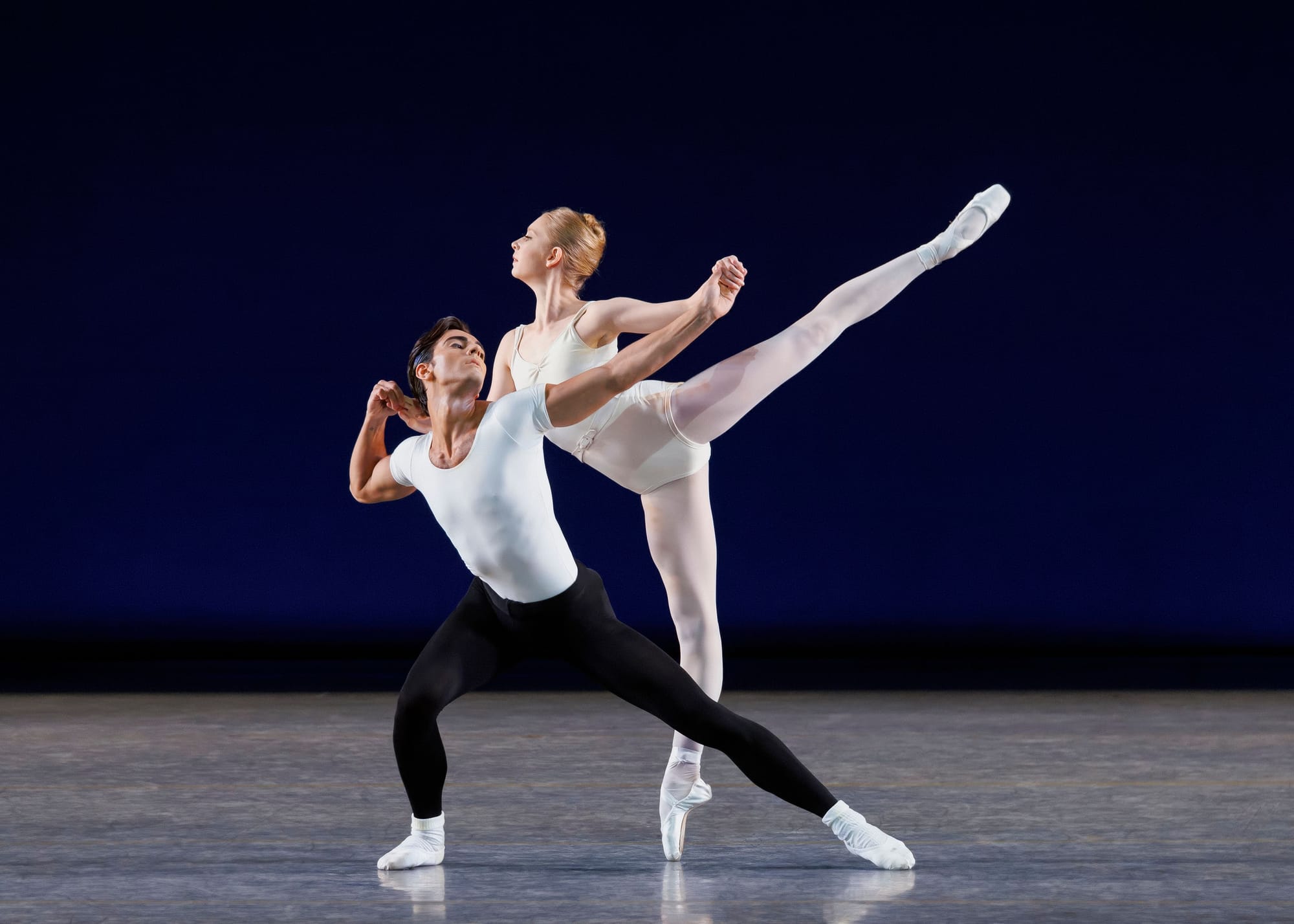
Afanasenkov and Riccardo made “Movements” equally exciting, though I expect no one would like the music to be longer. Afanasenkov danced with a fierce independence and a triumphant nonchalance which gave a tang to the unexpected moves; I loved the way she grabbed her toes and pulled her leg as if it were the most natural move in the world. Riccardo’s fluid support, intense concentration, and sculpted dancing set her off perfectly.
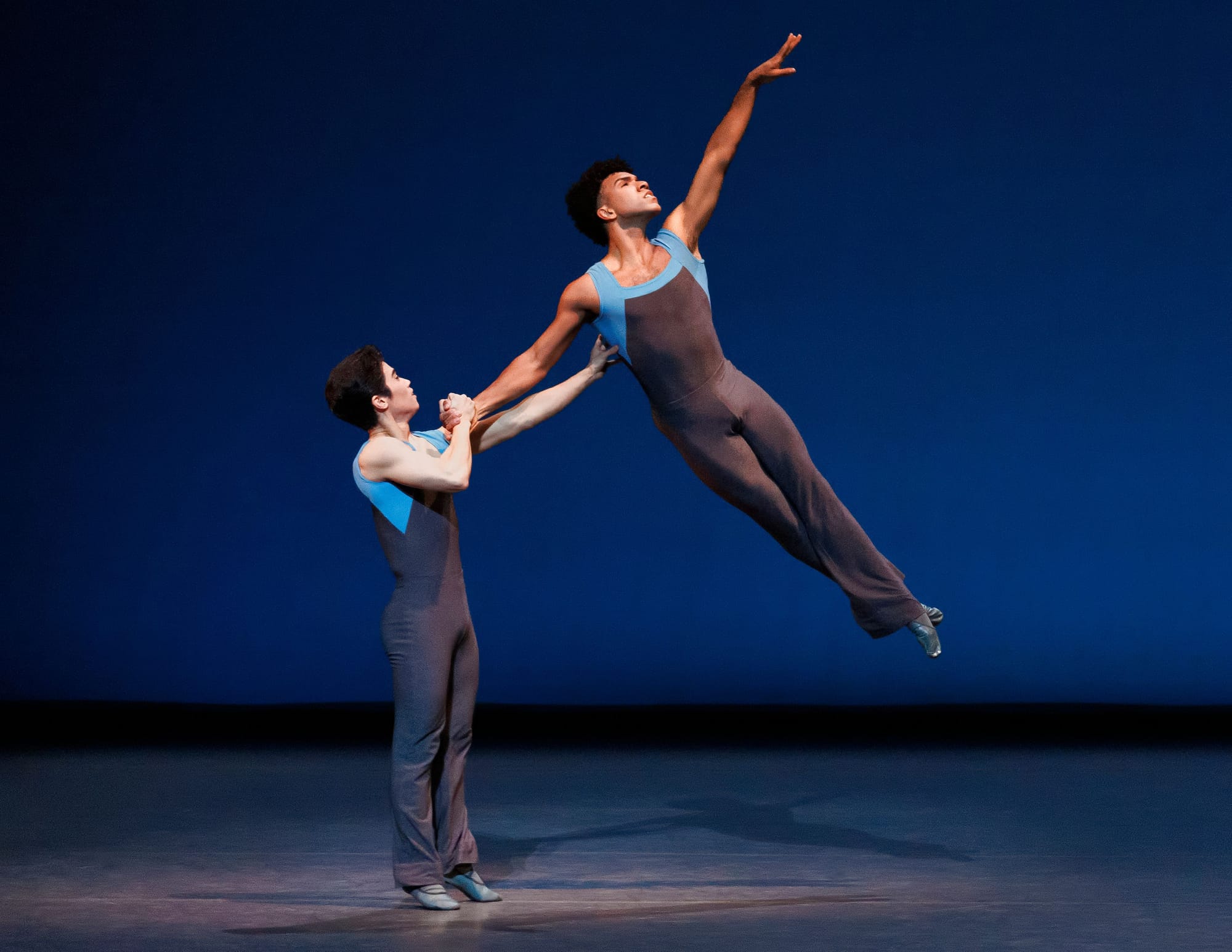
There was a lot of support and concentration in “Concerto DSCH”, an early Ratmansky/Shostakovich ballet choreographed for the company in 2008. The rambunctious work does not have the dark, ominous undertones of Ratmansky’s later explorations of the composer for ABT; Shostakovich wrote the work (“Piano Concerto No. 2”) as a birthday present for his nineteen year old son, and the music is bright and cheerful. The choreography, except for the more lyrical center movement, is thrillingly athletic and jauntily upbeat, opening with a trio (Indiana Woodward, KJ Takahashi, and Victor Abreu) practically bouncing off the stage.
Woodward is a less dominantly athletic than Ashley Bouder, on whom it was set, but she radiated playful energy and pure joy, matched by Takahashi’s bounding leaps. Abreu had an impressive debut, with fast, clear dancing and all three seemed to be a partnership, dancing for each other, not just individuals doing impossibly difficult steps. Sara Mearns and Tyler Angle danced the contemplative central pas de deux. Though there is no hint of a story in the ballet, there are shifting emotions, and Mearns’ weighted lyricism and musical acuity (the piano notes seemed to be rippling through her arms) gave the piece a haunted beauty, accentuated by Angle’s devoted partnering.
Though the five leading dancers were front and center, the seven supporting couples, with their industrial strength energy and constantly shifting groupings, are not just background decoration. They have their own little story lines, as they shift partners, change their minds, dance away, rejoin the group; Ratmansky’s architecture has a heart.
© 2024 Mary Cargill