Romance, Hard Times and Comic Relief
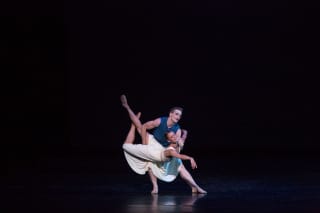
"Paz de la Jolla", "The Man in Black", "Cacti"
The National Ballet of Canada
Four Seasons Centre for the Performing Arts
Toronto, Canada
June 13, 2018
The NBoC closed their 2017-2018 season with a triple bill of 21st century works featuring the company premiere of Justin Peck's sunny 2013 creation, "Paz de la Jolla". This is the first ballet by the NYCB wunderkind to enter the NBoC's repertoire. Joined by James Kudelka's country-infused "The Man in Black" and Alexander Ekman's cheeky "Cacti", this mixed program had a little bit of everything.
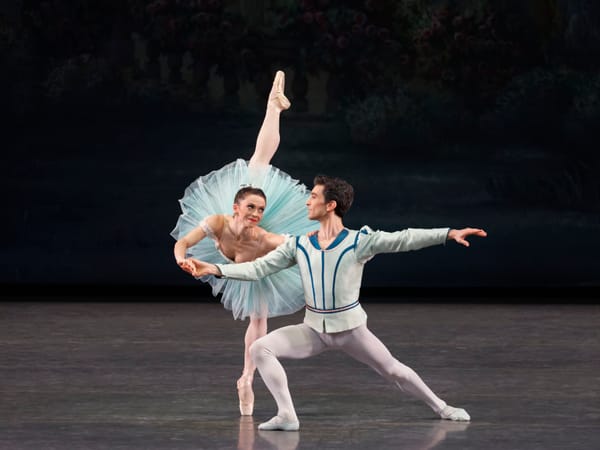
"Paz de la Jolla" opening the evening and was a breath of fresh air. One of Peck's earlier, more conventional works, "Paz de la Jolla" shows remarkable choreographic skill and confidence, while capturing the simplicity and joy of young love. Bohuslav Martinu's Sinfonietta la Jolla and the bright, beachy attire designed by Reid Bartelme and Harriet Jung created a relaxed SoCal vibe. Peck's phrases of movement fill the music, while allowing enough moments of stillness to create pause and breath. In the vivacious soloist role created for Tiler Peck, Chelsy Meiss danced expansively, covering the entire stage with crisp brisé volé. Hannah Fischer and Harrison James were perfectly cast as the young lovers, briefly separated and then reunited. The statuesque Fischer looked radiant and sun kissed, basking in the subtle, in-between movements between steps. James was a warm, devoted partner. His relief at finding her again is palpable. The ballet succeeds in its straightforward goal of depicting carefree youthfulness and evoking the sights, smells and sounds of coastal life.
Kudelka's "The Man in Black", set to six covers by Johnny Cash, is darker in tone. There is a weariness to it. The four cowboy boot wearing dancers move together, often linking hands but averting each others' gaze. They appear to have been disappointed enough times to be a little jaded, cautious with their trust and at times on the edge of giving in to despair. In Cash's rendition of Trent Reznor's "Hurt", Francesco Gabriele Frola danced apart from the other three, in a poignant, soul-searching soliloquy. This was the song that had that audience heavily sighing. Usually known for his technical brilliance in the classical repertoire, this is Frola as we have seldom seen him, thrashing and darting across the stage as the music builds in a slow crescendo. He danced with weight, rawness and emotional presence, without ever becoming overwrought or cheesy. His promotion to principal dancer shortly after opening night was well deserved. This was a fresh cast, with Frola, Ethan Watts, and Kota Sato each making their debut. Only Stephanie Hutchison had danced in "The Man in Black" during its previous runs in 2013 and 2015. The group moved steadily and in sync.
There is a resilience and momentum driving this work. Despite being emotionally worn, the bodies persist, one foot stepping in front of the other. There are no technical fireworks here. Kudelka's choreography is understated and quietly expressive. At times, the group moves in a brisk walk, a forceful march, or in "Four Strong Winds", a bouncing, horse-like trot. In "Further On Up The Road" and "Sam Hall", the mood is a bit more upbeat, with plenty of room for thigh slapping, foot shuffling, toe tapping swagger. The four dancers remain on stage for the entire 22 minutes of this piece, hinting at stories through small gestures and subtle facial expressions, requiring a unexpected and different kind of virtuosity. Frola, Watts, Sato and Hutchison enacted Kudelka's vision extremely well.
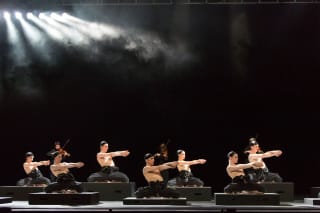
The final ballet was the witty and satirical "Cacti". Tongue firmly in cheek, the work features a pretentious narrator interpreting what is seen on stage in flowery academic language, huge run-on sentences and non-sensical jargon. This disembodied voice resorts to all the most overused clichés and pseudoscientific terms in describing this contemporary ballet. The voice asks, "what does it mean?" and then proceeds to offer his own overblown critical analysis. At times it is hilariously absurd. However, on repeat viewing, "Cacti" feels much too long, as the humour becomes repetitive. A percussive sequence of the dancers on podiums clapping and tapping the floor in front of them feels tedious, as the audience just has to stare at the tops of their heads as they hunch over.
Still, there are moments that are silly, playful and good fun. The dancers disappear off stage at one point, returning with glowing pots of cacti that they hold aloft like sacred icons. In another moment, the podiums are turned to stand on their side and the dancers pop up and down from behind them in a game of peek a boo. Suddenly, the dancers are waving their hands in the air vigorously, like a maestro. A pas de deux, danced by Félix Paquet and Jordana Daumec, is cleanly executed while being laugh out loud funny. The dancers' voices narrate with all the quirky counting, choreographic cues and dialogue that occurs between dance partners in rehearsal. "Cacti" is light and enjoyable, but less rewarding on repeat viewing than "Paz de la Jolla" or "The Man in Black".
copyright © 2018 by Denise Sum