Reality and Illusions

"The Dream" and "Being and Nothingness"
The National Ballet of Canada
Four Seasons Centre for the Performing Arts
Toronto, Canada
November 10, 2018
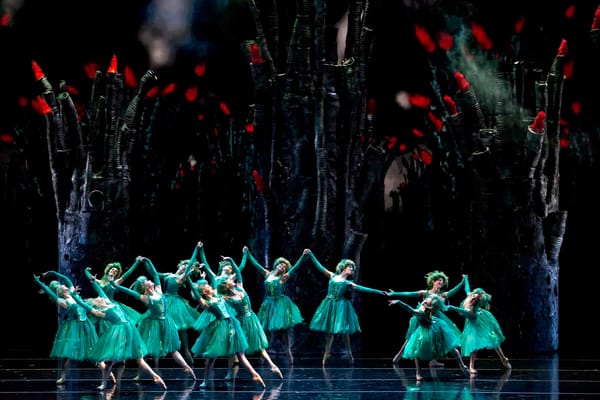
The National Ballet of Canada's fall mixed program featured two contrasting and complimentary one act works. First was a revival of Sir Frederick Ashton's "The Dream", arguably one of the most successful dance adaptations of Shakespeare's work. This provided a wonderful chance to see a new generation of dancers in this timeless piece. Next was principal dancer and choreographic associate Guillaume Côté's "Being and Nothingness", a meditation on Jean-Paul Sartre's philosophical treatise of the same name. Fresh off from recent performances on tour in Russia, the plotless ballet was in fine form. Originally created as a solo for Greta Hodgkinson, it later expanded into a 40-minute chamber work. Hodgkinson's expressiveness and artistry remain the highlight of this ballet.
"The Dream" was overdue for a revival after a 17-year absence. Ashton's lively choreography, Felix Mendelsohn's animated music and David Walker's lush set and costume designs were the perfect antidote to a cold snap that hit Toronto on opening night. The first cast was incredibly strong. Harrison James and Jillian Vanstone were well matched and regal as Oberon and Titania, King and Queen of the fairies. Vanstone has always been an exceptional technician and brought lightness and humor to the role, especially in her endearing pas de deux with Bottom (Joe Chapman). James tackled Ashton's intricate and challenging choreography with aplomb. He made the attitude pirouettes and penchés look easy and natural. Skylar Campbell was perfectly cast as Puck with his tremendous stamina and impressive ballon. His playfulness and comedic timing helped carry the production. Rounding out the cast were Tanya Howard and Giorgio Galli as Helena and Demetrius, with Chelsy Meiss and Ben Rudisin as Hermia and Lysander. The female corps moved precisely and in unison as the group of fairies.

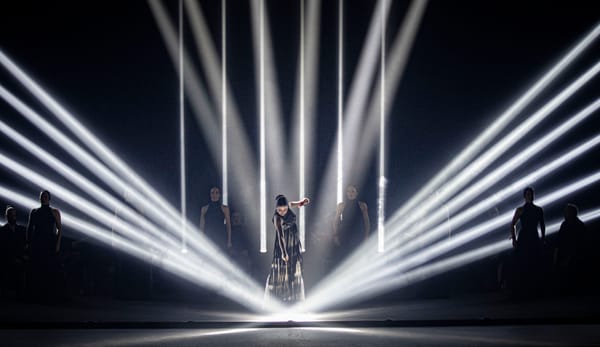
Côté's "Being and Nothingness" has many things going for it, including an evocative score of Philip Glass's "Metamorphosis No. 4" and "Études" and stark minimalist set designs by Michael Levine. The ballet is structured as seven individual encounters referred to as "parts" in the program, simply and descriptively named "The Call", "The Door", and "The Light," among others. It is quite a difficult task to convey Sartre's philosophical arguments in dance. Theories on the nature of existence, consciousness, meaning, and free will are hinted at, though not necessarily fleshed out.
Audience members trying to connect the different parts of the ballet with different chapters or themes in Sartre's essay may end up perplexed. But if one simply allows the ideas and imagery to stand alone, this ballet has many beautiful and memorable moments. The ballet begins and ends with Hodgkinson, the protagonist leading this introspective inquiry. Costumes by former company member Krista Dowson are pared down yet elegant. Hodgkinson appears barefoot in a white slip as if caught in a sleepless night of ruminations. "The Light" is an understated yet masterful solo demonstrating Hodgkinson's strength, control and articulation. Port de bras are eloquent and intentional, down to the fingertips. There are quick turns and grand pliés. She glances at a single hanging lightbulb, at her limbs, and back at the light. She confirms her existence through empirical measures -- sight and touch. In the end, "The Call", her existence is more relational. She dances a pas de deux with Ben Rudisin and exercises her free will in her choice to answer a ringing phone, perhaps a call to consciousness and self awareness.
Other vignettes allude to Sartre's musings on relationships, sex and alienation between people. "The Bedroom" shows a young, romantic union between Kathryn Hosier and Félix Paquet. "The Living Room", danced by Svetlana Lunkina and Brendan Saye, shows a relationship that is more weathered and tumultuous. Corps de ballet member Siphesihle November was brilliant in "The Sink" – an athletic solo that starts with the mundane act of shaving and ends with floor work and high flying jumps. The significance is less clear. Perhaps it illustrates the daily struggles of modern living or autopilot habits devoid of meaning? In "The Street" a chorus of suited men shuffle around upstage, laughing. It is a scene reminiscent of "the theatre of the absurd."
In "The Dream", confusion and comedy end in the restoration of order and happy unions. In "Being and Nothingness", notions of certainty and existence are deconstructed and flipped on their heads. This pairing made for an interesting and well-rounded double bill.
copyright © 2018 by Denise Sum