Passionate Whirlwind
“Verklärte Nacht”
Anne Teresa De Keersmaeker
Baryshnikov Arts Center
New York, NY
January 30, 2019
in Anne Teresa De Keersmaeker’s “Verklärte Nacht,” Cynthia Loemij crashed elegantly to the floor in tumble after tumble, a wave of relentless feeling and pain. Set to Arnold Schönberg’s dramatic early string sextet, both the score and the choreography told the story in Richard Dehmel’s 19C poem about love and forgiveness. With a crisp and beautifully danced duet, De Keersmaeker, like Schönberg, hewed closely to the story and offered a simple arc of emotion through her powerful movement poem.
Dahmel’s poem tells of a woman walking with her lover on a dark night, revealing that she has had a child by another man; the “Verklacht Nacht" (transfigured night) carries them from her pained confession through his forgiveness and acceptance.
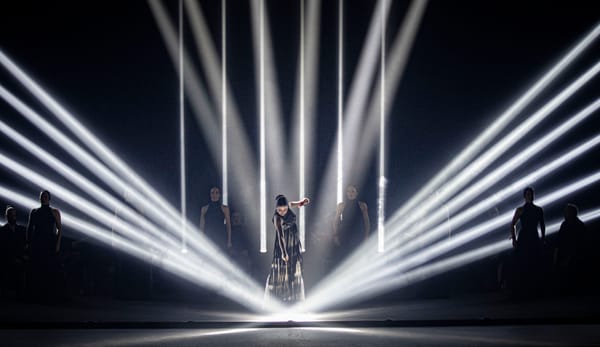
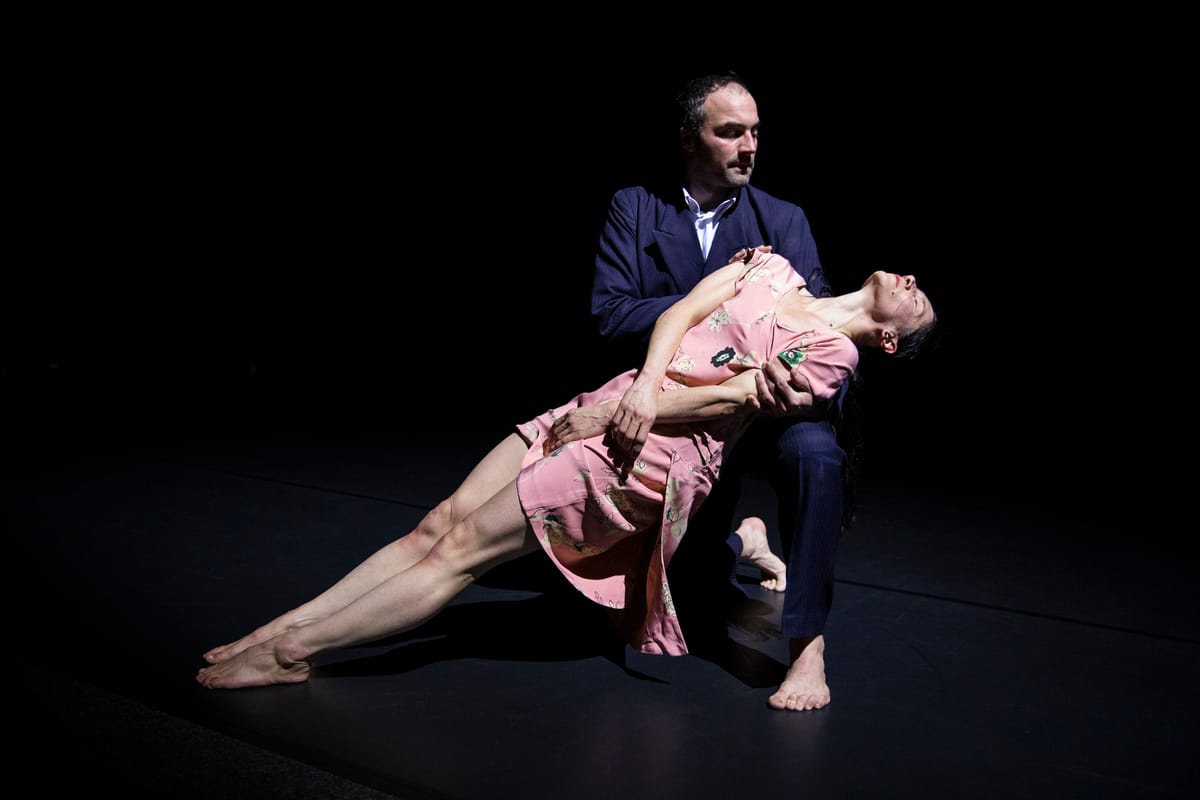
The dark forest of Dahmel’s poem was a bare stage at Baryshnikov Arts Center, lit in harsh chiaroscuro by Luc Shaltin and De Keersmaeker, with a wide bright diagonal slash breaking the otherwise black stage. In silence, Loemij entered with Igor Shyshko, and they danced a brief duet, shifting toward and away from each other; their short pairing ended when Shyshko lifted Loemij partially up from the floor, the dead weight of her upper body sinking into his arms, before they melted offstage.
In the next entrance, the pair entered with another man, Boštjan Antončič. Loemij repeated her earlier love movements with her new partner, Antončič, and the two men repeated Shyshko’s earlier pattern, both elegantly collapsing and recovering upstage, before dancing a long diagonal behind Loemij. The men danced in parallel in this transition from one lover to the next, and Antončič now caught Loemij as she collapsed. When Shyshko faded offstage, he didn’t reappear. The remainder of the dance was framed around Loemij’s guilt, fear, and love, as she agonized, persuading her new partner to forgive her earlier transgression.
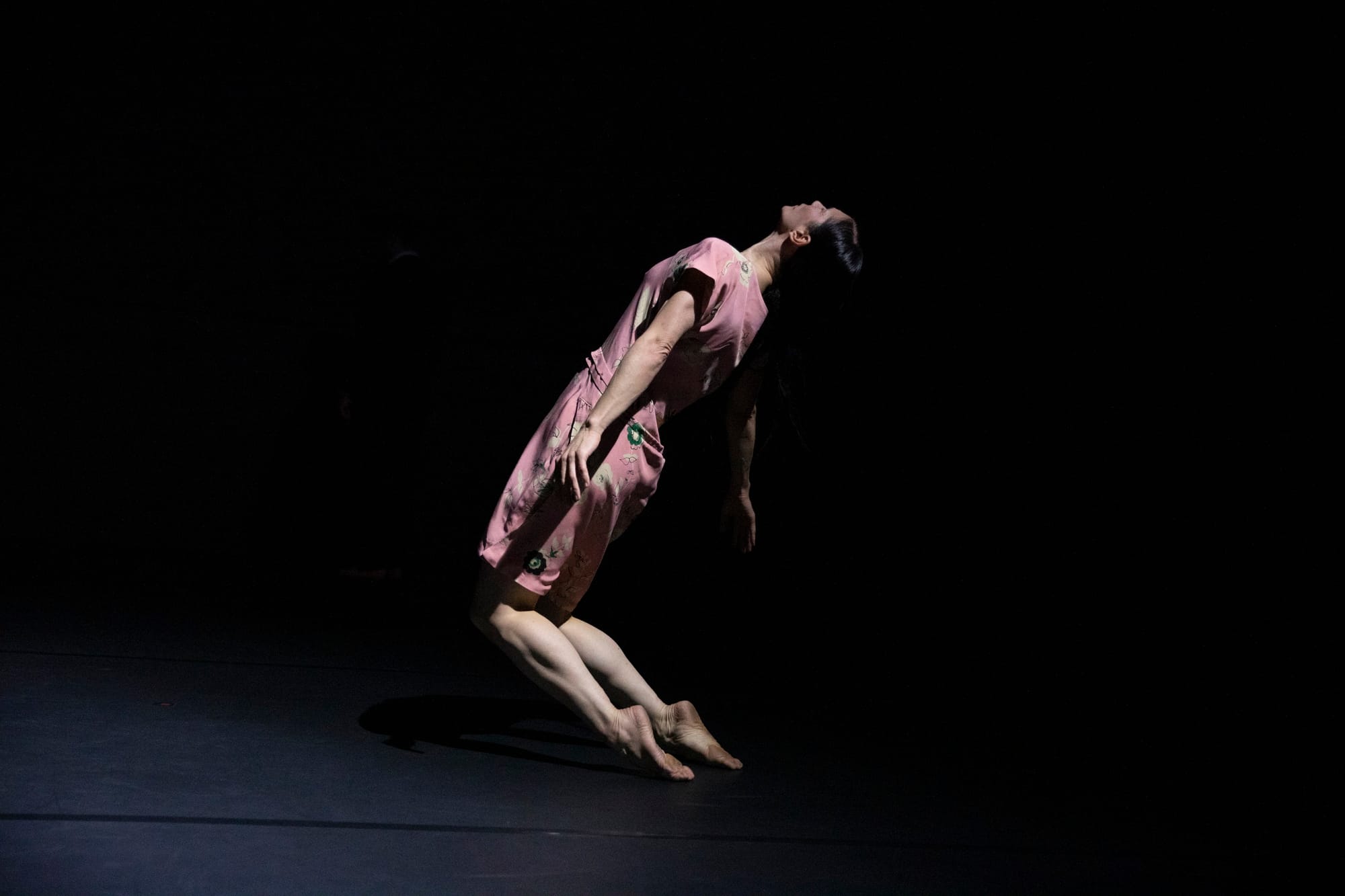
Loemij has danced with De Keersmaeker for almost thirty years. Her grace, strength, and stamina were essential in the endless repetitions of falls and recovery that were the heart of the piece. As Schönberg’s crashing score finally began, framing this second love affair, Loemij threw her body to the ground only to have it curl up as if it had struck an opposite pole magnet, her torso electric in its upright rebound. Antončič stood upstage in the darkness, his angled back to his partner as she moved in and out of the harsh light, pulled toward him, like a lodestone. She circled ever closer, a shadow whose face almost – but couldn’t quite – touch his back in a desperately sought caress.
After Loemij had made several solo cycles to approach then flee him, she gently leaned into his back. When he finally turned to face her, she became the still partner, and he took over the flailing rolls to the floor and back. As they found each other, their paired movement was just as sharp-edged and frantic as the solos.
Tenderness came only when Antončič caught Loemij in her repetitive collapses. In one harshly beautiful lift, Loemij flew onto Antončič’s shoulders, her bent legs caught around his neck, as his head burrowed into her lower belly; later, she slid around him in a long angle, but instead of collapsing to the floor, his bent knee caught her body.
Finally, they came to rest – so briefly – curled bodies, spooning lightly on the floor. Antončič covered Loemij with his jacket before they rose again, and she flew up into his arms. In an echo of the first scene, he danced diagonally upstage, then briefly began to collapse, roll, recover, as Loemij faded off stage, leaving him alone. In Dehmel's poem, there was resolution and acceptance; it was hard to tell whether, De Keersmaeker's lovers would have any happy ending.
New story dances are few and far between, especially ones that are as single-minded and linear as this telling. "Verklärte Nacht" was both easy to follow and wearying to experience. With her relentless focus on being true to the tale and its passionate score, De Keersmaeker left more than her dancers breathless.
copyright © 2019 by Martha Sherman