Of Ancestry and Present Moment
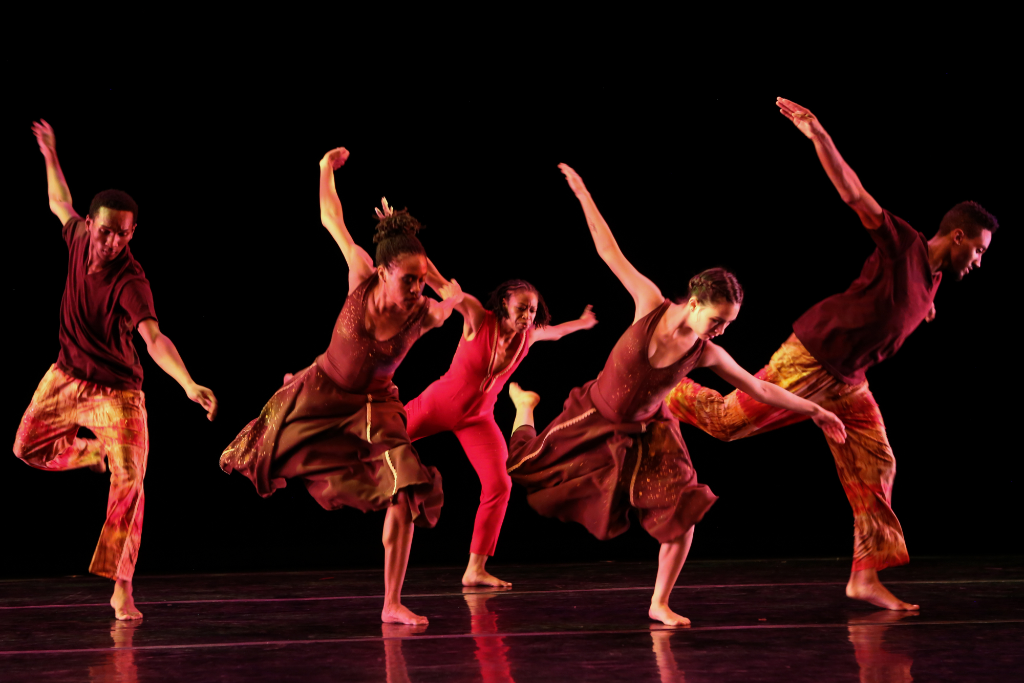
“Estrogen/Genius,” “Distant Kin,” “North Star,” “Mudan 175/39”
Garth Fagan Dance
The Joyce Theater
New York, NY
November 2, 2018
Garth Fagan Dance returned to the Joyce Theater this fall for less than a week, but was determined to make the most of the appearance. Each night’s program presented the company’s two new works, Garth Fagan’s “The North Star,” which was a celebration of the life of Frederick Douglass, and Norwood Pennewell’s “Distant Kin,” so the audience had an opportunity to see the premieres regardless of their chosen performance night. The rest of the bill consisted of two older works, which for the Program B performance I attended were Fagan’s 2017 protest piece again Harvey Weinstein “Estrogen/Genius,” and excerpts from Fagan’s 2009 work “Mudan 175/39.”
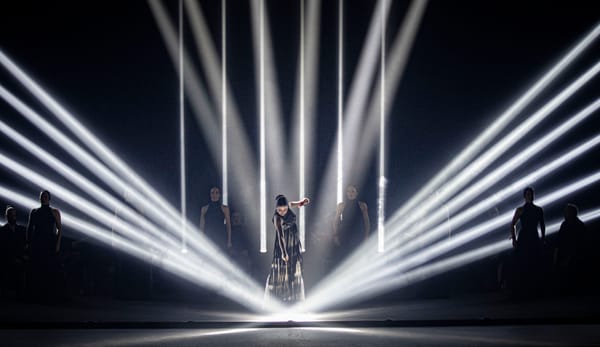
“Estrogen/Genius” was the lead-off piece, and immediately set the tone for the night with its soft-spoken but deeply emotional presentation. The protest in the work was voiced through measured and sustained balances and burning stares, and not a spew of unchained energy that one might think to expect. That made it more powerful. In the work, starting with Natalie Rogers, woman after woman would enter the stage with a similar movement narrative. The dancers would fall forward, bend, balance with a leg extended outward, then turn and move back. For Rogers, dancing an older woman, the falls felt burdened and unavoidable. They carried the weight of what seemed like generations with them. But she was soon replaced by younger women, four dancers in all, and while their steps often repeated Rogers’s sequence, they grew more confident and more determined: their falls felt anticipated, their balance with a leg extended a la second grew more defiant and forceful, their eyes – more piercing. If one looked close enough, one could even see glimmers of liberated joy.
The energy completed the shift away from darkness for Pennewell’s “Distant Kin.” Set to music by Naturally 7, the work was a delight of movement. The cast of seven dancers moved with a trance-like feeling, as though connected to an ancestral force that was driving them across the stage. The steps were loose-limbed, packed with jumping passages, but altogether free. Sometimes the flavor shifted to more hip-hop inspired tastes, and then returned to a rhythmic side by side motion. There was some adagio as well, but it merged with the rhythm to connect it all. The narrative here was unspoken, but it did not need to be said to resonate with the audience.
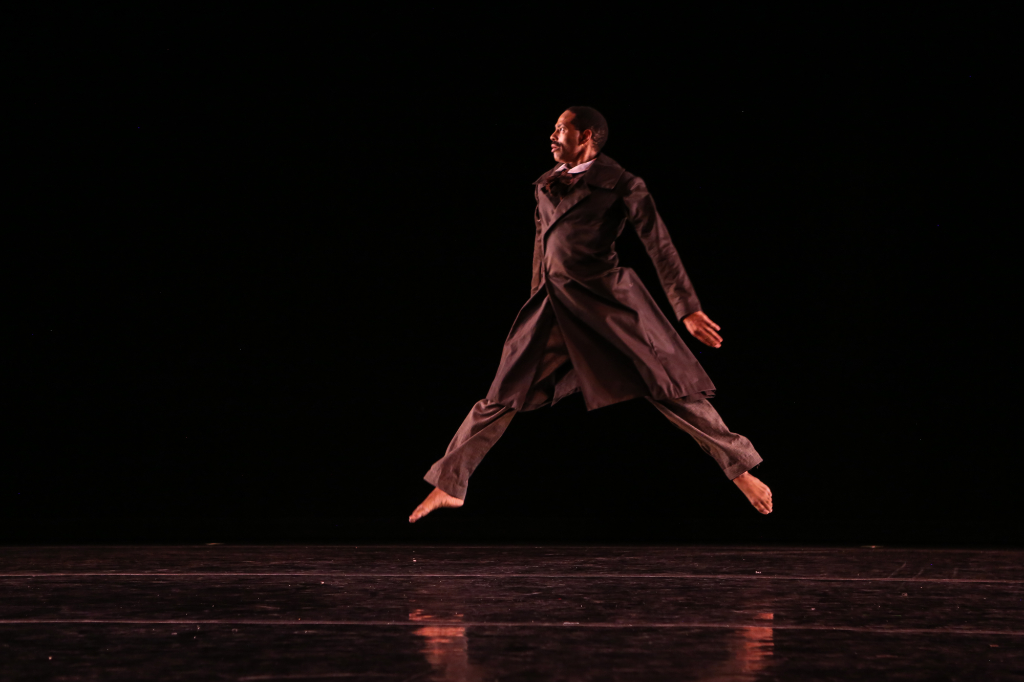
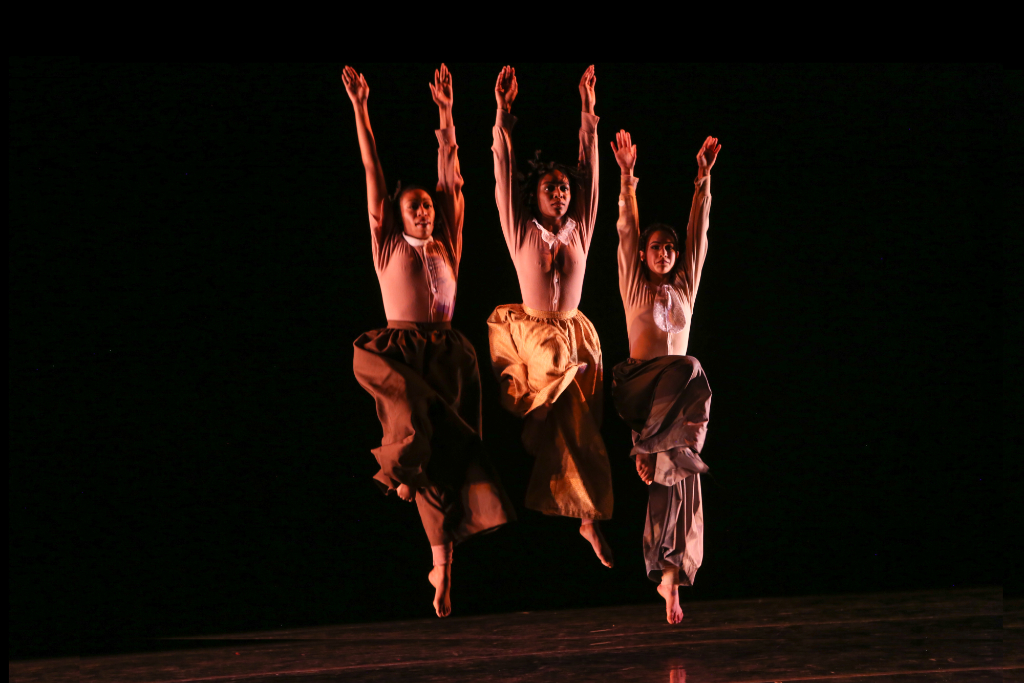
“The North Star,” by contrast, was almost a plot-driven work. Honoring Frederick Douglass, the work began with Steve Humphrey performing alone to Psalm 137, Douglass’s favorite psalm. After a beautiful and athletic solo, the next four parts of the work shifted to loosely tell the story of Douglass’s life. It was a beautiful tale of movement from slavery to liberation, to many accomplishments, including scenes where a younger Douglass is shadowed by the man’s more mature version, and scenes with Douglass’s wives. Along the way, the dance portrayed beautiful simplicity and polished refinement, with even bits of jazz adorning the presentation. The work’s last movement was a full celebration of the historical figure with the cast dancing joyfully in front of a Douglass’s statue placed in the back of the stage.
The night ended with “Mudan 175/39”, and all its colors of movement and costume. If the audience was still unfamiliar with Fagan’s choreographic signature of balance, abrupt turns, and athletic testing of the dancers’ body, they learned it here – the work was full of it. Remarkably, despite taking the evening into its third hour, the dancers’ performance never faltered in either technique or conviction. Still, “Mudan” might have worked better on a shorter bill, as the frequent repetitions in steps call for audience patience before delivering their payoff. As a fourth work of the night, no longer appearing before fresh eyes, it paled against what preceded it.
copyright © 2018 by Marianne Adams