Mood Music
"Kammermusik No. 2", "Le Tombeau de Couperin", "Antique Epigraphs", "Raymonda Variations"
New York City Ballet
David H. Koch Theater
New York, NY
January 23, 2026
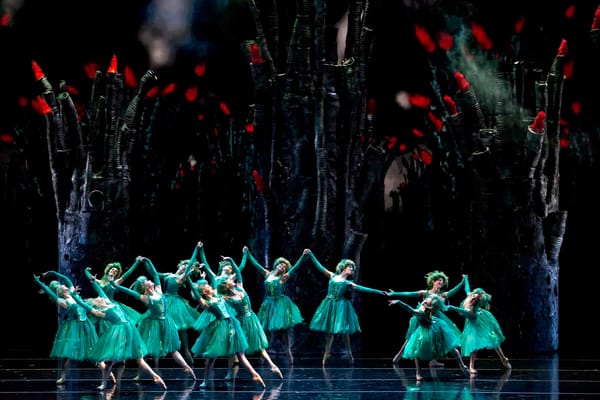
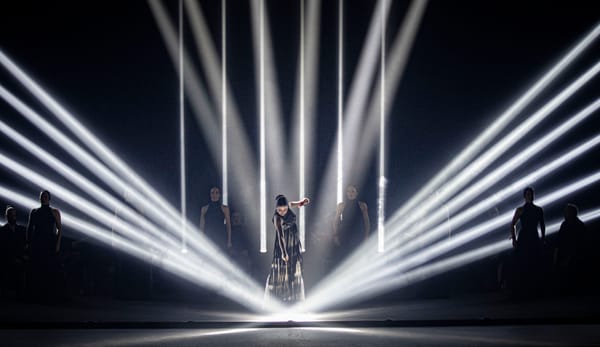
The four ballets (three by Balanchine and one—“Antique Epigraphs”—by Robbins) on this program were all plotless explorations of the different atmospheres created by the composers, ranging from the jagged tones of Hindemith’s “Kammermusik No. 2”, the classical calm of Maurice Ravel’s “Le Tombeau de Couperin”, the mysterious Grecian echoes of Claude Debussy’s “Antique Epigraphs”, to the luxuriously creamy excerpts from Alexander Glazounov’s “Raymonda”.
“Kammermusik No. 2”, choreographed in 1978, is a rare Balanchine work that highlights the male corps. In a talk a number of years ago, one of the original corps men said that Balanchine stressed that the movements should be heavy and strong. “Don’t make it pretty” he remembered Balanchine saying. It has become prettier over the years, and the corps danced the odd, crouching bent-knee moves and insect-like arms with a light and almost effortless kind of grace; it looked a bit like the Prodigal’s goons were at their senior prom. It may not have been as fierce as the earlier performances but it certainly had an engaging flair and the sharp, angular geometry of the corps formations has an almost disturbing fascination.
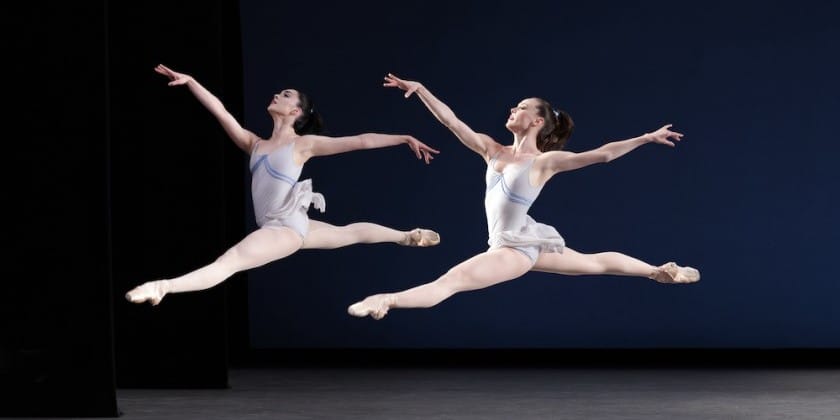
Emilie Gerrity and Mira Nadon were the two girls, accompanied by Chun Wai Chan and Ryan Tomash, both debuts. Gerrity and Nadon, ponytails flying, tossed the fast, quirky steps back and forth, Gerrity stressing the power of the moves and Nadon the grace as they danced, sometimes in canon and sometimes together. Their timing looked flawless and neither had trouble keeping up with fast, almost disturbing music. The two central pas de deux were not disturbing, but they were not romantic either, as the dancers, often with their arms in goal post formations, moving warily barely touching, echoing the softer, slightly ominous music. Chan, an open-hearted and robust dancer, complimented Gerrity’s strength, while Tomash moved with a concentrated and wiry elegance. Both dancers, Chan from the Houston Ballet and Tomash from the Royal Danish Ballet, have an unassuming theatrical flair to their dancing that gave their pas de deux a vibrant tension; Tomash and Nadon made a thrilling pair.
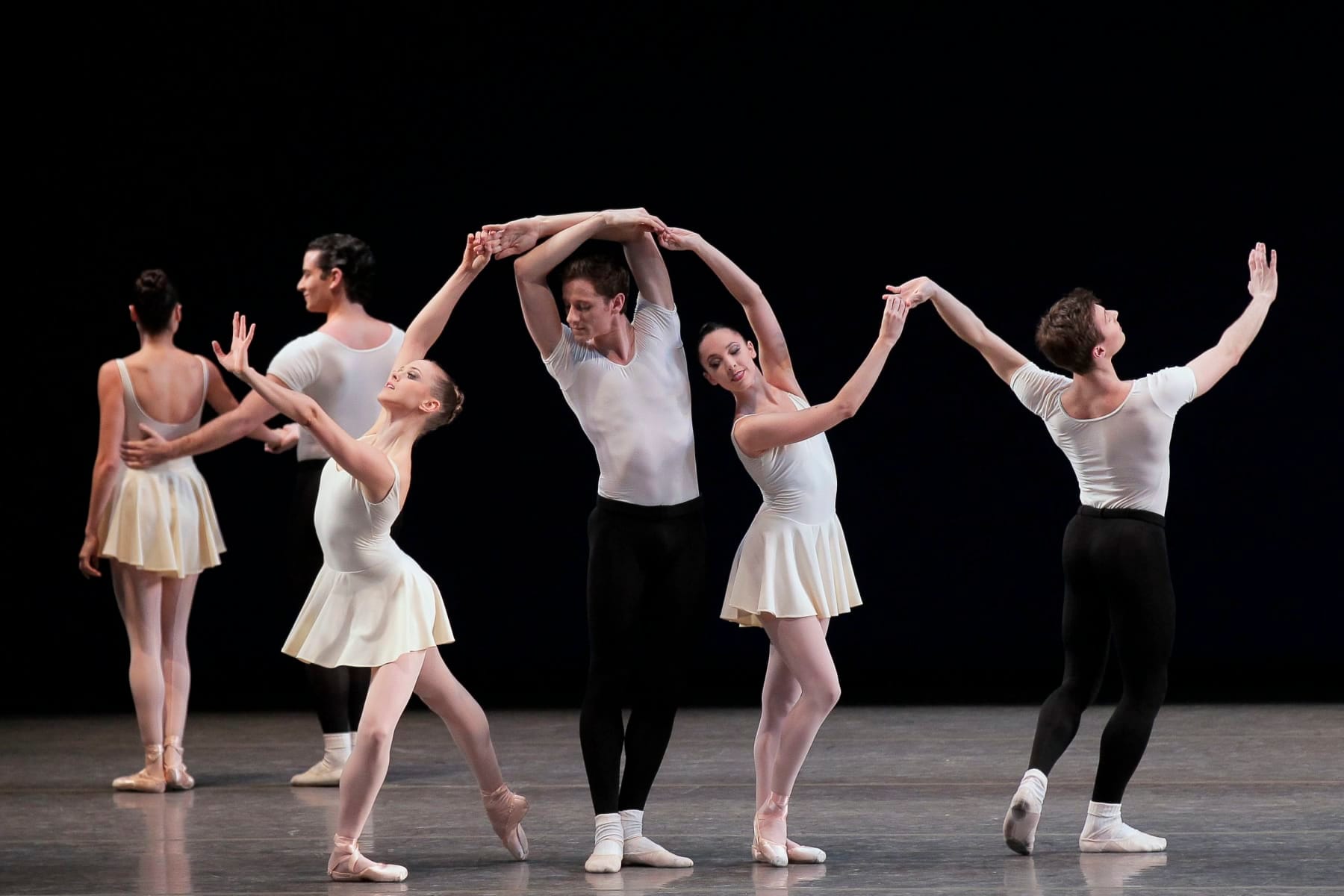
Balanchine choreographed “Le Tombeau de Couperin” for the 1975 Ravel Festival using four pieces Ravel had composed in the style of the Baroque composer François Couperin. Balanchine used these to celebrate his corps de ballet and the eight couples (originally all corps members) danced together as a group in simple black and white costumes. The choreography, like the music, was based on courtly dances and has a gracious, natural charm. The dancers looked especially warm, focused on their partners and dancing for each other while managing to bring the audience in. Balanchine used a lot of demi pointe for the women, and the soft feet, delicately sweeping the floor, gave the work a quiet elegance.
The work gradually became more complicated, as the dancers wove in and out, ending in a dignified hoedown, a kind of Virginia reel (many folk dances had their origins in the court), including a sharp clap and friendly handshakes. I did miss the focus a leading couple can give a work and the steady toing and froing did go on; it is a fine work, but, like Dr. Johnson said about “Paradise Lost”, “No man wished it longer”.
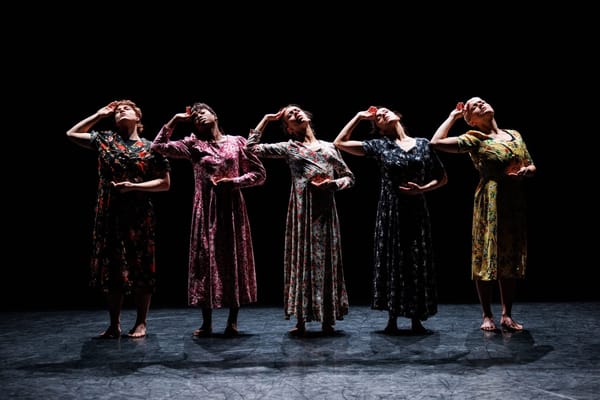
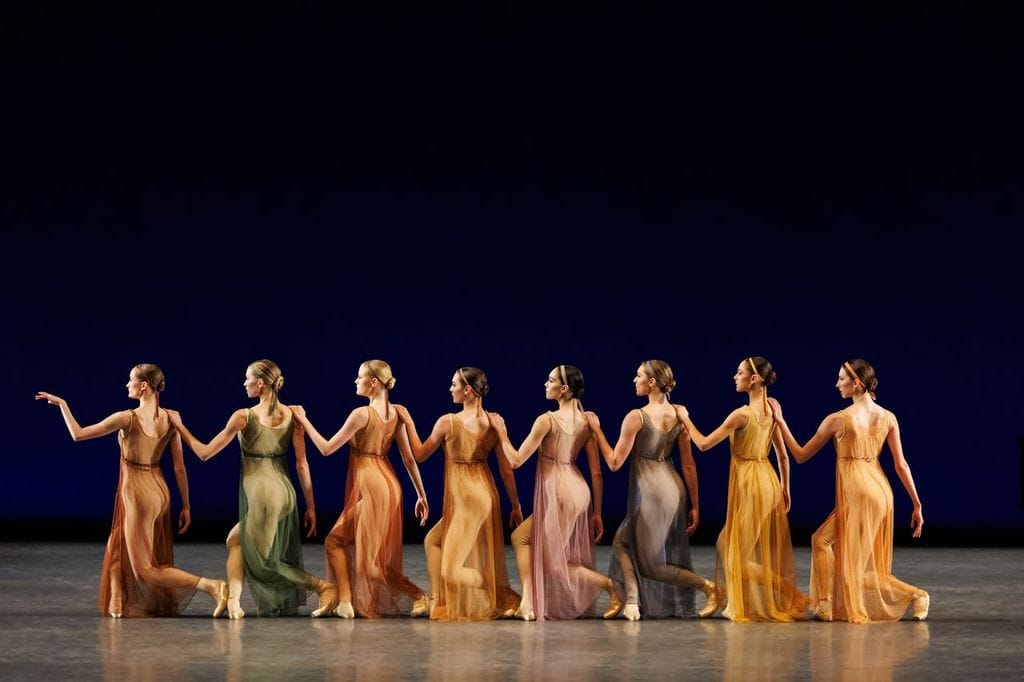
Robbins’ “Antique Epigraphs” is set to selections by Claude Debussy, including “Six Epigraphs Antiques” written to accompany Pierre Louÿs' “Chanson de Bilitis” (published in 1894), a supposed collection of erotic poems by a contemporary of the ancient Greek lesbian poet Sappho—the work was soon revealed to be a hoax but remained popular. Robbins’ ballet may nod to its origin, as he chose an all-female cast. The eight women (four principals and four corps dancers) wore flattering pastel chiffon chitons designed by Florence Klotz and did look a bit like they were in “Dances at the Parthenon”, especially during the final movement when they stood statue-like staring off into infinity thinking deep thoughts, or sat on the ground watching others dance. But what they saw was often compelling.
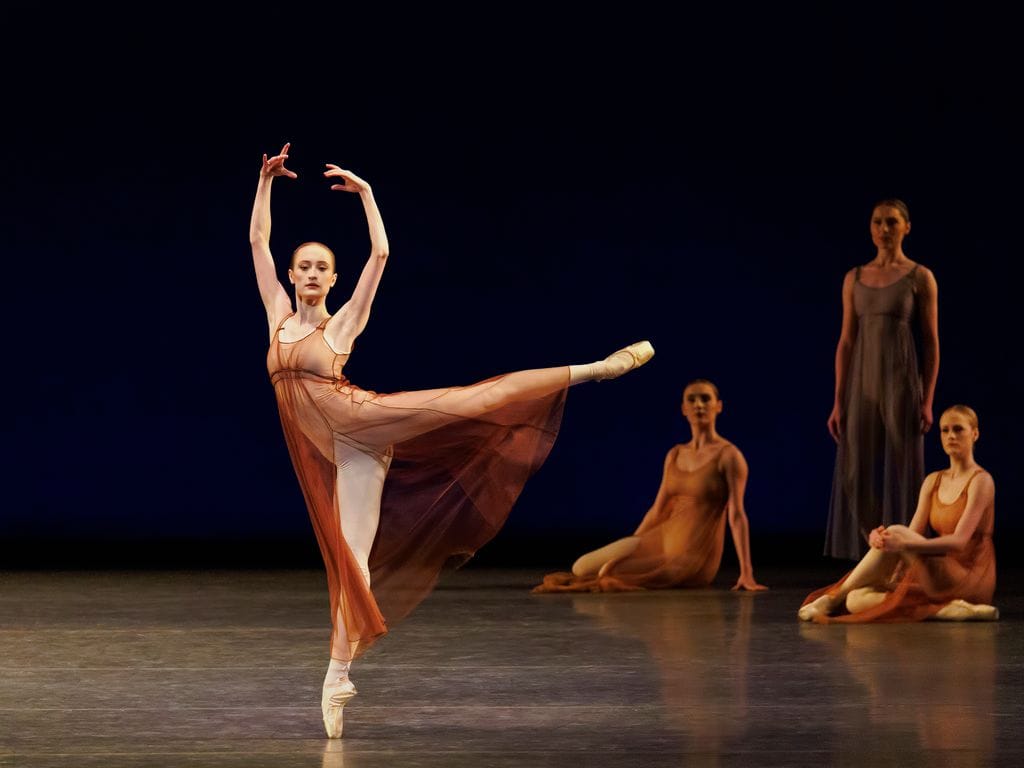
Ruby Lister, in her last minute debut, danced the first solo, full of staccato moves and pointing fingers, with a fierce power, looking like one of Coleridge’s “ancestral voices prophesying war”. It was a stunning performance. The other three principals, (Isabella La Freniere, Miriam Miller, and Mira Nadon), all debuts, had waftier dances of often hypnotic beauty, and looked like ancient statues moving in a breeze.
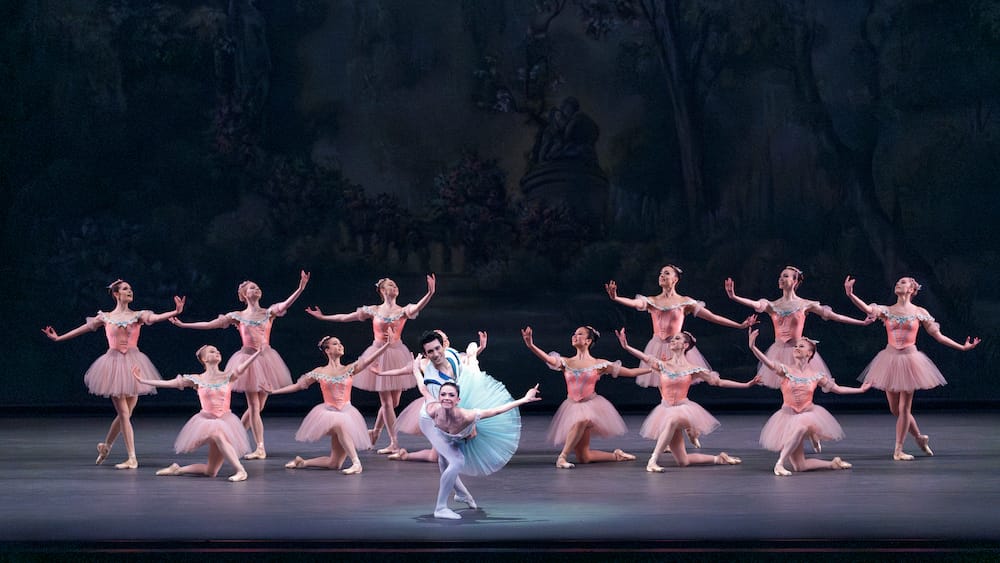
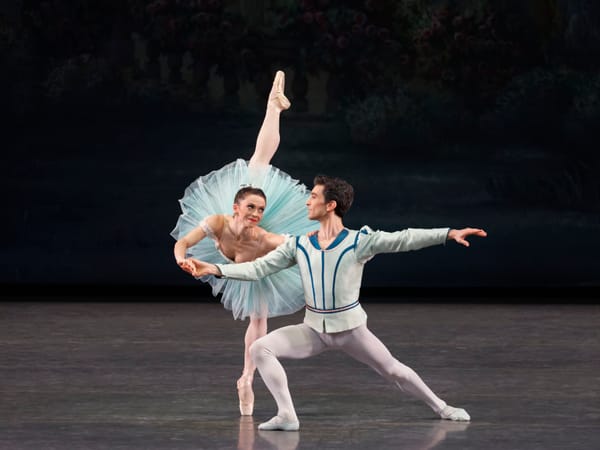
There was a lot of movement in “Raymonda Variations”, with a regal and energetic couple (Megan Fairchild and Anthony Huxley), five soloists (Allegra Inch, Mia Williams, Meaghan Dutton O’Hara, Mary Thomas MacKinnon, and Kloe Walker—Inch, Williams, and Walker in their debuts), and an energetic all-female corps. The ballet is predominantly pink (the principals wear turquoise), and, surrounded by Galzounov’s rich melodies, feels like a luxurious box of candy come to life.
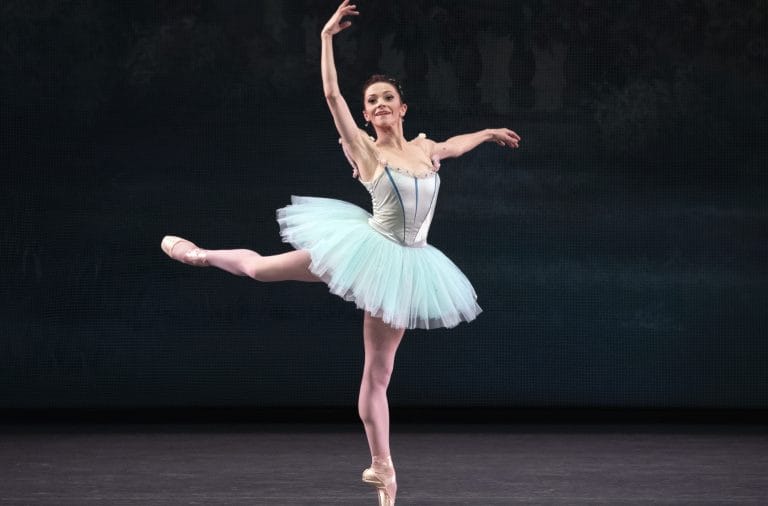
Fairchild, in her farewell season, danced with a sparkling confidence. Her first solo was slow and dreamy with delicate point work and flowing arms; she seemed to melt into positions. In her second solo with its more triumphant trumpet music, she combined delicacy with power, hopping around on her points while showing off the Hungarian arms (a nod to the original story), and exploding into a glorious series of pas de chats. Huxley, too, got two solos, the first with non-stop petit batterie (lots of brisés and quick turns) which he danced with ease. The second solo was more martial, with bigger jumps and impressive cabrioles; his dancing has a classical clarity and control (such soft landings) that makes everything look easy.
Balanchine used the original Petipa choreography which he knew from his St. Petersburg days as the basis for the five female solos but added speed and complexity; they are little gems. Williams stood out in the second solo for her easy, flowing jump, her sparkle and her elegant feet. Walker, in the fifth solo, was especially musical, swinging her leg in time to the pizzicato music, and accenting the finger to the chin movement with a charm that avoided any overly sweet coyness.
The ballet, for all its chocolate box sweetness, is a glorious celebration and a fine way to acknowledge Fairchild’s many gifts. It is like getting a gift from Petipa, Glazounov, and Balanchine, a gift that says perfect beauty is possible to find, and the audience left after the rousing finale in a very good mood.
© 2026 Mary Cargill