Miami at the Pillow
“Diversion of Angels,” “Geta,” “Antique Epigraphs,” “Serenade”
Miami City Ballet
Ted Shawn Theater, Jacob’s Pillow
Beckett, MA
August 24 - 28, 2022
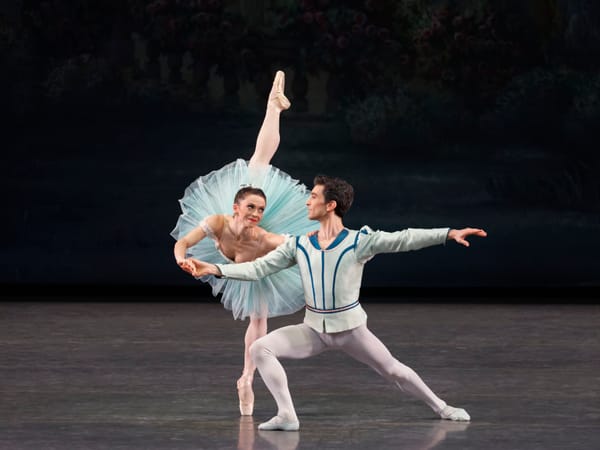
Since its founding in 1985, Miami City Ballet has had close connections with New York City Ballet and George Balanchine. The company’s technique and style are modeled on Balanchine’s teachings, while its first artistic director, Edward Villella, and its current one, Lourdes Lopez, were principal dancers with the New York company when Balanchine headed it. Those links were much on display in Miami City Ballet performances at Jacob’s Pillow last week. The company brought a program that included works by Martha Graham, Jerome Robbins and Margarita Armas.
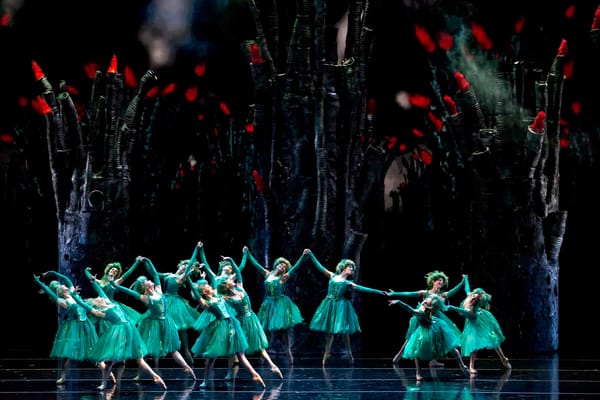
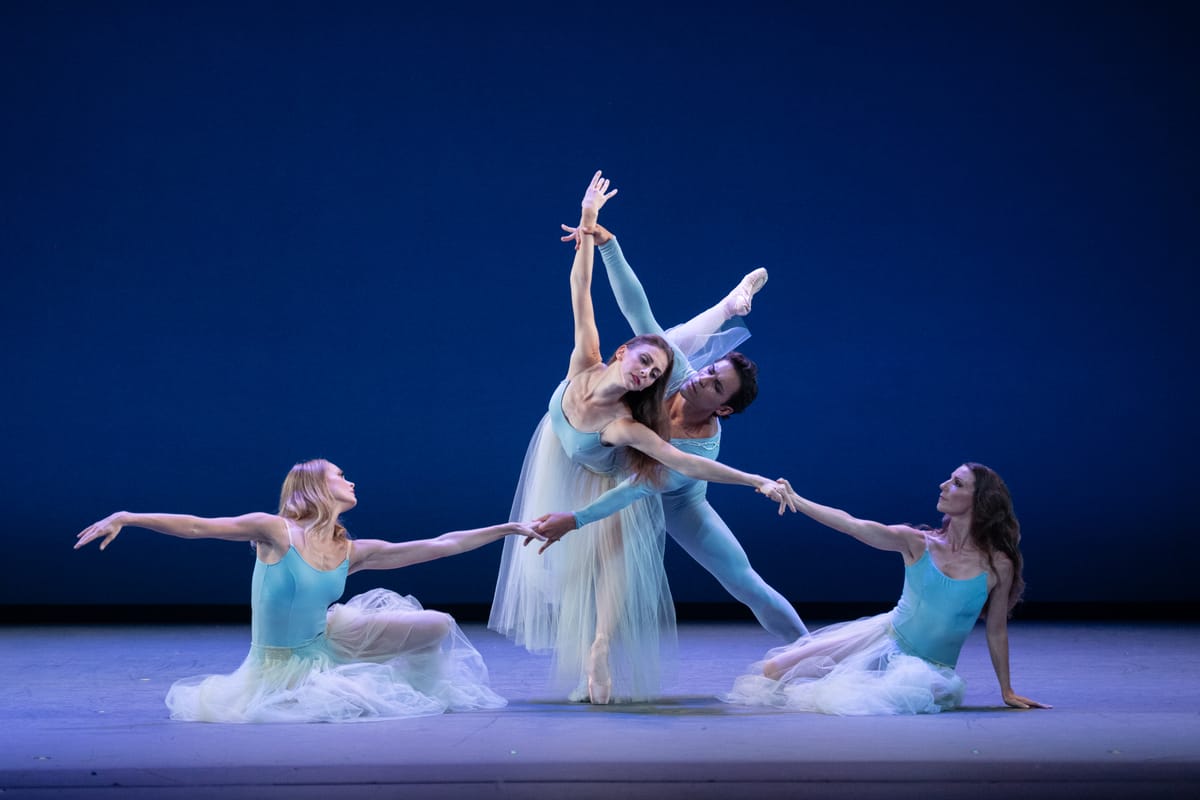
Also, for the first time at the Pillow, a Balanchine ballet was presented. The reason for this late Balanchine appearance is due to the fact that until this summer, the Pillow had no orchestra pit. Most of the music for past performances was recorded. According to executive director Pamela Tatge, the Balanchine Trust, which controls access to Balanchine’s ballets, does not allow his works to be performed without live music. A two-year structural upgrade to the Ted Shawn Theater, which included additional stage space and a pit, has now solved that problem. So Miami City Ballet was able to introduce Balanchine to local audiences. What better way to celebrate the Pillow’s 90th anniversary and its new structural additions, than with Balanchine’s “Serenade,” set to music of Tchaikovsky.
Balanchine created “Serenade” in 1934 for students at the newly formed School of American Ballet. It was his first major work choreographed in the United States and has long been a staple of New York City Ballet’s repertory. Miami City Ballet has danced it since 1991. Over the years, “Serenade” has lost none of its mystery and power. In some ways it looks back to Balanchine’s, pre-New York, European choreography with its Romantic theme of death and transfiguration. However, gone is any narrative line, its theme abstracted and imbedded in pure dance, pointing to Balanchine’s artistic direction once he settled in the United States. The Miami cast of twenty-six handled the urgent propulsion of Balanchine’s choreography well, if at times the movement seemed slightly rushed. Major roles were taken by Ashley Knox, Samantha Hope Galler, Hannah Fischer, Cameron Catazaro and Ariel Rose.
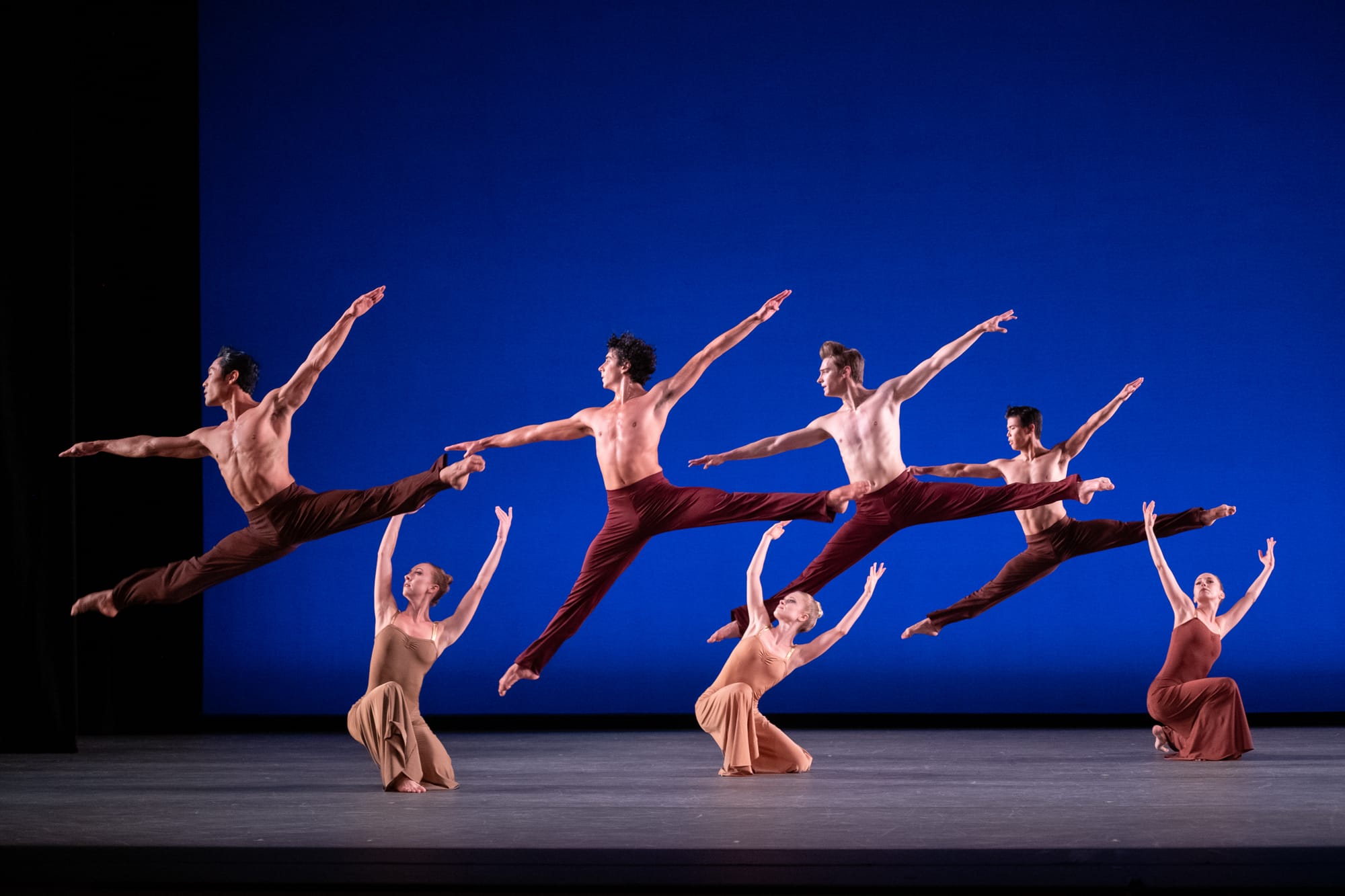
The company opened with Graham’s “Diversion of Angels,” from 1948. Graham, one of the greats of American modern dance, had a brief connection to New York City Ballet when, in 1959, Lincoln Kirstein invited her to create a joint work for Ballet Society, the precursor to New York City Ballet, and for her own company. That two-part work was “Episodes,” with Graham responsible for one part, Balanchine the other, and with Graham’s, which had to do with Mary Queen of Scots, soon disappearing from the repertory. “Diversion of Angels,” on the other hand, has always been a mainstay masterpiece of the Graham company. It looked very good on the Miami group, cleanly danced and with the unfamiliar Graham technique under control, if understandably balleticized to some degree.
The work portrays various facets of love, to a score by Norman Dello Joio. At the Saturday matinee I saw, the central Couple in White, representing mature love, were Hannah Fischer and Cameron Catazaro in the roles originally danced by Graham and Erick Hawkins. The more earthy Couple in Red were Adrienne Carter and Francisco Schilereff, and the youthfully exuberant Couple in Yellow were Taylor Naturkas and Shimon Ito. What particularly impressed, after not having seen Graham’s work for some time, was the richness and sheer inventiveness of her dance making. Graham started her career with Ruth St. Denis and Ted Shawn (the founder of Jacob’s Pillow), but her voice was completely her own.
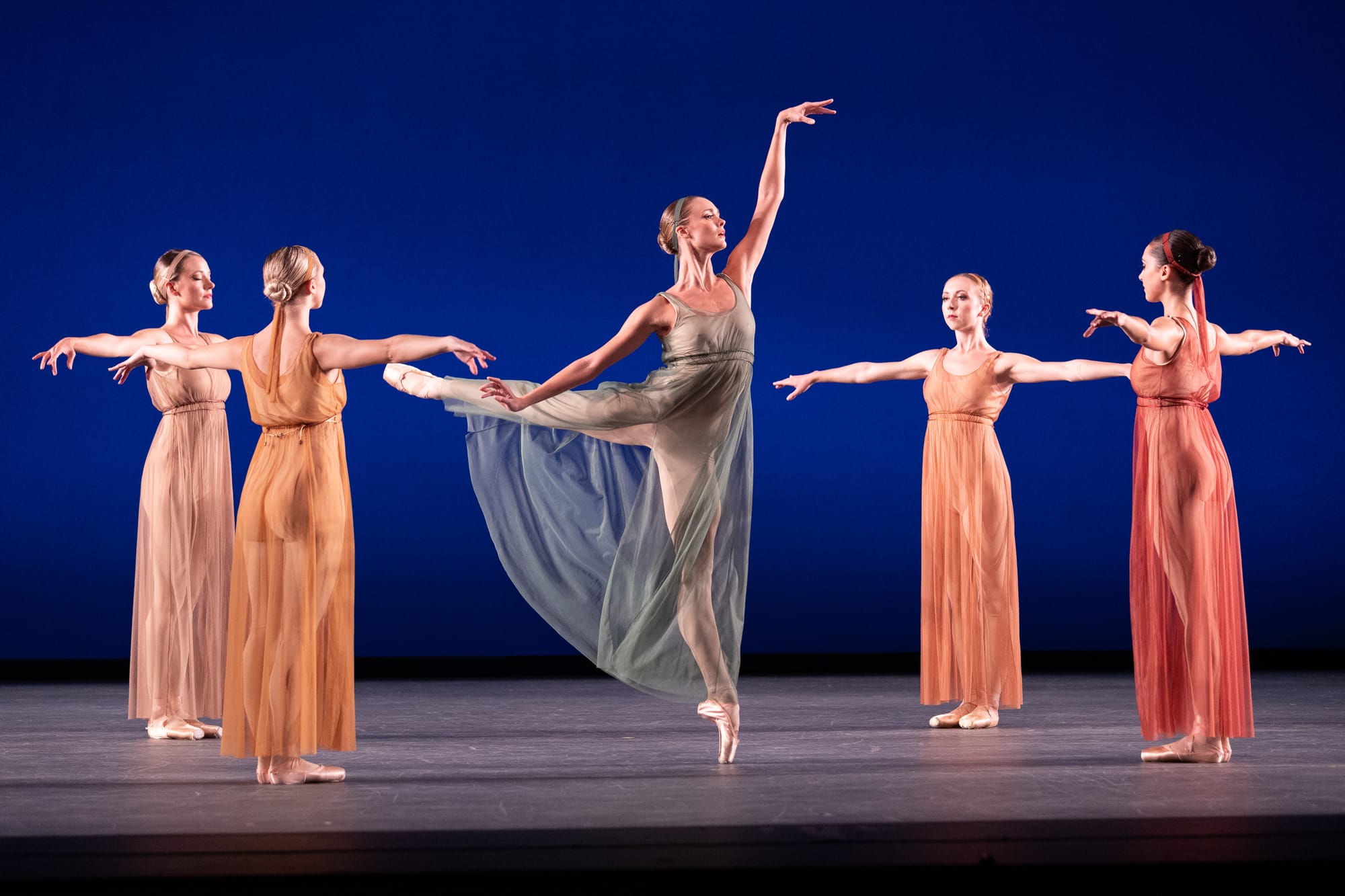
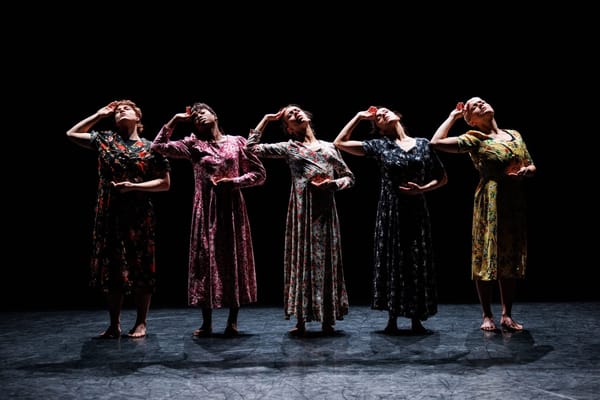
Jerome Robbins’ “Antique Epigraphs” to music of Debussy, was made for New York City Ballet in 1984. It is set for eight women and evokes Greek bas reliefs filtered through Robbins’ fertile imagination. It is as if we are seeing temple figures, frozen in eternal poses, suddenly come to life and taking joy in their newfound freedom. “Antique Epigraphs” is a mere nineteen minutes in length and something of an anomaly in a choreographer more associated with contemporary America than ancient Greece. But Robbins used the opportunity to create his own, highly personal, response to the ancient world. The excellent Miami cast was headed by Dawn Atkins, Hannah Fischer, Samantha Hope Galler and Taylor Naturkas.
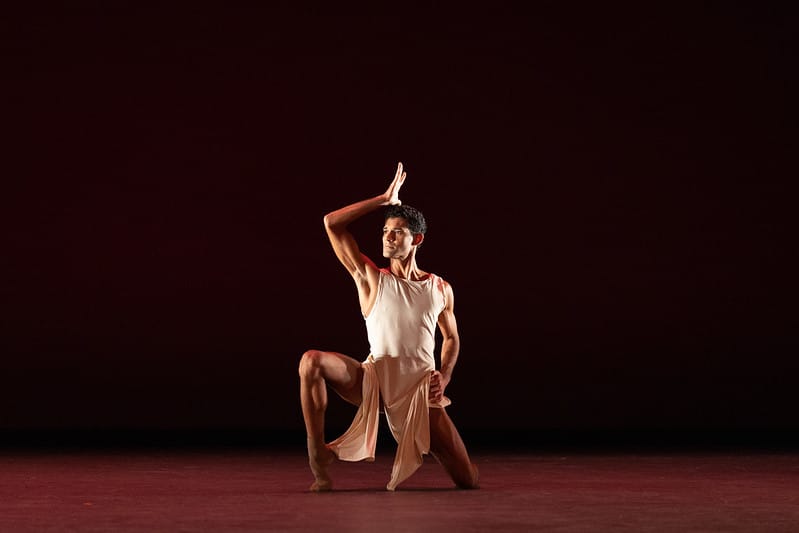
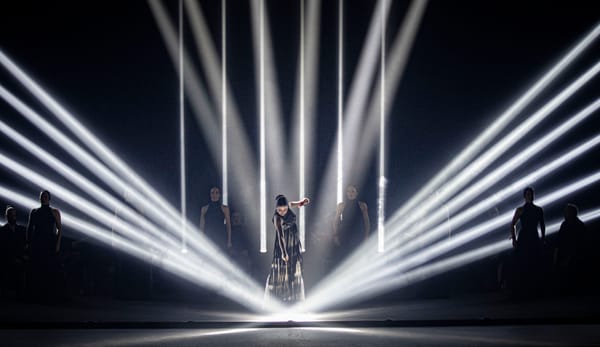
Margarita Armas’ “Geta,” made this year, was a solo dedicated to Geta Constan- tinescu, a much loved Miami City Ballet School teacher who died in 2017. It is set to the Jacques Brel song, “Ne Me Quitte Pas” (Don’t Leave Me). Armas, an alumna of the school, originally performed the dance herself at a school performance. She has since restaged it for Miami City Ballet principal, Renan Cerdeiro, who was a pupil of Constantinescu. The solo is contemporary in feeling rather than being classically based, and Cerdeiro performed it with an intense, but unexaggerated emotion that was touching.
Miami City Ballet is often grouped with other companies that have strong links to New York City Ballet, such as San Francisco Ballet and Pacific Northwest Ballet. However, Miami has a personality all its own, perhaps due to Hispanic influences that are a part of south Florida culture. A number of its dancers come from Hispanic backgrounds, as does Lourdes Lopez, who was born in Cuba. Whatever the reason, the company dances with particular passion and energy. And thanks to the Ted Shawn Theater’s new additions, live music, which Miami City Ballet served to introduce, will be an integral part of the Pillow’s future.
copyright © 2022 by Gay Morris