Look Back in Joy
"Harlequinade"
American Ballet Theatre
Metropolitan Opera House
Lincoln Center
New York, New York
June 4, 2018
by Mary Cargill
copyright © 2018 by Mary Cargill
Nineteenth century ballet comedies often involve poor girls in love with poor young men, rebelling against a parent who has a beady eye on a rich suitor ("Don Quixote" and "La Fille Mal Gardée" are familiar examples), with true love winning happily in the end. (As Oscar Wilde would say, that's why it's called fiction.) Marius Petipa's 1900 "Harlequinade", recreated by Alexei Ratmansky, follows the same familiar plot, using the stock commedia dell'arte figures. These evolved from itinerant popular theater troupes, and show the gallery's contempt for authority (rich men and law enforcement were eternal targets), support for the rebellious rascal, and love of physical comedy. (The word "slapstick" comes from the commedia's two piece wooden stick which would make a snap when the players whacked at each other, which they did frequently.) The commedia dell'arte characters, though, had the poor man's respect for money and "Harlequinade", unlike most other comic ballets, rewards its hero Harlequin for his love of Columbine, as the good fairy gives him a magic stick that can conjure up lots and lots of gold.
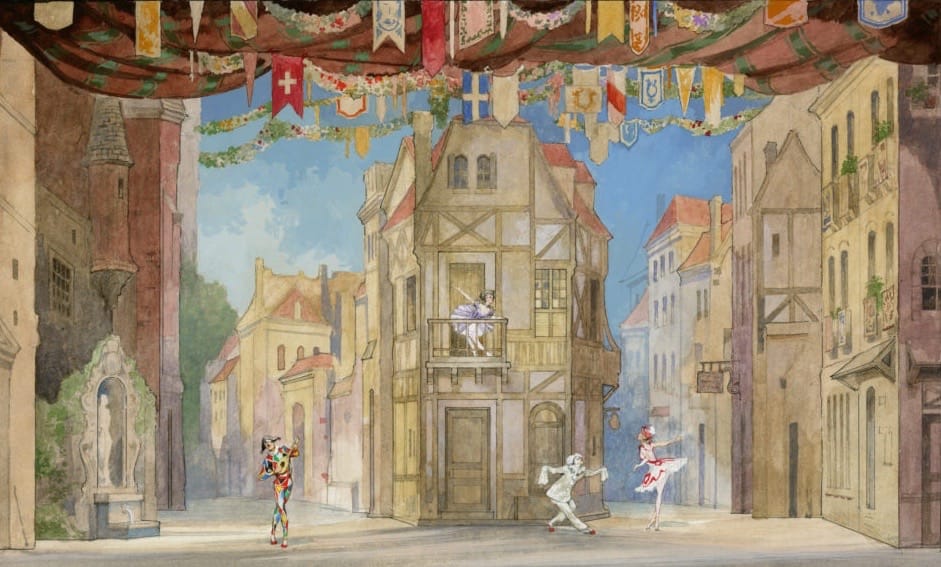
"Harlequinade" is one of the ballets included in the Stepanov notations smuggled out of Russia after the Revolution, now at Harvard, and Ratmansky based his revival on those notes, supplemented by other sources. The acknowledgments included a note of thanks to Edward Villella, who was Balanchine's original Harlequin in that choreographer's setting of the old ballet. Balanchine had danced in the Petipa version and had shown Villella much of the mime. Ratmansky and the designer Robert Perdziola also used the original set and costume designs, still in St. Petersburg, and the ballet looks glorious, with airy, atmospheric sets and colorful costumes, with hats galore. (These helped emphasize the many delightful bobbing moves.) The ballet was set in the early 1800s, with panniers, knee breeches, and mob caps, and the wedding guests in the second act were dressed in colorful and varied Empire-style gowns. It is impossible to watch "Harlequinade", choreographed originally as a ballet to entertain the Tsar and his retinue at the Hermitage before it was transferred to the Maryinsky, without a sight tremor thinking of Nicholas and Alexandra watching those lower-class figures beating up the decadent aristos and their drunken, useless guards, with the dancers costumed in post French Revolutionary costumes, but Ratmansky's reconstruction is neither sociology nor history. It tries simply to be entertaining, a rare and generous approach.
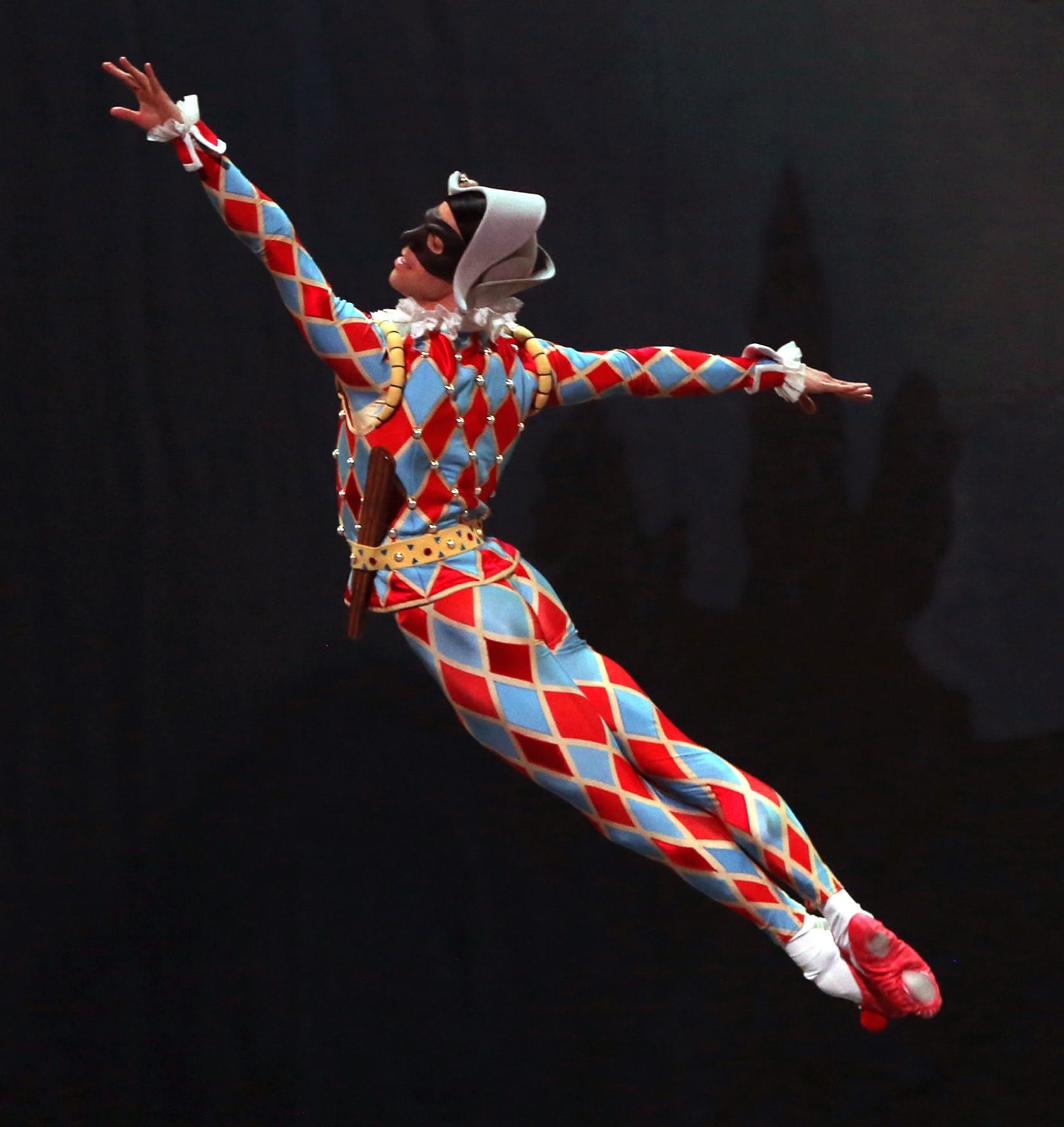
"Harlequinade" is a cornucopia of dance styles, with extensive mime, broad physical comedy, folk dances, demi-caractère frolicking, and a radiant abstract ballet, another of Petipa's hymns to female beauty. The story is taken care of in Act I, with a wedding (always a good excuse for dancing) in Act II. James Whiteside, the rogue Harlequin with his iconic diamond patterned tights, was in love with Isabella Boylston's Columbine, who was guarded, completely ineptly by Thomas Forster's lazy Pierrot and helped by Gillian Murphy's Pierrette, Pierrot's sprightly wife.
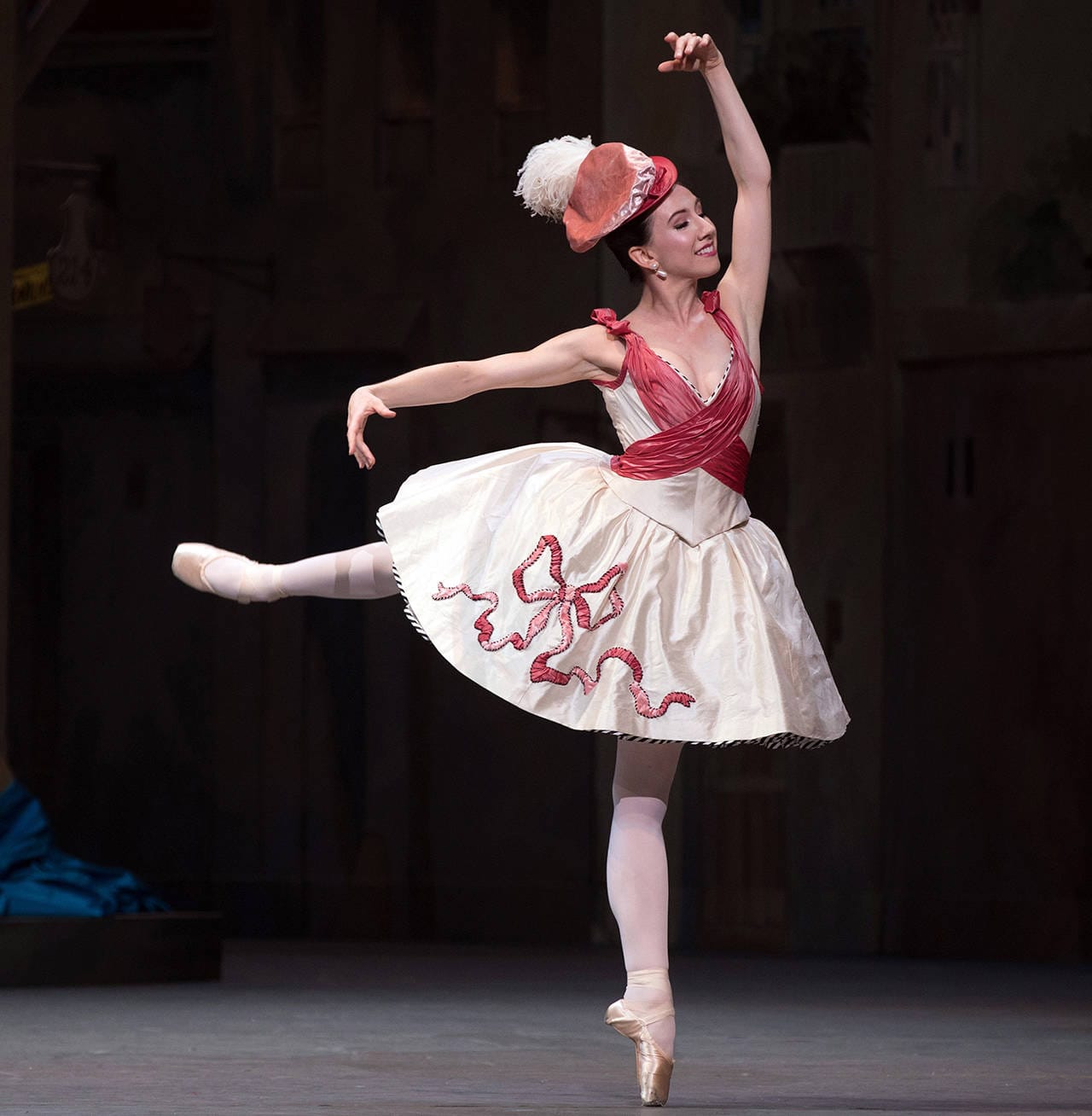
The women's choreography was full of little steps with loads of hops on point, going backwards and forwards and in circles, while their upper bodies were melting and lyrical. Boylston, who has had somewhat wayward arms in the past, was chic, musical, and witty, and looked devastatingly elegant in her first act hat. Whiteside, too, has rarely looked more engaging as the brash rogue with non-stop beaten steps that he tossed off with a confident bravura combined with a sense of character.
The mime, which would probably have been more effective on a more intimate stage, was broad (commedia dell'arte didn't go in for subtlety, and the gags were more reminiscent of the Three Stooges than the Lilac Fairy's elegant speeches). Duncan Lyle as Léandre, the rich, foppish suitor, had an especially funny schtick as he tried so hard to sing to Columbine.
The wedding scene, set somewhat incongruously in an elegant ballroom (all the better to dance in, of course) sported a ballet school full of children, very well rehearsed, who wove through some rhythmic and charming (if long) folk dances. They were especially gracious, keeping their eyes on their partners without any nervous, self-conscious "Hi Grandma" grins and whose knees thankfully were covered by those elegant costumes.
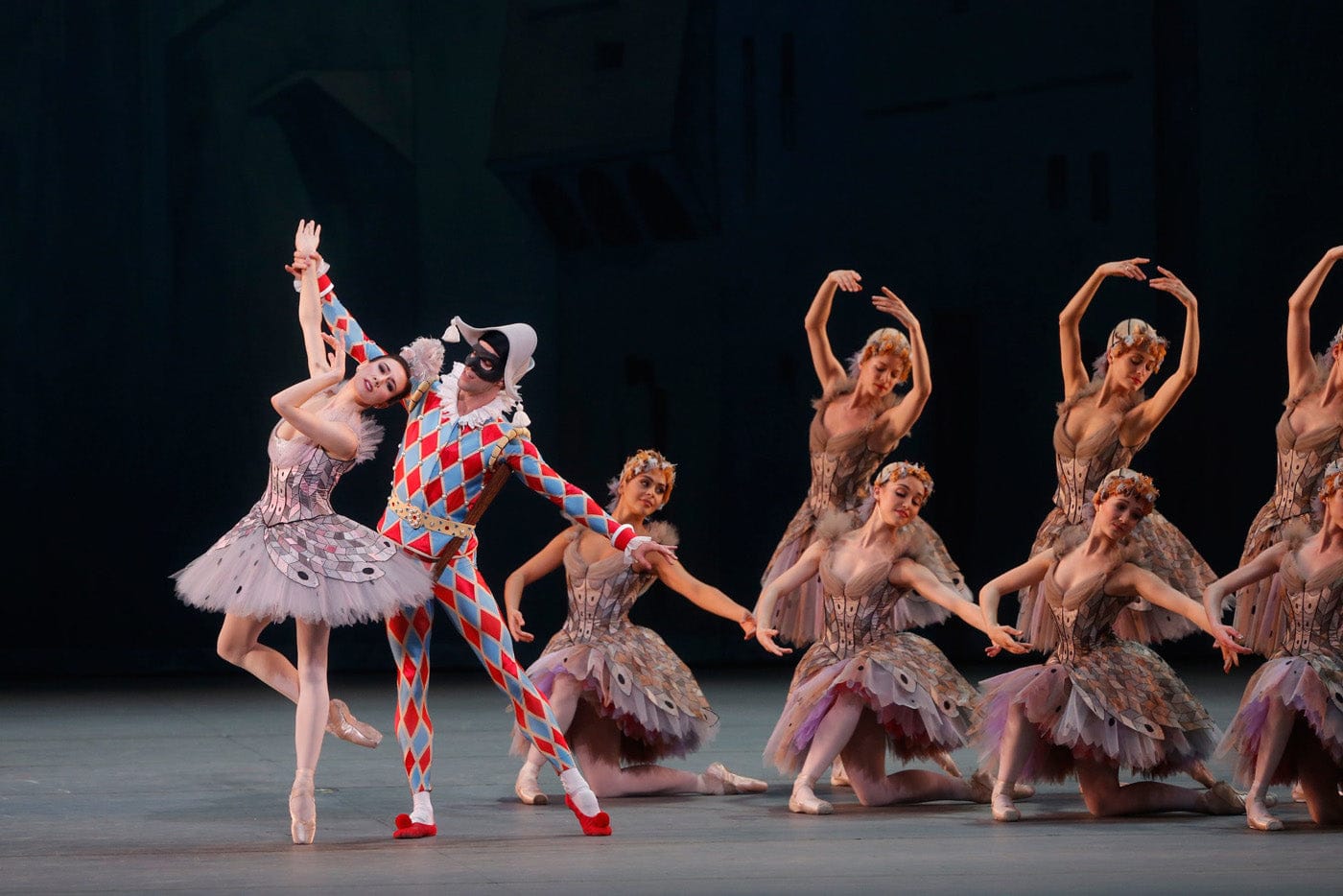
The heart of the second act was the allegorical "Hunt of the Larks", where Columbine morphs into a grand ballerina/lark (with a lot of larkettes to accompany her) who was hunted by Harlequin. It is one of Petipa's lyrical vision scenes complete with bouncy emboîtés all round, inventive geometry for the corps with the happy couple weaving in and out, and a melting, serene solo for Columbine introduced by a shimmering harp. (The music by Riccardo Drigo, proved that he was no Tchaikovsky but the score is charming, tuneful, and danceable, and a perfect match for the light, beautiful ballet.)
I suppose there may have been a nineteenth century John Martin, watching yet another anachronistic polonaise and all those bird-like flutters, who sniffed that Petipa "has one again given us that ballet of his, this time for some inscrutable reason to Drigo". But if so, he would have passed up some timeless and beautiful choreography – love and laughter really does not go out of style or get old.
Copyright © 2018 by Mary Cargill