Let the Sun Shine In
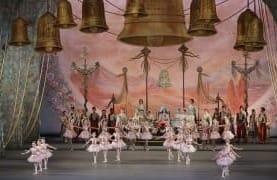
"Coppélia"
New York City Ballet
David H. Koch Theater
Lincoln Center
New York, New York
October 5 evening, 2024
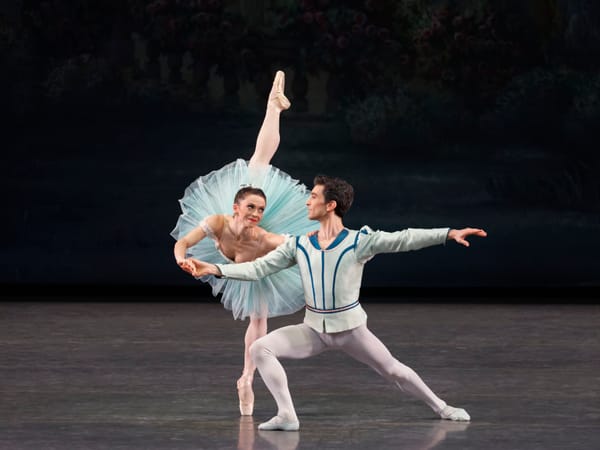
NYCB has scheduled “Coppélia” over successive weekends, a marketing triumph, it seems, for the theater has been packed (even the fifth ring was open for this performance), filled with excited families; the children especially loved the shivering knees in Act II. But for all its rollicking humor, “Coppélia” exists in a village of elegant, sophisticated dancers, and few City Ballet dancers are as elegant and sophisticated as Tiler Peck, dancing with a new Franz, the irresistible Roman Mejia, who made his debut a few days ago.
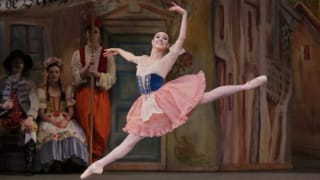
Peck’s Swanilda was obviously the village grande dame, a bossy, sassy miss who could dance the toe shoes off anyone else. Her opening mime made that clear—demanding the mysterious girl come down and play with her, and when she was ignored, Peck danced away with a slightly contemptuous shrug. Her dancing was crystal clear, every step etched to the music, and she seemed to love playing with Delibes’ luscious melodies.
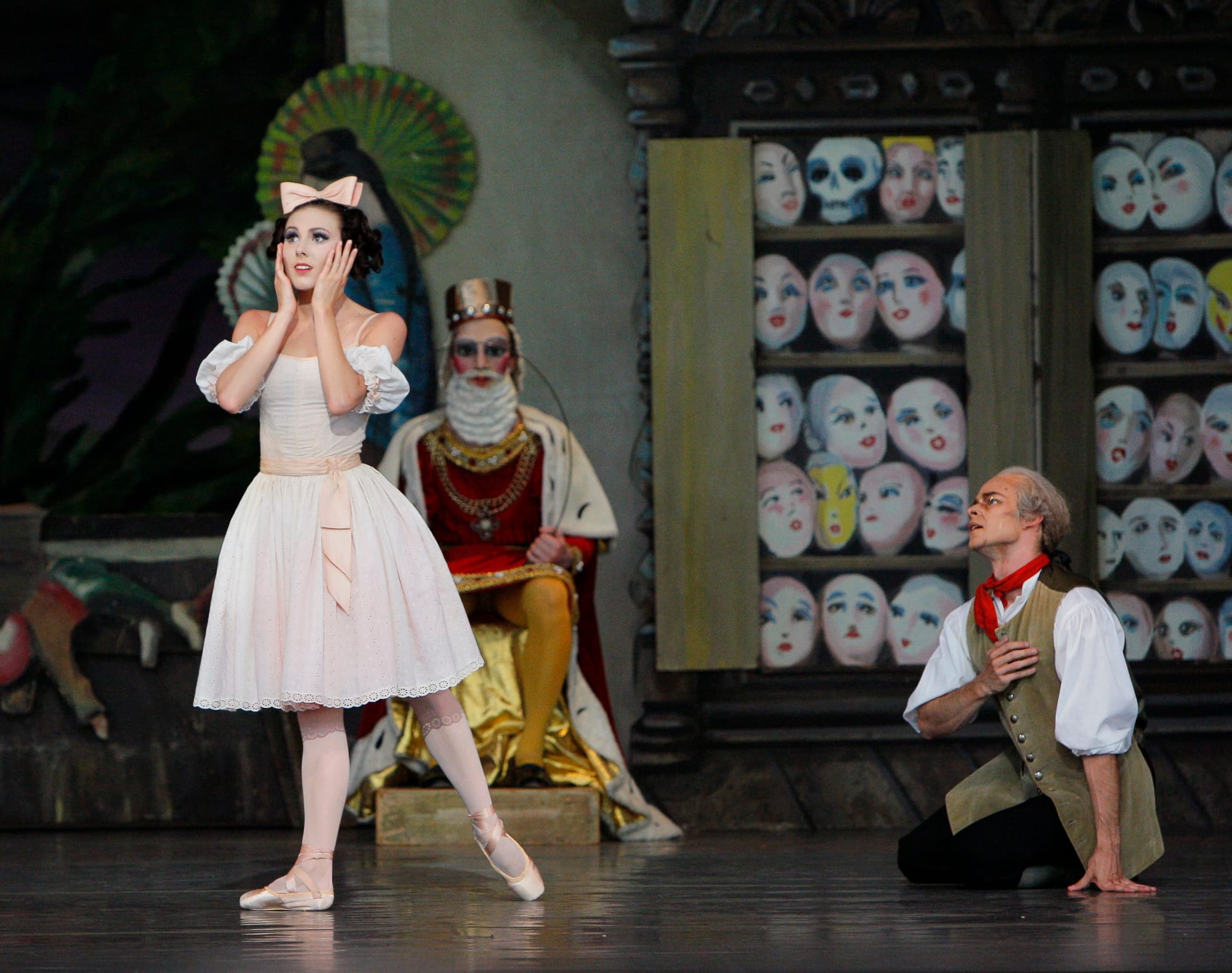
She also seemed to love destroying Dr. Coppélius’ workshop and her brilliantly timed stiff-armed, stilted doll seemed to mock all his dreams. Adam Hendrickson, a former NYCB dancer, was the doctor. He is on the small side, and was peppery and short tempered, with an almost sullenly wicked aura. Poor Franz was no match for him (that ear pulling looked like it really hurt) and the doctor’s almost lascivious perusal of his book of magic and fierce joy when he thought he succeeded in pulling out Franz’s beating heart to give to his creation had a Frankenstein intensity, so vivid in Delibes’ magical music. He did deserve Swanilda’s mocking lesson, but Hendrickson gave his crushed realization that his powers were dust a certain pathetic dignity.
Mejia’s Franz was the village jock, a bundle of cocky charm who was convinced that he was a great catch. His casual “let me just smooth my hair” gestures would have graced any number of Basilios and his mime was clear and vivid. He has the natural showman’s ability to play to the audience, to let them on the joke and to share in his fun, and his gleaming eyes when he heard the wheat sheaf rattle and realized that Swanilda loved him were so expressive.
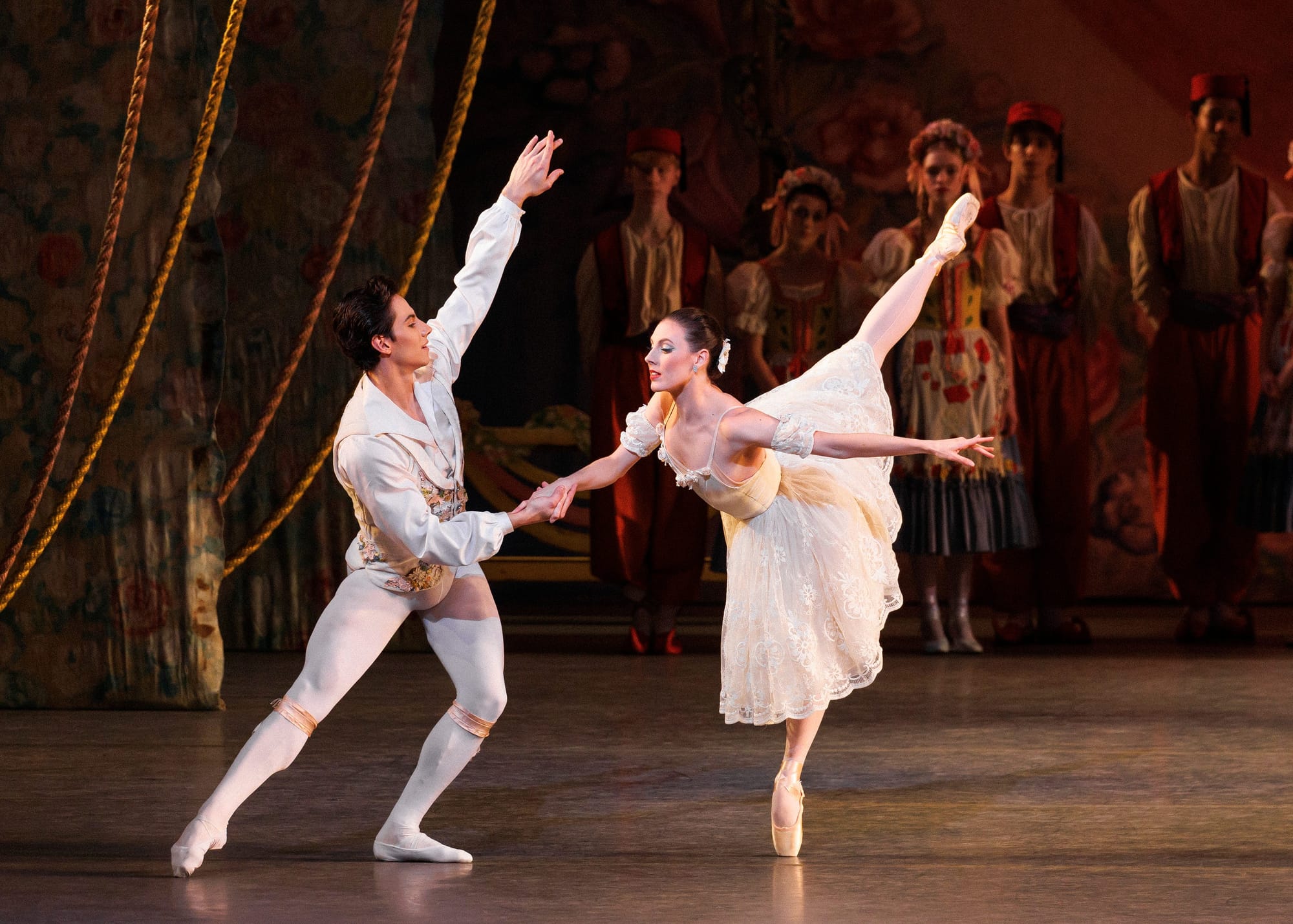
His Act I solo was exuberant and explosive, and he made the stage look small. But he was not just a jumping phenom. The gracious adagio in Act III was a true declaration of love and trust, with Peck almost floating up to his shoulder in seemingly effortless lifts. He was a devoted partner, with his eyes fixed on her, as she floated through serene balances, offering her hand in a slow, creamy motion. Their pas de deux became an almost abstract ballet in itself, an exalted picture of perfect harmony and joy. If the thread of the story got a bit lost, nobody cared. Mejia got to show off his flair in his solo, opening with a huge sideways split jump, followed by a flying diagonal and thrilling air turns with perfectly soft landings, dancing with a buoyancy that exploded off the stage.
Peck’s solo saw her luxuriating in her femininity, playing with her skirt, showing off her diamond sharp points, and then almost disappearing in the final cascade of turns. The brilliant clarity and sophisticated musicality of her dancing is by now a given, but it is always astounding to see. Her Swanilda might not be quite as fresh and real as Fairchild’s, but this was dancing on a grand scale, and we are so lucky to have them both.
© 2024 Mary Cargill