Kings and Dancers
"Dig the Say", "This Bitter Earth", " "The Naked King", "Everywhere We Go"
New York City Ballet
David H. Koch Theater
New York, NY
February 5th and February 8th, 2026
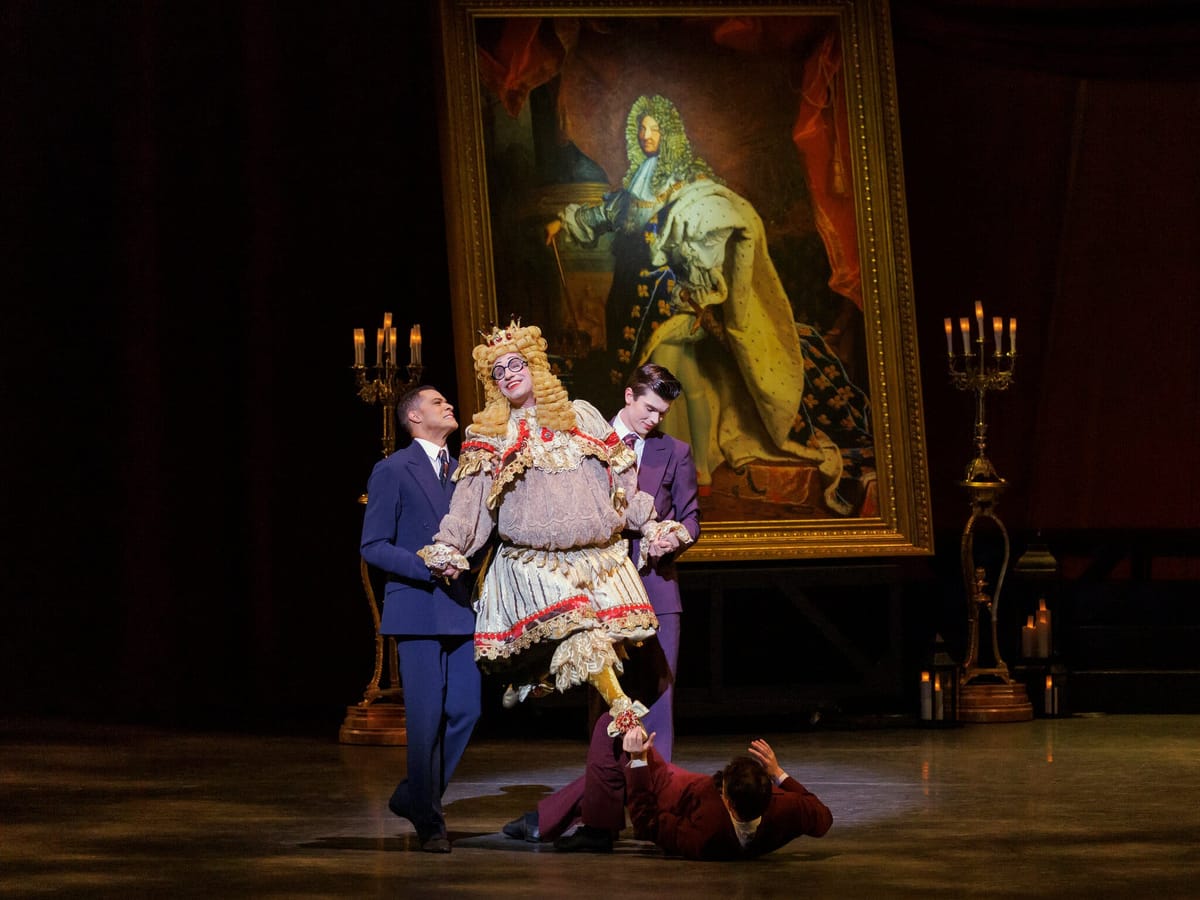
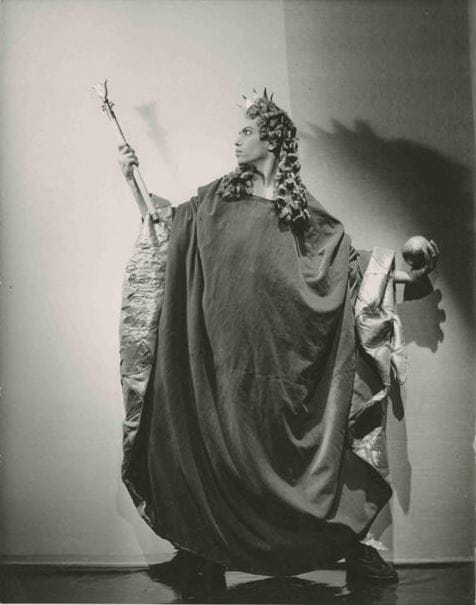
Alexei Ratmansky’s new ballet “The Naked King”, a retelling of Hans Christian Andersen’s always timely “The Emperor Has No Clothes”, is another of his explorations of ballet’s history. Shortly before he died Diaghilev had come up with the idea of using the Andersen story for a ballet, and in 1935 Serge Lifar, then the head of the Paris Opera Ballet revived Diaghilev's idea and commissioned the composer Jean Françaix to write the music for a ballet. The ballet, “Le Roi Nu” (“The Naked King”), premiered in 1936; Ratmansky used the music and much of the libretto for his sparking new work. Lifar had introduced a queen and her lover who also appear in “The Naked King”, three ministers, and three tailors; the main difference is that after Lifar’s King was exposed, he dismissed his ministers and replaced them with the tailors, a cynical twist that Ratmansky replaced with the pathetic embarrassment of the King.
Santo Loquasto’s costumes reflected Françaix's bright, brassy, and danceable music and were a complex mixture of styles and colors. The King was a cartoon of Louis XIV, perhaps a nod to Lifar’s original monarch, his ministers were corporate automatons in buttoned up suits, the three tailors (accurately called swindlers in the program) were dressed as psychedelic rockers, and the queen, hiding behind sunglasses, wore an elegant flash of purple. The story was simple and clearly told; the vain, simpering King was surrounded by his toadies, while the Queen, looking bored, tried to ignore him. The three Swindlers burst in and planned their deception, while the townspeople and the three court couples danced through the palace, as the Queen and her lover met up. The King then reappeared in a monumental fat suit and immediately the little boy rushed on shouting “The King is naked!”. Much confusion, and the king shrinks off. Ratmansky may have been guided by the music, but I did miss the lesson of Andersen’s tale; the fault lay not just in the King’s vanity but in the courtiers and the townspeople who were too greedy or too cowardly to admit the truth.
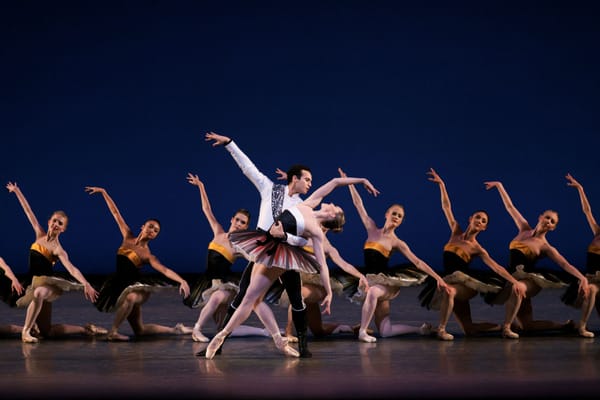
The choreography was equally colorful, ranging from the energetic folkish dances of the townspeople, to the social dances of the courtiers, and culminating in the exhilarating flash of the swindlers. But Ratmansky made his dances so much more than a musical conglomeration of steps and and dancers had distinctive personalities. Besides reviving the older score and libretto to create a completely new work, Ratmansky slipped subtle nods to the past, and had his King and courtiers briefly mimic a bit of Balanchine's "Apollo", perhaos another not to Lifar, who was Balanchine's first sun god.
Andrew Veyette (February 5) and Craig Salstein (February 8) portrayed the King. Veyette, who retired last year, was a pompous, determined monarch, convinced that he was in charge. He even tossed off a few secure turns a la seconde, much to his (and the audiences’) satisfaction. Salstein, who, before he retired from ABT, illuminated so many character roles, was a sillier King, fussy and insecure, begging the audience for reassurance; both had impeccable timing, and both their supported cartwheels, as they were turned over by the courtiers, were deadpan gems.
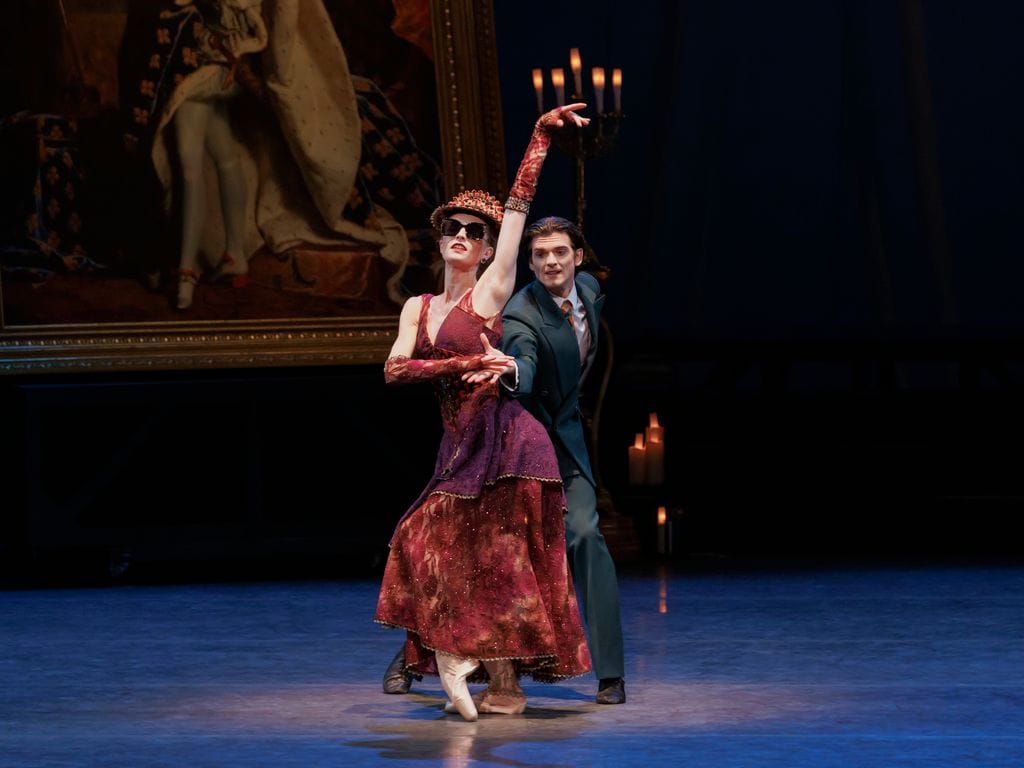
Miriam Miller, with Veyette, and Emily Kikta, with Salstein, danced the trophy wife. Miller was sharp and sulky, bored by the King and condescending to her lover, Peter Walker. Walker’s Charleston with Miller was one of the highlights. His oleaginous, smarmy, loose limbed dancing epitomized the social climbing bureaucrat and even his hair looked oily. Kikta was a vain, voluptuous queen; I loved her lolling on the throne admiring her manicure. Her lover, Ryan Tomash, danced with infectious enthusiasm but his courtly good manners, it seemed, made it impossible for him to look at Kikta with anything but love and admiration; Walker’s eyes blazed with dollar signs.
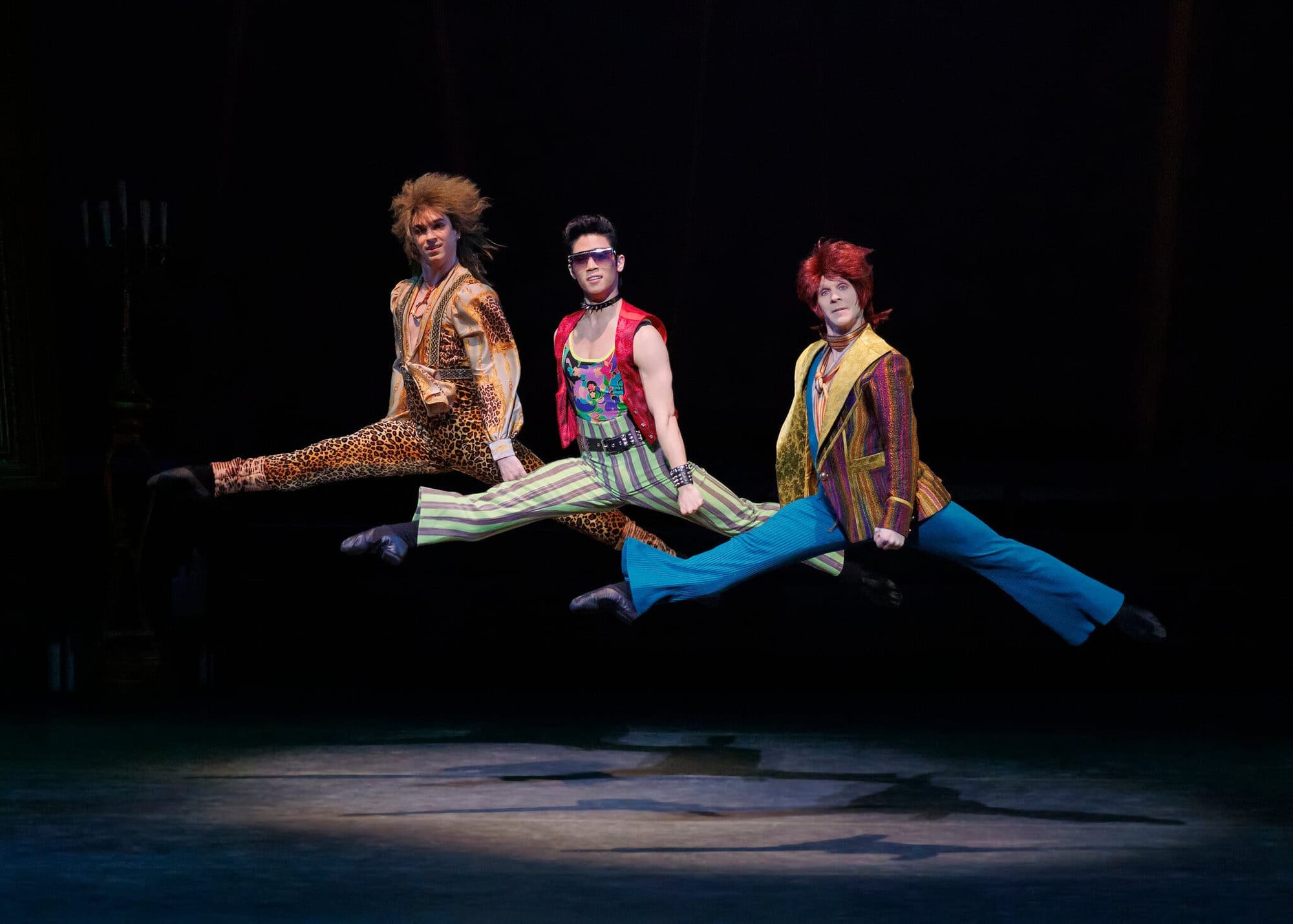
Dollar signs also dangled in front of the three Swindlers, who got some of the most exciting and character-filled dancing, full of sharp, jaunty jumps and conniving huddles. David Gabriel, KJ Takahashi, and Daniel Ulbricht were the opening night trio; they were fiery, especially Ulbricht, who turned the stage into a trampoline, showing off a series of entrechats with bent legs that seemed to scream “I am a crook”. Simeon Daniel Neeld (still an apprentice), Sebastián Villarini-Vélez, and Cainan Weber danced in the February 8th performance, showing off the incredible depth of NYCB’s talent, both in dancing and in performing, as they were shallow, venal, and greedy. The ballet may be a cartoon, but it is one etched in acid.
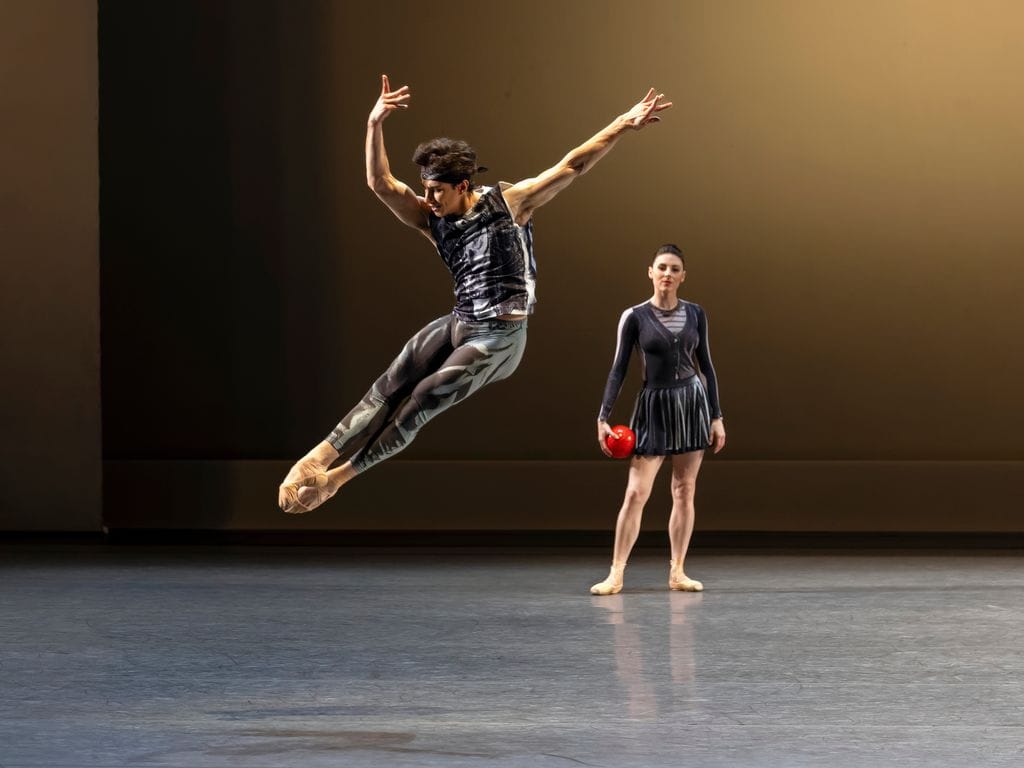
Justin Peck’s “2024 “Dig the Say” is a cartoon, too, but the stridently athletic pas de deux for Tiler Peck and Roman Mejia has little to say besides “These dancers are incredible”. Peck lets them do what they do best—he has Tiler Peck float through time, somehow holding back the music, and then tossing off some thrilling fouettés, and lets Mejia charm the audience and toss off some apparently impossible corkscrew jumps like it was the easiest thing in the world. It is an impressive and astounding bauble, but those dancers deserve more.
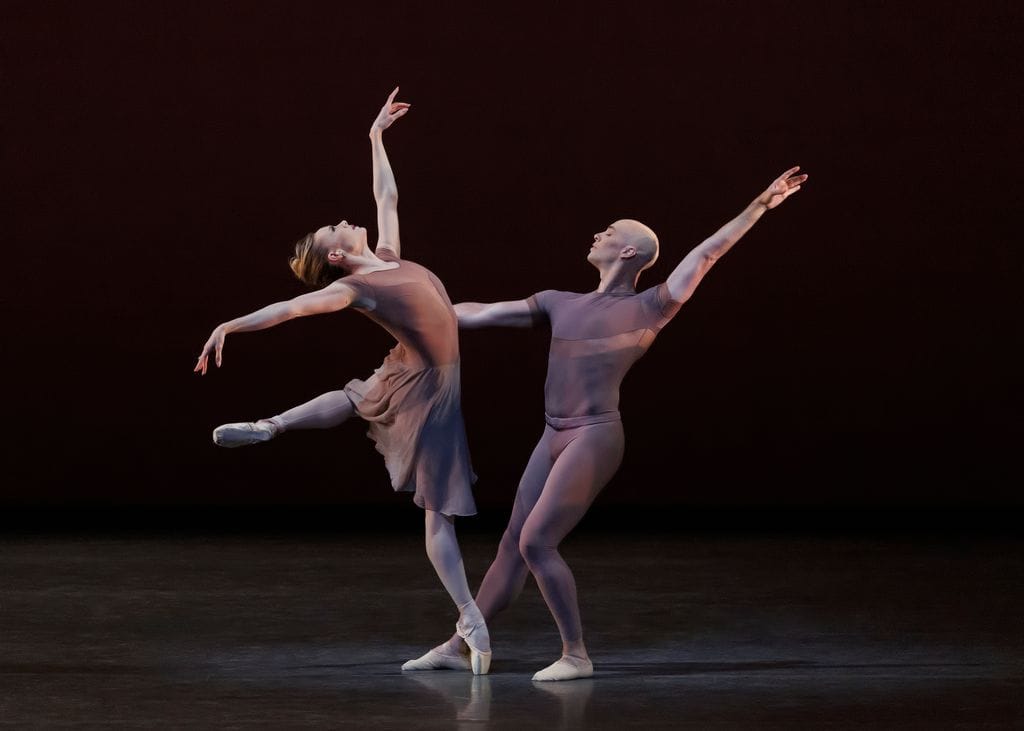
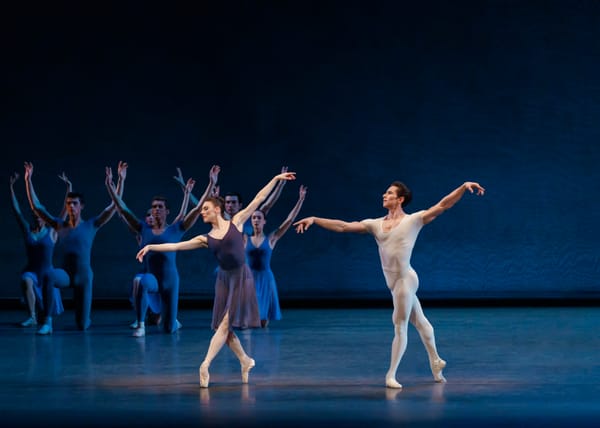
Sara Mearns and Tyler Angle danced “This Bitter Earth”, Christopher Wheeldon’s 2012 pas de deux to a recording of the eponymous song by Dinah Washington, full of soaring emotions and sentimental phrases (“Today you’re young/Too soon you’re old). Mearns looked wonderful in the flattering grayish chiffon dress by Reid Bartelme and gave an openhearted performance, full of restrained passion. She looked like the prow of a ship parting the seas as she was held aloft by Angle, at his supportive, generous best. She danced with an elegiac melancholy, with her powerful legs seeming to push the air away; she is a dancer who can make the smallest gesture resonate.
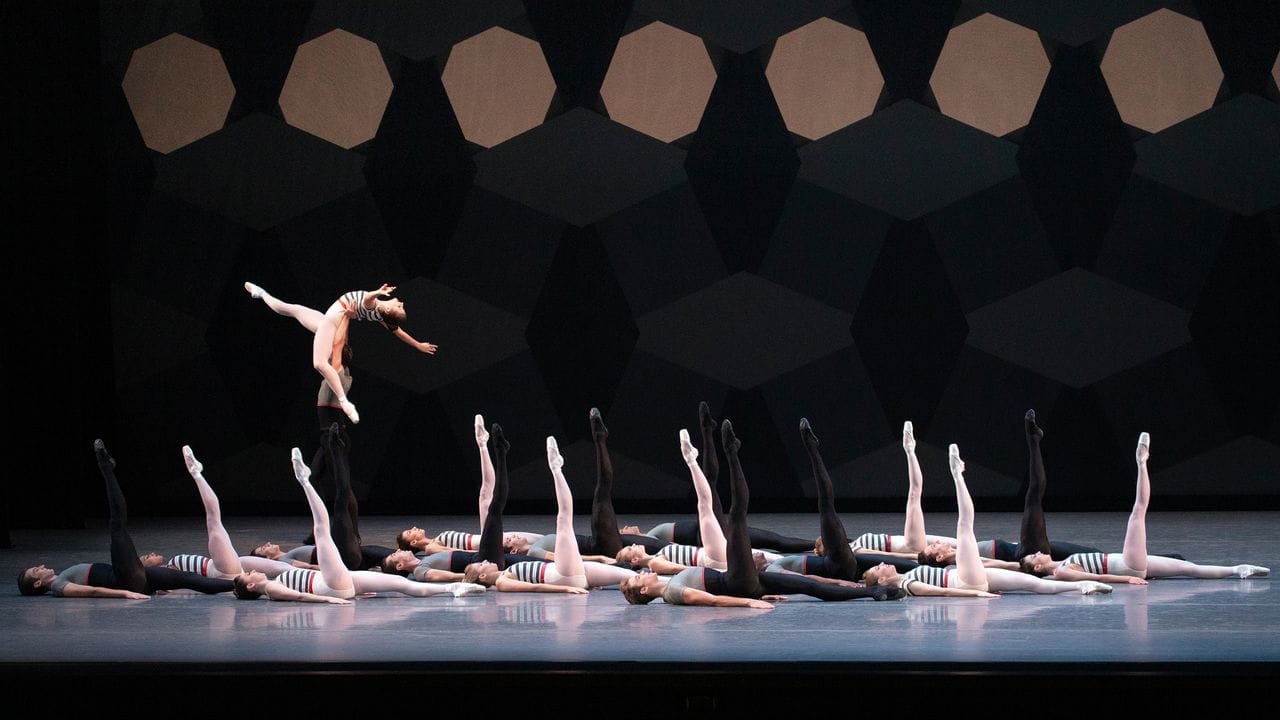
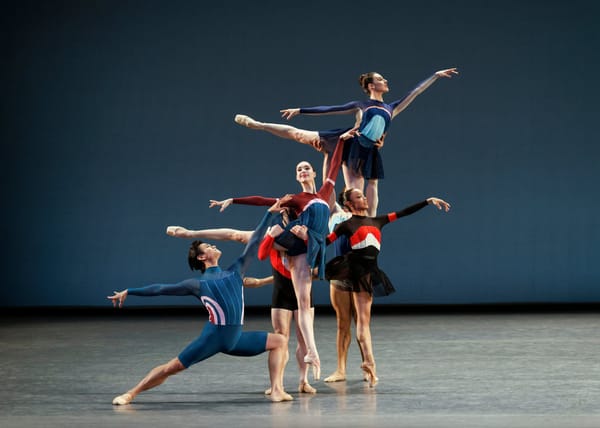
There are lots of gestures in Justin Peck’s 2014 “Everywhere We Go”, set to music commissioned by Peck’s frequent collaborator Sufjan Stevens. It has 25 dancers, nine sections, and lasts about 45 minutes, a significant statement from the then comparatively new choreographer. It was impressively assured, as he brought his dancers on and off the stage in sharp, geometric formations, matched by the background’s striking, shifting geometric shapes (designed by Karl Jensen and lit by Brandon Stirling Baker).
There were three main couples (Emma von Enck with Taylor Stanley, Indiana Woodward with Chun Wai Chan, and Dominika Afanasenkov with Adrian Danchig-Waring), plus an additional dancer, Emily Kikta, who occasionally gave the groupings an interesting off-balance feel. The dancers raced on and off, with Woodward and Chan radiating sunshine, while Afanasenkov and Danchig-Waring had a more lyrical role; Afanasenkov has a particularly expressive upper body and a haunting beauty.
The work, though, did loose focus near the end, as the couple grouped and regrouped in sometimes confusing patterns. Near the end there was a striking vignette, as the cast stood on the stage and gradually slunk to the floor one by one, each dancers being caught by another. But when it was repeated not long afterwards, the effect became muted, and it did seem as if there were a couple of sections too many. The choreographer, apparently went for a bushel when a peck would have been enough.
© 2026 Mary Cargill