It’s All in the Music
“Serenade,” “Mozartiana,” “Tschaikovsky Piano Concerto No. 2”
New York City Ballet
David H. Koch Theater
New York, NY
January 26, 2019 (matinee)
You cannot go wrong with the music of Peter Ilyich Tchaikovsky or the choreography of George Balanchine, and so in some ways New York City Ballet’s “All Tschaikovsky/ Balanchine” program, a fairly regular staple of the company’s seasons, was set up for success. The many debuts in two of the bill’s works wouldn’t have made or broken the overall impression of this performance, but as it happened mostly delighted with fresh but faithful interpretations.
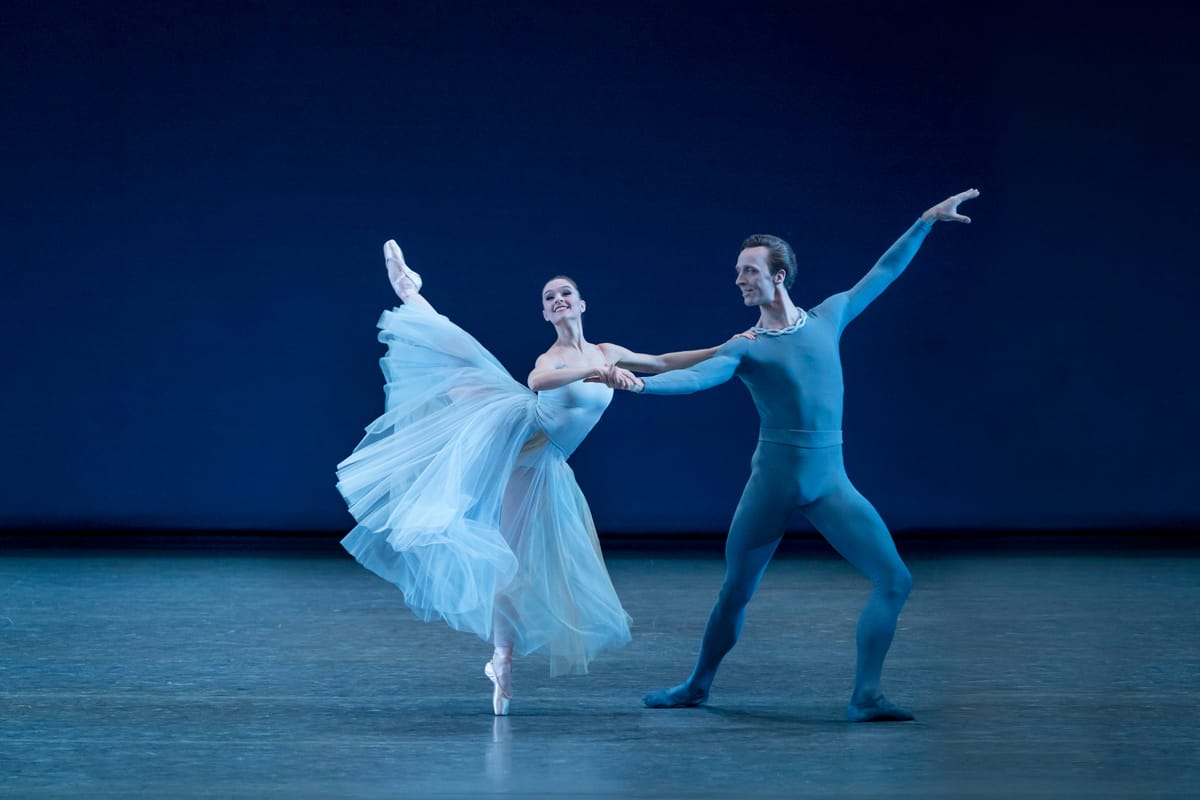
In the timeless “Serenade” the lead cast was all new save for one veteran appearance by the always reliable Ashley Bouder as the Russian Girl. Of all, Lauren Lovette’s Waltz Girl opposite Ask la Cour resonated most strongly. While the waltz itself at times felt rushed, Lovette and la Cour showed a real connection on stage both to each other and the music, dancing with such an innocent lightness that seemed to expand what the orchestra was delivering from the pit. A few moments of tenderness, such as the way Lovette maintained her gaze at la Cour as she bouréed away from him, rounded out the dancing with an emotional touch.
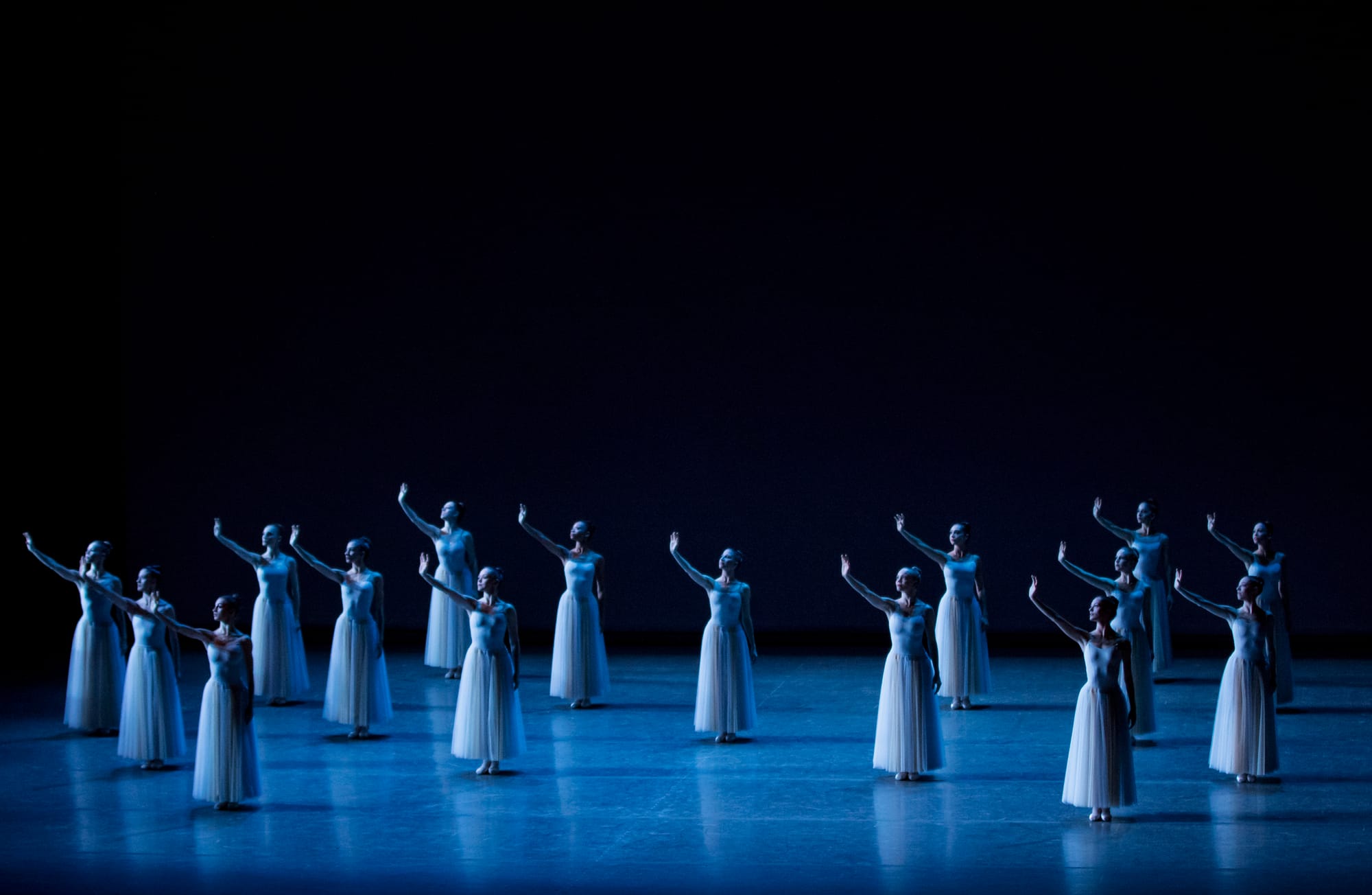
In comparison, Emilie Gerrity’s first time as the Dark Angel seemed to lack presence. Surely the steps were there and in solid form, but the subtle drama of the role was mostly forgettable. The few exceptions were the parts when she appeared with Aaron Sanz, in his debut as well, whose stylish and committed partnering of all of the women made them seem very comfortable, and allowed them to really shine. Although, veteran Bouder probably wouldn’t even have needed that – her dancing continues to be precise, energetic and technically impressive. One pause in arabesque on pointe, after several jumps, lingered effortlessly for so long that she was almost at risk of missing the music for her next step!
“Tschaikovsky Piano Concerto No. 2,” the other ballet with debuts which closed the program, offered a similarly refreshing performance by Megan LeCrone. Although the lead ballerina part was danced by Teresa Reichlen, LeCrone overtook the ballet each time she was on stage with her regal demeanor, beautiful long neckline, and impeccably clean execution of the steps. Her pas de trois with Spartak Hoxha and Jonathan Fahoury, both of whom were also making first time appearances, showed well-rehearsed and seamless synchronicity, particularly in the section where both men support the ballerina through a series of turns. This type of dancing seemed wholly tapped into the score, and well reflected the grandeur and fluidity of Tchaikovsky’s music.
It was also a contrast to what we saw from Reichlen and Tyler Angle as the lead couple. Not new to the ballet and arguably much improved in her upper body and époulement, at least for the first half of the work, Reichlen’s dancing made the part worth watching mainly for Balanchine’s brilliant arrangement of steps to the music, and not the dancer’s execution. It was a shame, as this lack of engagement made more trivial things such as Reichlen’s height disparity with Angle more noticeable. Could her taller stature have accounted for the less than stellar adagio?
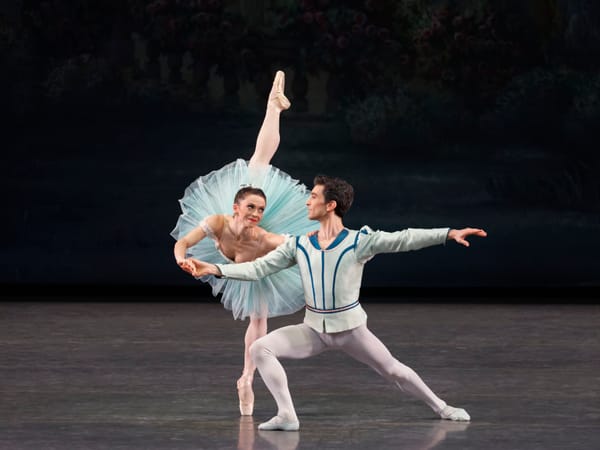
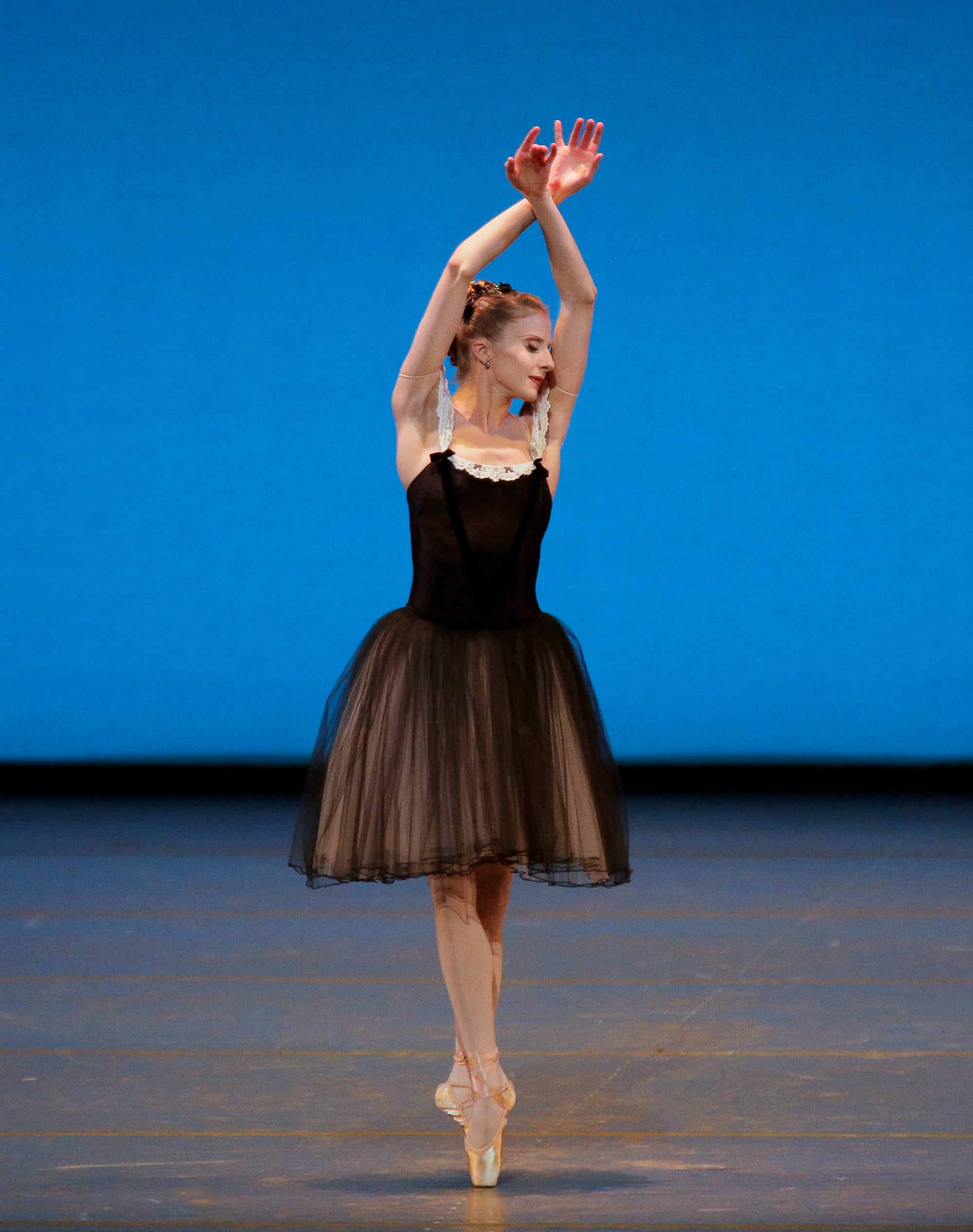
No such problems existed in “Mozartina,” where Sterling Hyltin, Anthony Huxley and Troy Schumacher delivered a crystalline performance of this classic. Hyltin in particular seemed to really like this role, as I cannot recall the last time I saw her execute each step with such enjoyment and make it feel so “right.” Despite the ballet’s challenges and demands for classical, clean execution to match Tchaikovsky’s reflection of baroque refinement, this ballet seemed to be one where all three dancers were comfortable being comfortable in, allowing for the steps and the score to really come into focus in the best way.
“It’s all in the music” Balanchine once said of “Seranade.” The quote was true of all three of this bill’s works – it was all in the music, and shown by most dancers onstage in Balanchine's steps.
copyright © 2019 by Marianne Adams