Isadora in the 21st Century: Interview with Lori Belilove
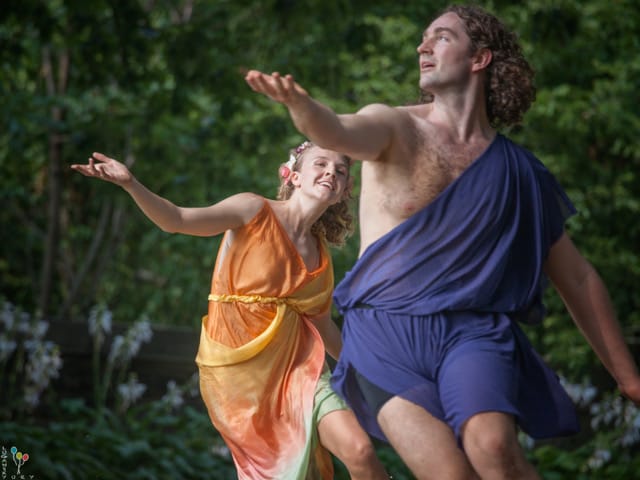
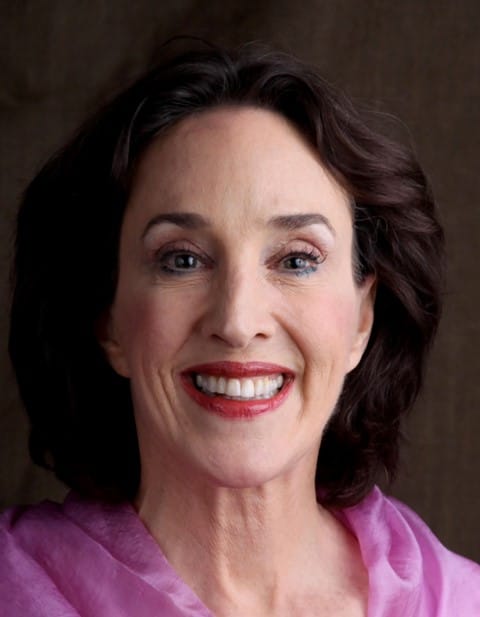
Isadora Duncan was and is an outlier – 100 years ago, a rebel against the academic dance establishment, and now, a pure classicist in a free-wheeling, eclectic dance environment. Today, no one embodies Isadora’s life and work more than Lori Belilove, director of the Isadora Duncan Dance Company and Foundation. Working out of a loft-studio in Manhattan’s Chelsea neighborhood, she has spent decades as a dancer, teacher, and choreographer, re-inventing Duncan Dance for the 21st Century. I talked with her over the last year, most recently on the last day of summer, 2022.
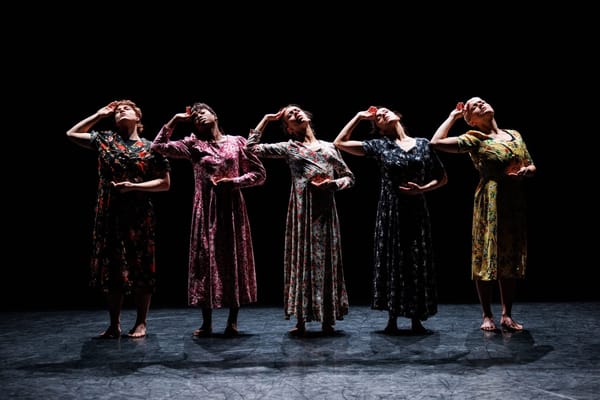
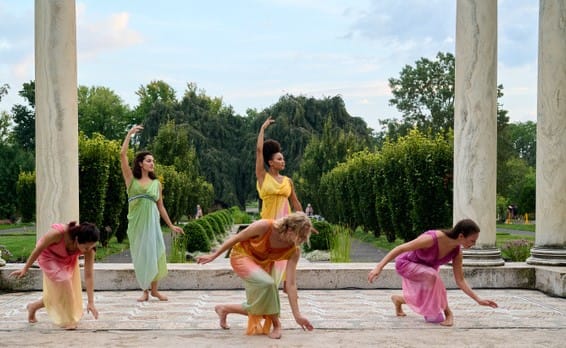
The Isadora Duncan Dance Company: L to R: Carolyn Yamada, Samantha Mercado, Hayley Rose, Diana Uribe, Emily D'Angelo
TP So what's new for the Isadora Duncan Dance Company?
LB: We just finished a series of outdoor performances – at Untermyer Park and Gardens in Yonkers (above), Fort Tryon Park in Manhattan, and Alice Austen House in Staten Island. And we've added to our repertoire a tribute to people fighting to defend their homeland in Ukraine. This kind of political theme is very much in the Duncan tradition – she went to Russia in 1920 and made dances that cry out for the downtrodden.
We have three new members, former apprentices who each add youth, energy and diversity -- Samantha Mercado, Diana Uribe, and our first male dancer, Sam Humphreys. Isadora was a universalist -– she believed dancing was for everyone.
TP How did you first encounter the legacy of Isadora Duncan?
LB: My mother was a forward-thinking woman, so the minute I turned twelve we were off to Europe for three months in our VW Camper. My older brother had studied piano, and when we arrived in Athens we met his piano teacher’s former dance teacher, Vassos Kanellos, who had studied with Isadora. He had books and paintings everywhere, and big bushy eyebrows.
I’m twelve and he’s seventy-something, and he says: “Will you come study with me? I think you’re the next Isadora!” So I go back home and read everything I can about Isadora. It was like I'd found a soul sister.
I started writing to Mr. Kanellos, and training in dance. I was looking for Isadora’s philosophy in the dance studios, but was very disappointed.
These were ballet classes?
Ballet and modern dance. And the way it was taught bothered me as much as the content. It was that old abusive manner, where students always in the wrong. I really thought Isadora was onto something different. I thought I was onto something different. I lived in Berkeley, California and we were onto something different!
This was the Sixties?
Yes. And by 1970 I was in Athens, where I studied with Vasos for two years. Then I came back and enrolled at Mills College in California, where I was able to design a triple major in dance, classics and religion.
Meanwhile there’s a group of women who danced with Isadora and claimed her legacy. How did you come in contact with that teaching line?
My brother was in school at Santa Barbara, where Irma Duncan had moved, so I traveled down there and studied with her. Finally, she said —Lori, you need to go back East where my best students and Duncan performers were settled.
Hortense Kooluris lived in Short Hills, New Jersey. She picks me up at Newark Airport, puts me in her daughter’s old room, and just embraced me. We danced in her garden and would drive into New York for classes and rehearsals with her and other Duncan teachers and dancers. This group formed the Isadora Duncan Centenary Dance Company in 1976.
Two things stood out -- they had no clue about staging, and no fresh vision. They were all 60-plus, and Duncan was their only dance training. I experimented with other techniques, and one I gravitated to was Doris Humphrey technique.
I can see that influence in your company – weight, momentum and swinging movements.
At the same time I was always training in some kind of ballet. I didn’t love the ballet aesthetic, but I did love the training.
What did ballet give you?
It gave me strength, discipline, a community... and the ability to reach other dancers, using the common language of arabesque and attitude for instance. Isadora tried to revolutionize dance training with basic action words – leg swings, knee bends, running, skipping, jumping.
And some beautiful made-up terms I heard in your class: wild pony, windsail, whirlpool.. . The essence of Duncan technique iI would say is inside the body, not on the surface. Agree?
Absolutely. What you see is this underpinning of breath, actually a kind of breath control, which translates into a look of freedom and spontaneity. You create buoyancy in your chest, a kind of “breath upon a breath” so your arms never press close to your sides.
I talked to a choreographer who said these gestures were refreshing 100 years ago, but today it's the “same old, same old.” How would you respond?
Isadora introduced a modern sensibility to dance in the early 1900’s, so I can understand how a dancer today might not see her work as revolutionary. She was offering freedom and joy in moving, which now we take for granted. But what is eternally vital about Duncan dance is that she wanted the person to be present in the movement, she wanted it to emanate from their authentic self ---rejecting the copycat mentality of traditional dance training. That’s the “same old same old.”
TP: What’s next for you?
LB: I'm busy teaching, dancing and choreographing -- many passions drive me: climate change, the war in Ukraine, women’s rights. But now I'm turning a lot of my roles over to the senior Company dancers. Having founded The Isadora Duncan Dance Foundation & Company, I can't be the chief cook and bottle washer forever. And they say they like it -- it feels more like their company now.
copyright 2022 by Tom Phillips and Lori Belilove