In with the Old
"Paquita", "In the Night", "Symphony in Three Movements"
New York City Ballet
David H. Koch Theater
Lincoln Center
New York, New York
February 6, 2025
"Paquita", Alexei Ratmansky's new ballet, was to have been danced as the middle ballet, but, due to an injury, this evening’s program had been rearranged, and the program opened with the main attraction. Unity Phelan, who was already dancing in the first two ballets, had to replace Ashley Laracey in “Symphony in Three Movements” and perhaps she needed a bit of a rest after “Paquita". A marathon evening for her, with the exalted classicism of “Paquita”, the romantic swooning of Robbins' “In the Night”, and the acerbic modernism of Balanchine's “Symphony in Three Movements”; her performances were all different, all nuanced, and all richly detailed.
The New York City Ballet’s orchestra may have been surprised to find themselves playing a compilation of frequently derided 19th century ballet composers but Alexei Ratmansky’s reworking of the Grand Pas, the glorious finale of Marius Petipa’s “Paquita”, included compositions by the notorious trio of Minkus, Drigo, and Pugni, as well as Adam (famous for “Giselle”), and the obscure Alexei Barmin and Edouard Deldevez. And play it they did, making the melodies sing and the rhythm bounce, providing a fine floor for the delicate filigreed dancing. “Paquita” is one of the ballets included in the Sergeyev notations (now at Harvard) which contain records of several Petipa works notated in the early 1900’s. Ratmansky has mined this collection for several revivals including a complete “Paquita” in 2014 for the Bayerisches Staatsballett. In a recent New York Times article, Ratmansky explained that this new Grand Pas is not an attempt at a compete stylistic revival, but an experiment in combining older steps onto the NYCB sensibility.
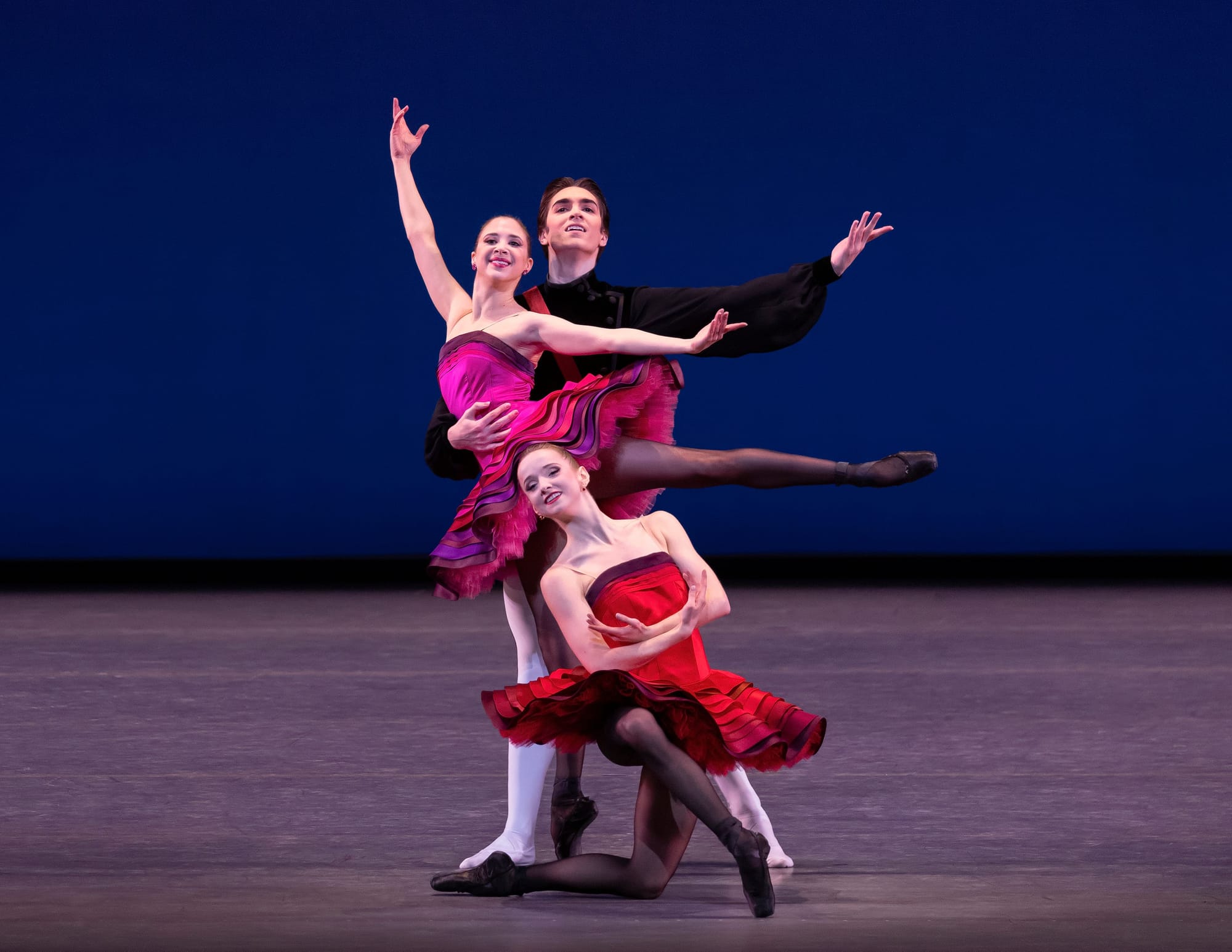
It barely acknowledges the plot, a grand mixture of the Napoleonic invasion of Spain, a noblewoman captured by gypsies, assassination plots, and love at first sight. Perhaps to distance the NYCB production from the traditional trappings, there were no sets and no longer, softer tutus. The costumes for the opening aperitif, Balanchine’s 1951 reworking of Petipa’s Act I pas de trois for a man and two women were particularly disappointing. The short, stiff, sleeveless tutus, bright red and hot pink, (designed by Jérôme Kaplan) looked like something Marilyn Monroe would wear to show off her diamonds, and the black tights and black shoes looked like they were copied from the dancehall girls of “Western Symphony” and helped hide the glorious footwork. The costumes for the Grand Pas were much better (no black tights), but the tutus did have a stiff, 1950’s modernist feel with black tops, short, stiff white skirts with yellow and black sunbursts for the corps and soloists, and red and black for the principal and again were sleeveless, which seemed far too modern for the delicate and refined épaulement of the choreography. It may be that the designer and the choreographer wanted to separate the new production from its 19th centurty roots, but the costumes seem to me to be a bit self-consciously chic and at odds with the innocent melodies of the music and the joyful inventions of the choreography. And surely, NYCB could have afforded a few swags and maybe a chandelier or two to indicate a ballroom for the wedding; even the brightest jewels look better in an elegant setting.
The dancing, fortunately, was full of very bright jewels. Balanchine’s “Minkus Pas de Trois”, danced by Erica Pereira, Emma von Enck, and David Gabriel, with its infectious music, was a joy from the very beginning, as the dancers entered, prancing as one with locked arms, a picture of perfect harmony. The women’s solos were full of quick, fleet steps, Pereira’s with frisky pas de chats, which she flew through, and von Enck’s with unexpected balances. Gabriel danced with a fine elastic bounce through some intricate formations, especially cabrioles landing on one foot, which he tossed off with ease. Like the “Sylvia” pas de deux, City Ballet hasn’t danced this since 1993, so I hope it will stick around a while longer this go round.
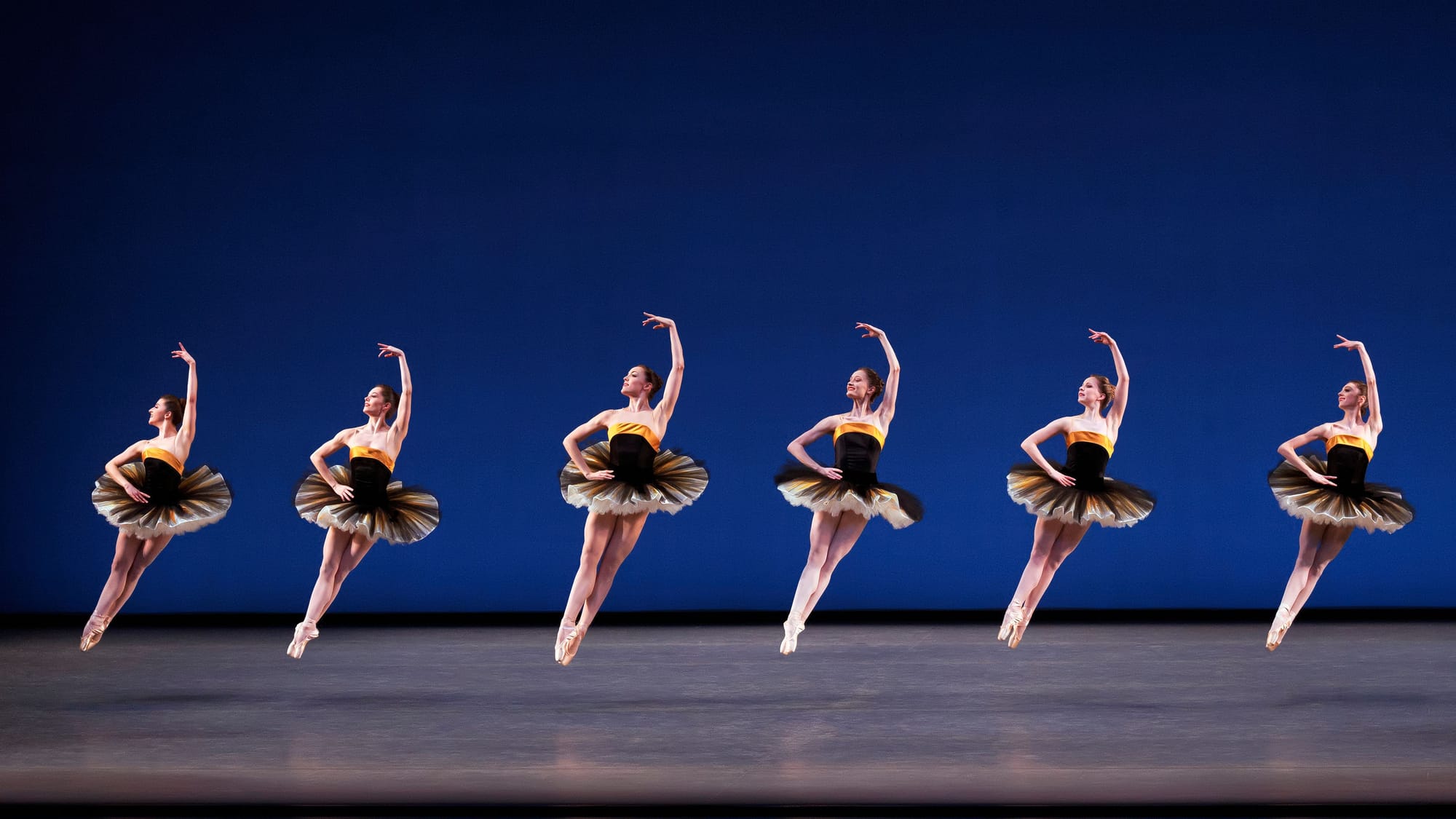
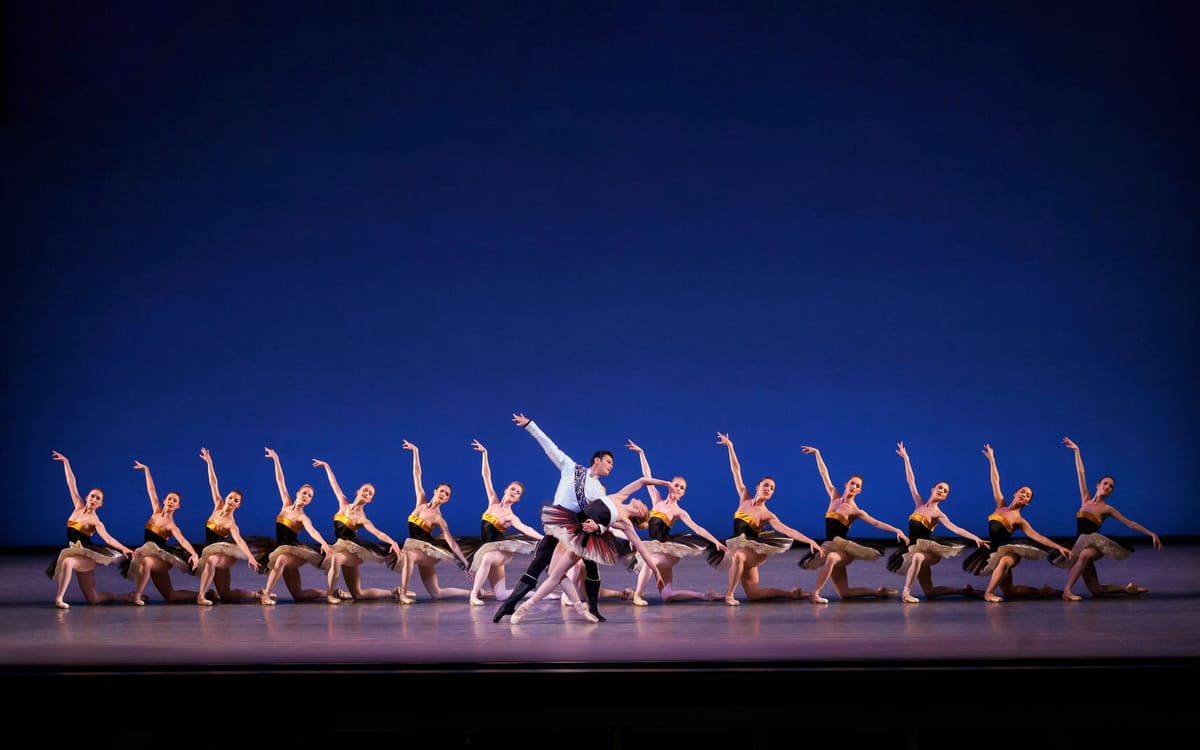
The pas de trois seems to be a salute to friendship and fun; the Grand Pas, with it cascade of female corps formations and solos (the lone man does get a quick look in) seems to be a love letter to beauty and it is both comforting and uplifting that such perfect forms exist. The corps formations, with straight lines broken up by smaller groups dancing lots of juicy emboîtés sets a wonderful frame for the soloists—geometry designed by a master.
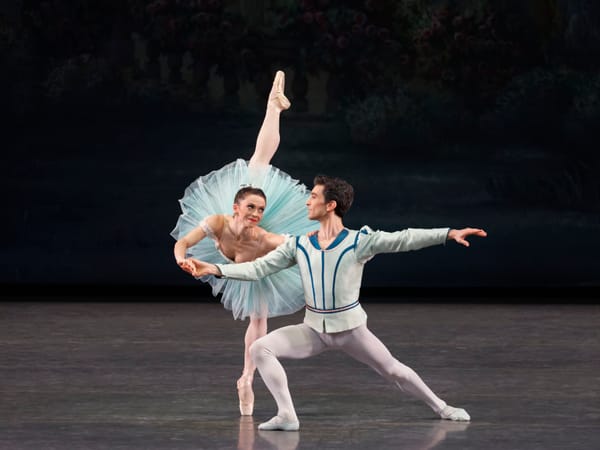
The heart of the ballet are the dances for Paquita (Sara Mearns), her beloved Lucien (Chun Wai Chan)—both unnamed in the program—and her four companions, Olivia MacKinnon, Unity Phelan, Indiana Woodward, and Emily Kikta. Like the “Sleeping Beauty” fairies, each soloist has a distinctive theme, a beautiful facet in the jewel.
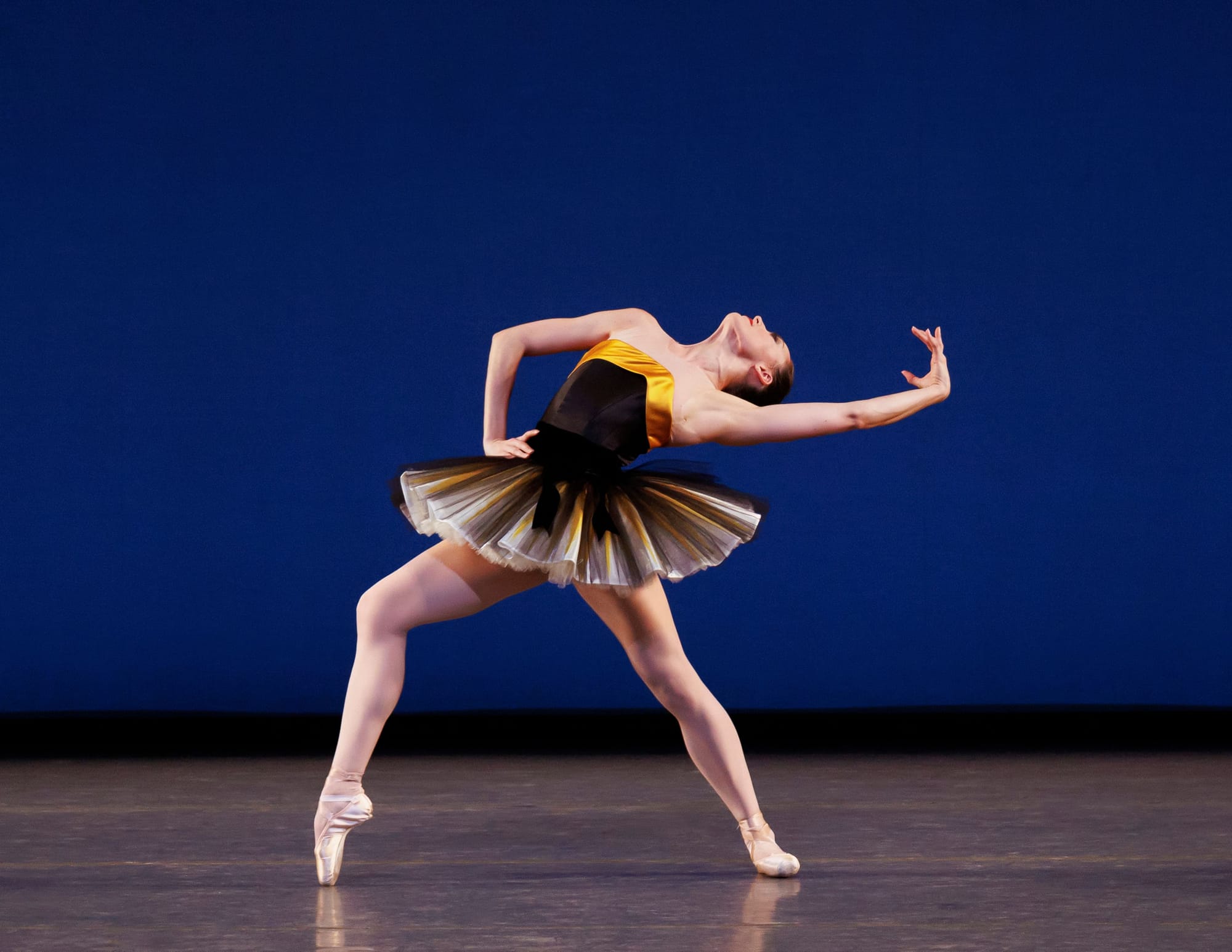
All were very well and stylishly danced, with softer arms and more twisted shoulders than usual. MacKinnon got some lovely little jumps, constantly on the move, while Phelan was more languid. She made her solo into a little poem, calm and controlled, with serene arabesques; she looked like she was dancing on a moonbeam. Woodward’s solo was more familiar, known to current audiences as Amour from “Don Quixote”. I loved the way her foot caressed the ground before breaking into those little bent leg leaps, like a baby goat just discovering grass. Kikta’s solo was full of majestic backbends and sudden balances, showing off her luxurious line.
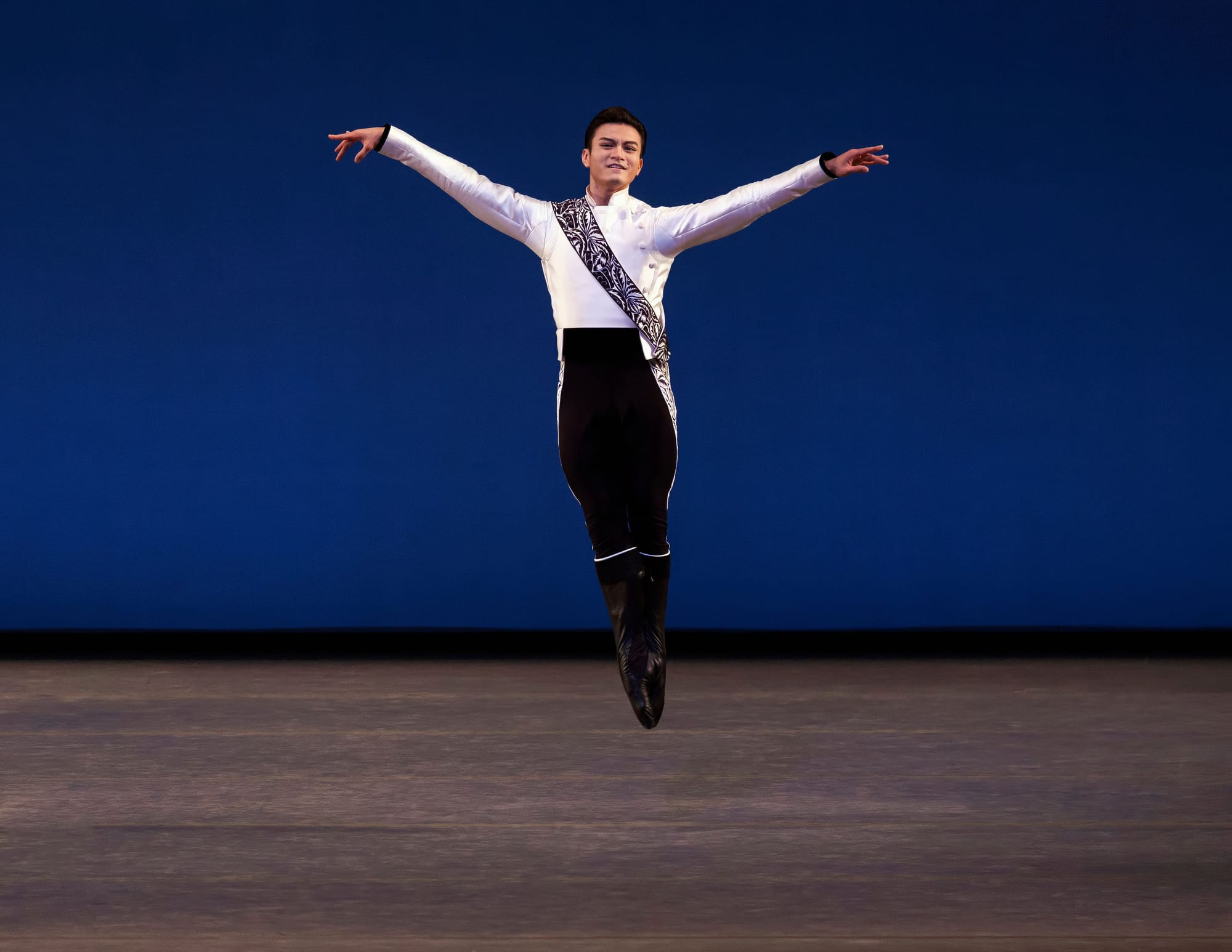
Chan, in a militaryish costume, had a dignified gravity, seeming to be overwhelmed with joy. His difficult, but not flamboyant, solo was full of entrechats and nonstop little jumps, which he danced with an elegant ease. Mearns, in her harp solo, looked a bit uncomfortable in the tricky balances, and her arms sometimes seemed to be just going along for the ride, though her final series of turns were thrilling.
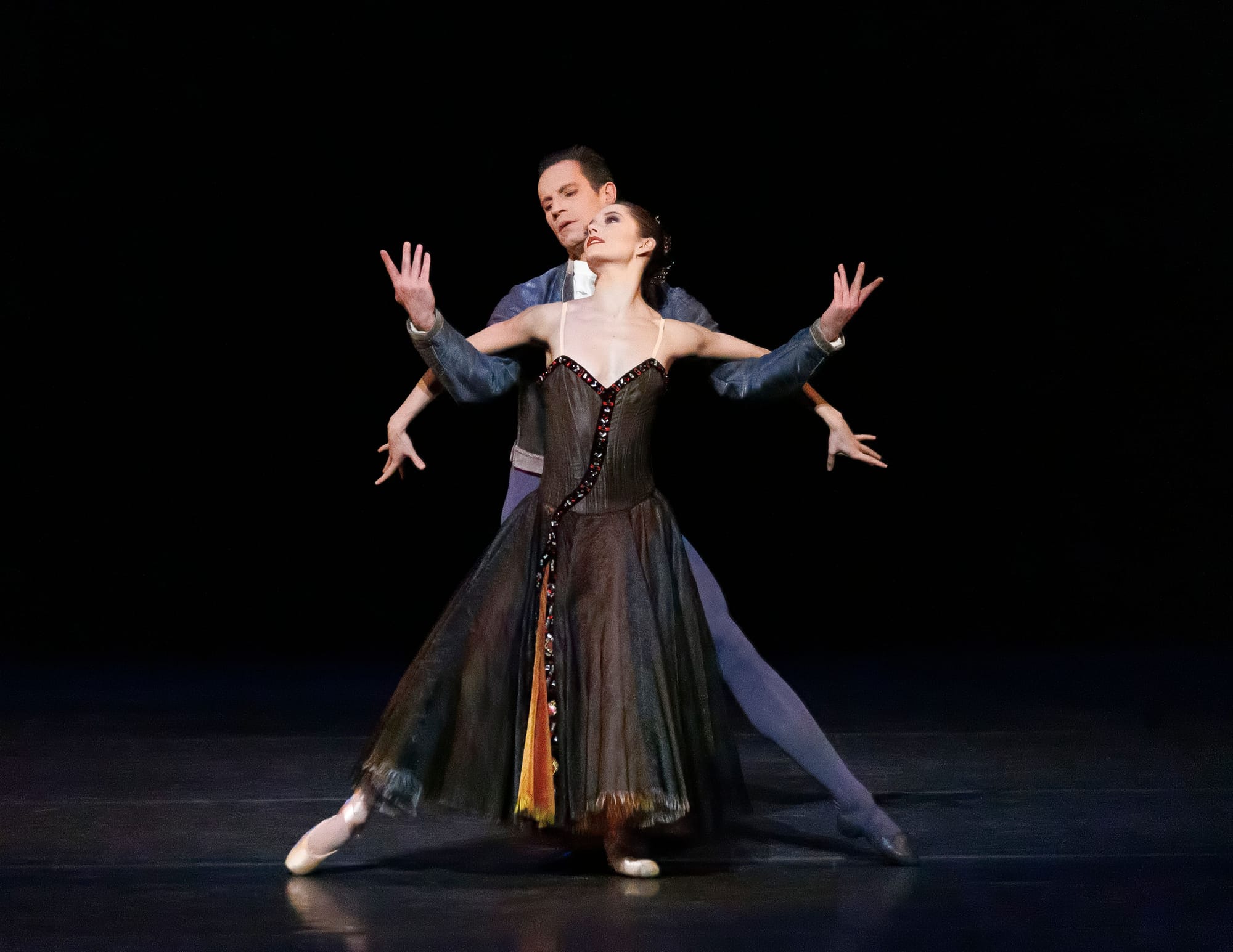
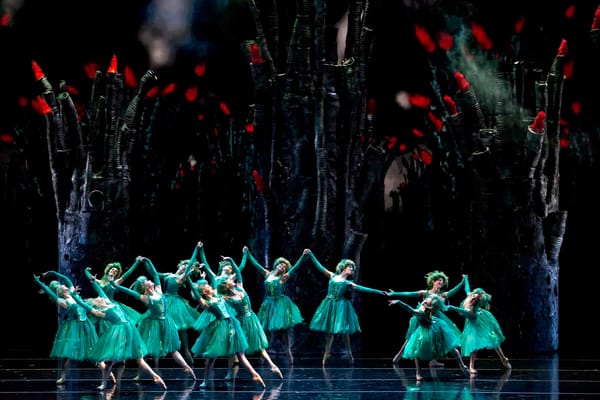
There are lots of thrilling turns and lifts in Robbins’ “In the Night”, a romantic reverie for three couples to Chopin, full of billowing chiffon and gleaming lights. Olivia MacKinnon with Alec Knight were the youthful innocents, Emily Gerrity and Tyler Angle the older, slightly jaded couple, and Unity Phelan and Andrew Veyette the can’t live with you, can’t live without you match. The Chopin flows nicely (played by Elaine Chelton) but the dances do meander with little variety; it is a pleasant reverie but there are no real revelations.
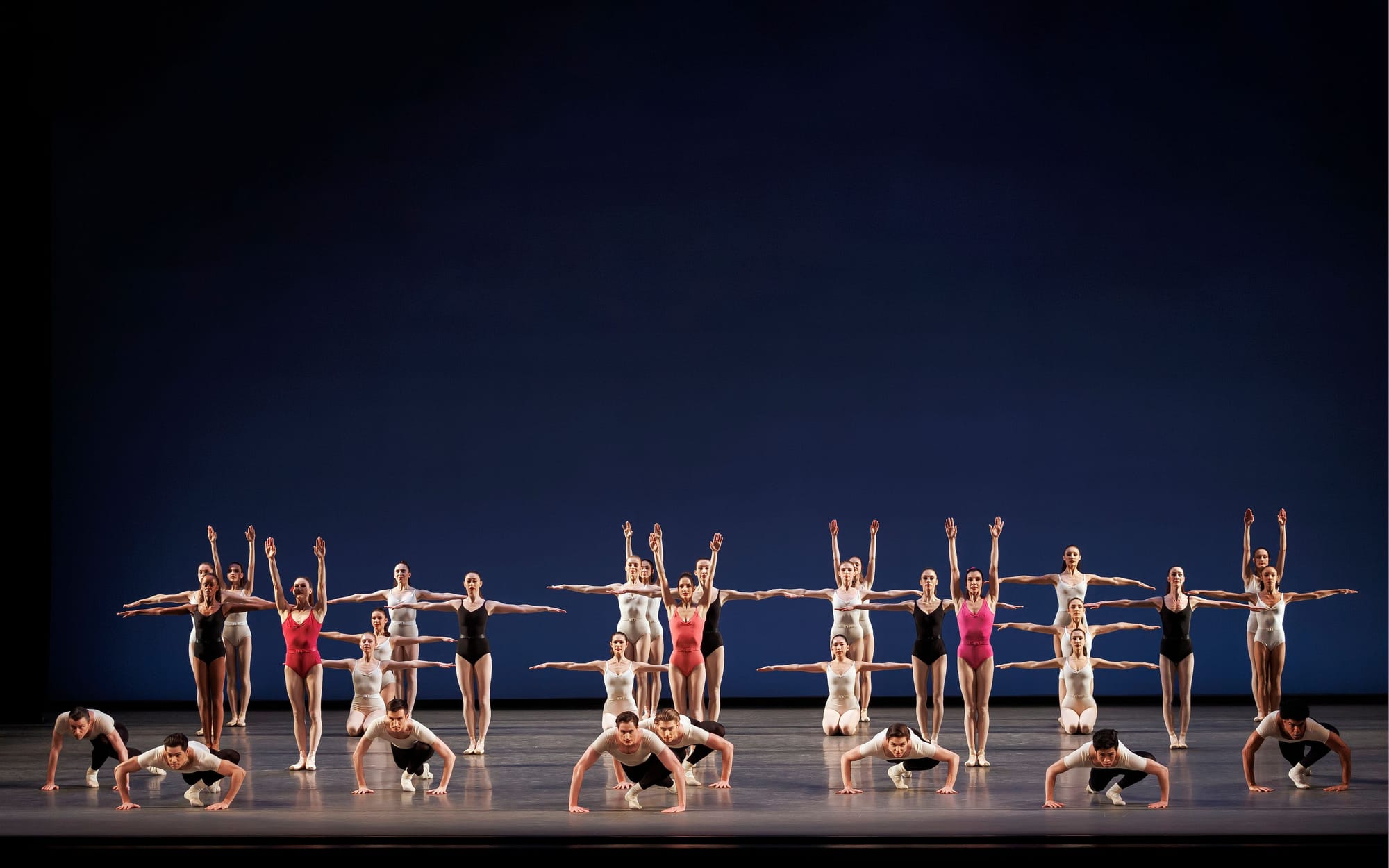
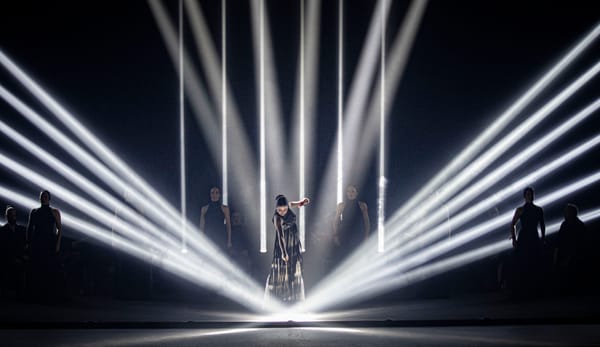
The bracing “Symphony in Three Movements” would seem to have little in common with the classicism of “Paquita”, but it was intriguing to see them together. Balanchine’s corps, with the straight lines, shifting shapes, and strong dancing, did seem to be the descendants of Petipa/Ratmansky’s Spanish charmers. The opening diagonal was sharp and clear, each dancer stabbing the air in turn. Ashley Hod, in her debut, with KJ Takahashi were the jumping couple, and jump they did. Takahashi really did seem to hover in the air, and Hod has a distinctive, sharp snap to bring her legs up. Though she is a bit taller than he, there were no issues with the partnering and their dancing was electric.
Megan LeCrone, with Jovani Furlan (another debut) danced the other secondary couple; LeCrone, always her best in more modern works, gave her leggy solo a spiky wit, while Furlan gave his intricate steps a grounded weight. The hardworking Phelan danced the central pas de deux with Aarón Sanz. She had a feminine playfulness, as if the oriental tinge to the music was a game, and she and Sanz flowed through the odd shapes with an elegant lightness; a fine end to an amazing evening.
© 2025 Mary Cargill