Hope Prevails
“Hope Hunt and the Ascension into Lazarus”
“Navy Blue”
Oona Doherty/OD Works
Ted Shawn Theater
Jacob’s Pillow Dance Festival
Becket, Massachusetts
Sunday, July 30, 2023
To be honest, I was a little afraid of Oona Doherty. The press materials sent out by Jacob’s Pillow, where Doherty’s company, Oona Doherty/OD Works, performed last week, made her sound angry and aggressive. Who needs more negativity after two-plus years of pandemic trauma? But Doherty confounded expectations. To be sure, there is anger in her dance. She is a native of Northern Ireland, and it’s hard to believe anyone from that beleaguered land wouldn’t harbor some degree of anger. The surprise was that there was so much more than outrage. Doherty’s work has a complexity and richness that made me wish I had seen multiple performances, and not just one.
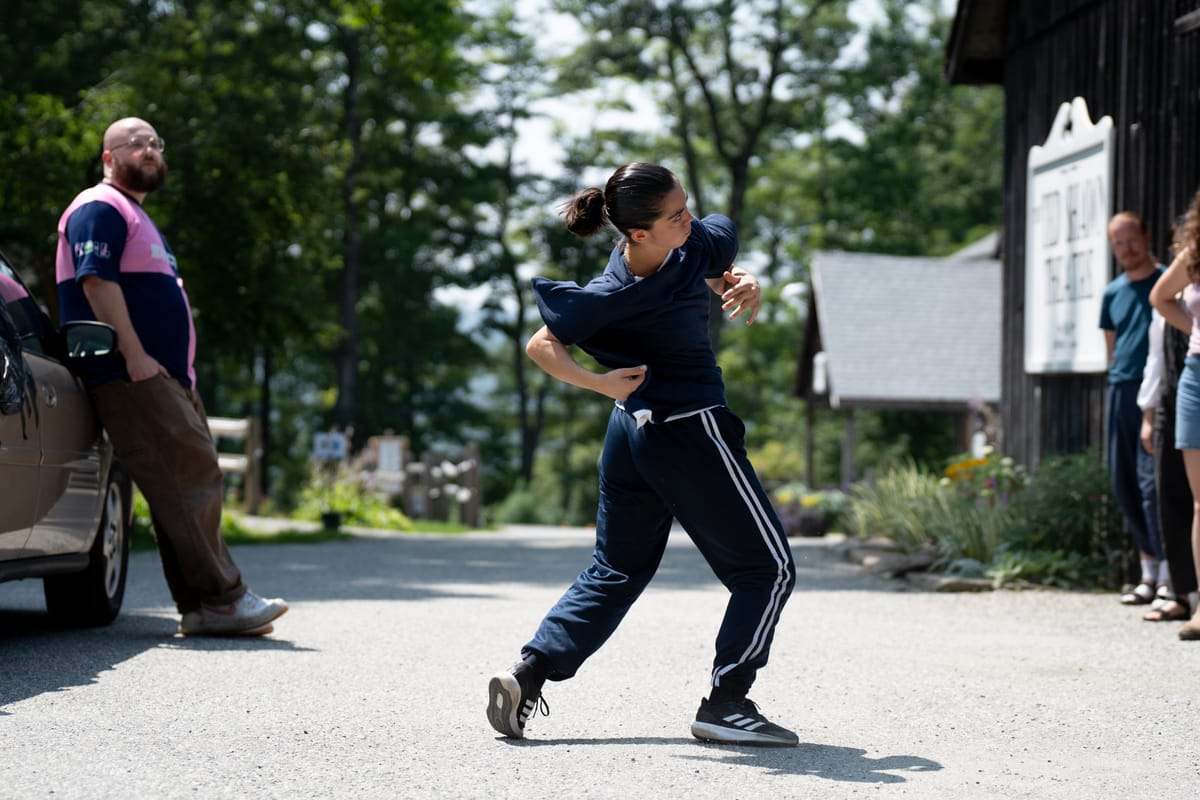
Doherty is not only a choreographer, she is a poet, and her work is full of words, as well as movement and music. The first piece on the program was a solo, Hope Hunt and the Ascension into Lazarus, from 2016. It started with a pre-performance bit in which a car drove up outside the theater, music blaring from within. A dancer, Sati Veyrunes, emerged along with the driver, John Gunning. Roaming the area near the car, Veyrunes loudly ordered everyone into the Ted Shawn Theater, which the crowd slowly, and with some hesitation, obeyed. Meanwhile Gunning drove off while Veyrunes pathetically shouted after him to come back. It was a funny moment that pointed to Doherty’s sly sense of humor in work that tends to be overshadowed by serious themes.
Once inside the theater, the solo, proper, began with Veyrunes going through hip-hop inflected moves set to music of Maxime Jerry Fraisse, and accompanied by Veyrunes’ copious verbal remarks, some of them in French and German. The dance is all about tough kid posturing, calling up images of strutting teen-age gangs out to impress and intimidate. Veyrunes is small in stature and does cockiness very well. But beneath the posing ran a thread of fear and vulnerability. We weren’t seeing a seasoned warrior, but a grown-up child facing a threatening world. At the end, Veyrunes appeared in white, suggesting the hunt for hope, dashed in so many ways in Northern Ireland, is still alive.
The performance program notes stated that the figure in Hope Hunt is male. However Doherty ignored gender, casting Veyrunes in the solo. She is a virtuosic dancer whose body has a tense flexibility that is always interesting to watch, and whose mood can transform instantaneously from snarling, to pensive, to mischievous. Despite all the swagger, she also conveyed the character’s essential defenselessness in a way that was particularly touching.
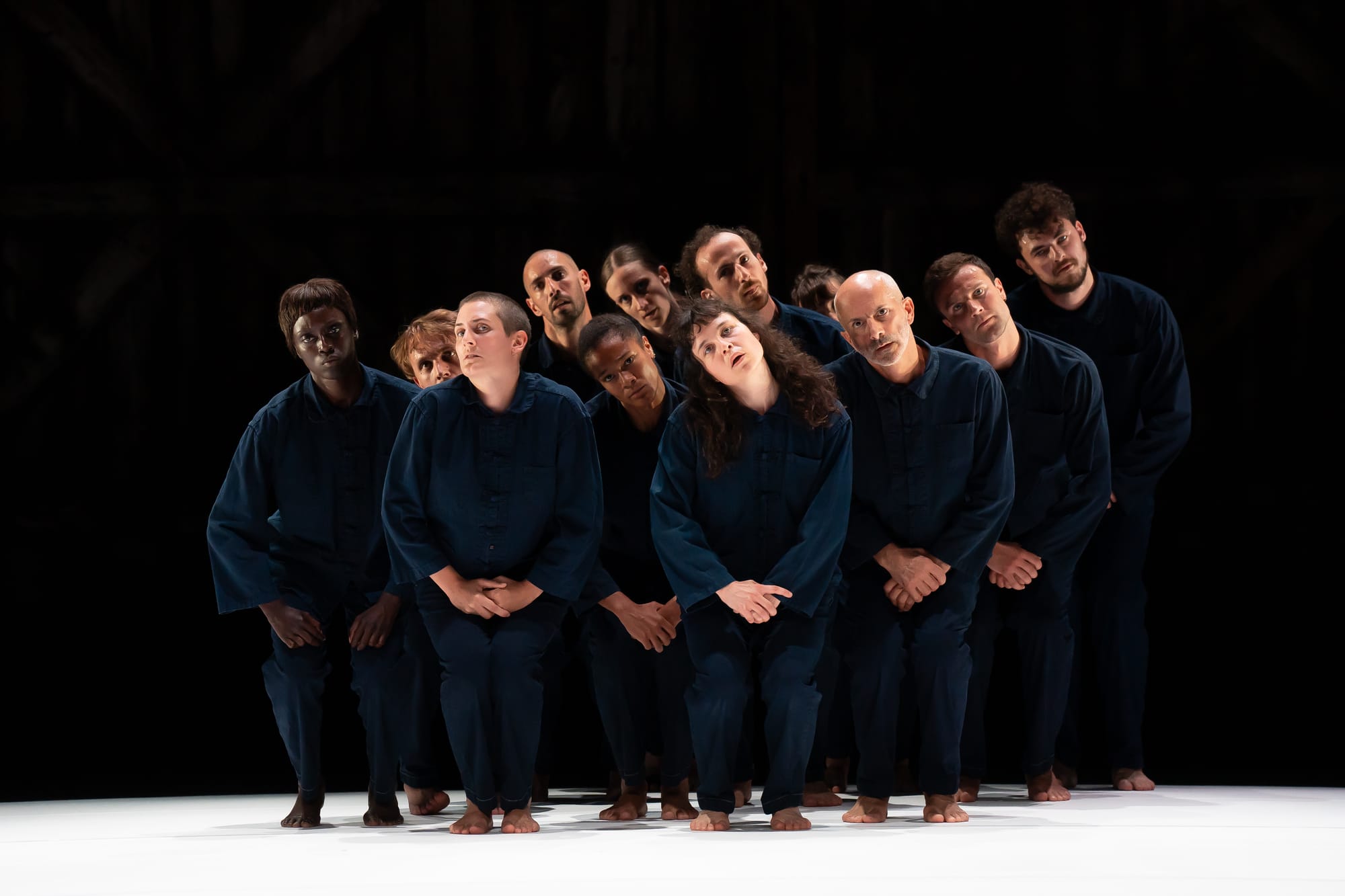
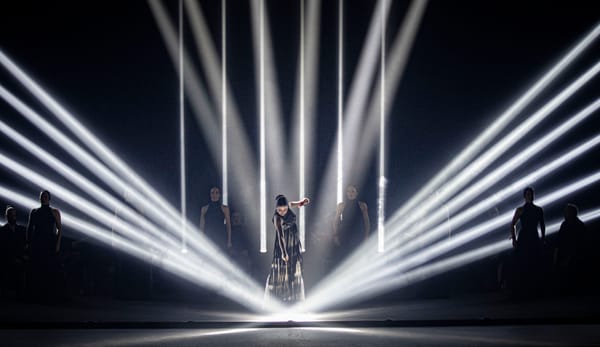
“Navy Blue,” the second and final work on the program, was a U.S. premiere that Doherty created last year. It is a large, ambitious piece that concerns death, and, if not redemption, at least resistance. It is set to music of both Rachmaninoff and the pop musician/composer Jamie xx. The two very different kinds of music intertwine in the work. “Navy Blue” starts with a dozen dancers onstage, dressed in dark blue coveralls and moving in patterns that shift in waves. The movement, while often pedestrian, is more balletic than in the earlier "Hope Hunt". There are signs of a pas de bourree here, an arabesque there, adding a formal, composed look to the movement.
Suddenly a gunshot is heard and one of the dancers falls. As the piece advances, more dancers fall, while those left behind look about in confusion. They huddle together, but they are without protection since no one seems to know who the enemy is or where death is coming from. At times, individuals appear from within the group to dance alone, as if defying the violence, but they are often the next victims. Finally, when most have fallen, there is a black-out. Then the dancers reappear, moving about from within a soupy darkness while a recorded text speaks of conflict, greed and the failures of society. As the darkness lightens, the dancers line up, creating an image of resilience in a world gone wrong. If they are not openly rebellious, they are survivors, and they aren’t giving in.
To say that Doherty’s dances resonate with our times is putting it mildly. At the same time they seem to be a specific response to the decades of turmoil in Northern Ireland. Whatever the case, these dances make powerful statements that demand the viewer sit up and take notice. And while the message is hardly one of Pollyanna uplift, it is certainly in line with carefully calibrated hope. One final note, this on the company’s twelve dancers, who come from all over Europe and are notable for both their technical versatility and expressive range. Every one of them was a pleasure to watch.
copyright © 2023 by Gay Morris