Going to the Dogs
"Company B", "Scudorama", "Diggity"
Paul Taylor Dance Company
David H. Koch Theater
Lincoln Center
New York, NY
November 7, 2025
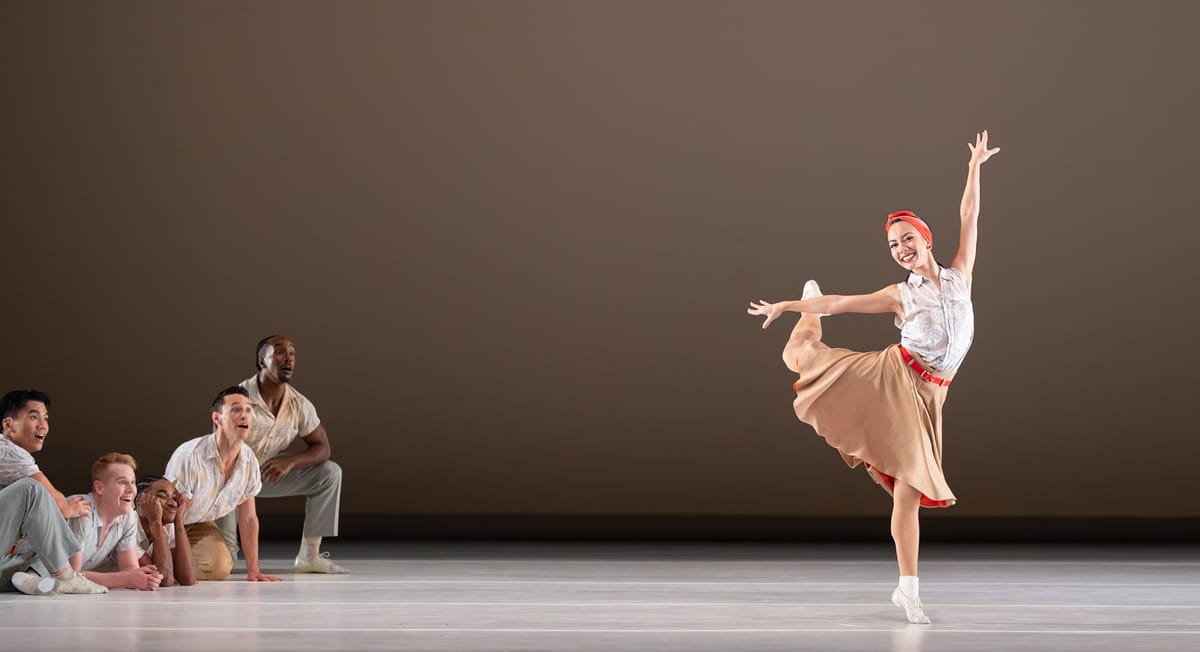
It may have been accidental but this all-Taylor program had a canine theme--there were lots of dogs, flat metallic ones sitting on the stage for the dancers in the final work, “Diggity”, to maneuver around and Taylor has also explained that one of the inspirations for the middle work, the inscrutably surrealistic “Scudorama” was the memory of a dog pulling furiously against a chain. There are no actual dogs in “Company B”, though the work, set to recordings by the Andrews Sisters, does feature the dogface soldiers of World War II dancing up a storm. There were no dogs in the dancing, though, as the company looked invigorating, committed and dynamic.
“Company B” begins and ends with cast dancing to the upbeat “Bei Mir Bist du Schön” and sending the audience home humming, though it also begins and ends in darkness, with silhouetted soldiers falling to the ground, a haunting reminder that the soldiers who danced to those wonderful songs were also dying overseas. The dancers were very impressive, giving each song an individual flavor. Lisa Borres Casey and Austin Kelly tore through the “Pennsylvania Polka”, a youthful couple without a care, while behind them, bodies were falling. On the lighter side, Lee Duveneck was impressively low-key as the goofy guy with the glasses who couldn’t believe his luck in “Oh Johnny”—he made him real, not a comic stick-figure. Payton Primer, new to the company, gave a innocently sultry performance in “Rum and Coca-Cola”; Taylor used the song’s upbeat calypso lilt to show his dogface soldiers relaxing for a short while. Though the mother and daughter may be “working for the Yankee dollar”, Taylor didn’t forget that those Yankee soldiers were also likely to die.
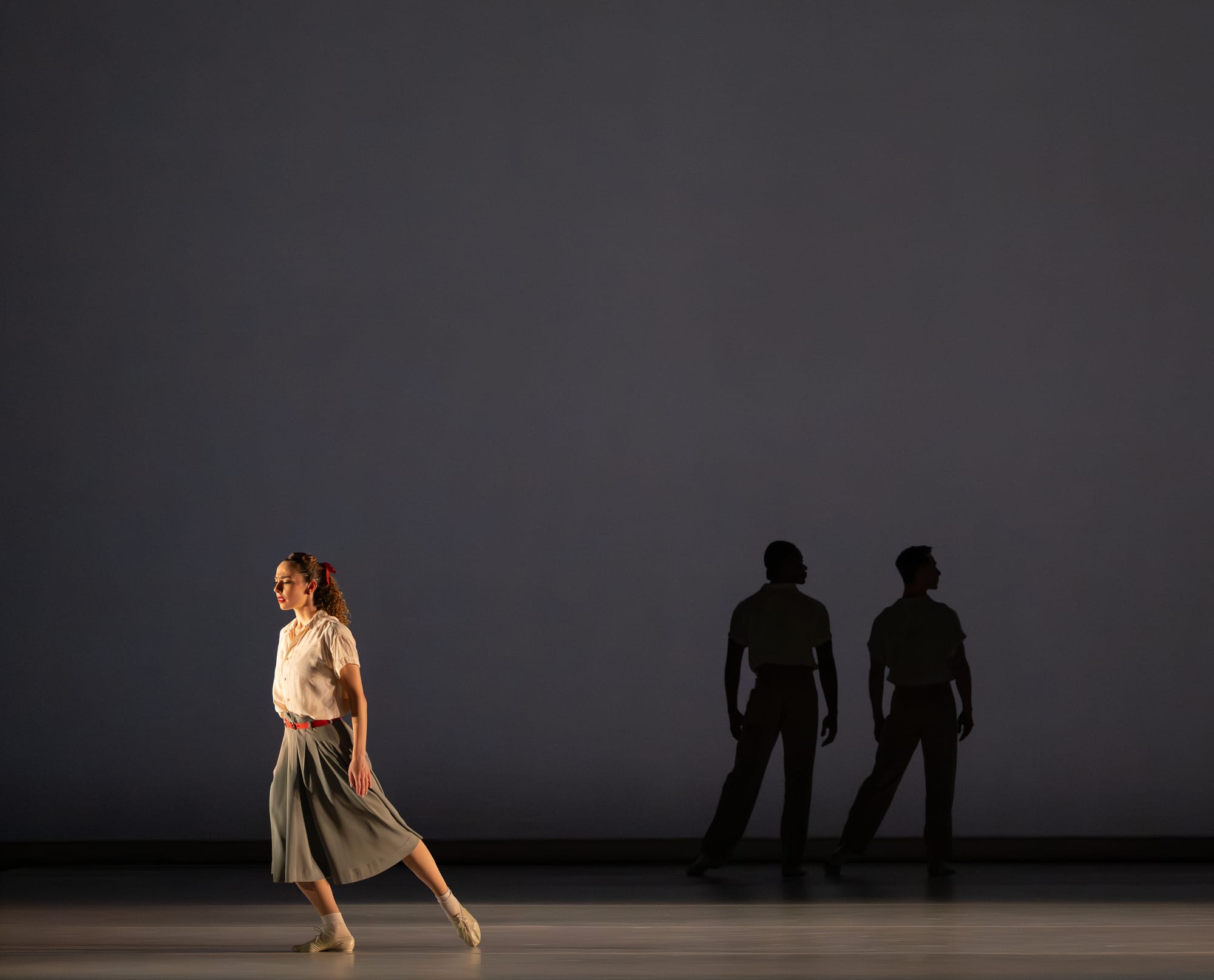
Jessica Ferretti was particularly moving as the solitary woman in “I Can Dream, Can’t I?”, pulled by the melody and moving as if lost in her memories; her brief moments of anger seemed like an anguished cry. Alex Clayton in “Tico Tico” seemed to be trying and failing to outrun the bullets and John Harnage made the fiendishly fast choreography of the “Boogie Woogie Bugle Boy” look smooth and fluid and danced as if he were thrilled to be tooting his horn for the boys.
Elizabeth Chapa and Devon Louis gave “There Will Never Be Another You” a haunting lyricism, and it seemed as if Chapa were really creating him from memory. Louis, a tall, powerful, dynamic dancer, looked almost transparent as he moved slowly and lightly around her before finally disappearing into the background with the other ghosts.
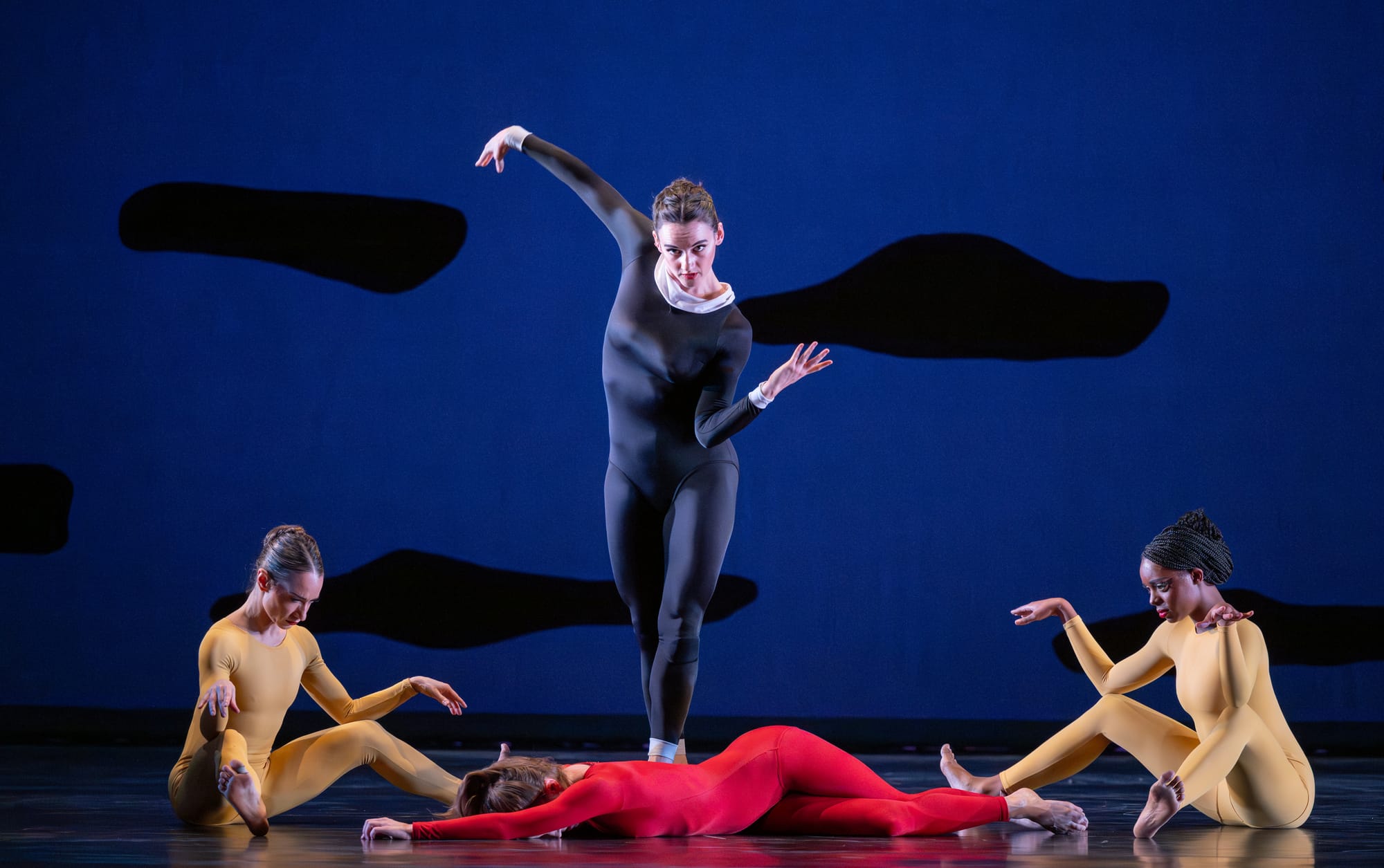
Louis was not ghostly in “Scudorama”, choreographed in 1963, as he dominated the proceedings. A scud, according to Wikipedia, is a low-lying, ragged cloud, and Alex Katz’s decor is a dark backdrop of cloud shapes. Taylor’s notes also quote Dante—"What souls are these who run through this black haze…the nearly soulless whose lives concluded neither blame nor praise”. The dancers huddled on the ground seemed to be waiting in Limbo, dazed and confused. Louis, dressed in a natty suit, was the first to struggle up, walking warily through the group. The work had the hallucinogenic logic of a nightmare, as the dancers emerged from the huddle, sometimes tortured by three demonic women in black leotards with white collars which made them look like demented Puritans, sometimes dancing furiously, and sometimes huddling under colorful blankets, as if the work were a bizarre “Beach Blanket Bingo”.
Louis, now in a purple leotard, had a powerful solo, with astounding balances and strong jumps, and later a grim duet with a limp Kristin Draucker, winding her around his neck like an inanimate snake. The complete lack of logic combined with the powerful and committed dancing made the work disturbing, fascinating, and unforgettable.
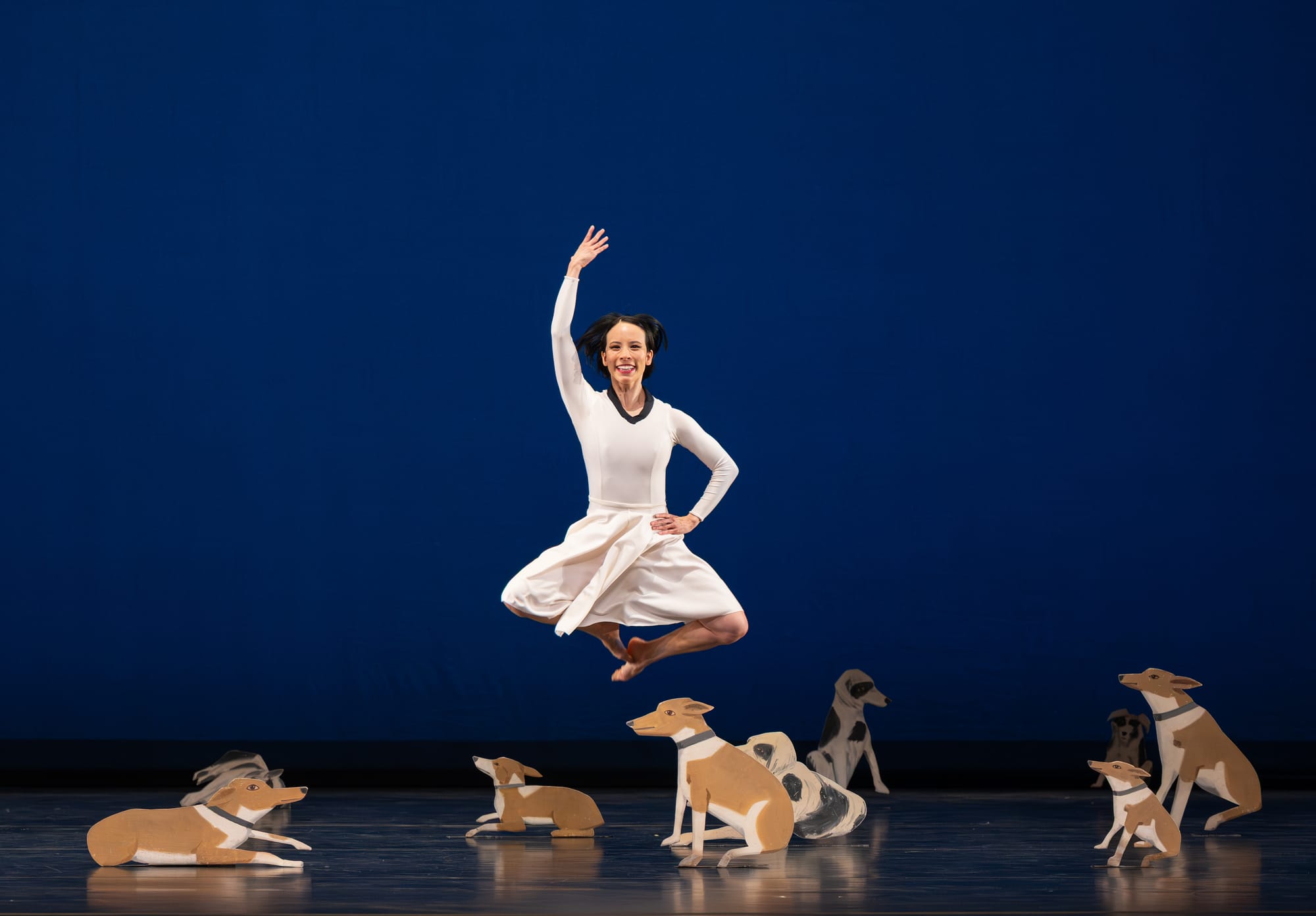
Alex Katz also designed the sets and costumes for the more lighthearted “Diggity”, from 1978. Madelyn Ho, wearing a sporty white dress, opened as the mistress of ceremonies bouncing around the flat metal canine cutouts. Her radiant joy and technical prowess (at one point, she rotated around the men lifting her with a carless nonchalance) were invigorating. The rest of the cast emerged, (three women in similar white dresses and three men in beige chinos) bounding heedlessly through the obstacle course of dogs to dance a series of jaunty unconnected dances to Donald York’s jaunty commissioned score.
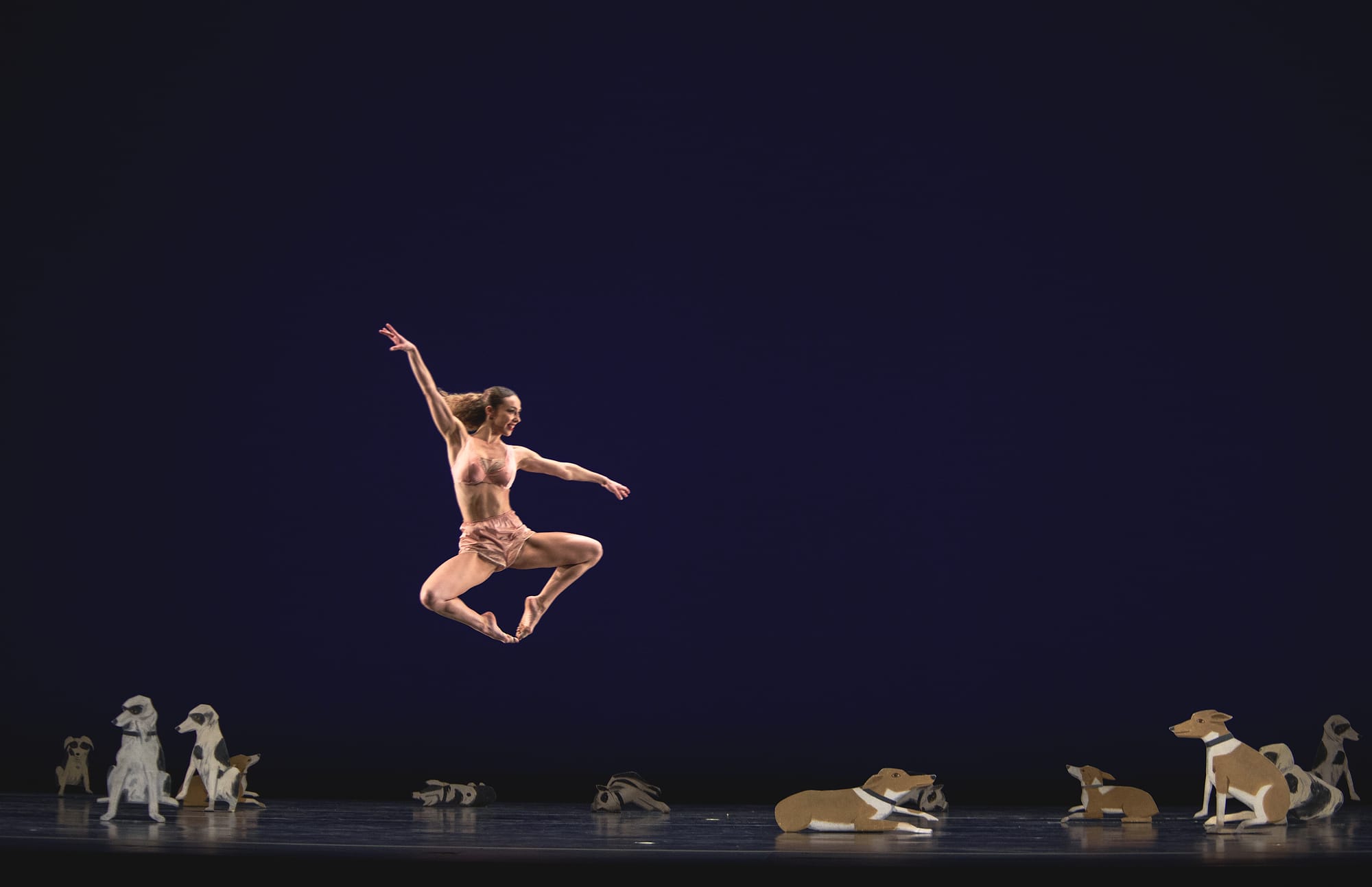
In a delightful non-sequitur Jessica Ferretti, wearing saucy French lingerie, romped enticingly through the group. In another unexpected moment, a large flat cabbage emerged, revered into a sunflower, and the music developed a “Latin from Manhattan” rhythm, with Lisa Borres Casey oozing through the notes with some of the most elegantly fluid wrist movements ever seen. The sunny, crazy, delightful work included the cast briefly barking at the audience. They seemed liked dogs having fun--the audience certainly was.
copyright © 2025 by Mary Cargil