Going to Extremes
"Runes", Post Meridian", "Brandenburgs"
Paul Taylor Dance Company
Joyce Theater
New York, New York
June 26, 2024
Marketing has christened the Joyce’s week-long Taylor season as “Extreme Taylor”, a perfectly accurate designation since all of Taylor’s works are extreme challenges, requiring both physical strength and an internal fierceness strong enough to transport an audience. This program highlighted Taylor’s variety; “Runes” (1975) showed his fascination with communal rituals, the rarely seen “Post Meridian” (1965) featured his sly and sometimes oblique humor, and “Brandenburgs” (1988) celebrated his classical exuberance and each dance had thrilling performers.
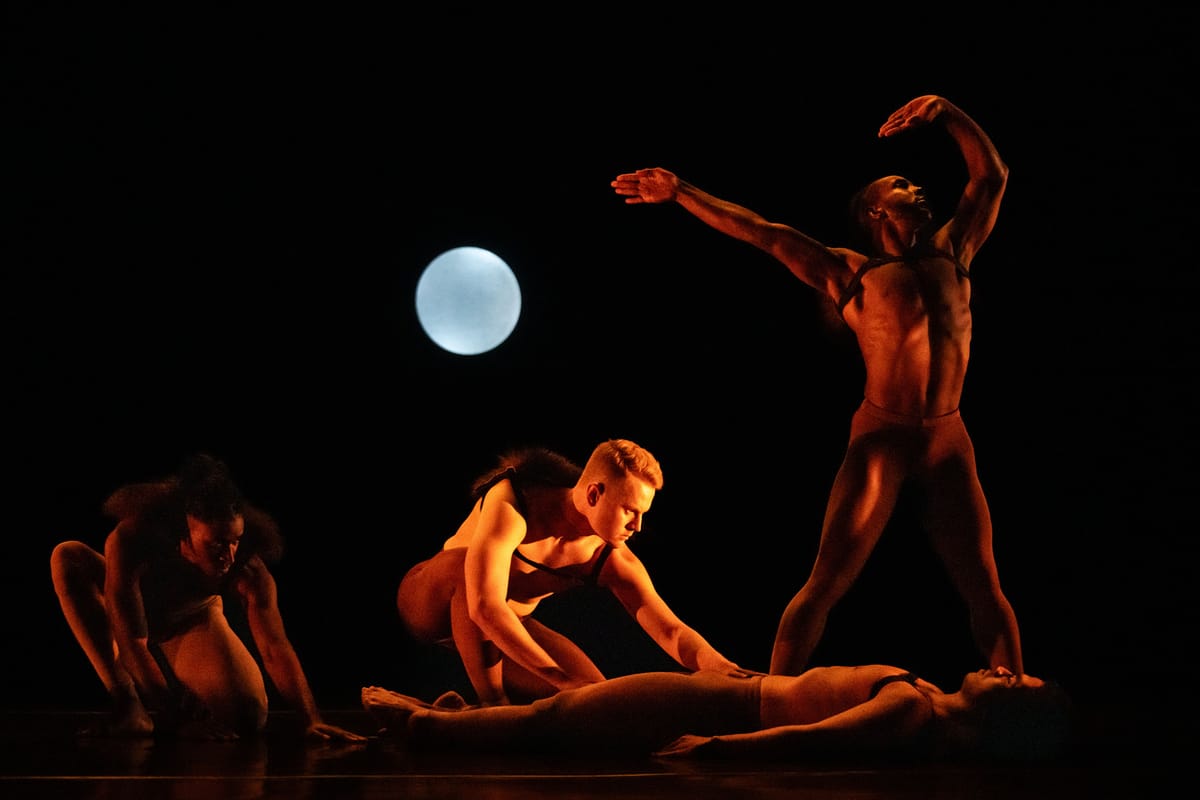
Gerald Busby’s music for “Runes” (unfortunately played on tape) set an ominous tone, as the jagged piano alternates between urgent rushes of sound and mysterious shifts of mood, often with insistent, repeated notes. The work opened with a man (Austin Kelly) lying on the floor surrounded by a crouching group with staccato, mechanical, almost grasping arms. They seemed to be part of an archaic ritual, either a sacrifice or an initiation; the mood was more significant than any literal meaning.
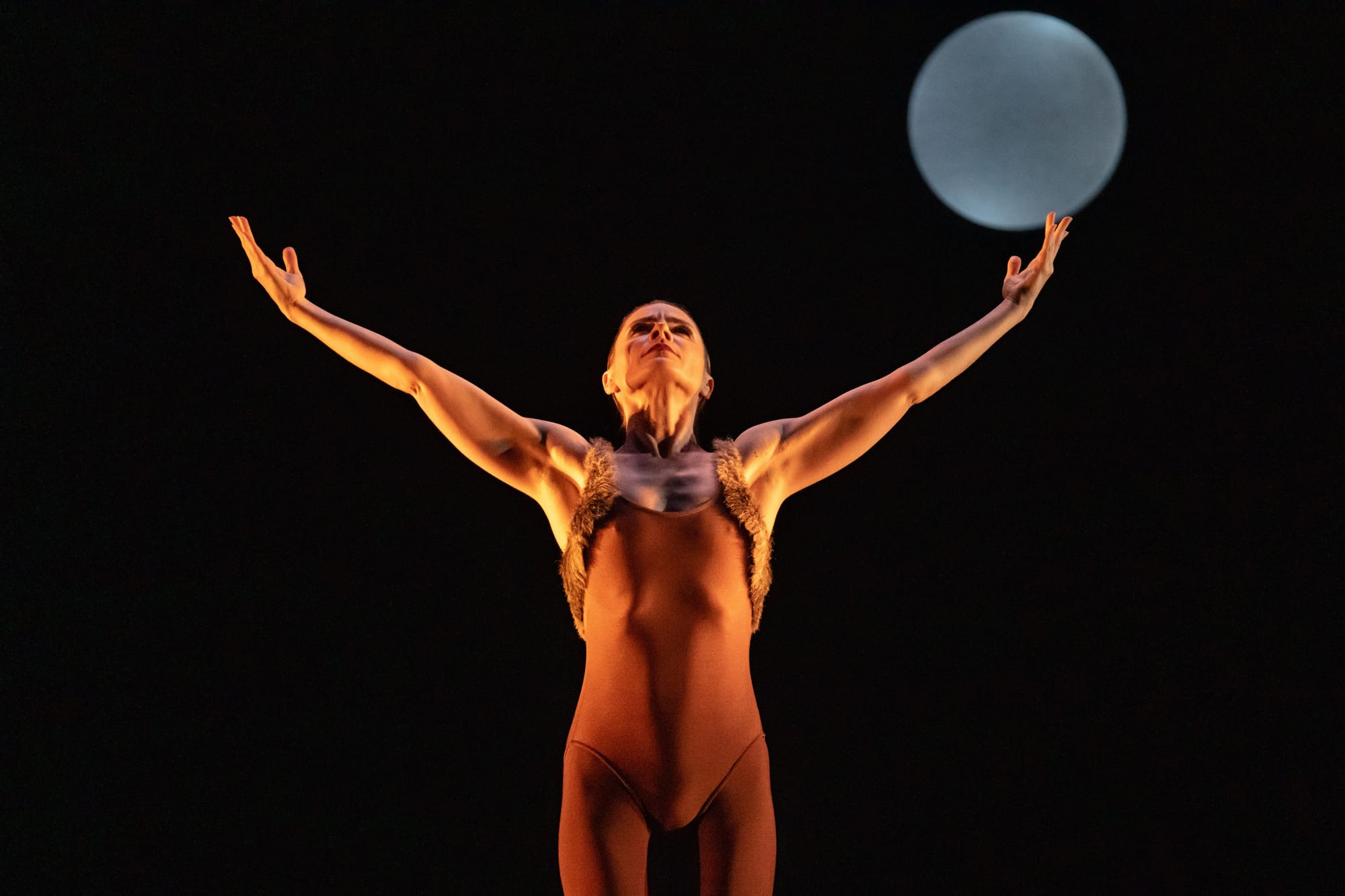
The dancers, bathed in a coppery light, were fierce and frantic, creating sharp, clear vignettes. Eran Bugge and Christina Lynch Markham were especially memorable, Bugge, for her low, grounded, predatory runs, and Markham for her frantic, agonized solo. Alex Clayton, dancing in a semicircle of shadows, seemed to pulling some mysterious power from the earth, and Madelyn Ho looked like an angry deity, eager to destroy him.
But powerful as the individual performances were, Taylor’s massed groupings dominated, as lines merged and separated around an ever-changing victim. The program’s notes describe “Runes” as “secret writings for casting a spell”—the work’s secrets may be inscrutable but the spell it casts on the audience is undeniable.
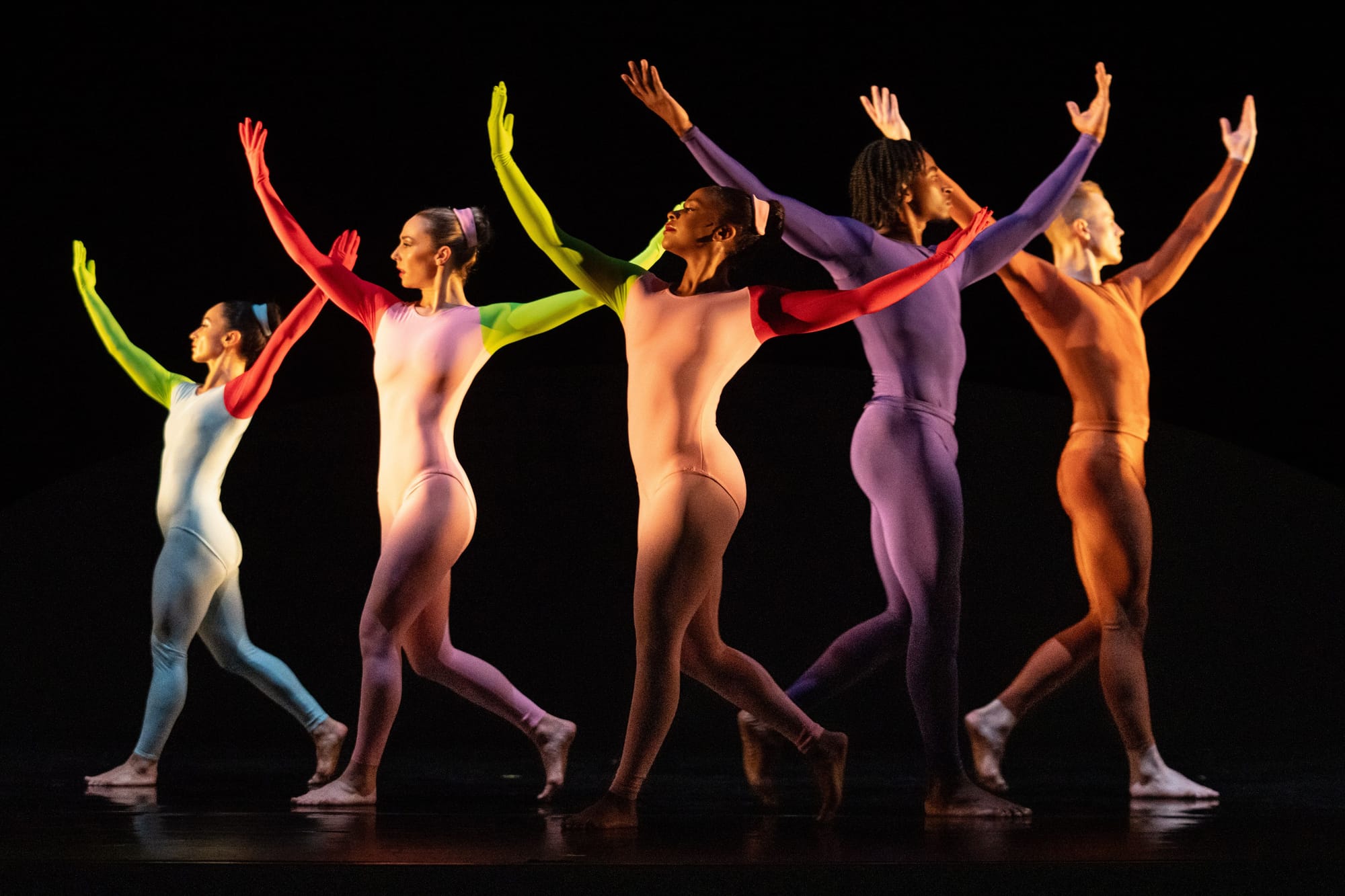
“Post Meridian” also has its inscrutable moments and its spell may not be as powerful, but the work, revived in 2019 after a 30 year hiatus, is a fascinating glimpse of Taylor’s early experiments. The music (some might question that appellation) was commissioned from Evelyn Lohoefer de Boeck, and is an apparently random collection of bizarre sounds reproduced on magnetic tape. It opened to the sounds of what may be a thunderstorm, as two women (Bugge and Lisa Borres) walking across the stage, in pastel unitards with long gloves, one green and one red and hints of decorous pill box hats. (Alex Katz designed the eye-catching costumes.)
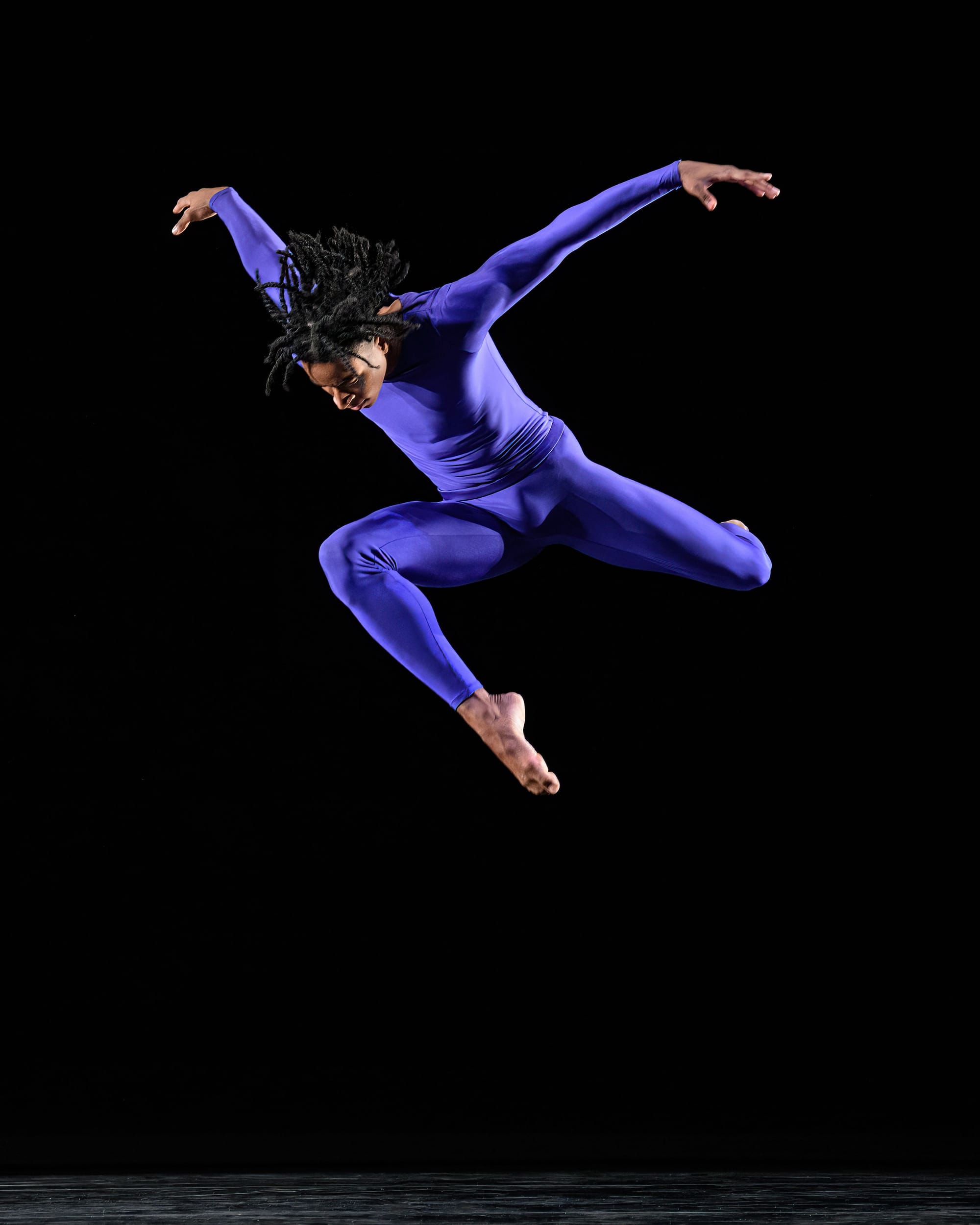
The sounds switched to a man mumbling something in French as the women shimmed and posed, showing off their red gloves—it seemed like a slightly tongue in cheek take on French philosophers, rather like Audrey Hepburn’s satiric dance in “Funny Face”. The seven-part work was full of surrealist non-sequiturs and captivating dancing. Bugge got a spiky solo full of quick jumps, punctuated with brief, preening pauses. Kristin Draucker, in a white unitard with yellow accents (including the pseudo pill box hat) was especially striking, making even the disjointed sounds seem musical with her mechanical chic accents. Devon Louis, in the solo originally danced by Taylor, got to show off his powerful, easy jump.
“Brandenburgs” had a lot of powerful, easy jumps too. Taylor choreographed the elegantly formal dance to selections from Bach’s “Brandenburg Concertos”, for a man (John Harnage), three women (Bugge, Borres, and Maria Ambrose) and a male corps of five, who got most of the jumping. One man and three women dancing for his attention, brings to mind either the judgement of Paris, or Balanchine’s Apollo, or of course, it may just be Taylor playing with symmetry, but despite the dance-off, there were no winners or losers, and all four seem perfectly content.
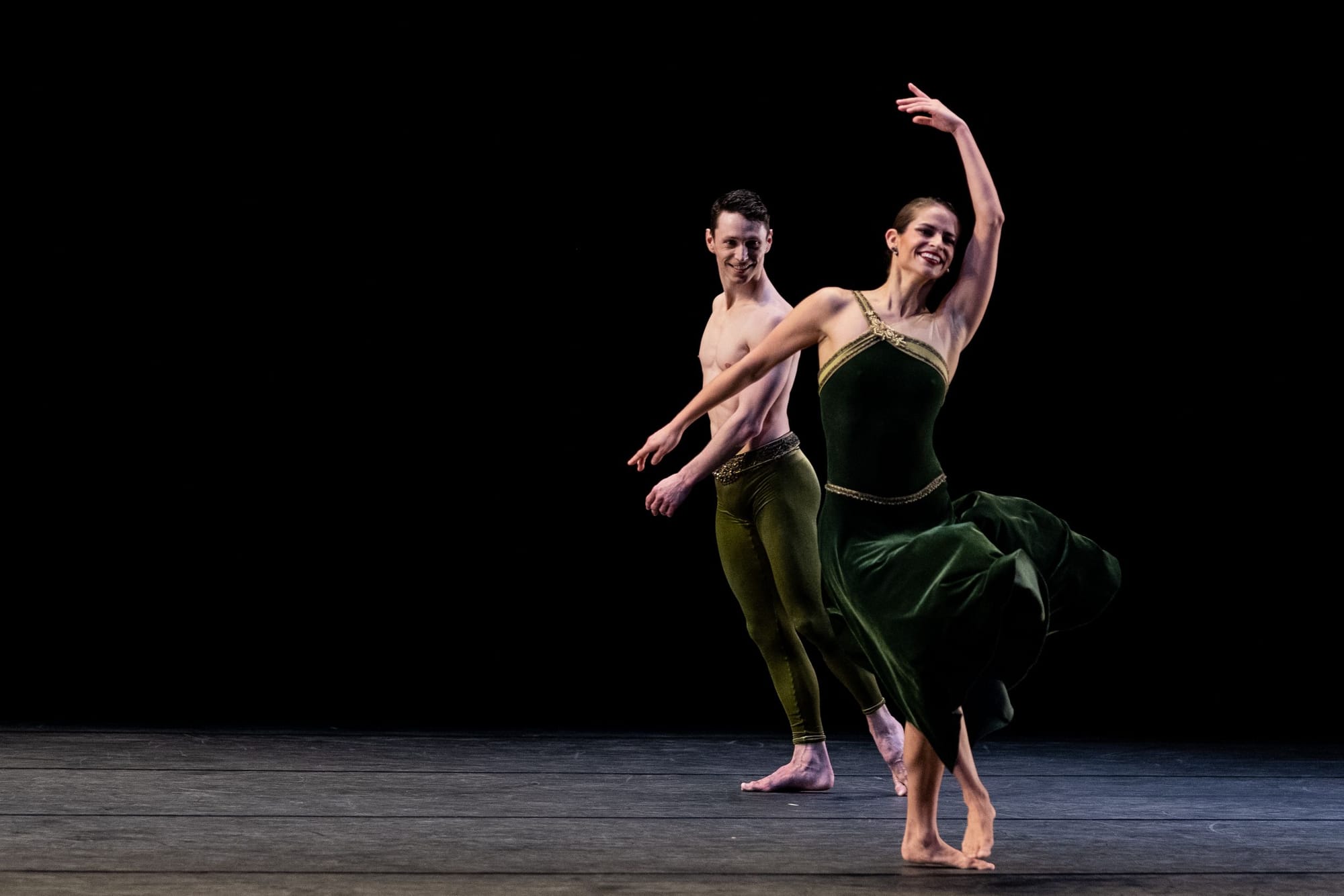
The small size of the Joyce made it easy to watch the individual corps dancers, who seemed relaxed and happy, pouring out those stag leaps. Austin Kelly and Jake Vincent were especially crisp and incisive. Ambrose gave her solo a majestic, silky, luxurious air, with effortless balances, Bugge was decorously flirtatious, with elegant little hip swivels, and Borres was a whirling bundle of energy, proudly showing off her turns; no wonder Harnage couldn’t choose a winner.
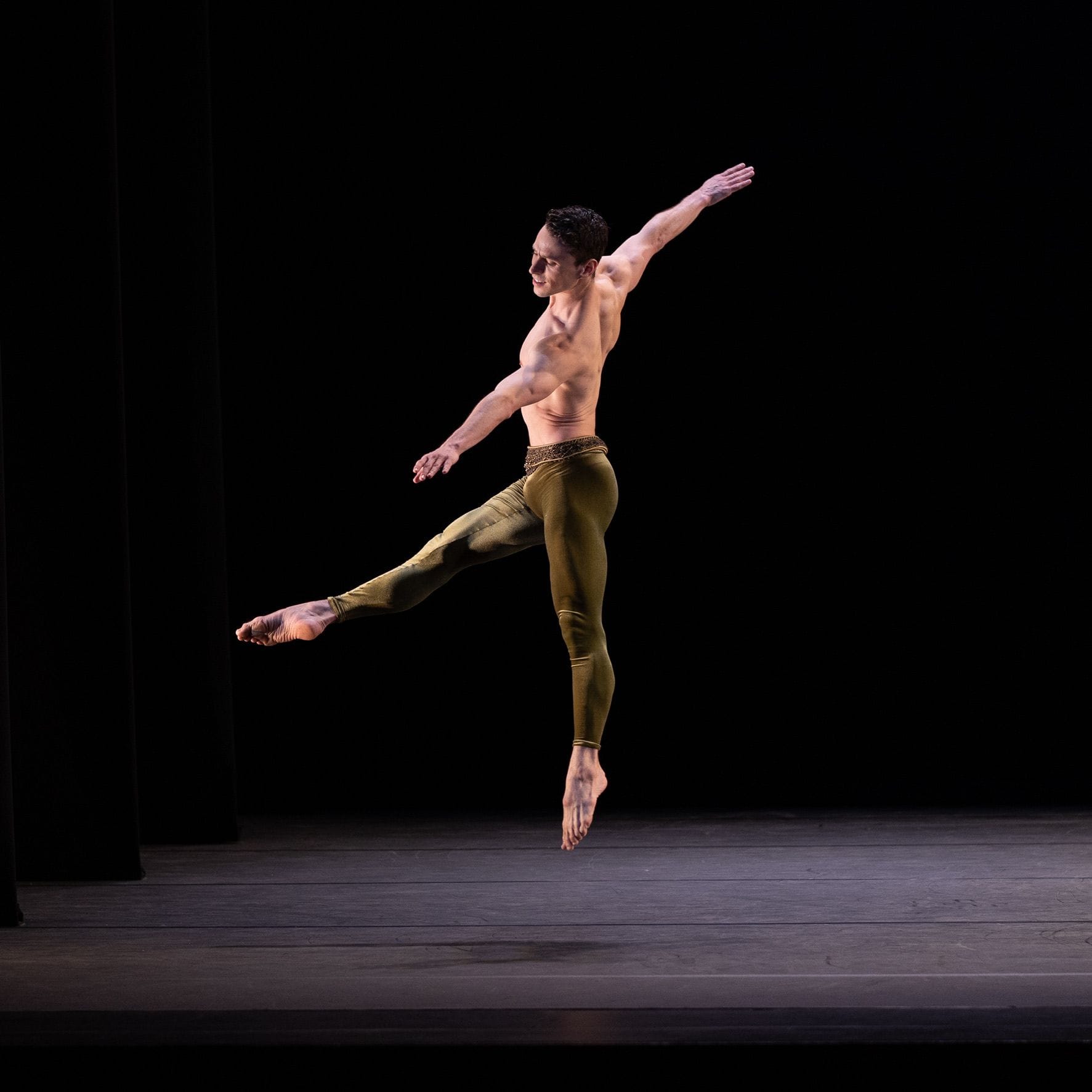
His haunting solo, corralled in a small pool of light off to the side of an empty stage, was a quiet moment in the midst of the glorious energy. Harnage danced with a fine control through the slow, generous bends and turns though I did miss the haunted isolation and yearning that Michael Trusnovic had; Harnage was a magnificent dancer doing beautifully formed steps but his soul was hidden—there were still some extremes to explore.
© 2024 Mary Cargill