First and Last
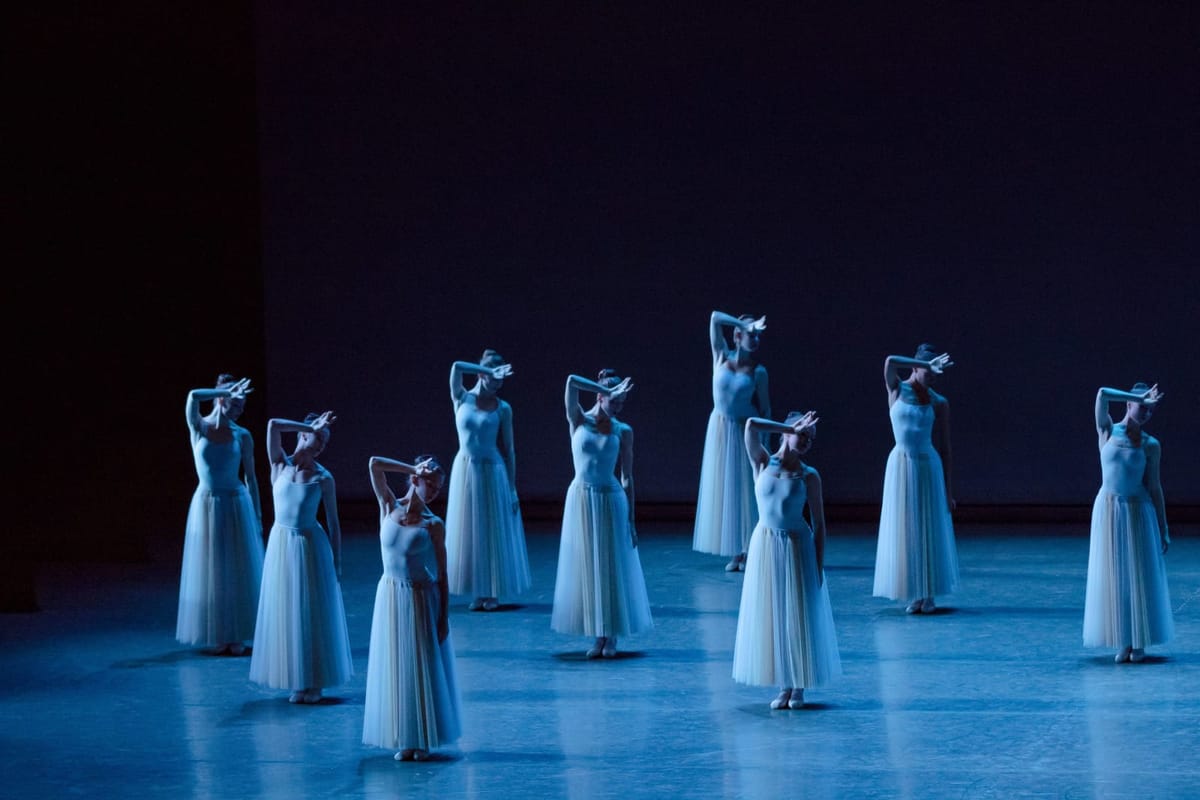
"Serenade", "Prodigal Son", "Paquita"
New York City Ballet
David H. Koch Theater
New York, NY
January 22, 2026
This evening’s ballets were a a series of firsts and lasts; Balanchine’s “Serenade” (1935) is the first ballet he made in the US, his “Prodigal Son” is the last of his works performed by the Diaghilev company, and Alexei Ratmansky’s “Paquita” (2025), while certainly not the first or the last work he has made for NYCB, is the first classical work he has done for the company. It was also the first program conducted by the young Venezuelan guest conductor José Salazar; he has been working with the Royal Ballet and his conducting was sharp and clear.
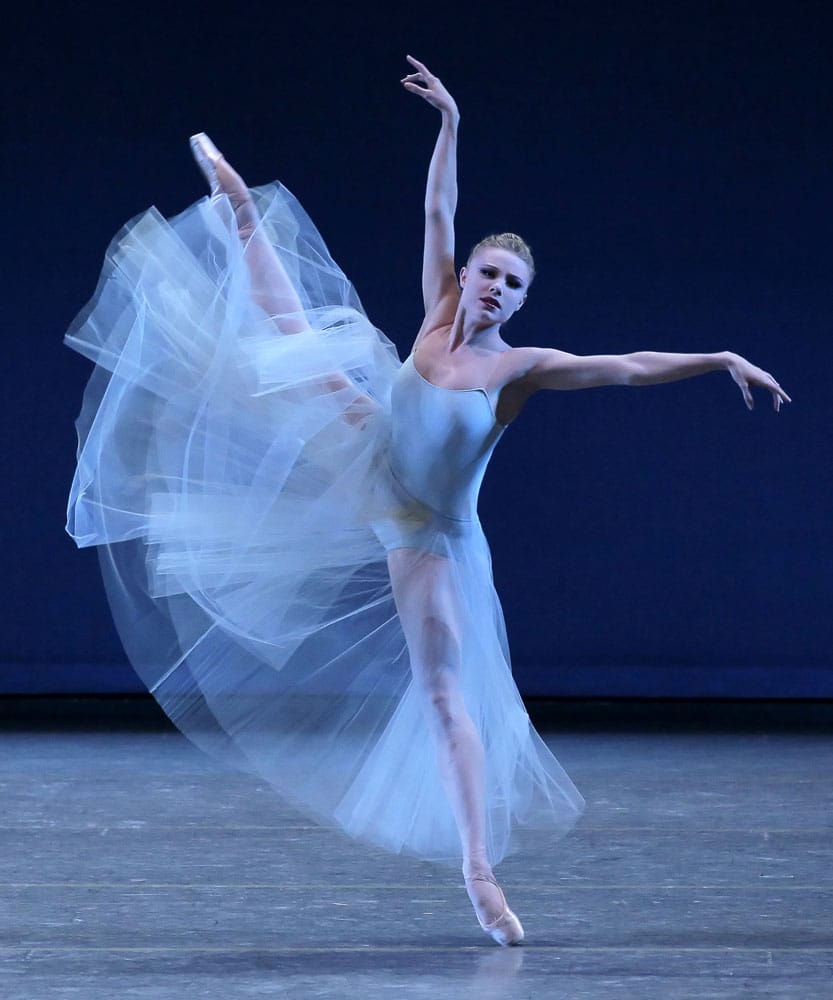
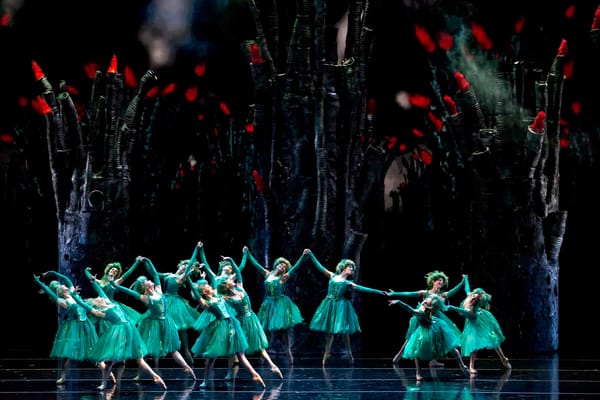
This was especially noticeable in “Serenade”, where his slightly faster tempo seemed to push the dancers to move with a dramatic urgency. Sara Mearns, dancing the waltz girl, is naturally dramatic, and the music’s fervor suited her approach. Her entrance through the forest of girls had a haunting loneliness, and her lifted hand as she joined the group seemed to be a brief triumph as she if she had finally found her place, only to lose eventually it as she was abandoned by the subtle but equally dramatic Davide Ricardo, pulled between two women. Her mixture of rapture and despair was astoundingly vivid.
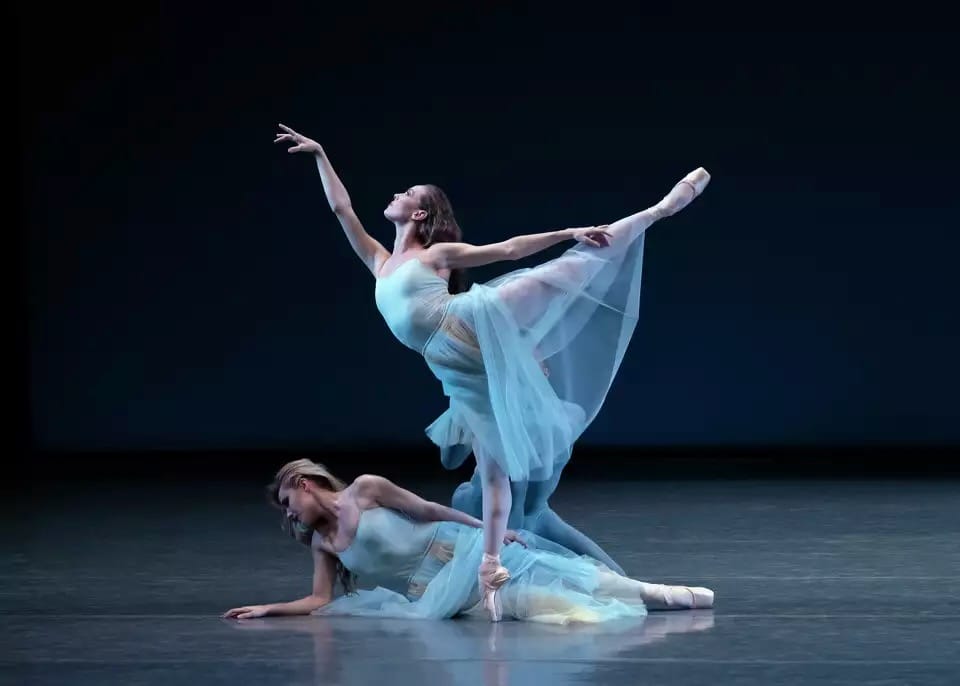
Emilie Gerrity danced the second woman, often called the Dark Angel, who wins the man. Her mysterious turning arabesque, with its hidden support, had a rare beauty. She turned with a perfectly harmonious 90 degrees, only to let her leg soar up and out at the last moment, as if it was being pulled by the music. It was an eloquent statement, not a flashy trick.
Megan Fairchild’s Russian girl had no flashy tricks either, as she combined the fast footwork with a rich presence, offering her hand to her companions with a generous warmth; this is her last season with the ballet, and it did seem as if she were saying a quiet farewell. It is a shame, though, that the newish costumes with the yellow inserts in the skirts, couldn’t make their farewell too, since they look as if a hauntingly beautiful moonlit scene was interrupted by an irrelevant burst of sunlight.
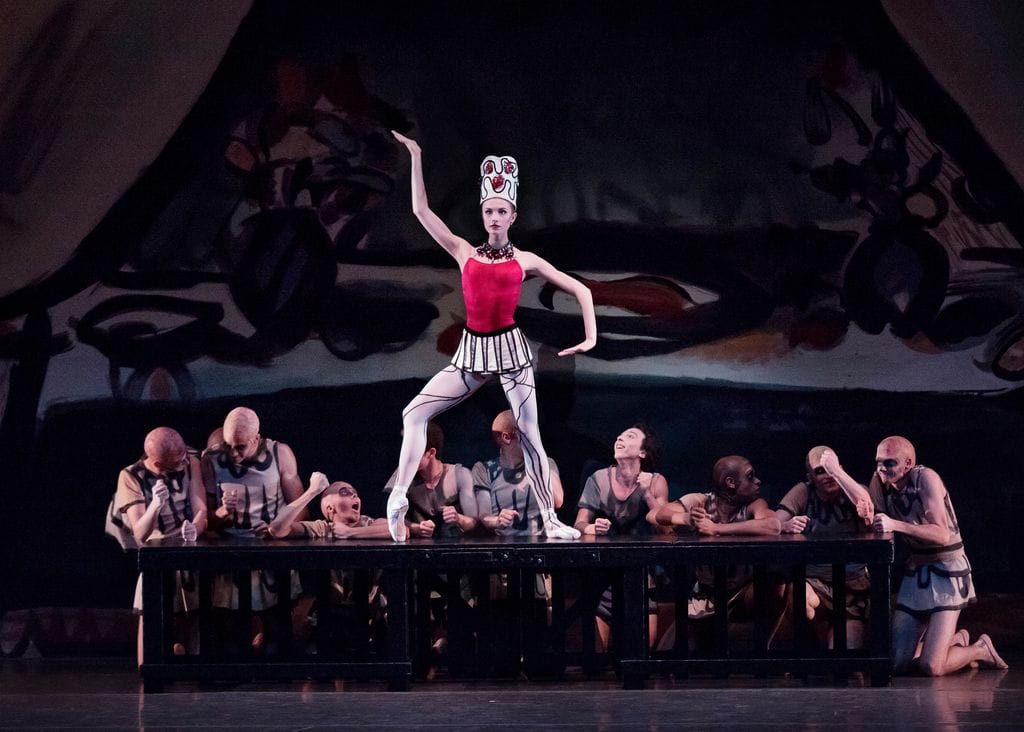
The Expressionistic sets and costumes of “Prodigal Son” have gone through very few changes, though the Siren’s varicose vein tights did seem a bit less strident than I remember. Anthony Huxley and Miriam Miller were the miss-matched couple. Huxley’s light and elegant dancing gave the work a slightly stylized feel, a demonstration rather than a dramatic interpretation, with an almost Brechtian Verfremdungseffekt which let that powerful music and vivid sets tell the story. Unlike every other Prodigal I have seen, Huxley did not knock on the gate to announce his return, his sisters just seemed to sense his presence. This worked with his more ritualistic approach as the verismo pounding would have been out of place and his dancing had a cumulative power; it was a very moving performance.
The poor Prodigal had no chance against Miller’s icy cool Siren and her long, powerful legs could have been snakes wrapping around him. She gave the “row, row, row your boat” scene, which can seem like a filler while the sets change, a dynamism, as she seemed eager to be off to find another victim.
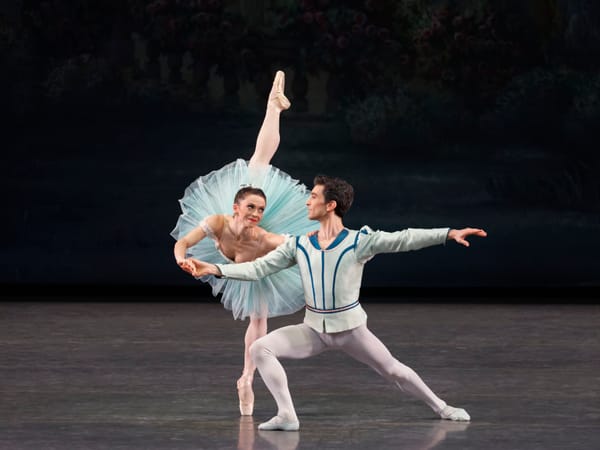
There were no victims left in Ratmansky’s excerpt from Petipa’s melodramatic “Paquita”, just a cornucopia of classical dancing to infectious Minkus variations, though Balanchine’s opening Pas de Trois has been dropped. It had seemed out of place and unconnected with the Grand Pas but it is an elegantly thrilling work and it would be a shame if it is put back in storage again.
It now begins with the corps pouring on; Petipa, it seems, was working in even numbers as the dancers appeared in groups of four, sometimes separating into pairs and he had four soloists, a change from the usual threes and fives of many of his other ballets. The corps danced enthusiastically, though their upper bodies were a bit stiff and their legs, especially in the flat footed arabesque line, were a bit wobbly and not completely uniform which lessened the majestic symmetry of Ratmansky’s reconstruction. The rousing finale though, with the bouncing emboîtés and kaleidoscopic shapes, was thrilling.
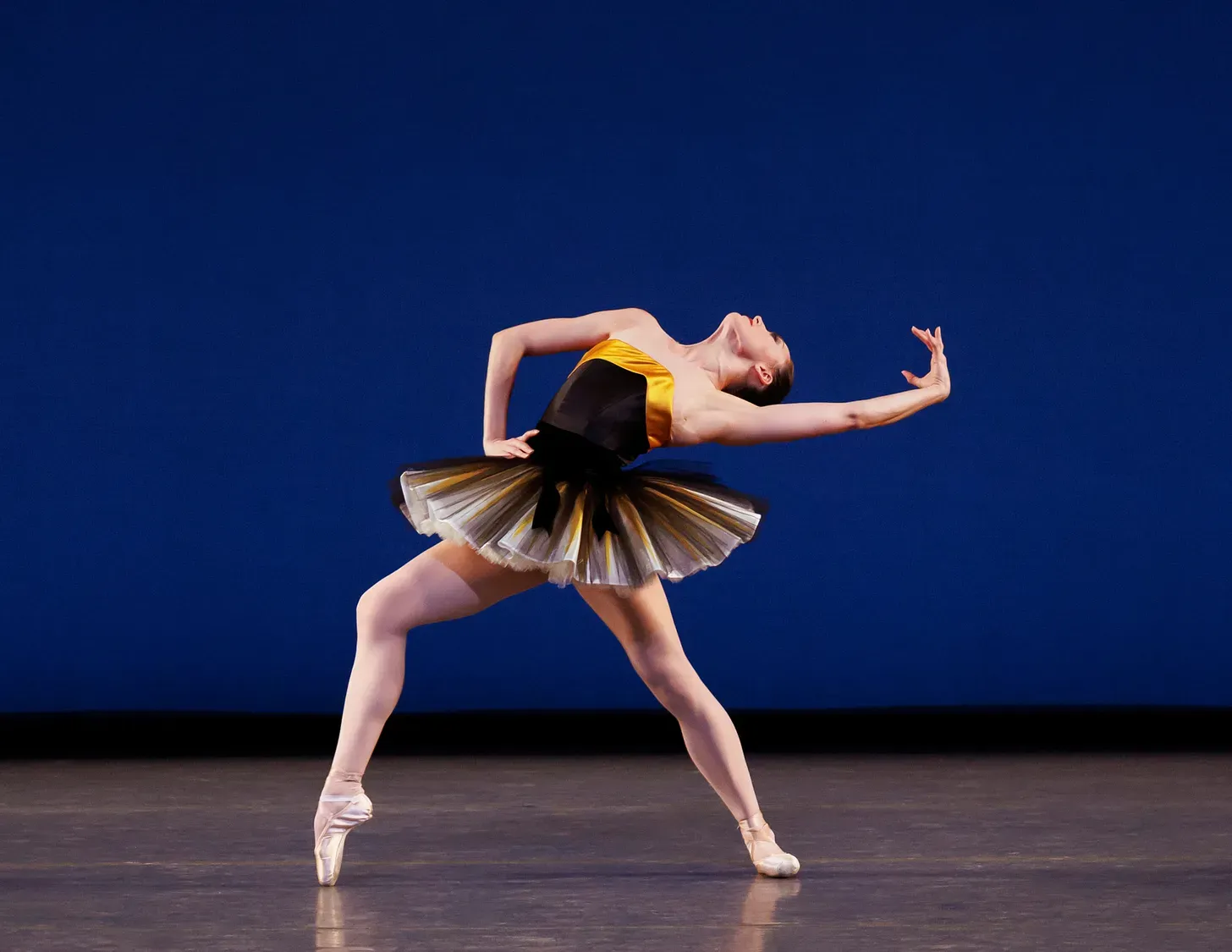
The four soloists gave their variations a distinctive flavor. Ashley Hod opened with crisp jumps and elegant cabrioles which flowed in hops in attitude and danced with a lively and confident air. With its opening prayer-like moves, the lyrical second solo was a peaceful contrast, and Dominika Afanasenkov used her shoulders and arms to sweep through the choreography with a quiet authority and a serene dignity. Emma von Enck’s bouncy third solo, better known as the Cupid variation from the “Don Quixote” dream scene (cut and paste choreography works fine with Minkus), was adorable without being overly cute, and the little goat-like jumps were glorious accents. Emily Kikta used her commanding height to shape the final Spanish-inflected solo, bending and twisting, and bursting into a flurry of turns, only to stop suddenly with a backbend that looked like an triumphant olé.
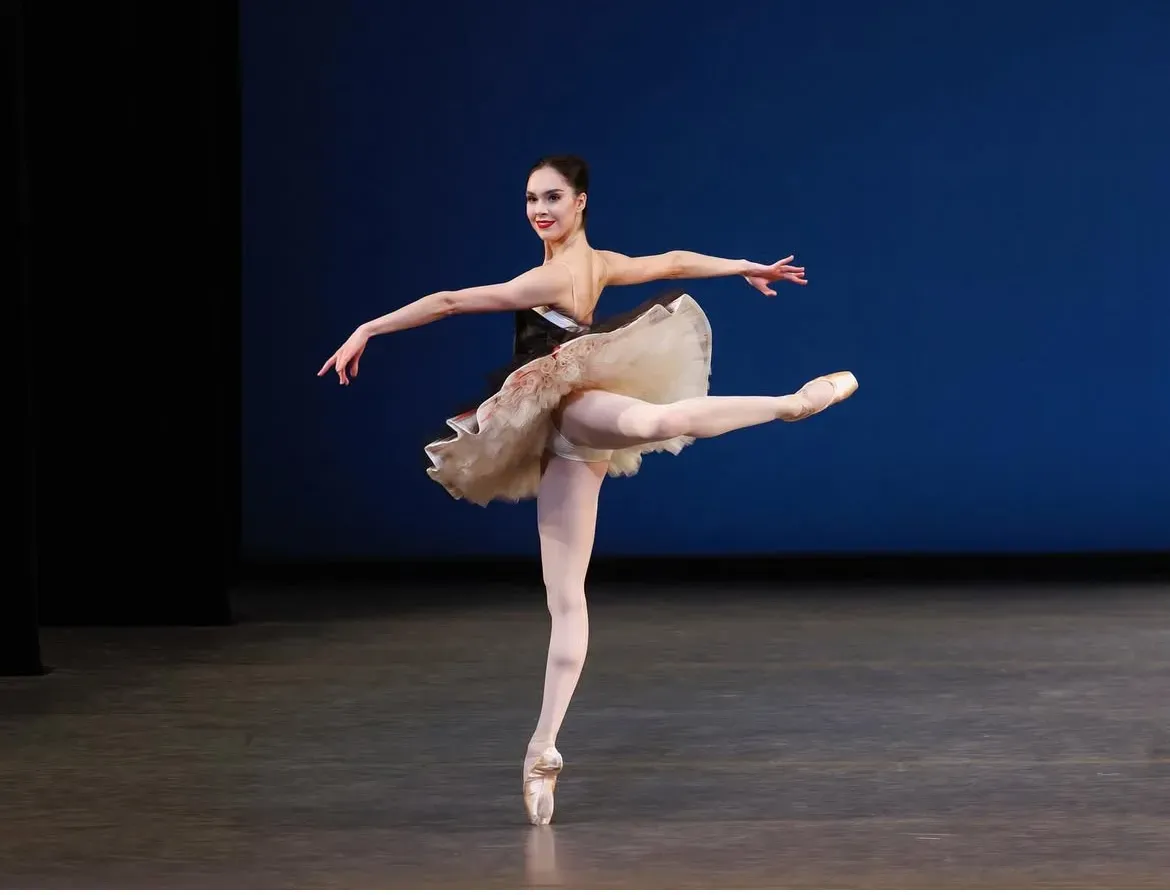
In the original ballet all of this dancing was part of a wedding celebration, and Mira Nadon and Chun Wai Chan were the very happy couple. Chan spent most of the ballet supporting Nadon, making courtly bows and looking at her as if she were the most beautiful woman in the world (not a difficult task) but got a chance to show off in two solos full of quick jumps and fast changes of direction. Nadon danced with a radiant confidence, floating through her harp solo and making her backward hops on point ending with a solid arabesque penché look like she was having the time of her life. She is a dancer who seems to be dancing for her partner, while embracing the entire audience, and it a joy, first last and always, to watch.
© 2026 Mary Cargill