Far From Denmark
"Bournonville Divertissements", "La Sylphide"
New York City Ballet
David H. Koch Theater
New York, NY
May 16, 2015 Evening
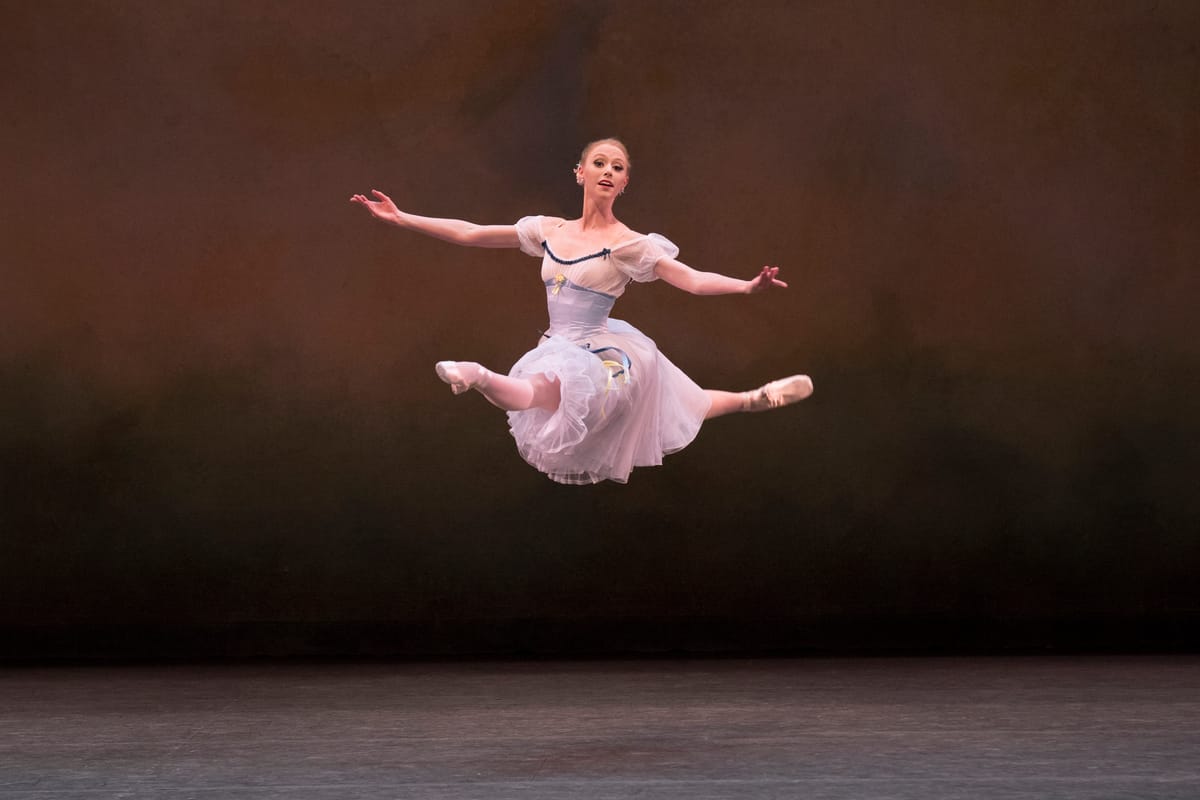
The New York City Ballet's continuing crash course in Bournonville included a number of debuts and last minute changes; the results were somewhat mixed as the fleet, effortless, skimming steps seemed to flummox some of the dancers. Fortunately Taylor Stanley, leading the Ballabile in the opening of "Bournonville Divertissements," looked completely at home as the happy fisherman, dancing with a fluid and springy jump, never pushing the height or size of his moves. He seemed to be swirling inside the music. He was a late substitution so may not have had much rehearsal with his Teresina, Georgina Pazcoguin, who was making her debut. They had little rapport and she seemed uneasy in the style, dancing straight out towards the audience and forcing outsized, jerky jumps which landed with distinctive thumps. She was a very determined and somewhat morose Teresina. The corps, however, especially the men, bounded joyfully through the waves of Bournonville's ever-changing steps.
Teresa Reichlen and Zachary Catazaro debuted as Genzano's young lovers; he again was a last minute substitution, and had been scheduled to make his debut with another partner at the matinee. The tall and leggy Reichlen is not a typical Bournonville dancer but she gave a beautifully self-contained, shimmering performance. Her arms, rippling like ribbons, were especially lovely. She used her slightly restrained stage presence to create a shy charmer without any self-conscious coyness. The speed did trip her up slightly at the end, but it was a sunny and charming debut. Catazaro, tall and somewhat lanky, seemed overwhelmed by the role's challenges; his head was not coordinated with his legs, he had trouble pointing his feet, and, though his turns were solid, couldn't manage all the quick little steps. He was a generous partner, though, and looked much more comfortable banging the tambourine in the Tarantella.
The opening pas de six (Sara Adams, Meagan Mann, Lauren King and Brittany Pollack, with Russell Janzen and Andrew Scordato, plus Joseph as the extra man) were all making debuts, with the exception of Lauren King who was another last minute substitution. The choreography with its ever-changing patterns and solos emerging from the group in seemingly spontaneous bursts of joy is a gem and the dancers looked lively and joyful. King swished her skirts with an innocently voluptuous abandon. Sara Adams, with her pliant, curving upper body and gentle radiance make her solo, full of unexpected balances, look easy and natural; she was pure joy. Joseph Gordon, in the bravura solo with the deep pliés, also had a natural and engaging presence but was a bit stiff-legged: his pliés lacked juice and wasn't able to leap up with a Danish abandon. But the finale with the swaying groups banking the tambourines is a perfect ending to any evening.
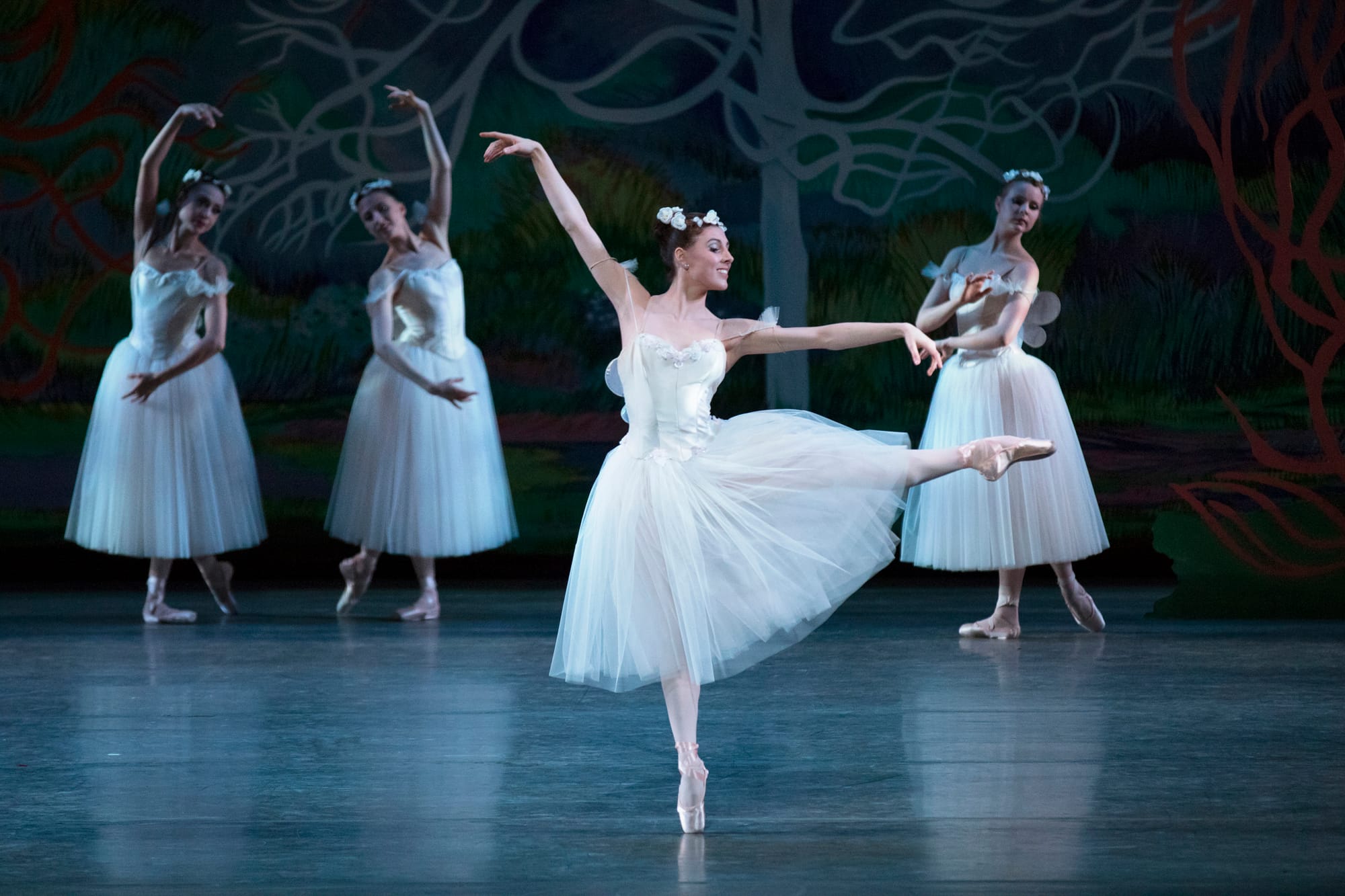
Not in this program though, where it is only the appetizer for the darker and tragic "La Sylphide". Tiler Peck and Gonzalo Garcia, in joint debuts, were the unfortunate couple. Peck danced with her typical imaginative musicality and polish, merging those beautiful shapes into a seamless whole. She seems incapable of making a move that does not come from her heart and gave the sylph a womanly, loving weight. In the opening scene she might have been Giselle watching over Albrecht. But the sylph is not human, she is both the embodiment of an unattainable ideal and a heedless creature who, so innocently, is a danger to poor James. Peck's rich, loving generosity eliminated the contrast between the two incompatible worlds and made this a sad story of a romance that might have worked had James not been rude to Madge, not a tragic story of a man's inevitable destruction.
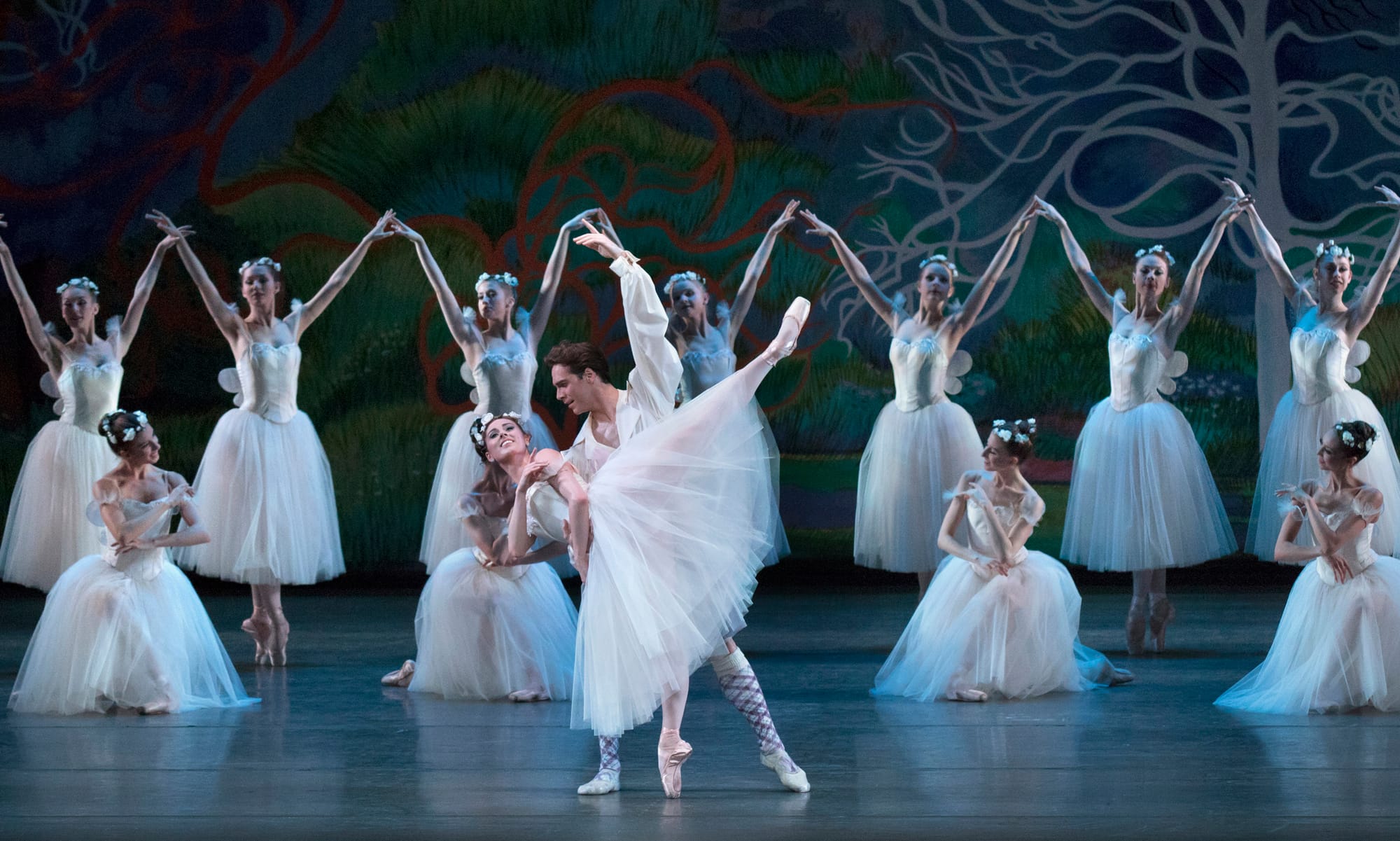
Garcia was a bit stretched by the technical demands, using his arms at times for ballast in uneasy attempts to leap higher. His characterization varied; his confusion as he was torn between the two choices was quite moving and his sudden run after the sylph, head flung back, was a true dramatic turning point, not just a choreographed move from A to B. But his confrontation with Madge didn't have the same spontaneity and was of the "one two three, stamp foot; four five six, scowl" school of acting. So far, this production doesn't seem to have a clear idea why James is so hostile to Madge. (Various explanations are that he sees her right where the sylph disappeared or he is afraid Madge knows too much.) There has to be some mitigating factor to show that James isn't just a bully.
Gwyneth Muller, making her debut as Madge, was trapped in the funny wig and silly costume. She looked young and there was some glimmer of characterization as she seemed to hint that she wanted James herself, but generally she wasn't able to give more than a Disney interpretation of a grumpy old witch. Her mime wasn't always clear and the moment when she tosses away James' money as he is trying to buy the scarf of doom, which can look like a primitive force of nature spitting on modern civilization, was played for laughs. Despite the rare and true beauty of Peck's dancing, this performance was a long way from Denmark.
copyright © 2015 by Mary Cargill