Dig Dance
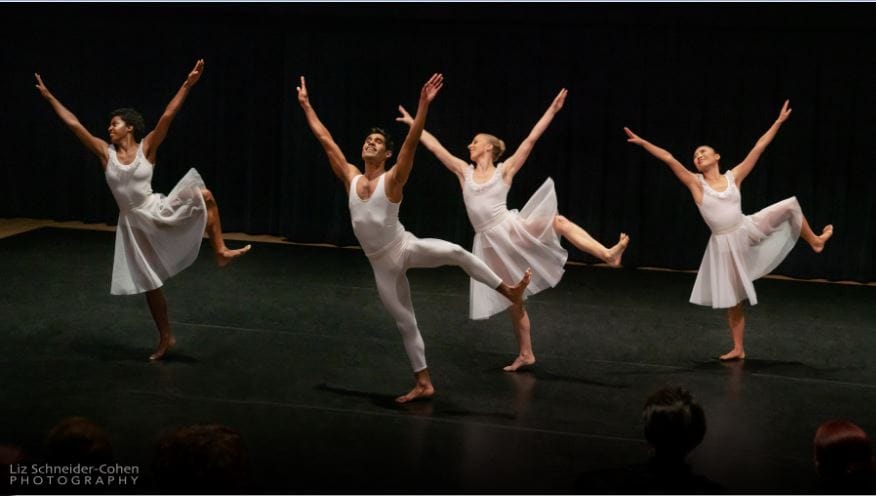
“Viva Vivaldi (excerpts),” “Aureole,” “Gamelan (excerpts),” “Party Mix”
Dig Dance, Taylor, Joffrey, Arpino: Deliciously Alternative Classics
New York Dance Project, Taylor 2
92nd St Y
New York, NY
October 19, 2018
When it comes to dance, particularly 20th century theatrical dance with a classical or neoclassical bent, words can be, if not dangerous, certainly misleading, paving stones on the road to disappointment. This has little to do with the quality of the dancers or dancing but rather with expectations raised and unmet.
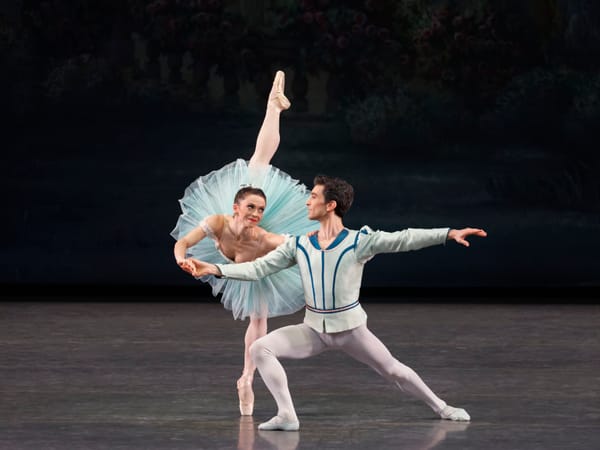
This edition of "Dig Dance" brought together works by Gerald Arpino, Robert Joffrey and Paul Taylor all created within three years of each other (1962-1965), the excerpts from the Joffrey Ballet rep danced here by members of the New York Dance Project, with Taylor's dances in full danced by his own Taylor 2. The evening opened with a duet and ensemble from "Viva Vivaldi". The ensemble was an unbroken torrent of turns, beats and innumerable pas de chat across the stage, in blinding succession. All those steps, at top speed, were enough to leave the audience, never mind the dancers, breathless.
Even the duet had too many steps as the central couple, Martina Sandionigo and Steven Scarduzio, was accompanied by a male trio that seemed much of the time to be doing their own (distracting) thing. Think uncomfortable looking splits right in the sight line of the main couple. That the pas de deux never lost its focus was due to Sandionigo's poise and serenity, particularly when carried high around the stage. She was literally and figuratively above it all. A final word for the women's costumes, brown leotards over tiered lace skirts in off white which were simple, elegant and moved like thistledown through all those steps.
Joffrey was represented by the Warrior Goddess' solo, and the trio for the Bird, Wind and Hunter from "Gamelan", the latter again with a cool, calm woman at its center: Brittany Larrimer as the Bird, long limbed and elegant. But the tension and drama came from the hunter who stalks her never getting up off the ground, hardly moving, and, as danced by Ivan Tocchetti, never taking his eyes off his prey. This glimpse of "Gamelan" left one wanting more. Only these two sections of the ballet are available on tape, so a glimpse is all one can hope for.
Watching Taylor's work so soon after his death is both sad, that there will be no more Taylor dances, and joyful, that there are Taylor dances at all. Happier still to find older works being taken out of mothballs and put back on stage as is the case of "Party Mix" reconstructed this year by Ruth Andrien, Yale Dance Theater and Emily Coates. Once again, Taylor observes a community of his fellow humans, here a hostess and her party guests. Alexei Haieff's nervous, tinkling "Sonata for Two Pianos", igniting and reflecting the restlessness of the chattering crowd, unable to alight anywhere or indulge in any conversation more demanding than gossip. There is, as so often in Taylor's work, an outsider, the hostess on the fringe of her own soiree. Her guests with their upraised arms and flattened palms like waiters carrying hors d'oeuvres on high, but with jutting bent elbows like barbed wire, ensure that she stays in her place.
And then there's "Aureole". Taylor himself may have grown tired of it, and certainly moved beyond it. But to see it in a small space (a dance studio) from a few feet away makes it glow anew. And Irving Amigon in the first male solo united technique, charisma and concentration way beyond steps, like watching a tightrope walker at the apex of the tent and wondering if he'd make it across. Yes, with flying colors.
And yet, only one of the dances on offer turned dance on its head. Only one actually is a "deliciously alternative classic". "Viva Vivaldi" opened and closed every Joffrey season from 1965 to 1970 but has not been danced by the company since 2005, though it has been produced elsewhere. "Gamelan" has not been revived since 1968. The same holds true for "Party Mix". Only "Aureole" actually turned dance on its head. Only "Aureole" has endured to become and be called a classic.
copyright © 2018 by Carol Pardo