Debuts Galore

“Allegro Brillante", "La Source", "Firebird"
New York City Ballet
David H. Koch Theater
New York, New York
January 25, 2020 matinee
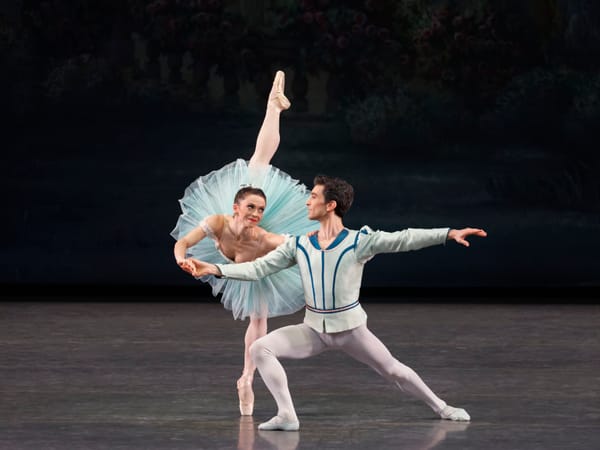
There may have been four debuts on the cast list, but at this performance, the most vivid and memorable performances came from veterans of their parts. After ten months away due to injury, Tiler Peck is back in the rotation, partnered superbly by Tyler Angle. "Allegro Brillante" – as Balanchine famously said, "All I know about classical ballet in thirteen minutes" – is often danced as a literal reflection of its title: fast and brilliantly, often with a hard, sharp edge like a faceted gemstone. Here, for whatever reason (that injury, conductor Andrew LItton's choice in the pit) the focus was on flow, rising and waning sumptuously, without descending to slow or stodgy. Consequently, there was time to notice details that otherwise fly by: the gust of air under a jump, the shape of a step revealed, the suddenness with which the corps disappears before the ballerina's solo. Peck, one of the most articulate dancers around, took full advantage of that flow, also looking extremely happy to be back on stage. The audience was equally happy to see her there.
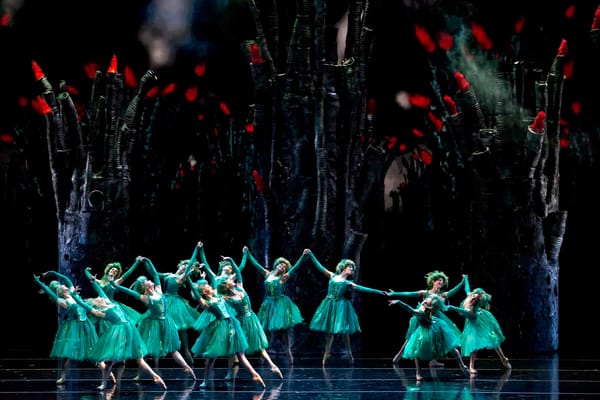
Follow Silas Farley's gaze as Prince Ivan in Balanchine's "Firebird", and you had the whole story, seemingly effortlessly. The narrative arc didn't slacken from his first moments on the hunt. When he bent under a branch, you felt the presence of that branch and saw it in your mind's eye. Opposite Farley, making her debut in the title role, was Sara Mearns, all gold and flame and charisma to burn. She knows how to grab the stage and hold it. Here, that read as the expression of the power and magic of the Firebird herself. It will be even more potent when Mearns has filtered out the too frequent references, particularly in her arm movements, to "Swan Lake". They aren't the same bird.
All three of the leading dancers in "La Source" were new to their roles. Most successful was Rachel Hutsell, leading the corps of eight women. Her unforced jumps seemed to hang in the air, at will. She also caught the high spirits of the piece -- you could almost hear champagne bubbles popping -- without becoming being cute or cloying.
At its premiere in 1968, "La Source" was intended as a crash course in partnering, stage presentation and stamina (the ballet was originally two pas de deux danced back to back without interruption) for John Prinz, perhaps the most promising young male dancer at New York City Ballet at the time. It seems intended to serve the same purpose here for Harrison Ball. He had the steps down in his solos, particularly the plush jumps with quiet landings, and was an attentive partner. The ease and authority needed to master "La Source" should come with time and more performances.
Opposite him, in her third leading role and second debut of the week, was Erica Pereira. Her presence was a mystery. For the ballerina role in "La Source" was made for Violette Verdy, a jeroboam of champagne bubbles popping, deeply musical and witty. Pereira was scrupulous reticent and dutiful, all the steps were accounted for, but without the elan, joie de vivre or perfume (it's a very French ballet) that makes a performance – any performance – stay in the memory, and without which "La Source" fell flat.
copyright © 2020 by Carol Pardo