Complexions: Gorgeous, Stalled
“Beethoven Concerto,” “Deeply,” “I Got U,” “Love Rocks”
Complexions Contemporary Ballet
The Joyce Theater
New York, NY
November 25, 2025
Founded in 1994, Complexions Contemporary Ballet’s endurance is to be applauded, and its two-week run at The Joyce Theater is testament to the weight of commitment. The company bills itself as an innovator, yet Program B, which I saw on this night, revealed that steadfast dedication to creation was more of its forte than innovation itself. Two of the works were older, two from this year, including a world premiere, yet the steps in all drew from the same, not terribly deep well. If you found you liked this style of movement to music (any music), it was bound to please. But if you came looking for something deeper, you had to look between the steps and, on this night, find meaning in the new work: "I Got U" by Co-Associate Artistic Director Joe González, which started slow and dripped with emotionally layered storytelling.
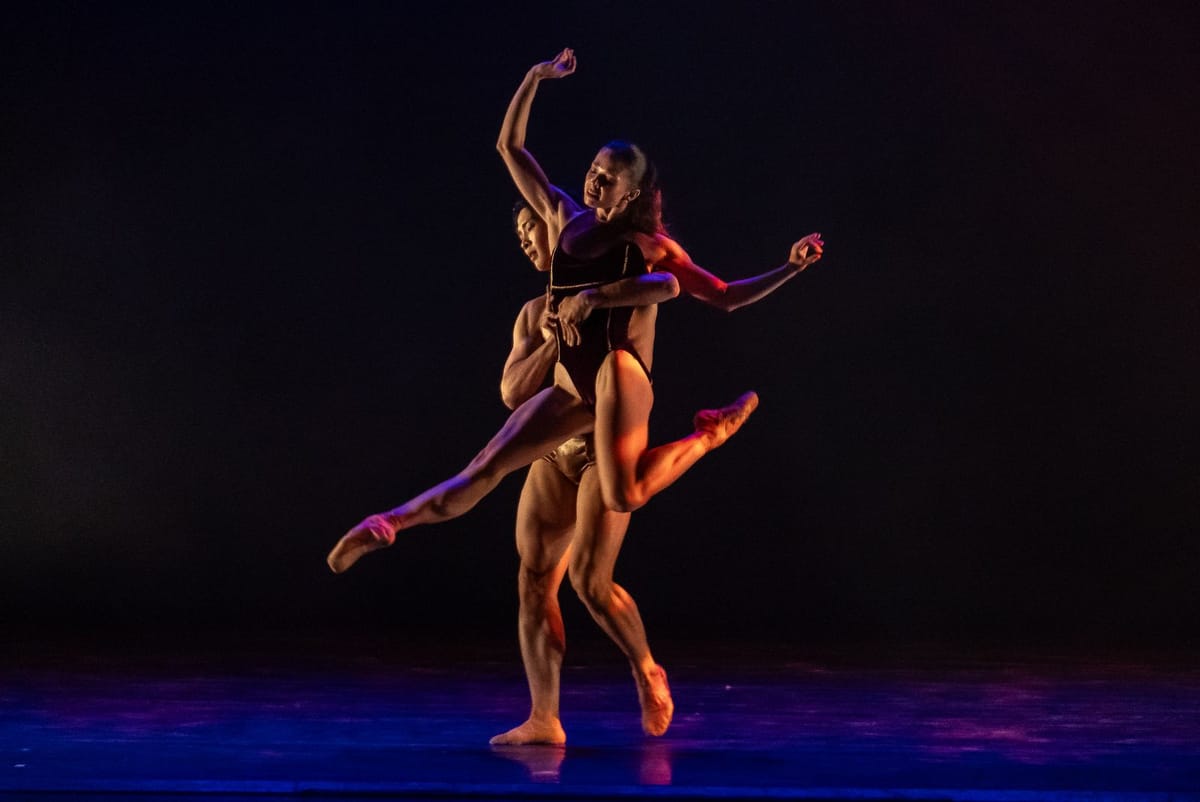
Perhaps unfortunately for the González piece, because so much of the step architecture and blocking was similar, the program opened with the New York premiere of company co-founder Dwight Rhoden's older work, "Beethoven Concerto." Set to the composer's Piano Concerto No. 5, it delivered impressive movement text from the start. Top-lit figures in minimal costumes spurred into a flutter of movement with many supported leans in arabesque and accelerated grand jetés that made them look particularly grand. Both the women and the men possessed impeccably selected lines and lingering extensions, well served by near-acrobatic choreography that looked completely unhindered by pointe work. Turns with legs tucking in à la seconde added flavor, while duets emerged from the ensemble and sparkled. The staging kept bodies in constant motion: beautiful and engaging, if not groundbreaking.
Next came Rhoden's 2025 ballet "Deeply," set to music by Arvo Pärt -- a risky move that misfired badly. Using music so iconically captured in movement by Christopher Wheeldon in his celebrated "After the Rain" made it nearly impossible to avoid unflattering parallels. In many ways, "Deeply" made the case for how brilliant Wheeldon's choreography was in every one of Rhoden's contrastingly jerky, busy, and overdramatic movements. The unavoidable mental juxtaposition insisted on the conclusion that Pärt's spare, meditative score unequivocally called for less, slower, more thoughtful movement, and two dancers, not three. (This, of course, may well not be true with the right choreography, even for an ensemble.) Instead, the dance offered what looked like a love triangle or a group of confused people unsure of where they fit in amongst themselves or onstage. They’d run from side to side, cluster, regroup. There was no conflict, no contrast in identical movement. By the end, not a single aesthetically evocative moment emerged.
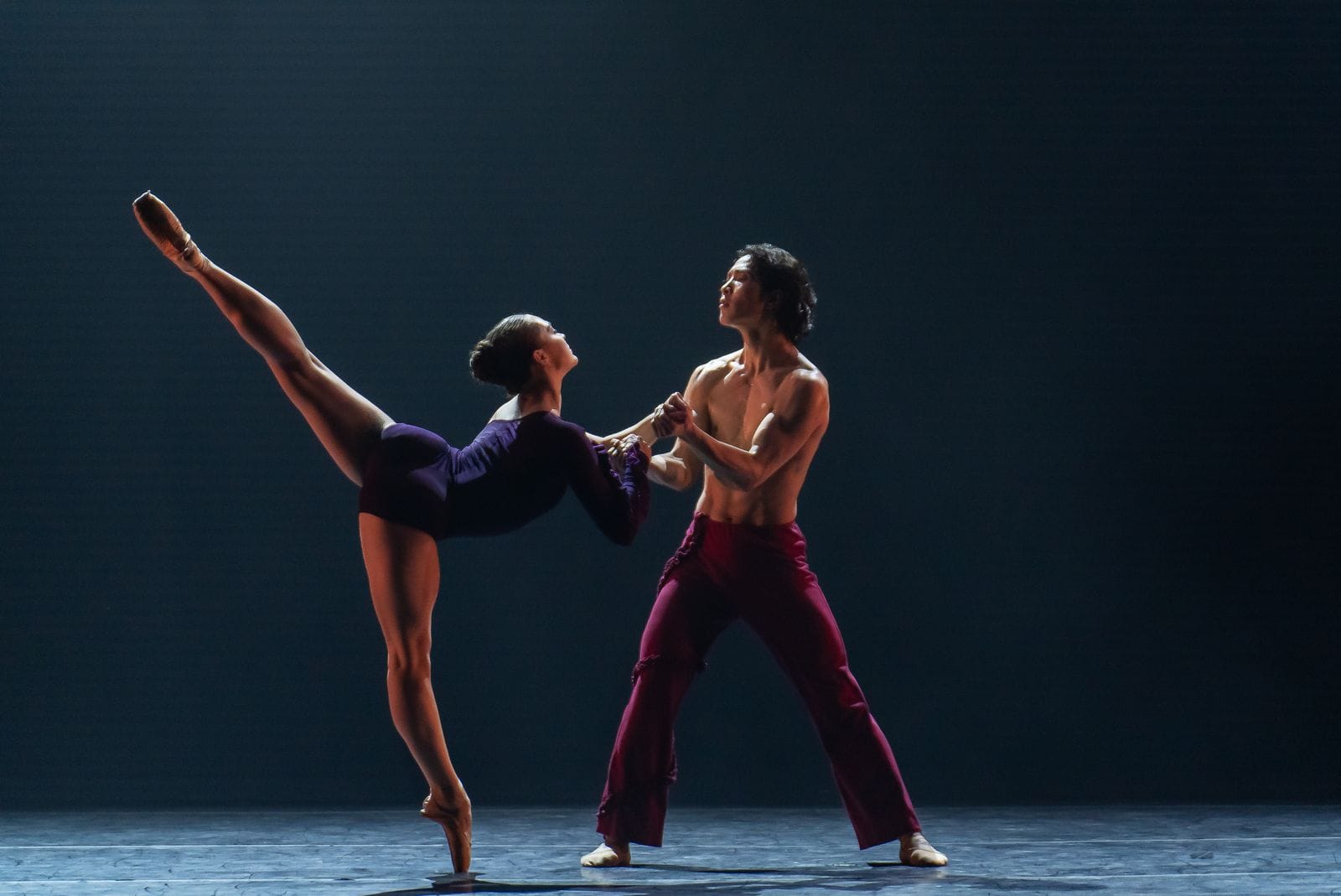
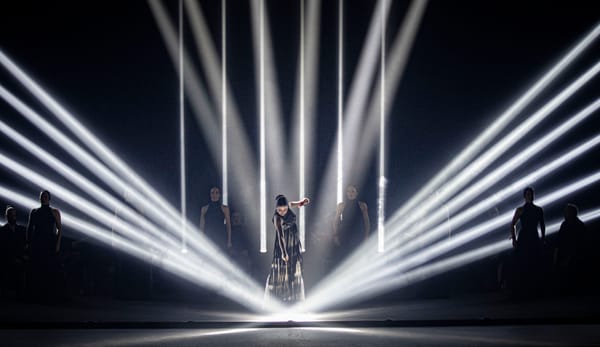
Thankfully, this was followed by "I Got U." Though it started like the first work, with vertical spotlights, and the first sections had a similar feel to "Beethoven Concerto" with runs and stops and supported balances, the work for seven dancers in flat shoes found its soul soon enough. First came the innovative choreography: as one man lay on the floor, the other flipped him by the feet, as though a blanket or a bedsheet, gently infusing energy into the prone dancer. Then came the storyline in the third scene: a woman walking forward as strangers around her force interactions. She seemed lost, with their approaches looking like manipulations, sexual hints pervading. Was she a victim being used? Instead, a loose woman? Her face showed little but dejected pain.
The program notes promised the work would “catch you and fill your heart with hope and reassurance during individual or global adversity,” and the combination of the acting, dancing and the soulful, cinematic music by Jon Obstad, Virgino Aiello and Vesialava Daniel Blumber delivered with magnetic tension. Finding a partner, our protagonist would push a way and jump into him, as if being pulled by the strings of fate. Then, with the cast aligned in a row, she was lifted and with one foot push toppled the rest like dominos. One sentiment affecting all. Here was the emotional substance the evening had been lacking!
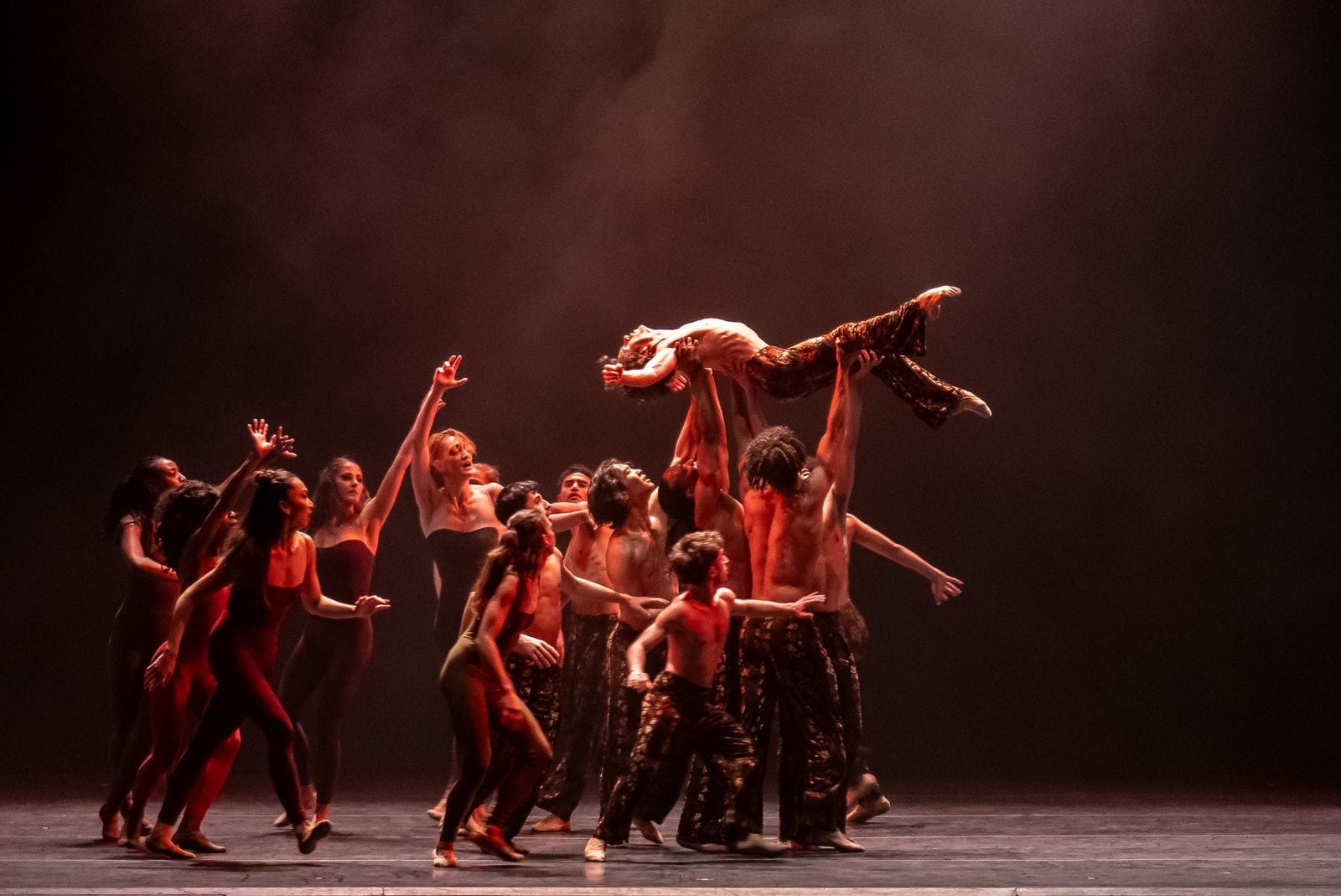
"Love Rocks" by Rhoden seemed a crowd favorite, but most of it felt like an excuse to create movement to Lenny Kravitz songs. A lot of them. The selection of seven musical works could easily fill an album, and it really felt like a dance party to an album release. No blame here (Kravitz has good music), but the rock never seemed to energize these dancers, and so much of it became repetitive song after song. Sashays to the side, men walking dramatically away from the audience with hip accents: it dragged. "I Belong to You" felt like a cheap ballroom dancing class. "Take Your Time" and "Get Away," same thing. There was but one moment where one male turned and stopped on a dime in à la seconde, perfectly aligning with the music’s punch and cool, but it was much too little, and far too late. By the time the final song arrived (a torturously dramatic presentation to “Here to Love”), the evening's commitment to movement for movement's sake had worn thin.
copyright © 2025 by Marianne Adams