Back to Back at ABT
“Theme and Variations", "A Gathering of Ghosts", "The Seasons"
American Ballet Theatre
David H. Koch Theater
New York, New York
October 19, 2019 evening
“Apollo", "Some Assembly Required", "Let Me Sing Forevermore", "Deuce Coupe"
American Ballet Theatre
David H. Koch Theater
New York, New York
October 20, 2019
Balanchine, Tharp, Ratmansky at night with Balanchine and Tharp anchoring a quadruple bill the next afternoon had all the makings of a choreographically rich weekend at American Ballet Theatre. "Theme and Variations", made for the company in 1947 is — or should be — their Balanchine calling card."Apollo" too has a long history at ABT, here with the birth scene and ascent to Parnassus intact. A Tharp premiere, "Deuce Coupe" the grand-daddy of crossover ballet, now forty-six years old, which brought the matinee to close, changed ballet forever. Would her new work, "A Gathering of Ghosts" have the same force? New last season, Ratmansky's "The Seasons" looked distant and dwarfed on the cavernous stage of the Metropolitan Opera. What, if anything, would be revealed by seeing it elsewhere? The performances would be rounded out by Clark Tippet's "Some Assembly Required" now thirty years old, and "Let Me Sing Forevermore" made to be performed at the Erik Bruhn Competition earlier this year by two of the company's most promising soloists, Aran Bell and Catherine Hurlin while simultaneously demonstrating the company's interest in presenting works by female choreographers, here Jessica Lang, whose "Garden Blue" and "Her Notes" are already in the repertory.
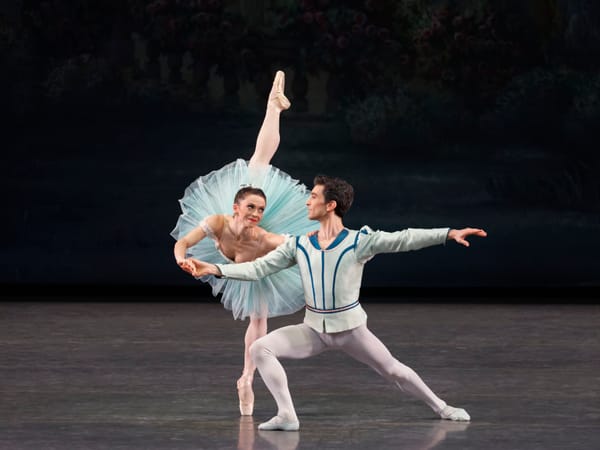
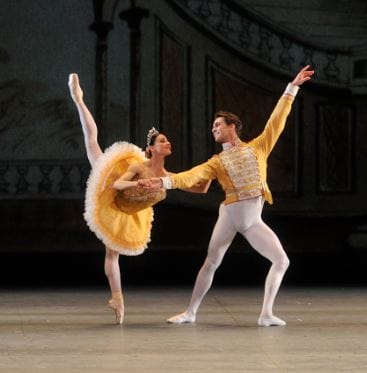
No one expects ABT or any other company to dance Balanchine as it is danced at New York City Ballet. But the slow tempi in both "Theme and Variations" and "Apollo" pulled the rug on Balanchine's floor for dancing, diluting the ballets' drive and pulse as well as atomizing each step. Under those circumstances, the dancers did what they could. In "Theme", Sarah Lane claimed the stage for each of her solos with a big suspended jump. Her authority was never in doubt. In the adagio, Joseph Gorak's epaulement was that not of a man following his partner, but of a prince yearning for a vision, "Sleeping Beauty" distilled. He did not, however, have the strength to make the partnered sequences flow, and the shoulder lift with which the ballet ends and from which the woman should confidently survey her domain, was shaky — "Sleeping Beauty" on the rocks.
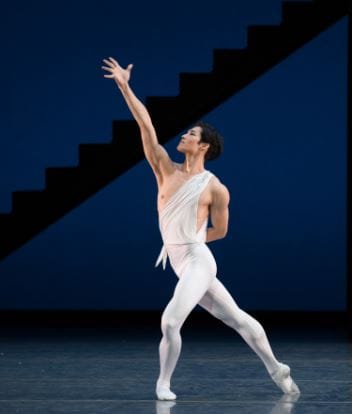
The greatest pleasure of this "Apollo" was having its narrative arc, and full score, restored, though there were others. Melanie Hamrick as Calliope took a moment before beginning her solo to review the text on her scroll. The poem for Apollo has a past. Hamrick is also one of the few dancers in the role to understand that its alternation of drooping and upbeat reflects the ebb and flow of inspiration. In Polyhymnia's solo, Katherine Williams nailed the turns into arabesque rendering them a sign of her increasing abandon and confidence in her ability to remain mute -- unfortunately misplaced. Stella Abrera's Terpsicihore was the epitome of quiet confidence and lucidity, her solo and the adagio unfurled in a seemingly uninterrupted arc. That Apollo singled her out was inevitable. As Apollo, Joo Won Ahn, went from teetering newborn immediately to a god, rather than growing up while seated on that stool at the side of the stage. He has the right body type for his choice, princely rather than demi-caractere. How he'll develop that choice is up for grabs. And who knows when he'll get the chance. "Swan Lake" will show up every year when ABT plays the Met, but the content of mixed bills is transitory.
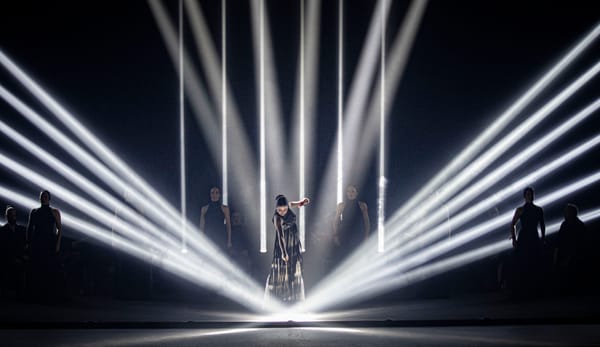
"A Gathering of Ghosts" was commissioned from Twyla Tharp to commemorate Herman Cornejo's twentieth anniversary with ABT. What would she reveal about the dancer and the dance's music, Brahms' second string quintet? It was Tharp, after all, who gave Mikhail Baryshnikov an American identity and who turned Beach Boys songs into theatrical dance music. However, the answer is not much, certainly less that one hoped for. Cornejo was certainly at the center of the ballet, surrounded by ghosts of Louis XIV, Proust and Greased Lightening, among others. Though aware of them, and saddened when they slipped away from him, he never danced with them, only among them. Nor could he settle on any of the consorts with whom he shared a multi-part pas de deux. Tharp's hero is a loner, the latter a consequence of the former. But Tharp doesn't reveal anything new about Cornejo, seeing him as she saw Baryshinikov, technically pure and invincible but also able to shimmy and let an impulse slide through his body, grave and witty, more often than not tongue in cheek. Nor did Brahms give away any secrets, apart from a short tango by Cornejo and Skylar Brandt in the adagio. The costumes share their designer and palette with Tharp's "Rabbit and Rogue" also for ABT, Norma Kamali and black and silver, but here on steroids, drenched in silver and sequins. Aran Bell, as Mme de Staël wears running shorts and a jacket that blinds the spectator, awash in those silver sequins. There may be much more to "A Gathering of Ghosts" than was visible here. In a lecture decades ago, Tharp revealed that her antic "Bum's Rush" was suffused with death. But should we really need the choreographer's play by play, then or now, to grasp the intent of a dance?
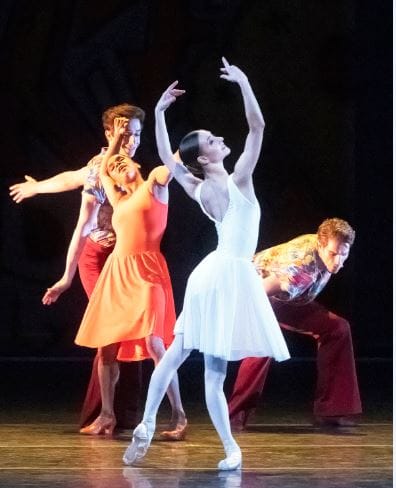
Without Tharp's own dancers, without graffiti artists generating the backdrop in real time – never mind the fact that cross-over has been ingested into the mainstream – "Deuce Coupe" can never be what it was in 1973. But it can catch some of the fun, wit and cheek of the original. And it can provide opportunities for dancers to shine. James Whiteside was all easy stretch, gobbling up the stage like a water strider. In 'Got to Know the Woman' Misty Copeland got to leave behind the pressures and p.r. of being the first black female principal etc. etc. to just dance. She's so deeply into what she's doing that she's phenomenal – and comfortable. Or perhaps, comfortable – and phenomenal.
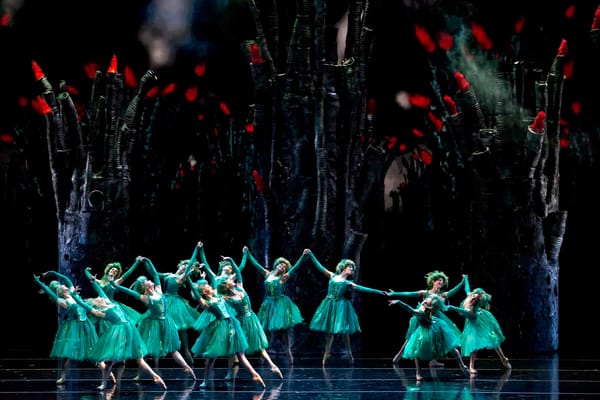
"The Seasons" returned with almost all of its original cast present. After a queasy moment when the opening tableau looked as distant as it had at the Met in May, it became clear that the ballet did benefit from the more dance-friendly stage of the Koch Theater. Masses of dancers were more easily separated from individual dancers. The final pose read as a consciously constructed monument, with The Spirit of the Corn in a one handed lift as its pinnacle. Even the costumes weren't as irksome as they had been last spring, though that may just be the "A Gathering of Ghosts" effect. Unfortunately, the dance students, with their red dresses and black tights, intended to evoke poppies still resemble cocodettes in training. But what shines most brightly now that the ballet is five months old, is the egalitarian esprit de corps of the work, so far from the hierarchically constructed classics in which everything circles around the two leads. Ratmansky has said that "The Seasons" is his "gift to the company". The company is returning the favor with Catherine Hurlin (as Hail) hurling herself around the stage but landing softly, Aran Bell (Winter) looking more at ease than in May, and Cassandra Trenary and Calvin Royal III combining spirit and restraint in just the right proportions in the autumnal bacchanal.
Clark Tippet's "Some Assembly Required" was made for John Garner and his wife Amanda McKerrow who set it here. According to an interview in the playbill, the pas de deux is an all too perceptive look at the state of their marriage, its highs and lows, four years in. The partnering in the piece is intense. At one point, the man is on his back on the ground with his legs straight up while his partner sits on his feet in a pin up pose. So, mechanically speaking, one can understand why Sarah Lane, light and strong, and Cory Stearns, an experienced partner and attractive presence, were cast together. But when they walked on stage, Lane, a head shorter than he, looked like Stearns' daughter and the vibe was icky. It took a while for that vibe to dissipate, and the ballet is only sixteen minutes long.
"Let Me Sing Forevermore", performed by Aran Bell and Catherine Hurlin, is a purpose made duet which served its purpose; Catherine Hurlin won the Erik Bruhn Competition in May. Set to three selections from the American songbook sung by Tony Bennett, It began well enough but, in the second movement, looked more like a skating routine than theatrical dancing whether Broadway or classical. (The dancers were in jazz shoes and sparkling dark blue costumes.) The final movement flailed as Bennet intoned "I've Got Rhythm" as though repeating a base beat. Only eight minutes long, the duet was completely dependent on Bell and Hurlin's youth, charm and good humor. They deserve better and in "The Seasons", they got it.
copyright © 2019 by Carol Pardo