At Long Last
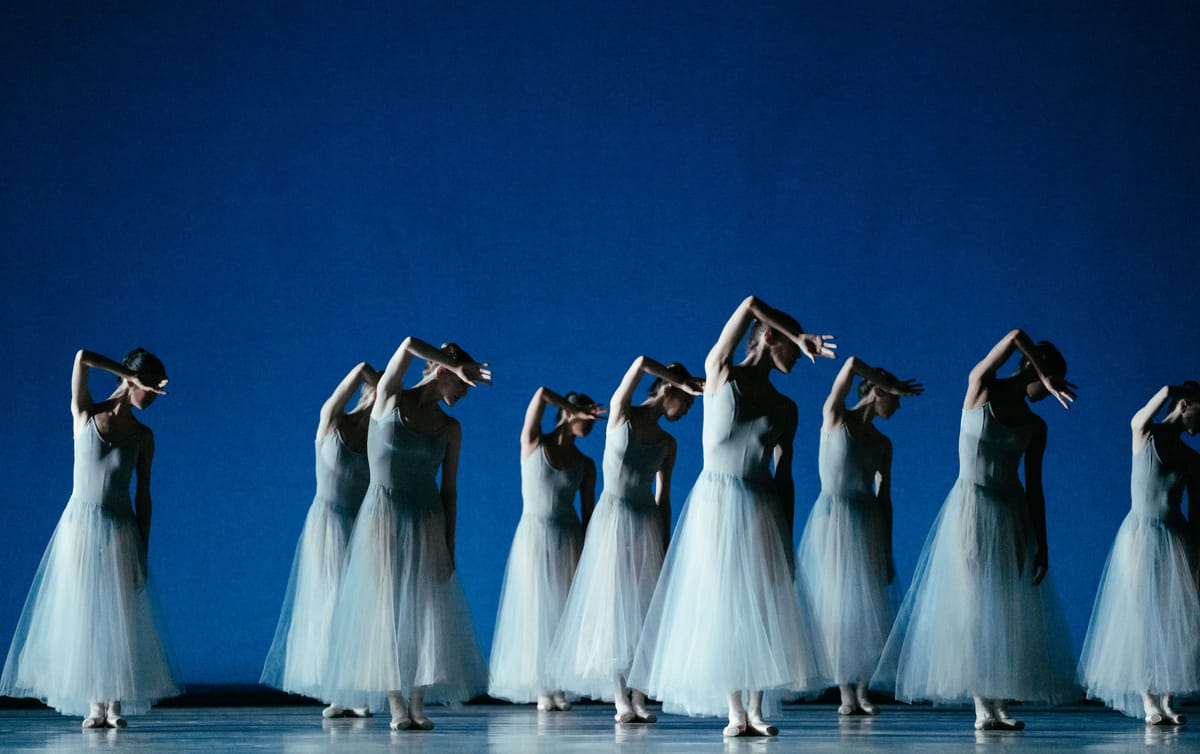
"Serenade", "Angels' Atlas"
The National Ballet of Canada
Four Seasons Centre for the Performing Arts
Toronto, Canada
November 11, 2021
Having endured one of the longest lockdowns in the world, the pent up desire for connection and live performance in Toronto has been palpable. The National Ballet of Canada’s triumphant return to the stage after 20 months was cause for joyous celebration, an opening night like no other. The evening consisted of two great ensemble pieces: George Balanchine’s “Serenade” and Crystal Pite’s “Angels’ Atlas”. In lieu of an intermission, a 10 minute video interlude allowed the dancers just enough time for a quick change. The video was filmed during the pandemic for the NBoC’s virtual 2020-2021 season, featuring “Soul” by Toronto-based indigenous choreographer, Jera Wolfe.
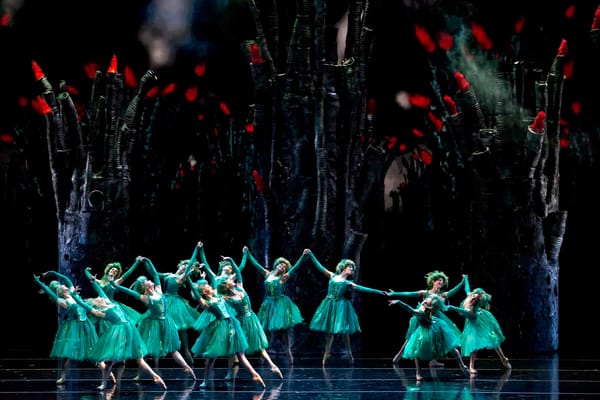
After thunderous and enthusiastic anticipatory applause, the curtain of the Four Seasons Centre, emblazoned with the words “Welcome Back”, rose on the iconic opening tableau of “Serenade”. With the powerful first strains of Tchaikovsky’s music, Ronald Bates’ moody lighting and dancers with arms outstretched gazing upwards to the moonlight, there was a collective emotional exhale from artists and audience alike. This long-awaited moment that at times felt so out of reach had finally arrived. The corps de ballet moved and breathed in unison with equal parts serentiy and excitement. Their port de bras were exquisite, telling a story with the simplest of gestures.
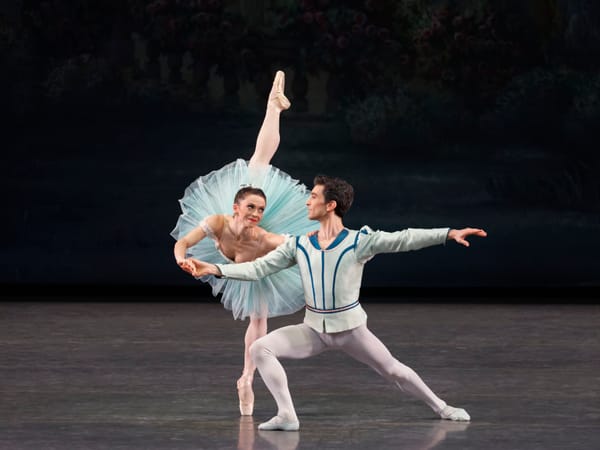
The ageless Sonia Rodriguez brought a grounded and calm presence even as she joined the group late as the Waltz Girl. Nearing the end of her career (she will retire after her last performance in March 2022), she is dancing with incredible openness and a renewed sense of pleasure. Her partnership with Guillaume Côté appears secure and easy. Their pas de deux was musical and imbued with accents and dynamics. As the Russian girl, Jurgita Dronina was exuberant and ever in the moment, stopping time with each suspended leap. Tanya Howard was quite serious and methodical in her approach to the Dark Angel. Her flexibility and suppleness lend themselves well to this role, although sometimes her bent wrists can be distracting and break the line. A stern Piotr Stanczyk was her Elegy Boy and gave a clean, precise performance.
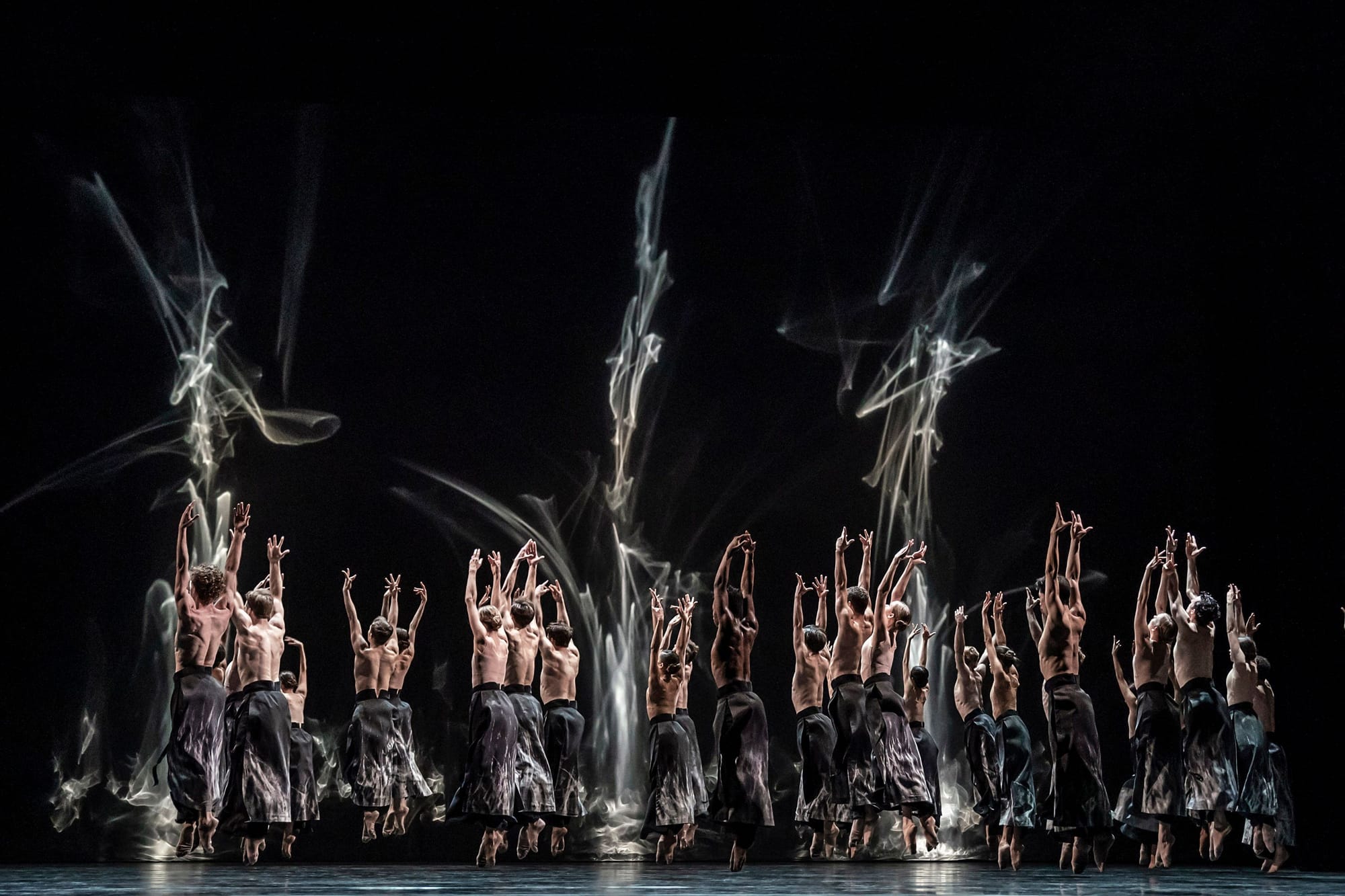
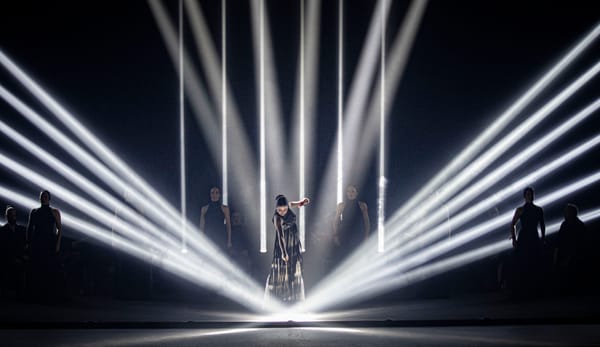
In presenting Pite’s “Angels’ Atlas”, the NBoC picked up where it left off. This ballet premiered just before the pandemic, in February 2020. Seeing it again now, its themes of impermanence, mortality and transcendance take on a new meaning. Like “Serenade”, it is a non-narrative pure dance work that also has episodes that invite interpretation. It features a massive cast of 36 dancers who are on stage most of the time, set against a dramatic backdrop of shifting light and shapes. Designed by Jay Gower Taylor and Tom Visser, this backdrop is another character in the work, both influencing and responding to the group’s movement as if in conversation. At times resembling fractals, the kaleidoscopic images bring to mind the rational chaos of the natural world. Pite creates a dark space that could be the afterlife or underworld. The music is a mix of Owen Belton’s dissonant and at times tinnitus-inducing composition, and choral music by Tchaikovsky and Morten Lauridsen. “Angels’ Atlas” simultaneously evokes both the divine and sacred and something ambiguously eerie and unsettling.
The corps are creature-like, with pulsating, low to the ground, twitching movements done in tandem or in fugue. The dancers demonstrated great stamina in executing Pite’s vigorous choreography with its unrelenting repetition. The effect is hypnotic. The trance-like ritual is punctured by brief moments of stillness. Standing apart from the masses is a central pair, Siphesihle November and Hannah Galway. At different points in the ballet, they each die (literally or metaphorically) and grieve the losses of each other. Towards the end, the whole ensemble collapses. Yet one by one, they rise, resurrected and reborn together. Their shared experience is both profoundly significant and a tiny blip in a vast universe.
The palate cleanser between these two large scale ballets is Wolfe’s intimate “Soul” featuring two pairs dancing to “All Human Beings” performed by Max Richter, Kiki Layne and Mari Samuelsen. The piece was created in 2020 when strict physical distancing guidelines were in place. Wolfe had to use words and gestures rather than hands-on adjustments to create, and the work initially used two couples who were in “bubbles” together (real life partners Côté and Heather Ogden as well as Harrison James and Ben Rudisin). As such, it is a unique ballet in the NBoC’s history. In the film recording, Côté dances with Tanya Howard instead. “Soul” was conceived with the camera in mind, allowing for subtleties of facial expression, close ups of arms and hands, and quick transitions from one pair to the other. Both pairs fully committed to the choreography, which features complex lifts, interwoven limbs and romantic embraces.
The company will continue with a run of “The Nutcracker” before a packed Winter season in 2022. There will be many wonderful performances to come, but it is hard to imagine anything quite as special or historic as this one. With this performance, the NBoC’s message was loud and clear: it’s good to be back.
copyright © 2021 by Denise Sum