All That Worth Protecting
“When the Water Breaks,” “Monarcas,” “Floes,” “Symbiotic Twins,” “Network,” “After the Rain,” “Asylum,” “Moss Anthology: Variation #5b (2025)”
vildwerk.
New York Live Arts
New York, NY
December 17, 2025
Dance lovers are drawn to dance because of its inherent beauty: visual, musical, and in story ballets, narrative. And it’s no coincidence. Humans are creatures captivated by beauty, whether born of nature or shaped by human effort. And so, when vildwerk., a three-year-old nonprofit with an urgent mission, married an appreciation for the natural world's splendor with the artistry of numerous talented choreographers, it tapped into something transcendent. The result is more than aesthetically gratifying: the foundation raises awareness for environmental causes in ways that take your breath away, proving that art can be both mirror and manifesto.
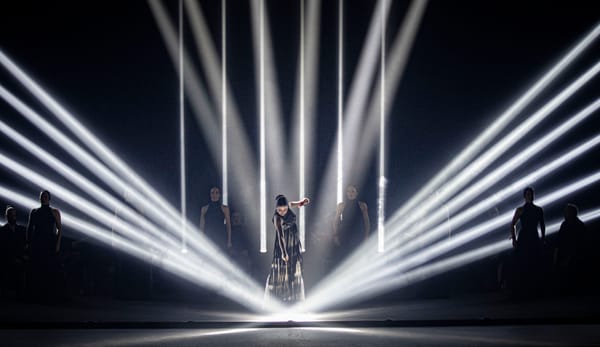
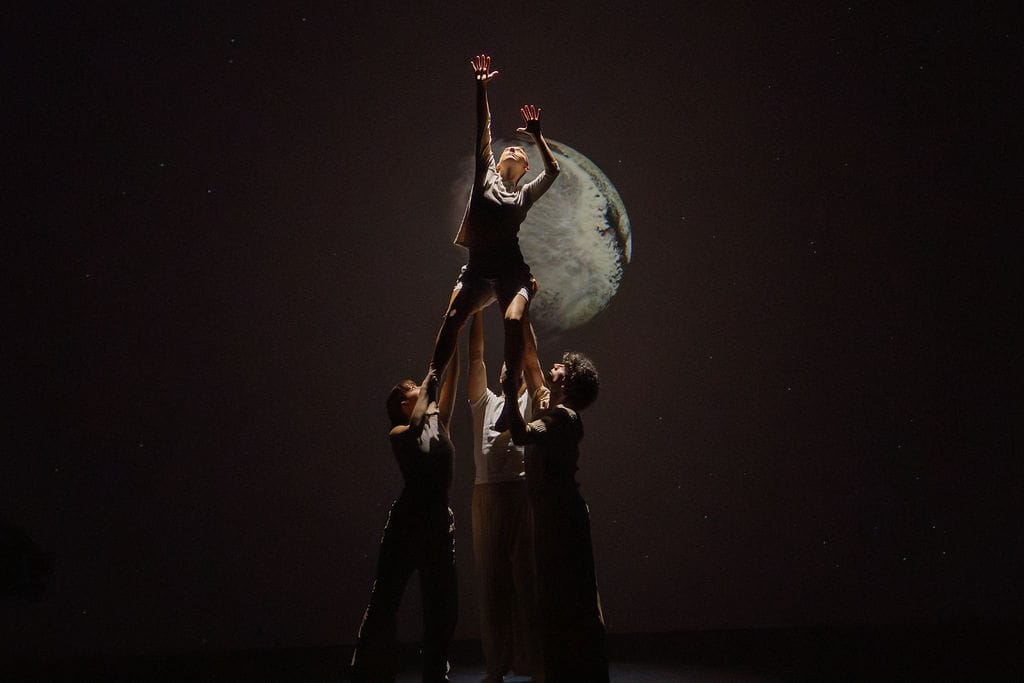
This second season, vildwerk. partnered with World Wildlife Fund and Nature and Culture International for the environmental expertise, and presented several world premieres of specially commissioned dance done in consultation with these entities. The evening opened with Bradley Shelver's "When the Water Breaks," set to an original score by David K. Israel (who performed live), which explored the mysterious and powerful ways of our planet's waters and their resonance with human emotion. As the piece began, an image of a technical scuba diver (Mexico-based underwater cave explorer Nicolas Casella) suspended in the depths of Mexican cenotes floated across the stage, ushering in an inspired ensemble from the Joffrey Concert Group.
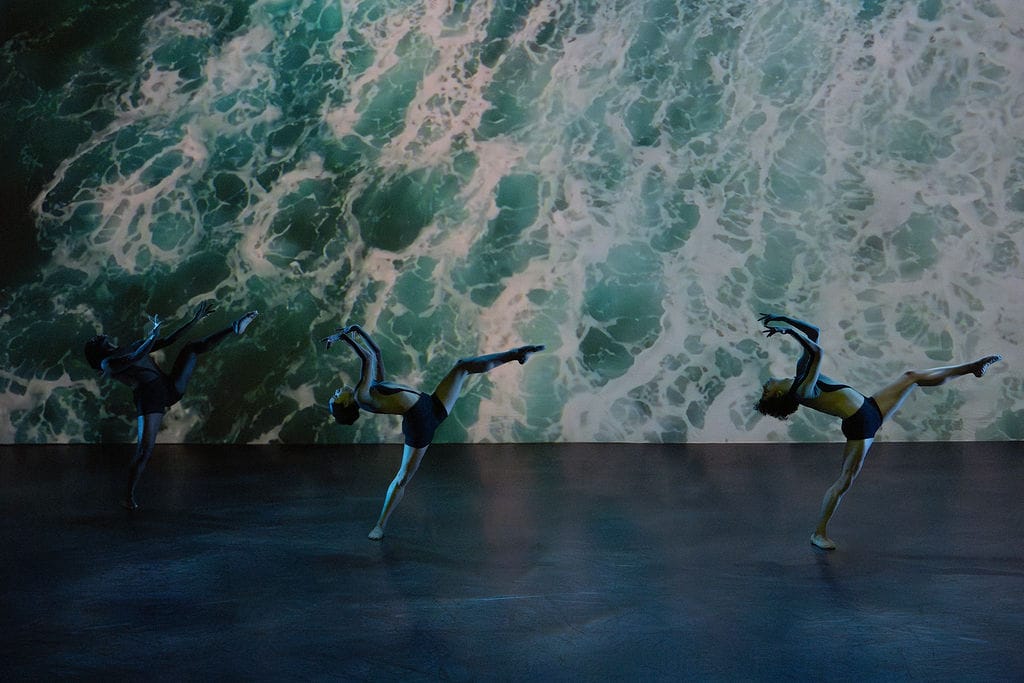
Their first appearance, admittedly, took me aback – there was such abundance of movement and detail among the dozen dancers that it seemed to contrast sharply with the background imagery. After all, cenotes offer perhaps the most spiritually serene experience in all of aquatic sports, a cathedral-like stillness beneath the surface. But as the work progressed, this opening gesture revealed its logic. The background images shifted to oceans and crashing waves, and the dancers' movement language evolved to complement the scenery, suggesting that the opening represented water's inherent energy. The choreography was inventive: two dancers executed full turns with legs stretched forward, flush to their torsos in gymnastic-style splits; duets morphed from à la seconde tour lent into tucked positions; arches and bends evoked microscopic life teeming in the deep. By the piece's conclusion, the parallel became clear – just as human experience contains limitless stories, so do our waters.
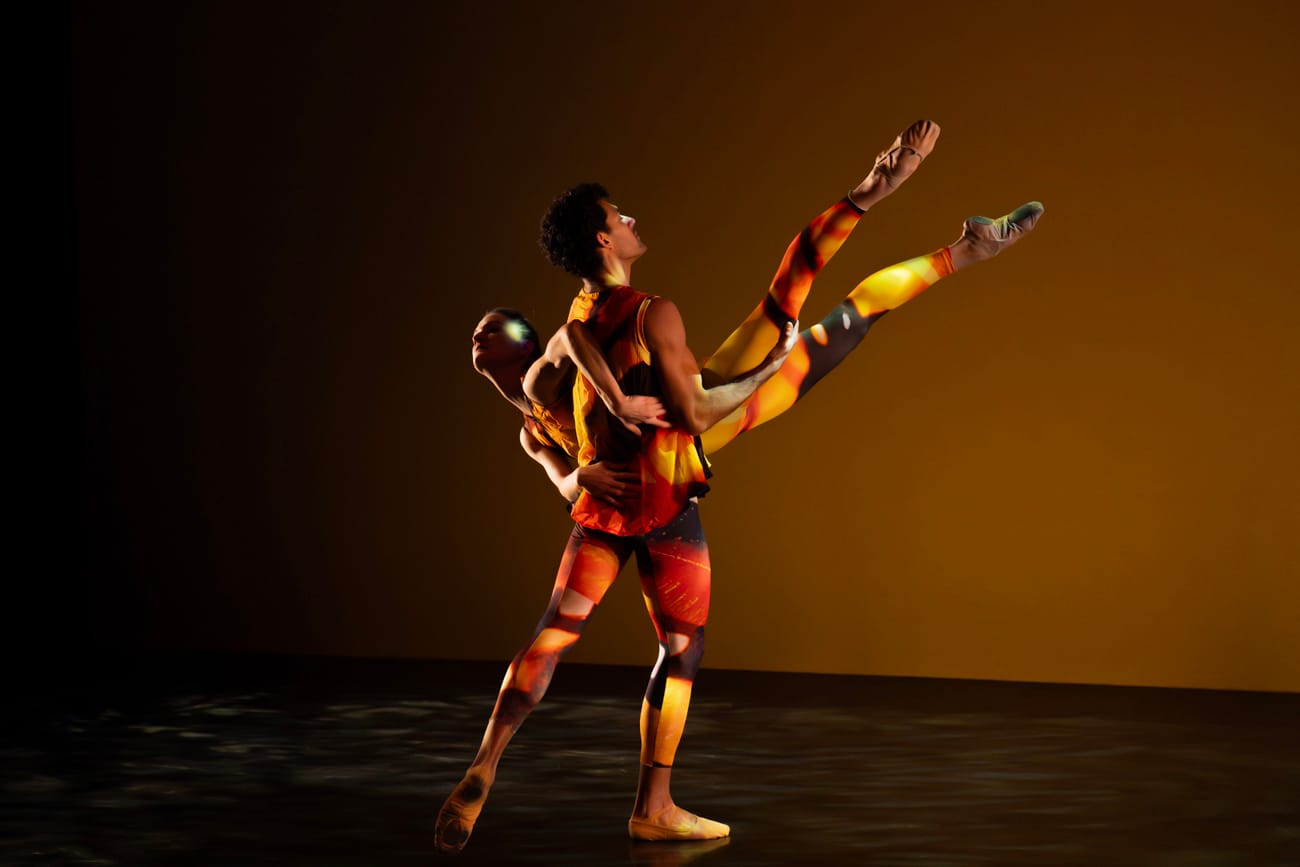
Next came an excerpt from Henning Rübsam’s “Monarcas,” a work created for vildwerk.’s inaugural season. Danced by Megan LeCrone and Renane Cerdeiro, this duet deepened in impact upon second viewing. Representing the migration of the monarch butterflies, the engaged flying arabesques and every other interplay of dancers – like when LeCrone would fall back with an outstretched leg and Cerdeiro would catch and spin her into another beautiful position – all felt like true butterfly movements. There were so many intricate shapes, yet none were ever static poses. Just like with real butterflies, the beauty fully blossomed in motion.
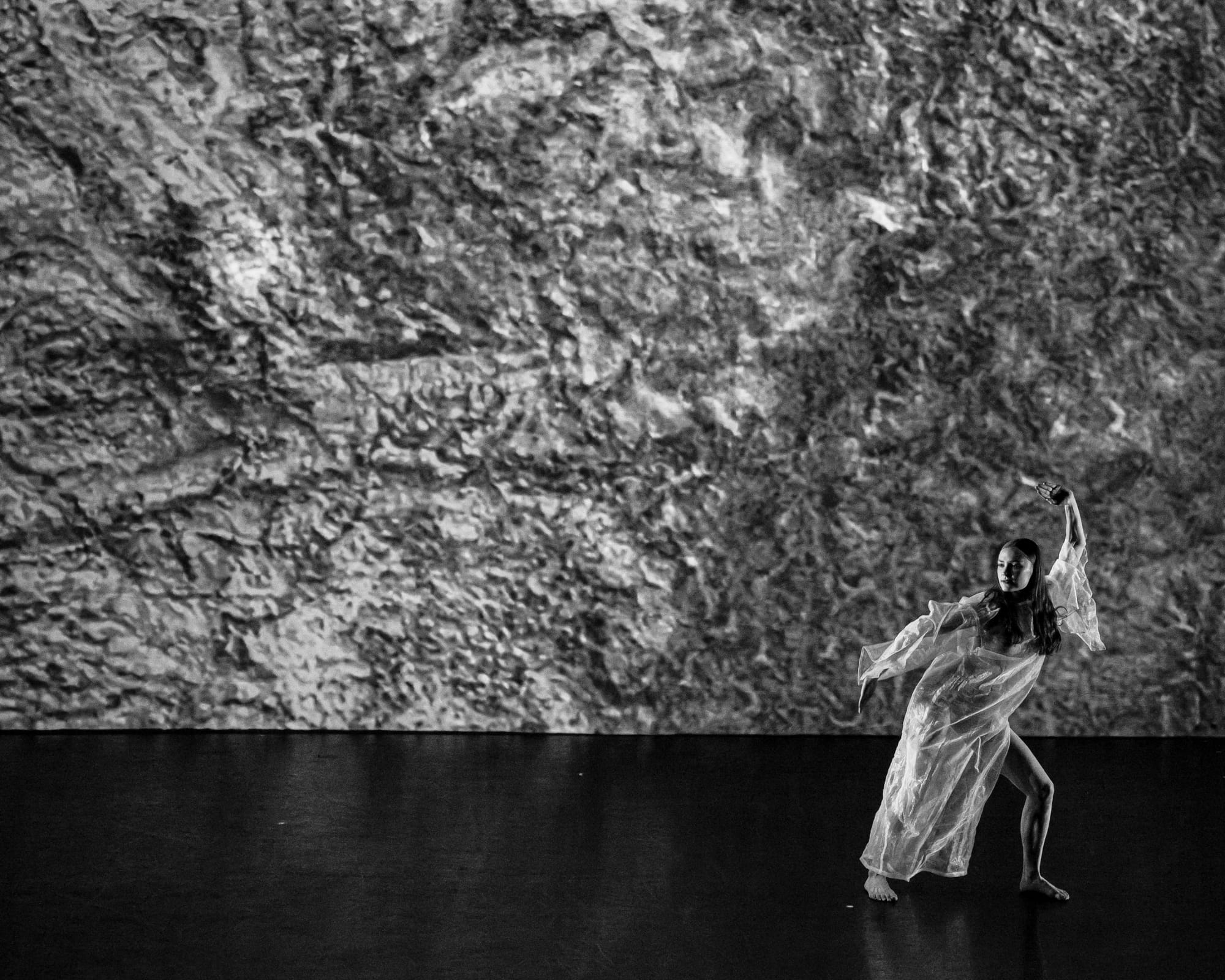
Virginie Mécène's climate-focused new work "Floes" followed, offering a stark tonal shift. Backdropped by images of ice with a particularly crystalline, glass-like quality, dancer Grace Sautter moved slowly across the stage. This work embraced stillness where others had celebrated movement, featuring held poses that transformed the piece into performed visual art. Combined with the projections, it became a meditation on loss – the melting and receding of polar ice rendered in human form, a body becoming smaller, more fragile, disappearing before our eyes.
Then, Annabelle Lopez Ochoa’s new work shifted gears to explore organic interconnectedness. In “Symbiotic Twins,” to music by Kate Moore, Benjamin Freemantle and Cerdeiro almost never broke physical contact as they twisted and turned like two intertwined vines seeking sunlight. At times linked only where their heads touched, at times fully interwoven, the shapes their bodies created were impossible in isolation, and needed both dancers. The message of symbiosis didn’t go deeper than this, but the dance presented was nonetheless beautiful.
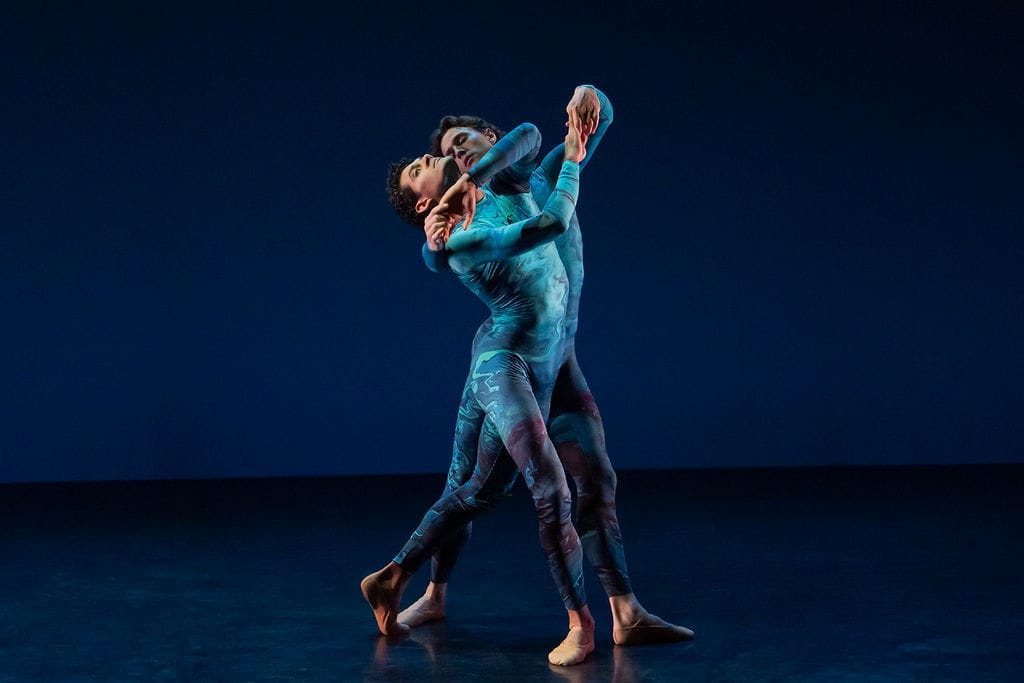
Gianna Reisen's "Network" returned from last season, another work worthy of a second look. Performed by Reisen alongside three other dancers, this exploration of fungal ecosystems had the performers stopping and clenching different body parts, suggesting the invisible mycorrhizal networks that connect forests below ground – nature's own internet, pulsing with information and resources shared across root systems.
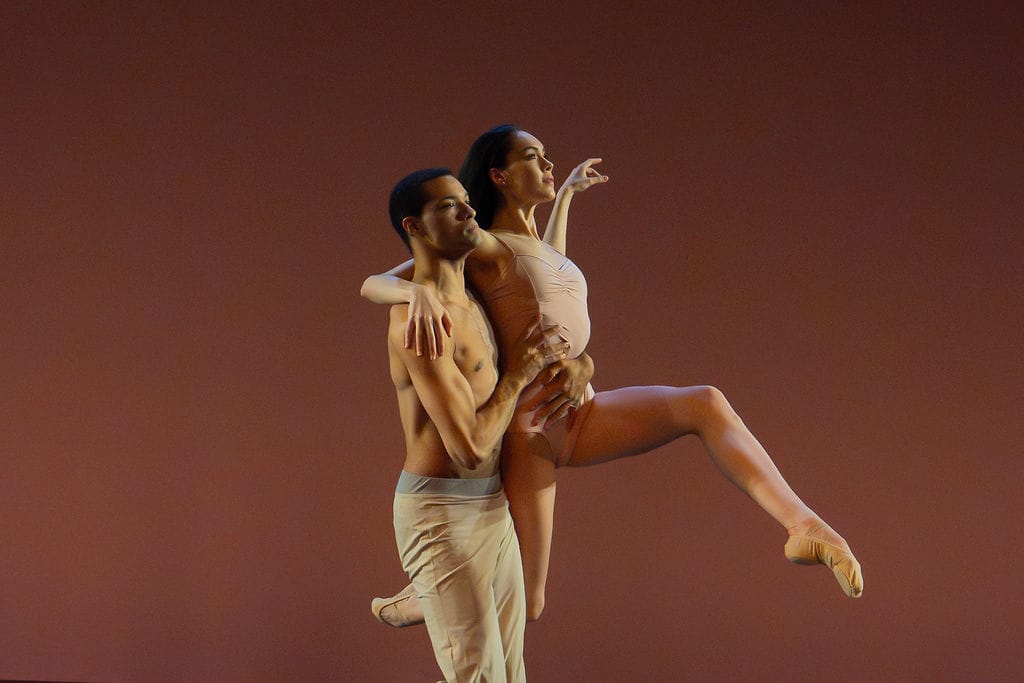
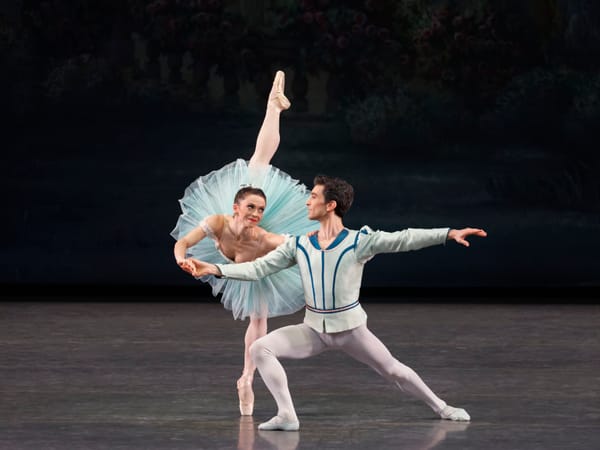
A far older work, Christopher Wheeldon's celebrated "After the Rain," offered a different kind of treasure: Mira Nadon's debut in the female role, partnered expertly by Preston Chamblee. The pas de deux retained all its characteristic exquisiteness, though Nadon at times seemed cautious, even a touch cold. Chamblee carried much of the emotional weight, and his kneeling gaze into the audience – as Nadon emerged from behind him – became, in the context of the evening's programming, simultaneously a question, a plea, and a confession about what we stand to lose.
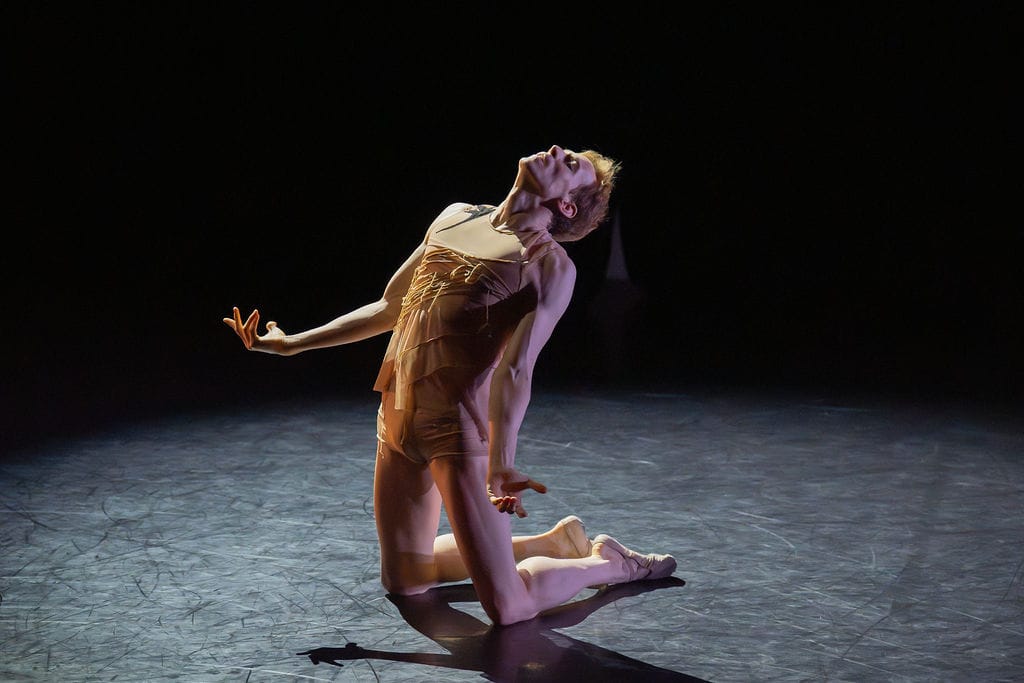
By contrast, the premiere of Antonia Franceschi's commissioned "Asylum," performed by Edward Watson to Ezio Bosso's Concerto No. 1, was awash in emotion. Almost overwhelmingly so. Where Bosso's score was busy and insistent, Watson's movement was deliberately sparse and introspective. He would lead his body into a pose, like an arabesque, then hold it as if listening for something lost. Then, he would clasp his head, pointing to corners of the stage, turning and covering his face. In one arresting moment, he stepped into a spotlight that illuminated only half of him, held his head, and stared – a man watching his sanctuary recede and fade, growing disconnected as the forests that shelter him erode away.
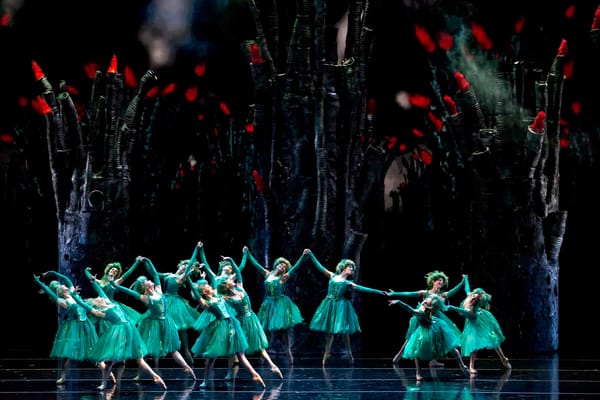
The evening concluded with Jacqulyn Buglisi's "Moss Anthology: Variation #5b," a slight reworking of last year's presentation. To me, this year it made less sense, as one normally does not associate moss with so much movement. One moment excepted: where the dancers were in a plank pose their forearms shaking deliberately, as though reacting to forces meant to uproot them. Beyond that, even if meaning evaded, the piece shared something essential with what had come before, though what exactly remained elusive.
vildwerk. makes an unassailable argument: beauty obligates. Having witnessed such artistry, having seen nature and human creativity in conversation, the audience becomes complicit. We've been shown what's at stake. The only question left is what we'll do about it.
copyright © 2025 by Marianne Adams