Achievement
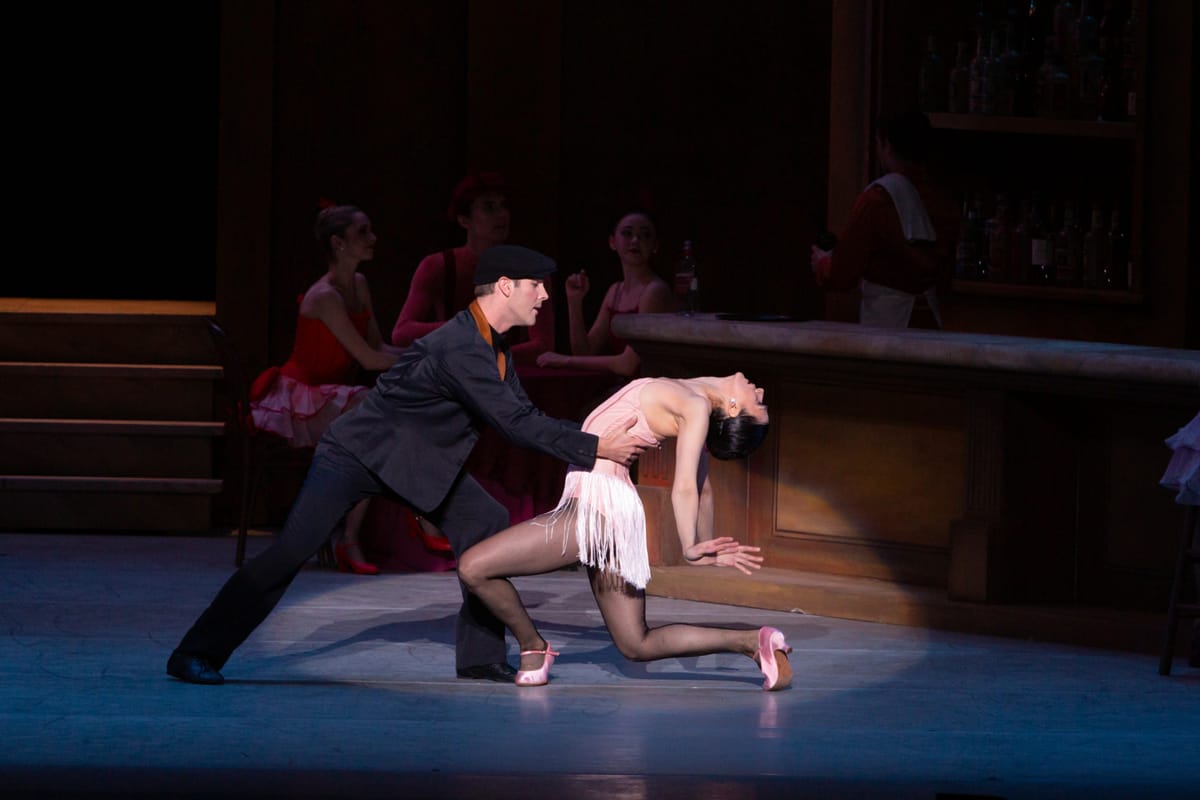
“Defile”, “Birthday Offering”, “Meditation from Thais”,
“Allegro Brillante”, “Slaughter on Tenth Avenue”
Eisenhower Theater
The John F. Kennedy Center for the Performing Arts
Washington, DC
February 20, 2020
It is a fun program, the Balanchine and Ashton (and Kent) quintuple bill that The Washington Ballet is flaunting this February week. An audience that seemed to fill the theater enjoyed itself from start to stop – especially the stop: Balanchine’s “Slaughter”, which isn’t one of his sublime masterpieces. I’ve seen many performances of it but never a better one. It is a “character” ballet with the gals not on toe but in heeled shoes and the only academic danseur a comic lampoon. Yet this choreography as danced on Thursday night revealed the classic steps and stances that are at the core of all the shimmying and shaking and hoofing by Sona Kharatian as the striptease girl, Daniel Roberge as the tap dancer, their cronies and combatants. Whatever else artistically and commercially these five dance pieces achieved, there was satisfaction!
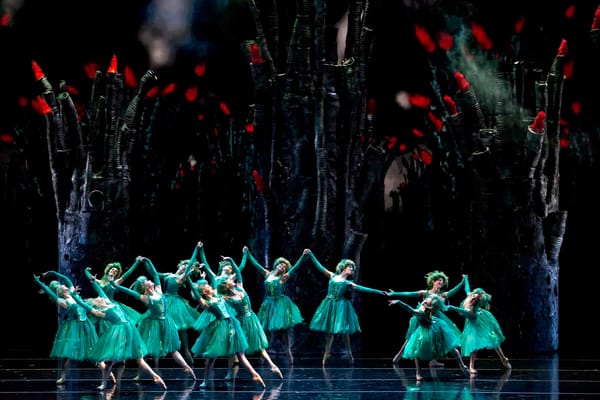
The curtain raiser was Julie Kent’s “Defile”, first shown earlier this season. It celebrates the 75th anniversary of the company’s school in the manner of the Paris Opera Ballet’s historic filings-by or defiles. Although there are many students to display, Kent keeps things simple, short and sweet to music by Leo Delibes. We glimpse the youngest pupils who skip, hop and run across the stage but also the more accomplished. “Defile” did not outlast its welcome.
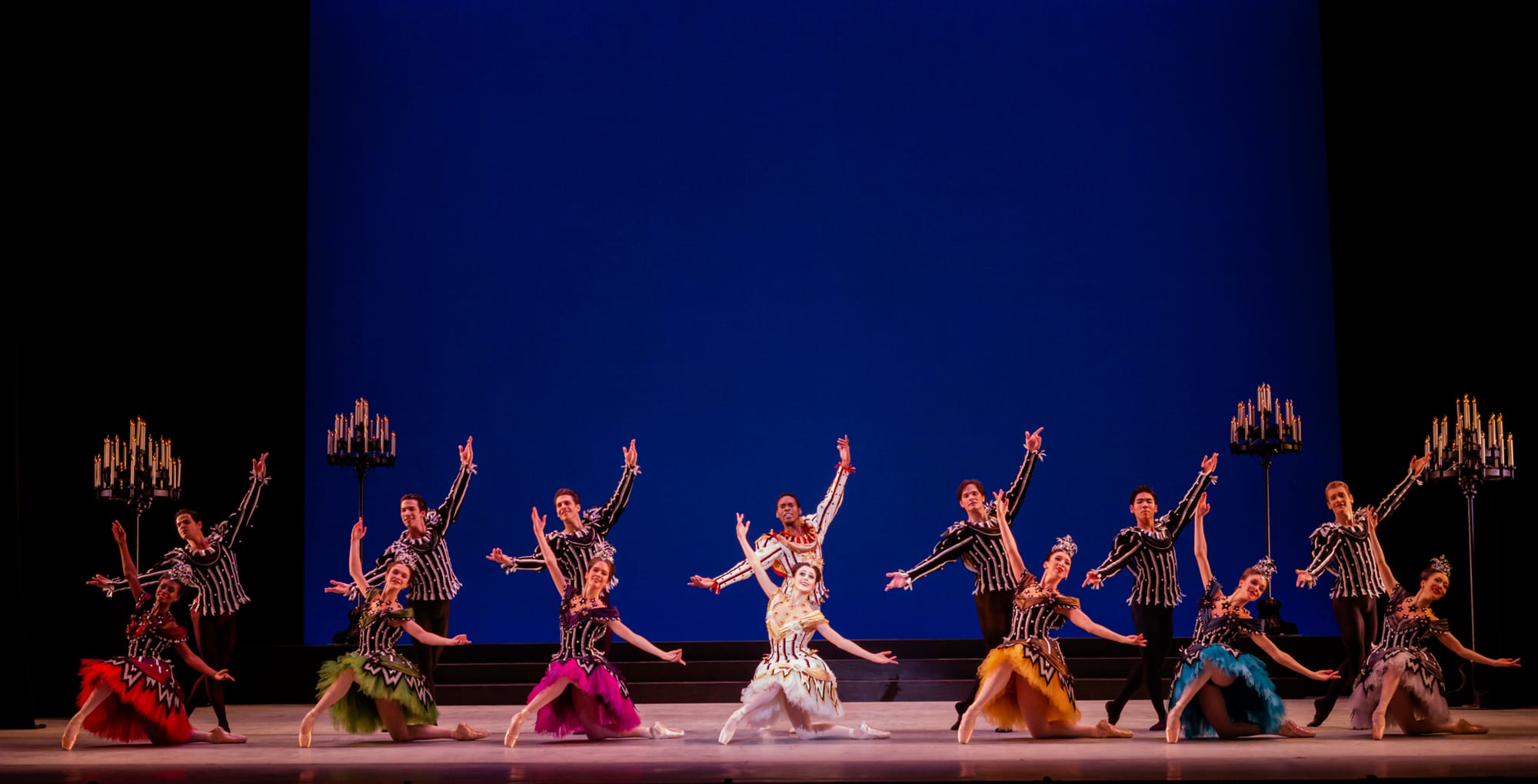
Can the program’s substance, two ballets by Frederick Ashton and two by George Balanchine, answer the question of how these 20th Century masters differed? I’m not sure. All four works were quite distinct, yet shared a richness and relatedness of movement vocabulary plus a sense of controlled dynamics. Ashton’s “Birthday Offering” is a formal balletic display piece for a ballerina (Katherine Barkman) and danseur (Andile Ndlovu) plus six additional couples to music by Glazunov. As staged by Christopher Carr, there is a very clear, an emphatic emphasis on the contrast between motion and rest. When action stops, it is as if the dancer is frozen in time. The motions vary. Some passages are grand, others have charm. There is haste and there is, too, composure. Yet all inactivity is absolute. In contrast, Ashton’s “Thais” duet (staged by Grant Coyle) seems never to stop. Motion is continuous. The dancers (Gian Carlo Perez and his lady Eun Won Lee) always have at least one moving body part – arms or neck - to the Jules Massenet music. An exotic, oriental mood tints the flow of this piece whereas “Birthday Offering” with its sharp halts had the flavor of European royal courts.
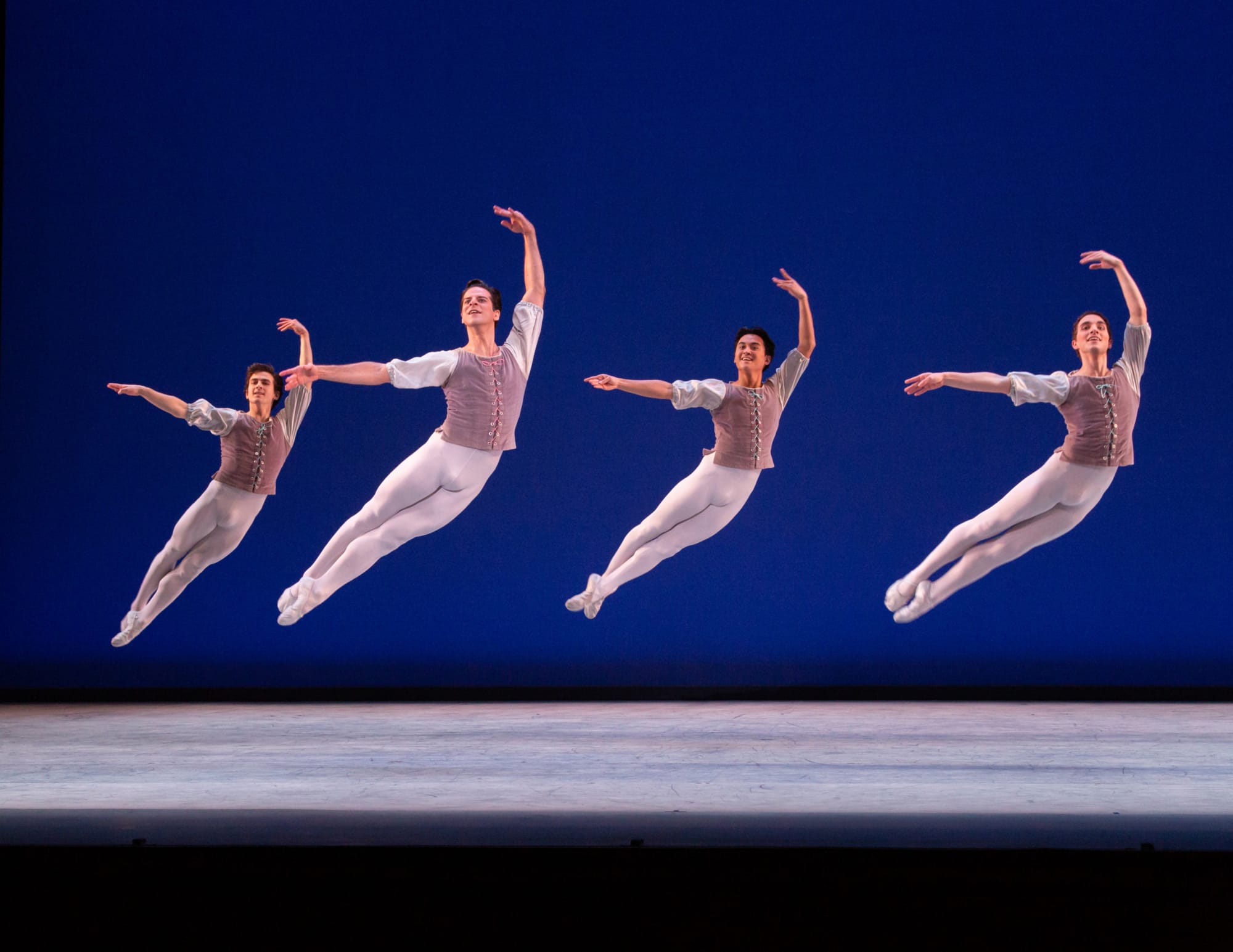
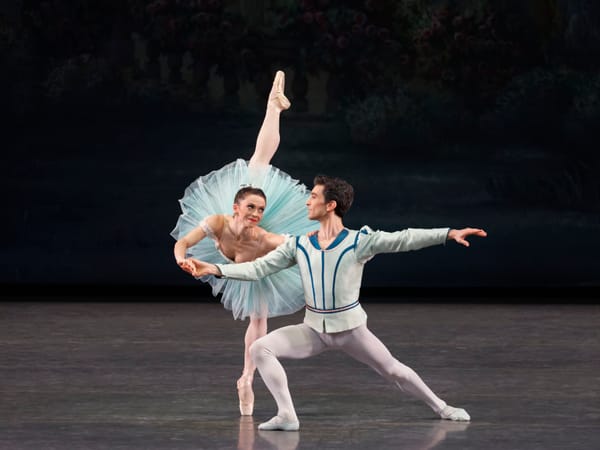
Balanchine’s makes “Allegro Brillante” a kaleidoscope of different dynamics and directions. In this piece to Tchaikovsky music (Charles Barker conducted the orchestra and pianist Glenn Sales), there is a contemporary dash to the dancing. Five couples are led by t he quicksilver Maki Onuki and by imposing Marcelo Gomes. The vocabulary and formations allude to Russian precedents (Marius Petipa and Lev Ivanov) but also to Danish bounce (August Bournonville). Balanchine seemed aware of all the balletic information he was cramming into the brisk “Allegro Brillante” (staged on this occasion by Darla Hoover) but still, the surprise for me was the program’s last work, “Slaughter” (staged by Philip Neal). Sona Kharatian sizzled as the stripper, yet never stooped to dryly undressing the role’s classical lines. Her high leg extensions and deep back bends always had a velvet texture. The men in this stripper’s life, Daniel Roberge’s hoofer, and the villains (Corey Landolt’s danseur, Oscar Sanchez’s boss man, Harry Warshaw’s gangster) weren’t just caricatures but also actually convinced.
Not just the program’s principal dancers but also the entire casts of the group ballets must be credited with making each work distinct.
copyright 2020 by George Jackson