A New Beauty Awakens
"The Sleeping Beauty”
New York City Ballet
David H. Koch Theater
New York, NY
February 19, 2026
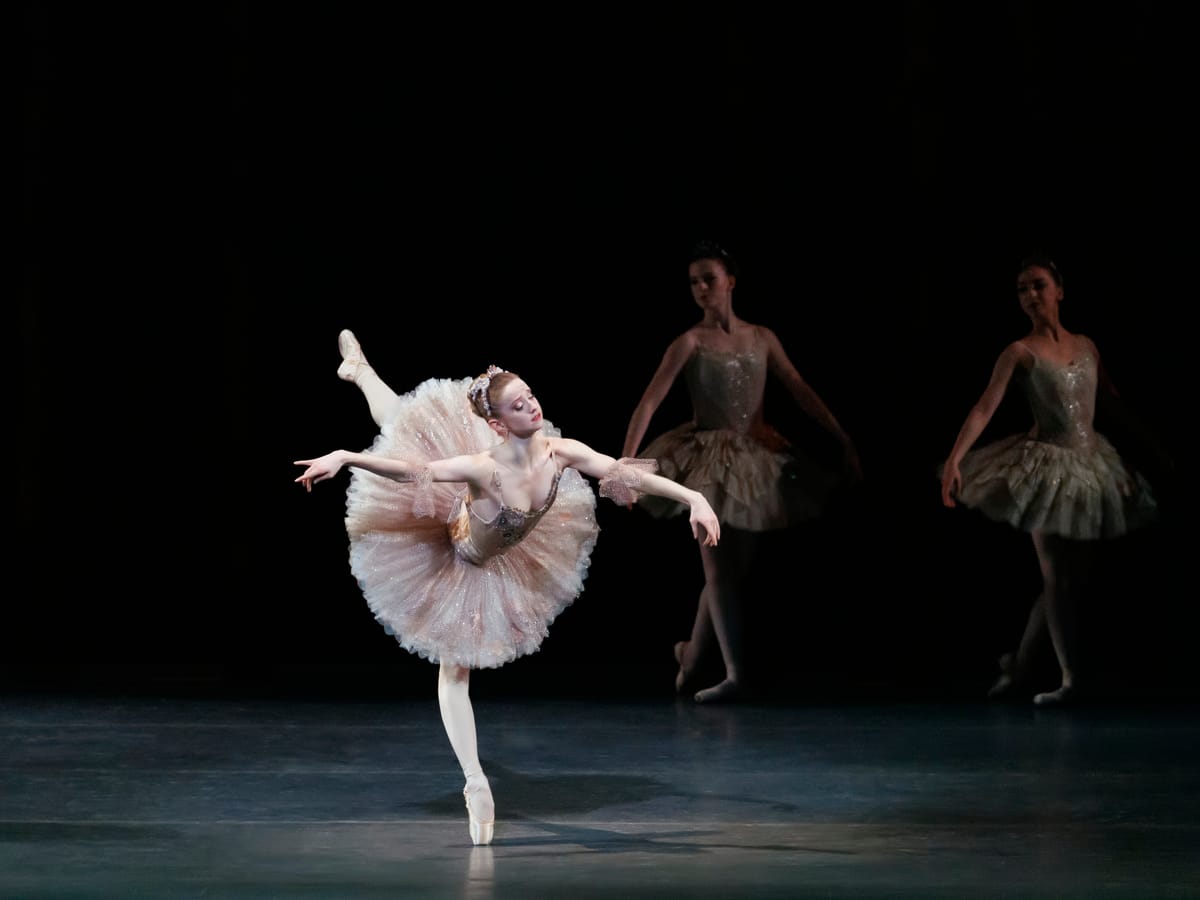
In a two-week run of Peter Martins’s staging of “The Sleeping Beauty,” New York City Ballet saved the best debut cast for last. The beauty of this “Beauty” was in the nuance, and Emma Von Enck as Aurora and Dominika Afanasenkov as the Lilac Fairy gave transcendent, intentional performances, while David Gabriel was a gallant and hopeful Prince. Meaghan Dutton-O'Hara's first outing as Carabosse, perhaps by design, had the character reduced to a miniaturized tantrum figure – more aggrieved office worker than dark sorceress. Despite some odd pacing, the story was a page-turner no one wanted to end.
From her first entrance, Afanasenkov – who seemed to have been saving herself all season for this role – moved with deliberate, unhurried authority. She was a force for good, and she made sure the audience lingered with her through deliberate phrasing and beautiful accenting. Even a reach toward a page boy at the top of the ball scene, gracious and warm, or a lean back to acknowledge her partner, read as carefully considered details worthy of a royal occasion. She stood out from her fellow fairies not merely because of her magnetism, but because of what she did with it.
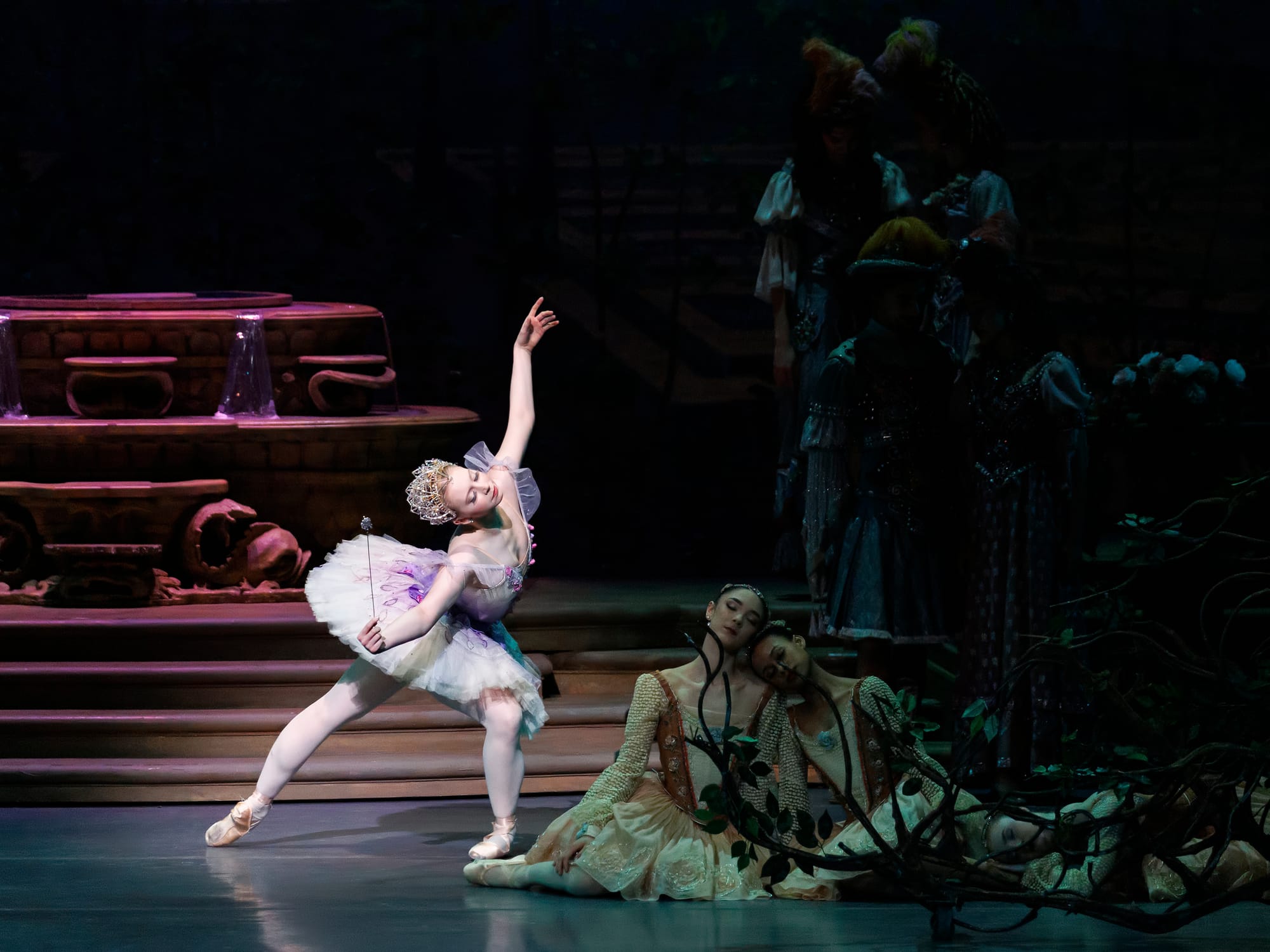
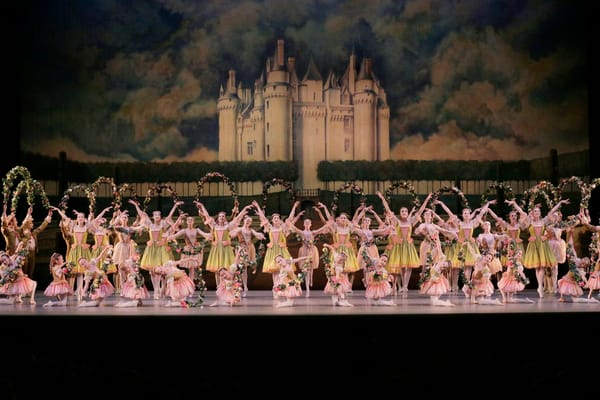
The group fairy dances fared reasonably well – symmetry was sharp, leg heights in the held écartés were admirably uniform – but the variations nearly unraveled things. Gabriella Domini as Tenderness lacked the far-reaching grandeur her variation calls for. Maya Milić as Vivacity launched into strong jetés but ended with jerky attitude devants and hands that appeared to be mashing potatoes, not adding movement accent. Sarah Harmon's Fairy of Generosity was too slow through the feet, each tombé leaden and over-pronounced, while Mia Williams as Eloquence offered arms that were busy, abrupt, and anything but, with pas couru to match. The saving grace was Ruby Lister, whose Fairy of Courage had the strong presence and confident delivery the variation demands – a welcome reprieve until Afanasenkov returned to right the ship.
The Lilac Fairy variation is a dripping collection of extended lines and suspended silences, and Afanasenkov delivered. She was ill-served by guest conductor Beatrice Affron, who has often disappointed with her tempi this season, and the ballerina looked as though she was physically willing the music to slow down. Whether through instinct or intent, her poses lingered, and after an accent poured into the next movement. It’s a shame the conductor didn't follow her lead.
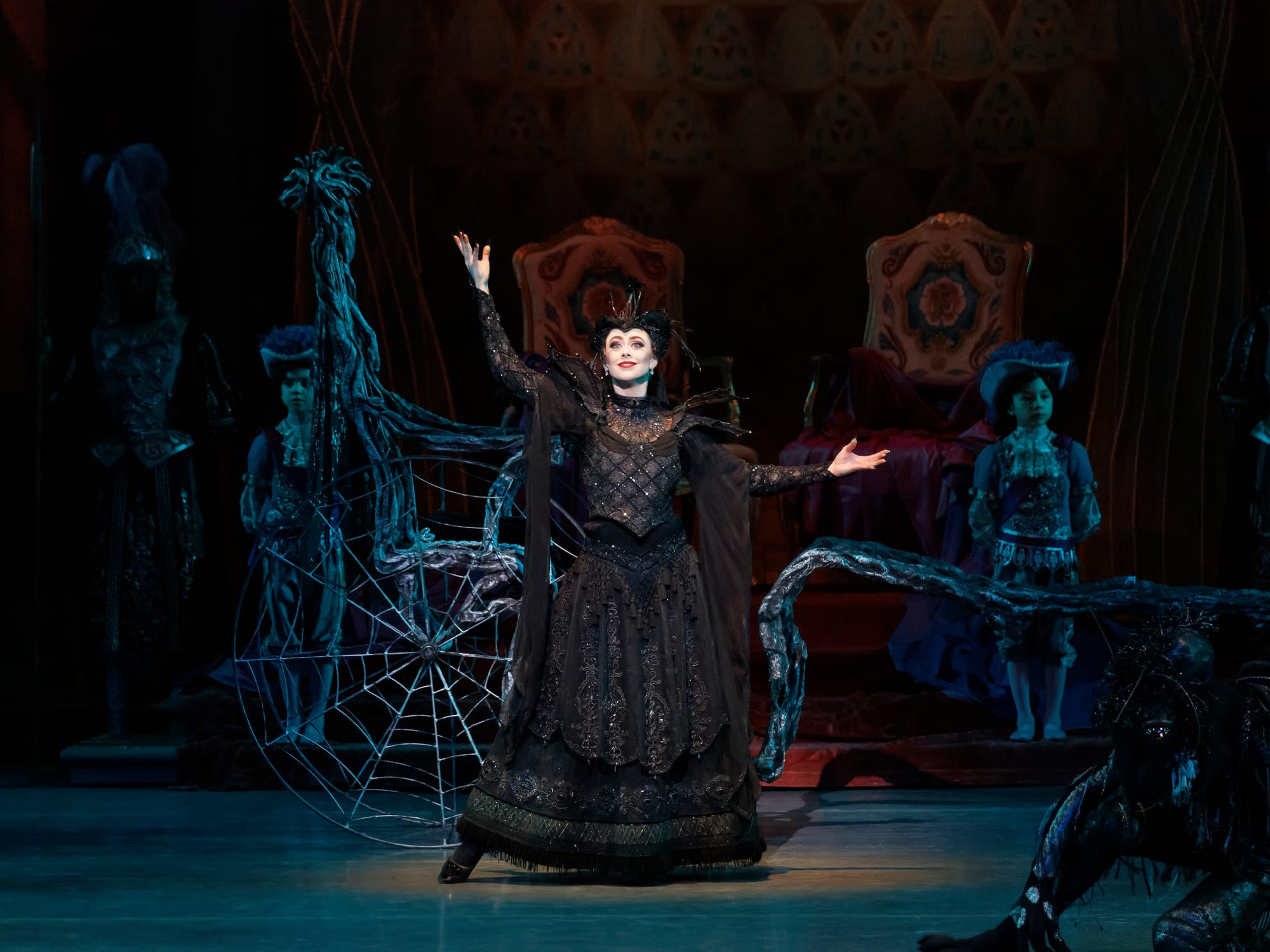
And then came Carabosse. Peter Martins's production allows her to be many things: demonic, devious, glamorous, perhaps harboring some deeper personal wound. With all those options, Dutton-O’Hara chose comically neurotic: storming the christening as though to complain about a missing condiment bottle from the company pantry, not a social slight of the highest order. It was an odd approach, but it worked well with Afanasenkov’s responses. When the Lilac Fairy gestured that Aurora would merely sleep, not die, she looked like a woman of infinite patience dealing with someone who's misplaced their grip on reality. “No, no, you’re quite mistaken – again,” Afanasenkov's eloquent head movements seemed to say.
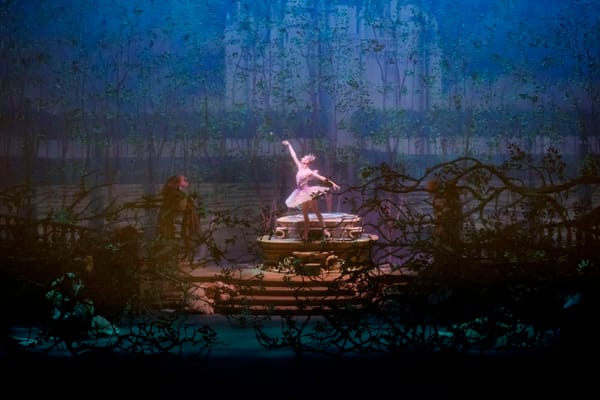
By Aurora's entrance, everything could go either brilliantly or badly. It went brilliantly. Von Enck's crisp entry, without too many accented holds, was youth personified. She was a somewhat timid girl, which worked particularly well with Von Enck’s petite stature, conferring innocence and fragility. When her four cavaliers faltered and she nearly toppled from her final attitude, decorum held; then she acknowledged them during her variation, almost with surprise – the coming of age hadn’t yet brought the realization of her allure. That same sweet naïveté carried through the spindle scene: Von Enck tried to assure everyone it was just a minor prick and appeared genuinely puzzled by her sudden sleepiness. With this thoughtful approach, Dutton-O’Hara’s gleeful scene-chewing – ripping the hair from Craig Salstein’s Catalabutte – was distinctly from another genre.
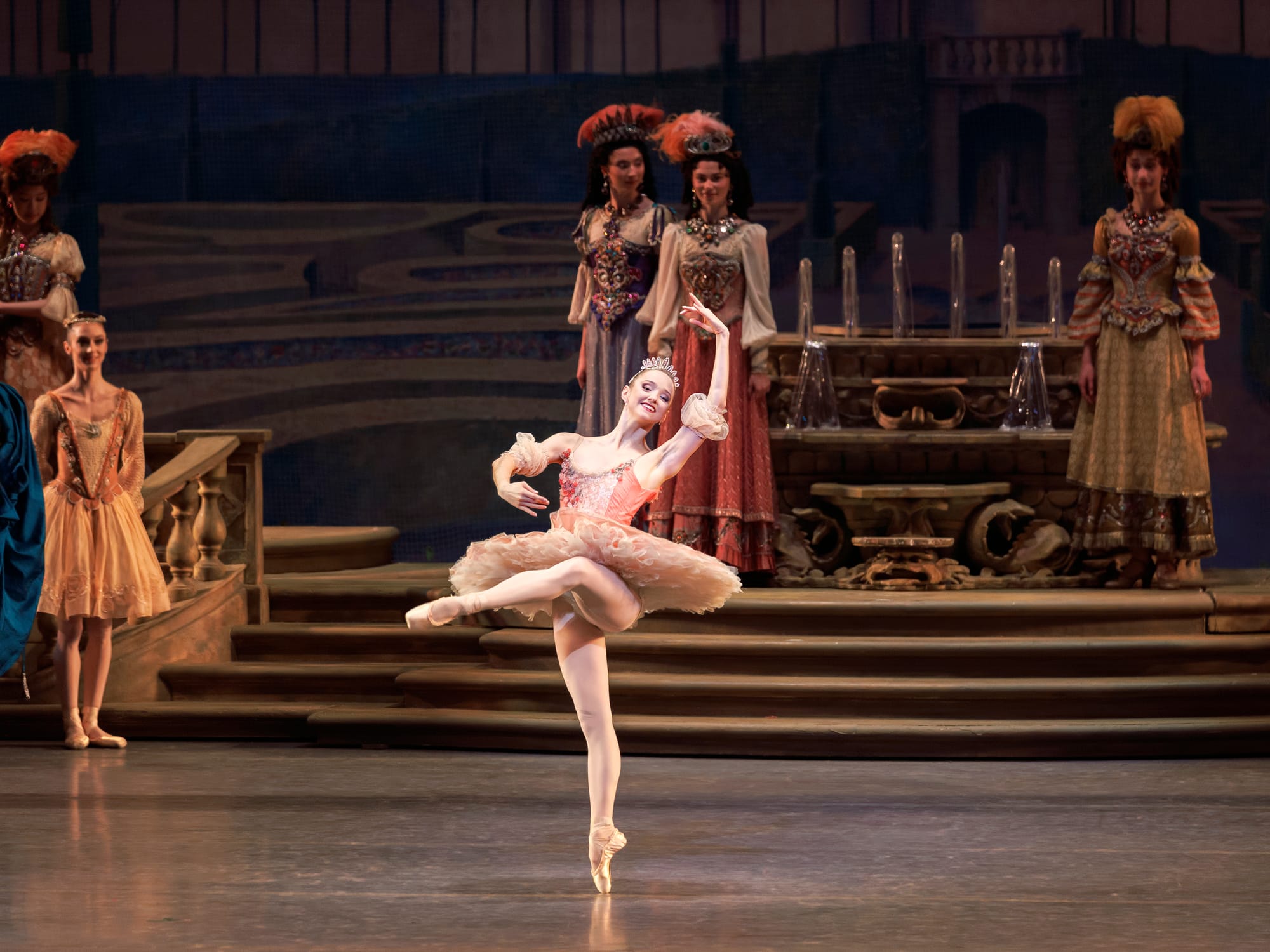
Luckily the elegance was recovered swiftly in the Vision scene, where Afanasenkov dominated as guiding force and Gabriel proved a charming Désiré, barely able to believe the vision being conjured before him. Von Enck danced with a spectral distance – real enough to reach for, remote enough to remind him she was a dream.
By the Awakening and Wedding scenes, it seemed impossible the dancing could improve, yet it did. The pas de deux was regal and refined, with abundant romance quietly hidden beneath it. When Von Enck ran to lean into the arabesque signifying a kiss to her Prince, it landed as gently as a butterfly on someone who'd spent his whole life being worthy of exactly that. It more than overshadowed the rough patches in the rest of the act.
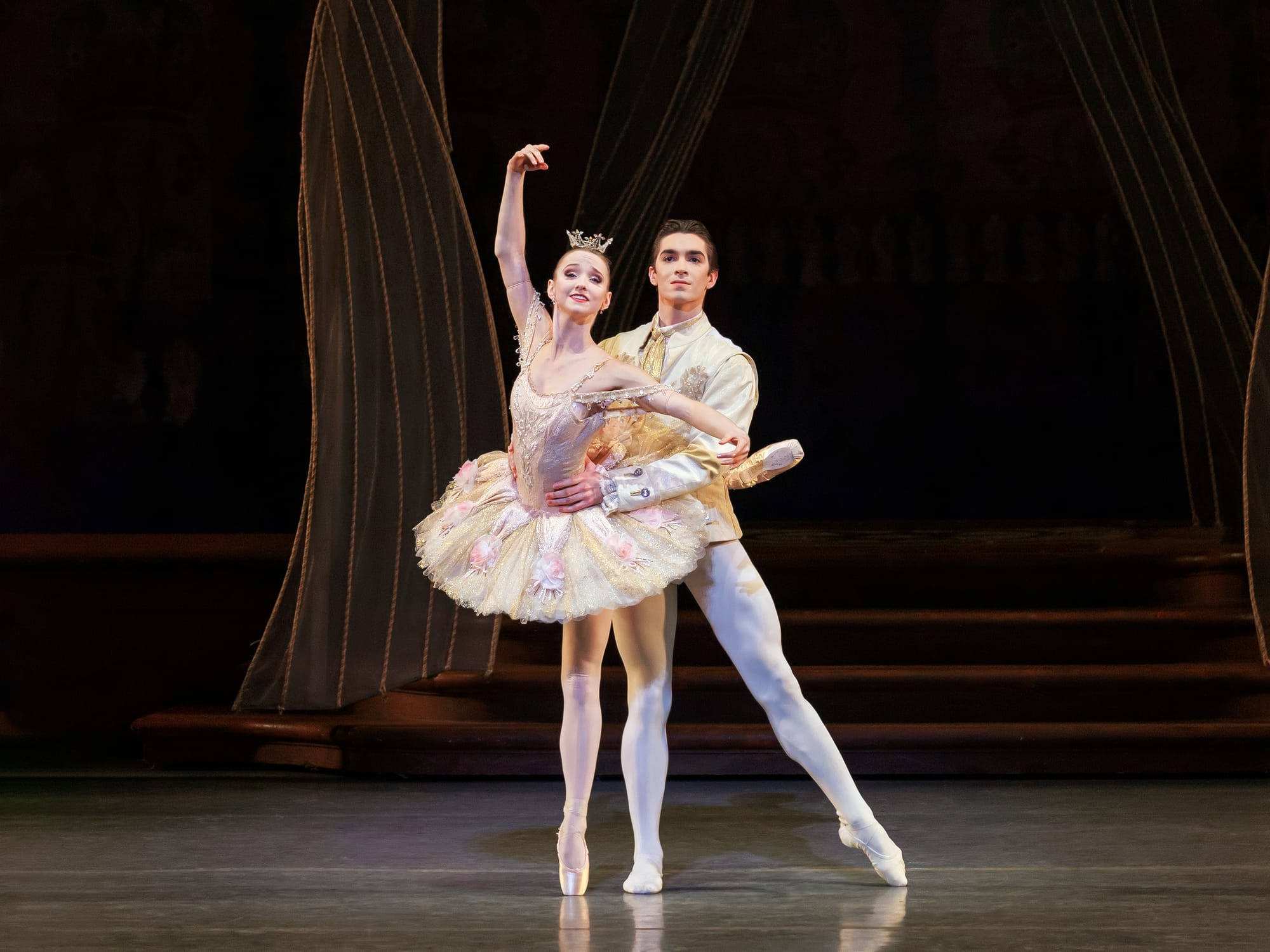
Of the Jewels, only Rommie Tomasini's Emerald had the speed and precision the role demands; Grace Scheffel as the Ruby and Preston Chamblee as the Gold produced uneven dancing, and Naomi Corti seemed miscast as the Diamond, her tall stature working against her. The Bluebird pas de deux was rushed by Affron, barely affording Sara Adams and Daniel Ulbricht time to distribute their accents; Ulbricht held his own, but Adams looked rattled. And Lauren Collett's White Cat was so aggressive in swatting away Harrison Coll's Puss in Boots that it became a mystery why he continued his pursuit at all. If only these dancers had taken some cues from the leads.
Classical story ballets have never been NYCB's most natural terrain – the company's instincts run faster, more electric, more Balanchine than Petipa. But when a lead cast like this takes the stage, they make a case not just for the ballet, but for what this company can do when it slows down and dreams a little. Call it another kind of awakening.
copyright © 2026 by Marianne Adams