A Beatles Tribute For All
“Pepperland”
Mark Morris Dance Group
Eisenhower Theater
The John F. Kennedy Center for the Performing Arts
Washington, DC
November 16, 2019
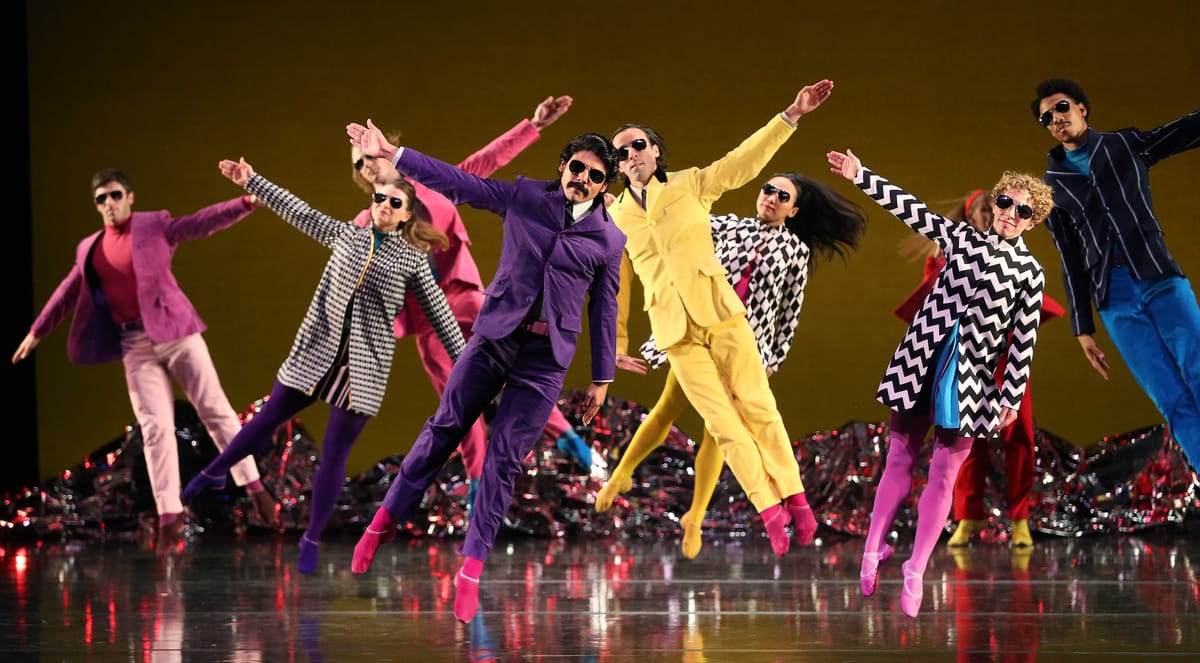
When I first heard Mark Morris had choreographed a work to Beatles music, I was surprised and a bit skeptical. There are a lot of strong feelings about the Beatles. Some people believe it is a crime not to love their work. After seeing this show, I believe it is a crime not to gain some sort of enjoyment from watching Mark Morris’ new work, “Pepperland.” His tribute to the “Sgt. Pepper’s Lonely Hearts Club Band” album was enlightening, soothing, and chock full of humor. To paraphrase the creator himself, Morris claimed that this show is for people who love the Beatles, for those who hate the Beatles, and everybody in between. The work was not meant to place the Beatles’ groundbreaking album on a pedestal nor demean the iconic collection of experimental songs by poking frivolous fun at its themes and melodies. Instead, Morris developed a remarkably witty and subtly clever hour-long dance. Decked out in neon, the dancers unraveled like a collection of Crayola crayons released from the confines of their brand new box.
The show did not quite feel like a work of modern dance. It more resembled a theatrical, broadway-caliber show. Each dancer exuded a unique energy, claiming an individual persona to embody throughout the performance. From Albert Einstein to a statue from John Lennon’s house, all the characters were joyful and sporadic. They twittered around the stage oozing with a self-imposed confidence. Matching aviator sunglasses only added to the mood. Beyond their stage presence, the dancers’ technique was impeccable and exact. Beautifully pointed feet and lengthened limbs were paired with stylized slouching so precise, it was unquestionably choreographed.
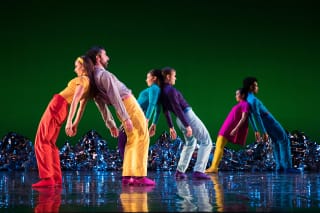
Morris’ “Pepperland” was broken up into scenes. Every scene exhibited a nostalgia which was not overbearing or resentful. It honored the historic prestige of the music, but did not stay stuck in the past. The work seemed to focus on how each of the arranged songs including “Sgt. Pepper’s Lonely Hearts Club Band,” “With a Little Help From my Friends,” “When I’m Sixty-Four,” and “Penny Lane” where still relevant today. Turning the pages of an imaginary newspaper, galivanting merrily — perhaps ignorantly — across the stage, and a myriad of duets searching for love were common motifs that remerged periodically throughout the set. While some moments in “Pepperland” were sensual and slow, others were swift and downright comical. No matter the tempo, Morris’ attention to musicality and meticulous footwork shined through all his dancers.
The innovation of “Pepperland” did not stop with the choreography. In addition to renditions of six songs from the Beatles’ album, original compositions by Composer Ethan Iverson (inspired by various aspects of “Sgt. Pepper”) were included, ensuring a fully captivating and on-brand musical experience.
Morris’ presentation in “Pepperland” was both episodic and circular. Featuring peppy, articulate steps juxtaposed by heavy, long strides and even, calculated turns followed by staccato petite allegro (small jumps), he crafted a work which was all-encompassing and collaborative in nature. Overall, this Beatles-inspired show was engaging, entertaining, and meaningful. It was everything I could ever ask of a dance.
copyright © 2019 by Arielle Ostry