Winners and Losers
"Dig the Say," "This Bitter Earth," "The Naked King," “Everywhere We Go"
New York City Ballet
David H. Koch Theater
New York, NY
February 7, 2026 (matinee)
In a program of works by Justin Peck, Christopher Wheeldon, and Alexei Ratmansky, New York City Ballet displayed the choreographic bedrock of the company’s current, post-Balanchine era. Fiercely technical, with a focus on musicality and sometimes drama, the direction is a formidable one when executed well. With Ratmansky’s new ballet “The Naked King,” the company also showed its comedic chops.
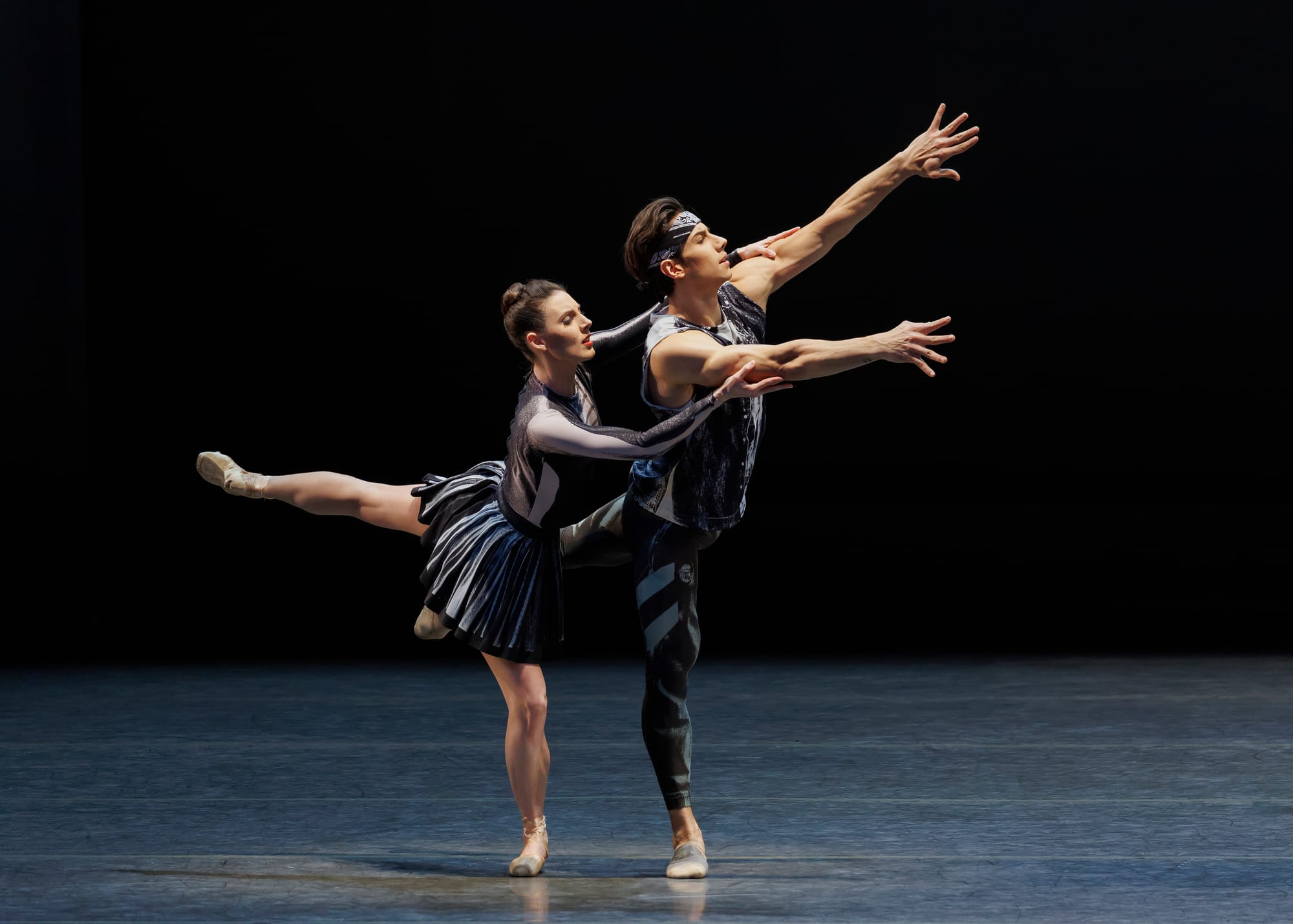
Before delving into the larger-scale choreography, the first act consisted of two opposing in style duets. Justin Peck’s “Dig the Say,” to music by Vijay Iyer, led off, with Tiler Peck and Roman Mejia reprising their two-year-old roles of a playful couple with intricate technique. The work has deepened with age. What read as mere playfulness at its 2024 premiere now flourished with nuance: supported turns deliberately tilted off-axis while Tiler Peck held her center with impeccable precision, nuanced jump patterns for Mejia punctuated by self-assured walking breaks, a coda dense with micro-steps that appeared effortless yet added dimension. If Justin Peck's early-career creative weakness was the duet form (as "Everywhere We Go" would later attest), “Dig the Say” proves he's mastered it.
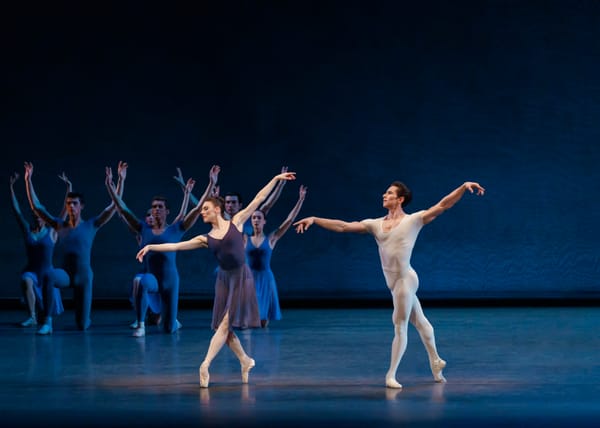
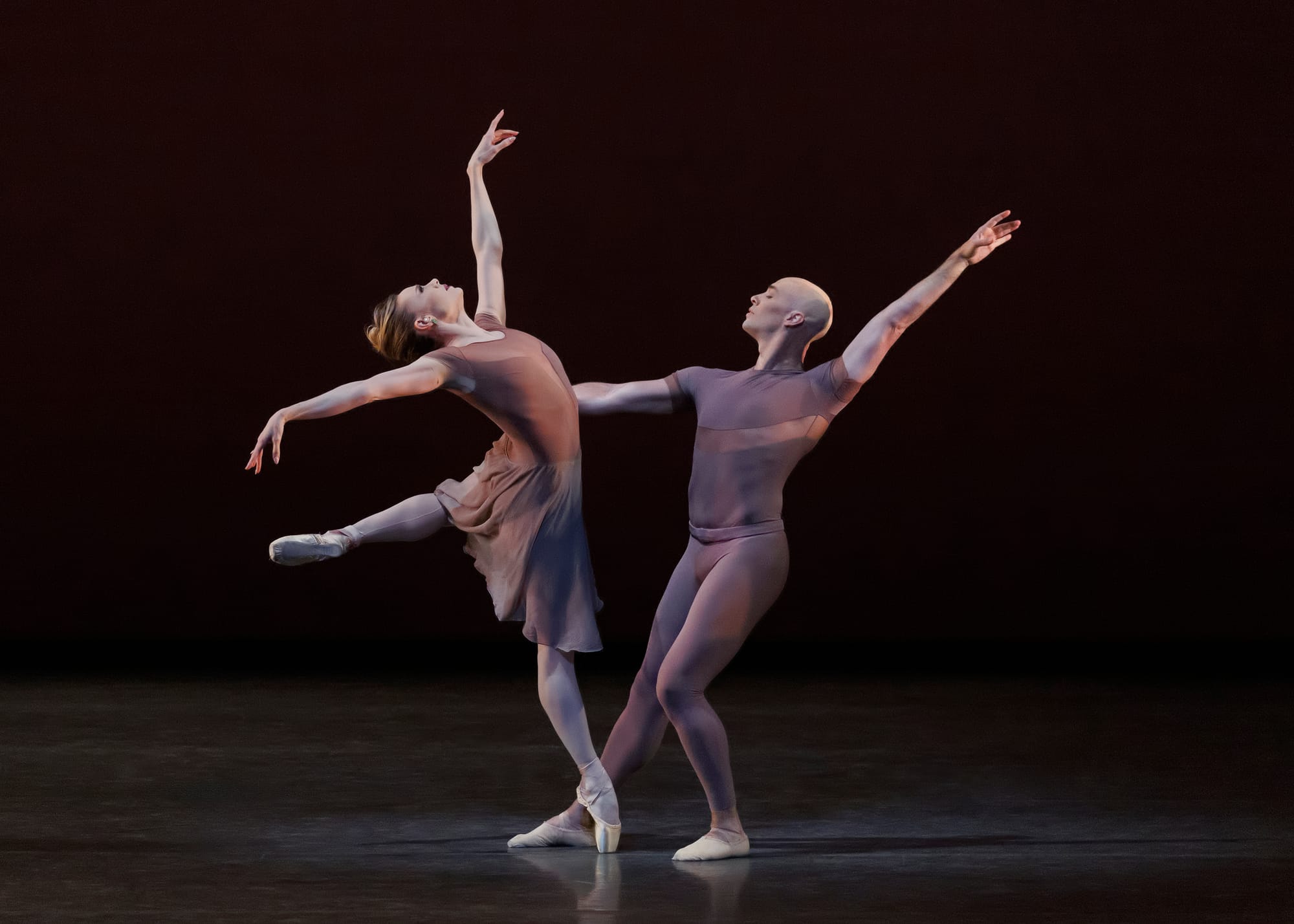
Wheeldon’s “This Bitter Earth,” after a brief pause, pulled the energy earthward. Leaning heavily on the emotions of the piece, seasoned veterans Sara Mearns and Tyler Angle labored through the taxing partnering steps and never quite unlocked the far more demanding, heart-shattering emotional moments of the choreography. When Dinah Washington’s voice sang “And if my life is like the dust…,” the steps felt like sequenced poses emptied of real accents or meaning. Similarly, their head-to-head moment, usually spelling tender intimacy, lacked connection. The dancers did their jobs, but the audience remained at a distance from what should have been a devastating, spellbinding experience.
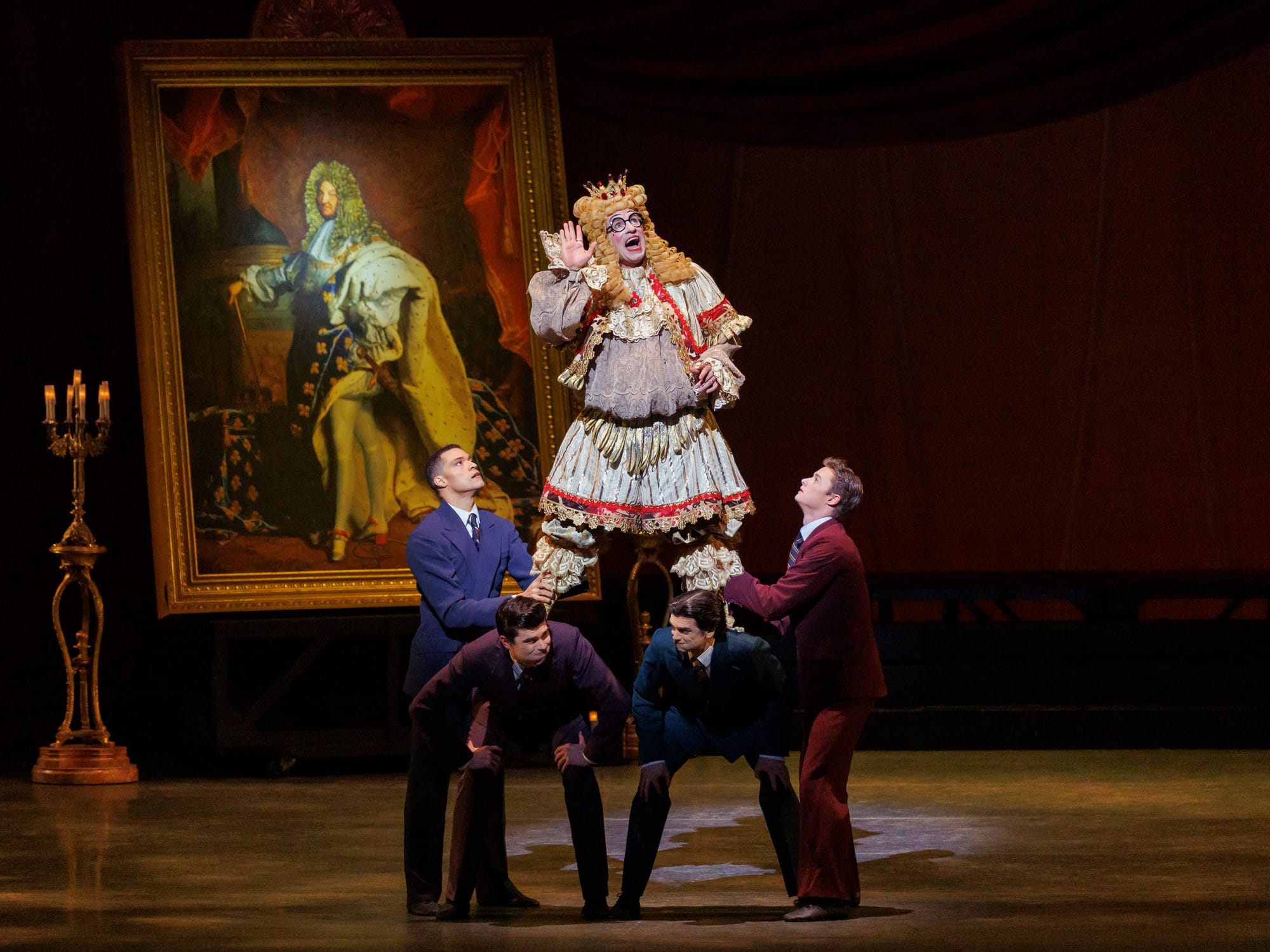
Wedged between the company’s established, elegant works was the latest ballet by Ratmansky. While not wholly original (the Jean Françaix music and the subject matter being borrowed from the 1936 Paris Opera Ballet production of “Le Roi Nu”), it was the choreographer’s full-force venture into comedic narrative. If nothing else, it seemed a welcome treat, as NYCB dancers frequently get to pirouette, but far less often tell a story.
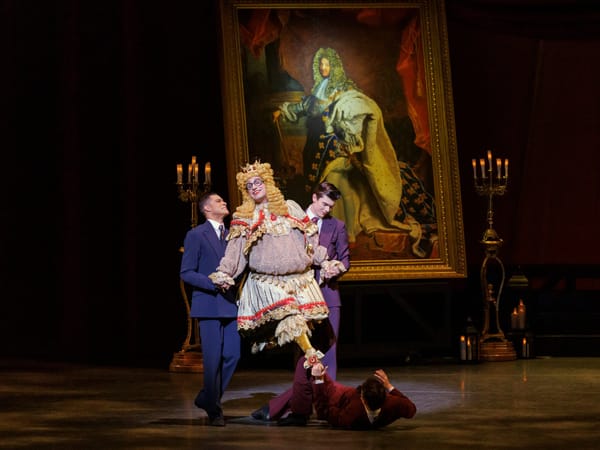
Andrew Veyette played the over-coiffed King, climbing atop eager servants who effortfully manipulated his awkward form, even rotating him upside down in a circular motion. His Queen, the beautiful Miriam Miller, remained fully concealed behind a tacky dress, hat, and sunglasses for the ballet's duration, occupying the stage in studied indifference. What dancing Ratmansky gave her, mostly with her Lover (Peter Walker), alas, was frustratingly devoid of steps to showcase her lines, technique, or expressive talent.
The dancers to get the steps and a worthy showcase were the three Swindlers and the three couples representing the King’s Entourage: Meaghan Dutton-O’Hara with Owen Flacke, Ruby Lister with Preston Chamblee and Mary Elizabeth Sell with Jules Mabie. With men dressed in suits and women in elegant Bordeaux-shaded unitards, their hair swept into French twists, they carried themselves with absolute refinement, each pose and step crystallizing their authority. Even one crass moment where the women pinched their partners' buttocks couldn't puncture their presence. For the Swindlers (David Gabriel, KJ Takahashi, Daniel Ulbrecht, all exceptional jumpers), Ratmansky reserved plentiful athletic jetés and horseplay, building toward the climactic reveal: the King fully nude, his fat suit sparing no gratuitous anatomical detail.
It was facile, architecturally busy comedy, a would-be excellent fodder for a ballet school acting class and a showcase for Ratmansky's unique gift for this genre, the very thing that distinguished him in the 1990s before he reached the international stage and turned toward weightier material. But it wasn't much more, despite apparent ambitions. Before the premiere, Ratmansky noted political undertones, and viewers likely wasted no time divining whom the orange-wigged King represented. For those seeking such parallels, the comedy must have felt emotionally gratifying. For the rest, without that political subtext and without a single aesthetically transcendent moment, the ballet itself was thinly clad.
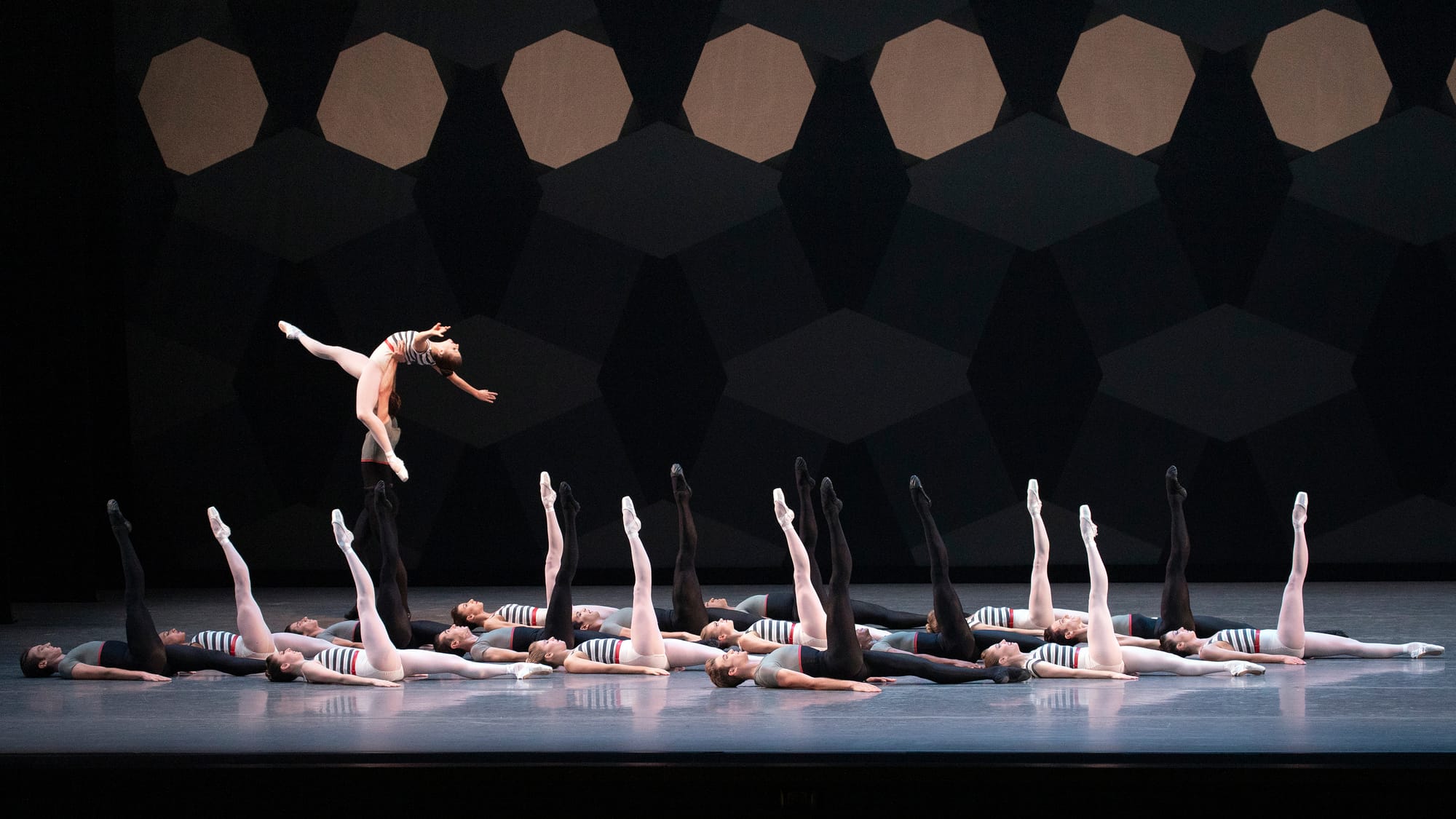
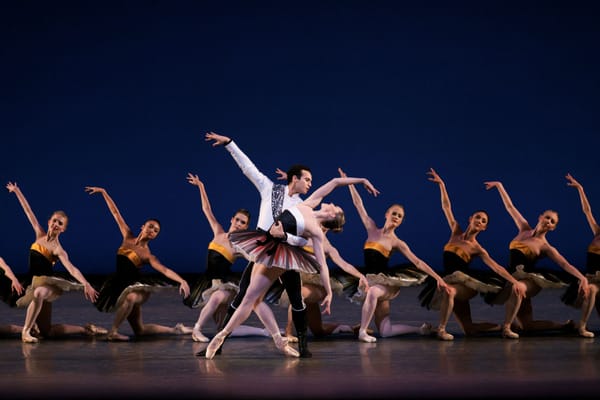
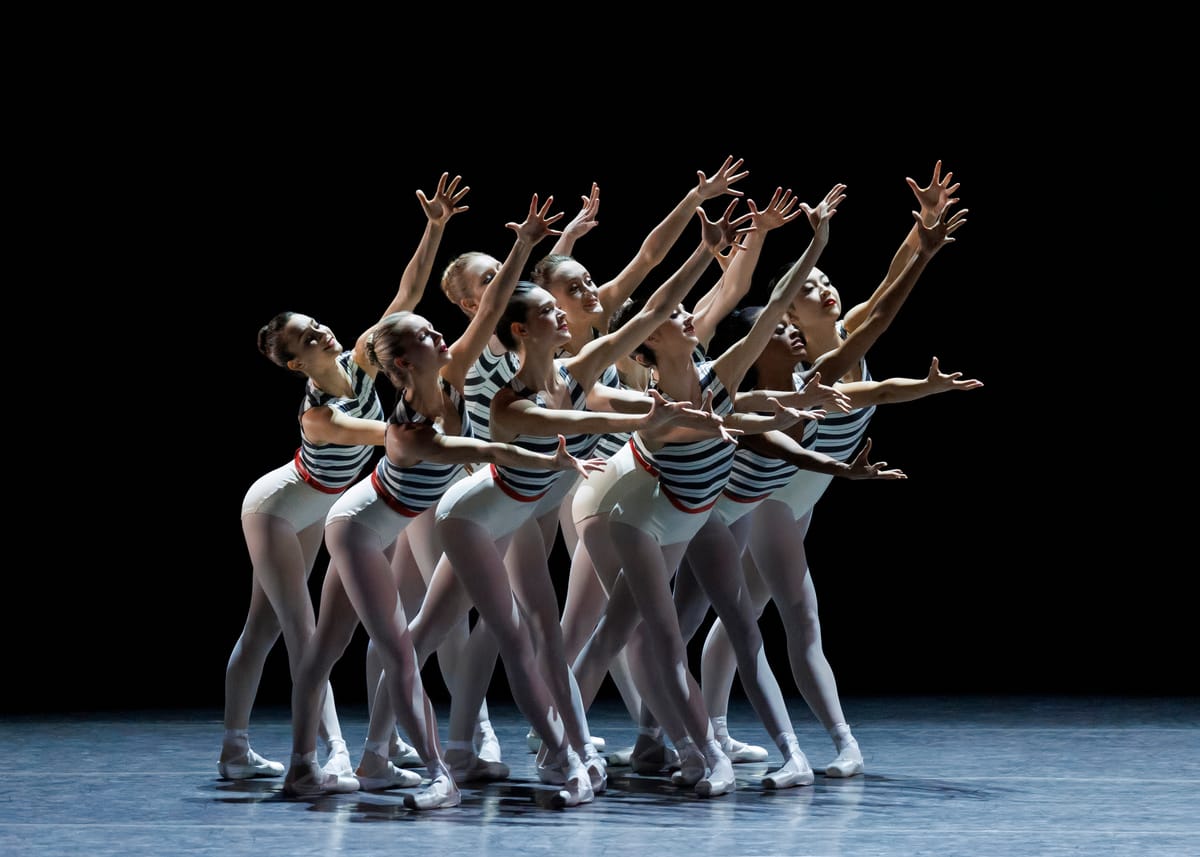
Justin Peck’s 2014 “Everywhere We Go,” after an intermission, was a stark contrast with its minimalist costuming, movement, structure, and an aesthetic the dancers thrive with. Cast from the company’s new generation ranks (the only still performing veteran of the original cast – Tiler Peck – sat this one out), the dancers wholly inherited the work and made it their own. Indiana Woodward was a sparkling joy to watch, Emma Von Enck gave her section a predictable lightness, and Chun Wai Chan infused the work with his now trademark bravura. Taylor Stanley danced with authority, and if there was one weak point, it was the central lilting pas de deux danced by Dominika Afanasenkov and Adrian Danchig-Waring. This ballerina continues to be still reaching for her peak form this season, and her dancing in the duet felt heavy and uncentered. It was a shame, and a stark contrast to Emily Kikta’s solos, whose casting in the lyrical role given to Afanasenkov would have made the work stronger. Still, with the dancers feeling so free to infuse themselves into the notes and steps of this work, this last impression of the program was a lasting one. With Justin Peck works at least, all audiences were winners.
copyright © 2026 by Marianne Adams