Under New Management
"Concerto Grosso", "Corvidae", "The Exiles", "Suite from a Choreographic Offering", "Night Light"
Límon Dance Company
Joyce Theater
New York, New York
May 2, 2017
José Límon founded his company in 1946 and after his death in 1972, the LÍmon dancer Carla Maxwell directed it until her recent retirement; Colin Connor, also a Límon dancer, became the artistic director in 2016. The math says that the company has been run without its founder for 45 years, an astounding feat for a company based on one choreographer. Of course, the company dances newer works – it must to keep active – but the Límon pieces are its backbone. Based on the recent performance the backbone, supported by the engaged, vibrant, and appealing dancers, is in very good shape.
The generous program offered three works by LÍmon and two newer works, one by Connor and one by Kate Weare, which she choreographed for the Juilliard in 2014. (Límon began teaching at the Juilliard in 1953 so there is a family connection.)
The program opened with Límon's 1945 "Concerto Grosso", to Vivaldi. It is a bouncy, joyful excursion for three dancers , two women (Kathryn Alter and Elise Drew) in swirling red a purple and one man (Jesse Obremski) in casual slacks. They skipped open-armed through the first movement, dancing with an off-centered formality and casual dignity that made them look like the parents of Paul Taylor's frisky demigods.
The adagio had an intriguing sculptural quality as the group joined hands and formed various shapes, the women revolving around the man. The final section was a bright romp, with lots of little jumps. The dancers, especially Alter, moved through the shapes with an appealing warmth.
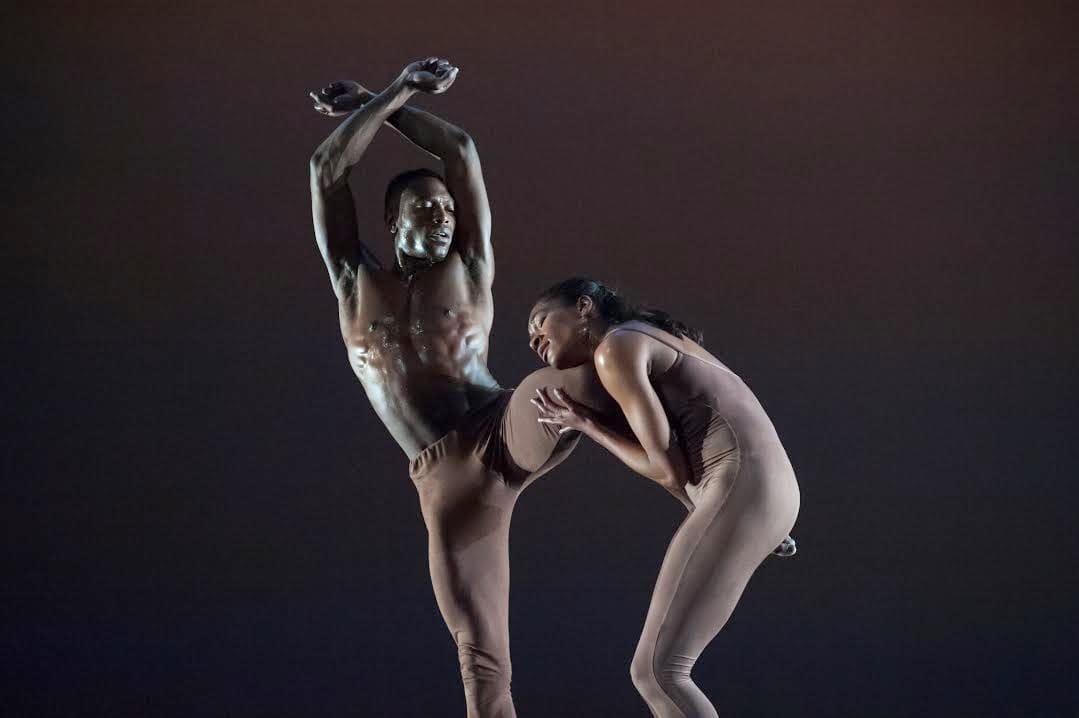
"The Exiles", Límon's 1950 pas de deux based on a quotation from "Paradise Lost", evokes both the Adam and Eve story and the situation of all other refugees. It is set to Arnold Schoenberg's "Chamber Symphony No. 2", a late work that saw his return to tonality; its throbbing intensity reinforces the dance which was performed with power, humanity, and fierce technical control by Kristen Foote and Mark Willis. The contrast between their physical strength and their helplessness was shattering.
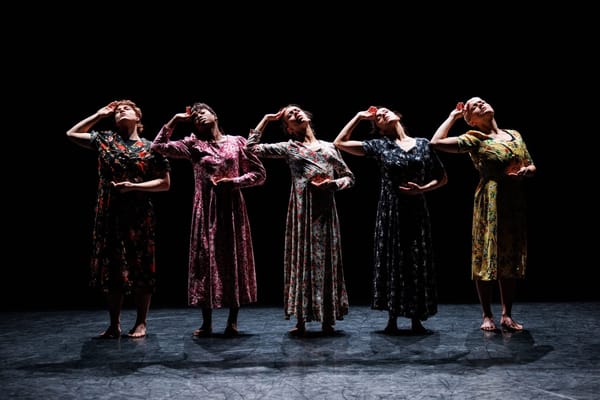
"Suite from a Choreographic Offering", Límon's 1964 homage to Doris Humphrey, was another warm, cheerful dance to Baroque music; it looked like a larger versions of "Concerto Grosso's" trio, but another chance to spend time in that exalted yet human company was welcome. The dancers wore muted pastels, the women in knee-length swirling dresses and the men in slacks and t-shirts, and they ran, skipped, and jumped with casual formality, breaking into color-coded pairs to dance slow, private moment with gentle, supporting moves.
Brennan Monroe-Cook had an expansive solo with especially expressive arms, sometimes curving them over her head like a crown and sometimes rocking them softly in front of her in a cradling move. She danced with a warmth and directness that was irresistible.
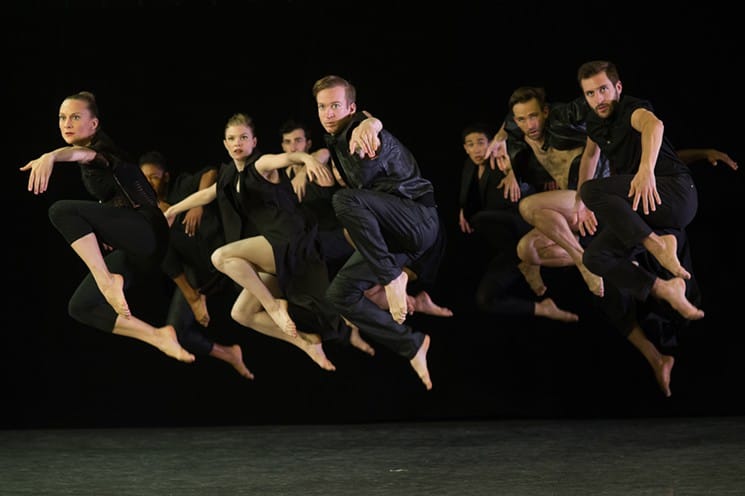
Connor's "Corvidae" was a darker and more ambling take on nature; the music, the first movement of Philip Glass' "Violin Concerto" offered little structure or contrast. The dancers wore black against a black backdrop and the imaginative lighting (by DK Kroth) illuminated their bare skin so there were gleams of gold among the gloom. Corvids, the program tell us, are black birds, specifically ravens and crows, who "have been seen as messengers throughout the ages". It was not clear what message these dancers were delivering, though, other than power and precision.
There were a few bird-like movements, as the dancers rubbed their hands together in what seemed to be mime in a foreign language, and the six dancers moved in low, crouching, athletic bursts. The dancers were often an anonymous blob of movement, striking and determined, but Leon Cobb stood out for his easy unforced charm.
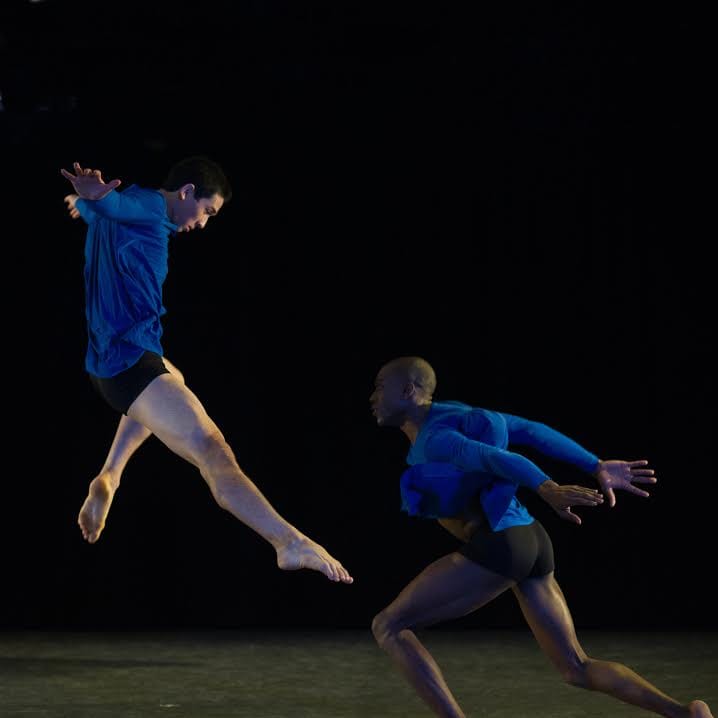
Kate Weare's "Night Light" was another excursion into the dark. The dancers wore unisex costumes, blue tunics and black shorts, which changed for some of the dancers into black underwear. The tone of the dancing, though, was consistent, unvaried, and irresolute. The dancers lined up on the sides of the stage as various groups emerged to circle each other warily. It was full of stylized violence; it did avoid the Apache dance cliche of many modern works and the women gave as good as they got, landing some impressive punches. It was impressively performed but emotionally hollow; these dancers deserved better.
copyright © 2017 by Mary Cargill