Impossible Dreams
"La Sylphide", "Tschaikovsky Piano Concerto No 2"
New York City Ballet
David H. Koch Theater
New York, NY
February 13, 2016, evening
New York City Ballet paired its Romantic Bournonville classic "La Sylphide", new last year but based on the nine- teenth century Danish version, with Balanchine's "Tschaikovsky Piano Concerto No. 2", one of his streamlined homages to Petipa, a relationship made clear in its original title "Ballet Imperial". This was an imaginative juxtaposition, the older work plot-heavy and the other music driven, but both had irresistible but unattainable ballerinas dancing out of the reach of the melancholy hero. Those poor men have been wandering around looking for their dreams for almost 200 years and eventually, I expect, it will dawn on them that it just isn't going to happen, but in the meantime we can sympathize and luxuriate in their efforts.
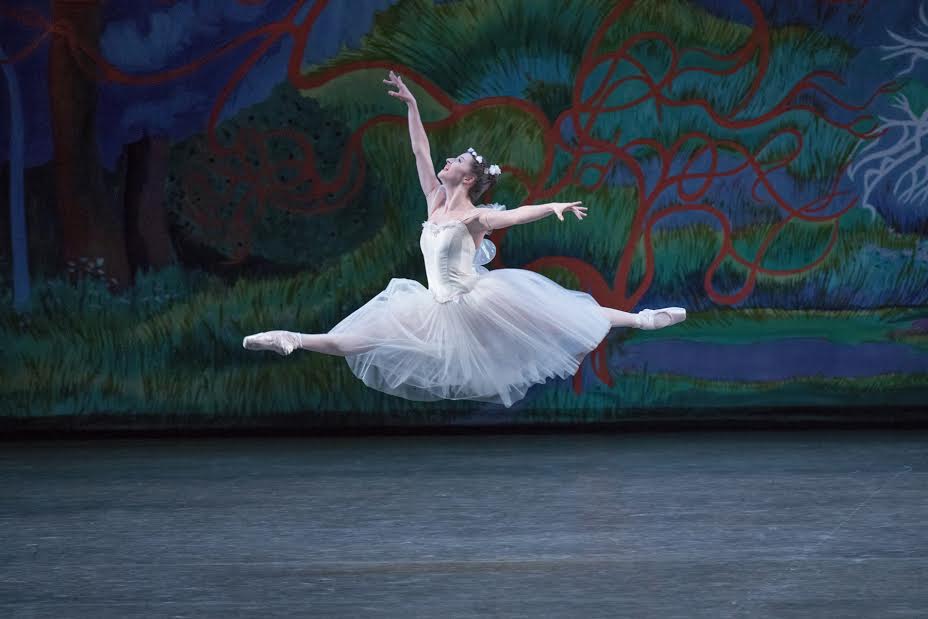
Indiana Woodward, a dark-eyed beauty still in the corps, made an impressive debut as the Sylph in Martins' solid, if not inspired, production. Her Sylph was a sweet-faced, capricious child, charming, self-centered and utterly irresistible. She used her soft and fluid upper body to float through the jumps (her sissonnes in the second act were joyful puffs of wind) and paid attention to style; her legs were low and the demi-pointe was clear. She also captured the Sylph's changeable moods, especially in the second act as she walked on, a sad little waif looking for James, who, not finding him, seemed to say "Well, never mind, this forest is all mine and I can dance here forever". Poor James' sacrifice was clearly in vain, scarf or no scarf. Her death scene had an eloquent directness and simplicity that was deeply moving. Time will tell whether this was a case of going out there a corps dancer and coming back a star, but if a star wasn't born, a sylph certainly was.
Anthony Huxley, her James, danced clearly and sharply, with fine, effortless beats. But he didn't really have the sense of yearning and melancholy, of being a man out of place that underlies the tragedy. Of course, having James break into his happy dance in the middle of the first act may be applause generating but it is dramatically incongruous. And it is hard to be a Romantic dreamer wearing bright purple. Despite the quiet intensity of his soliloquy as he mimed his love for Effie and his longing for the Sylph and freedom, his "the world well lost" dash through the door didn't resonate.
Nor, unfortunately, did the Madge (Marika Anderson, a young corps dancer), who hobbled around like she was applying for a job at the Ministry of Silly Walks. The young City Ballet dancers just can't suggest the depth and subtlety of experienced Danish mimes who have grown up with the rich and complex work. It is too bad that this production can't borrow a Dane, one who could also bring along a costume to replace the aged and dejected hippie effect of the current one.
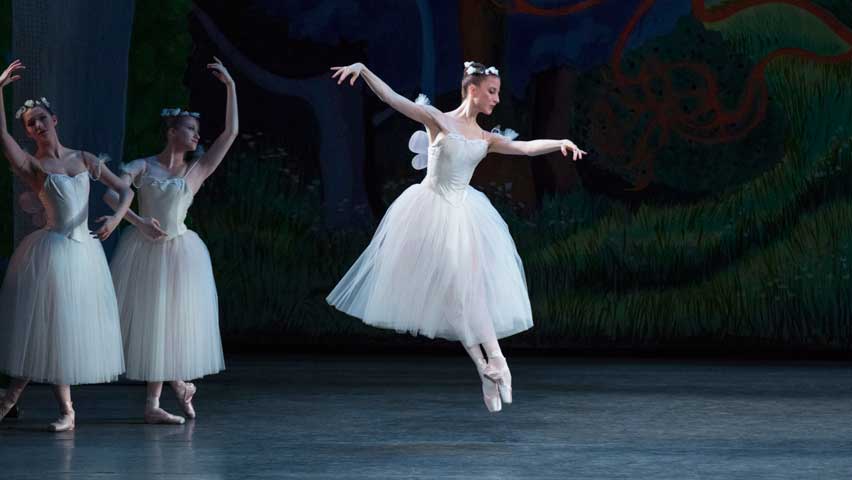
It would also be a good idea to import a realistic forest for the second act to replace the vibrant curlicues which look like they were borrowed from a provincial "Nutcracker" Act II. The colorful stylizations works against the magical realm that Bournonville created, though the sylphs, led by a soft and luminous Sara Adams, did their valiant best to bring it to life.
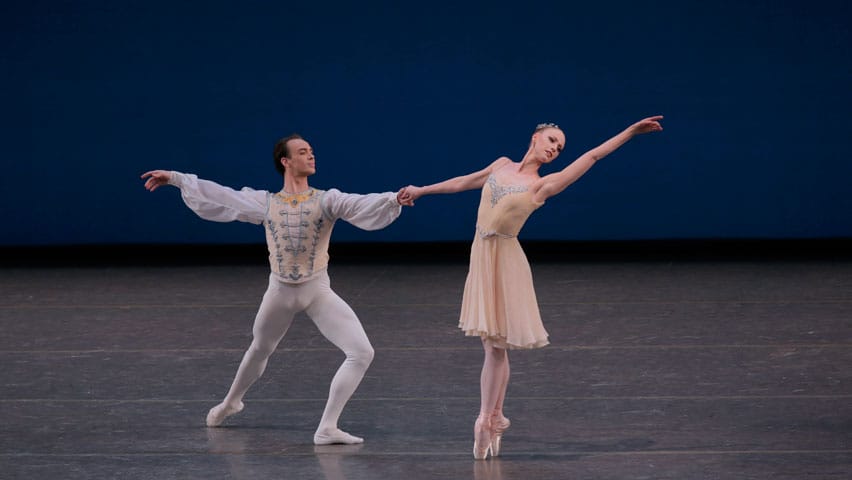
There is no forest in Balanchine's "Tschaikovsky Piano Concerto No. 2" though with Teresa Reichlen and Tyler Angle leading the way there is mystery, beauty and loss. This is "Swan Lake" territory -- the corps even echo the Act IV gestures from older versions of the much distorted classic, telling the dancer formerly knows as Siegfried "No, she isn't here, look elsewhere."
Reichlen was at her cool, magnificent best, spooling through the choreography like a golden ribbon. She didn't make the steps look hard but she made them look important, creating a private conversation with the piano that her partner was able to overhear.
Angle gave his role a vibrant melancholy and his warm eagerness set off Reichlen's luminous perfection. Angle's noble, resigned bow to the empty stage seemed to acknowledge all of his predecessors--he seemed to be bowing to all the unattainable sylphs and swans of the past, and walked slowly backwards to join with all of the James and Siegfrieds.
Copyright © 2016 by Mary Cargill