Chopin, Chiffon, and Diamonds
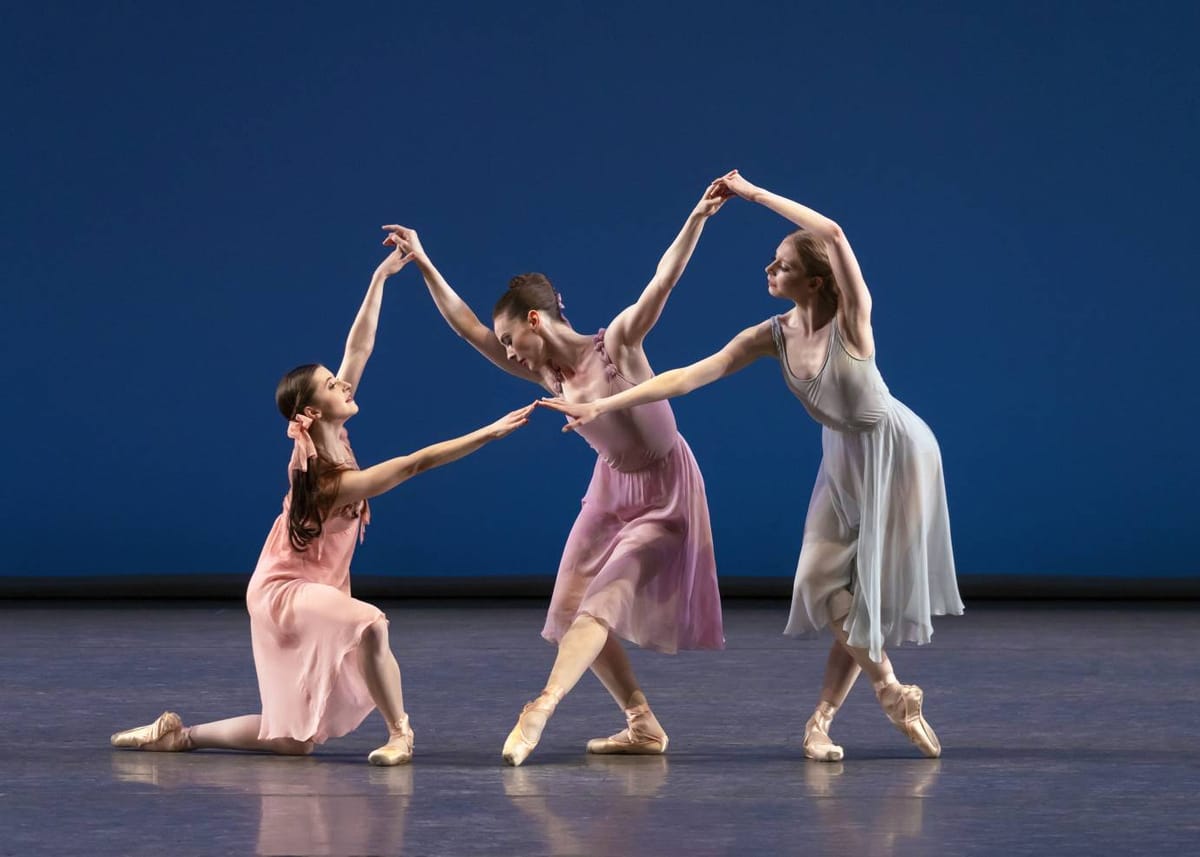
"Dances at a Gathering", "Diamonds"
New York City Ballet
David H. Koch Theater
New York, NY
February 26 and 27, 2026
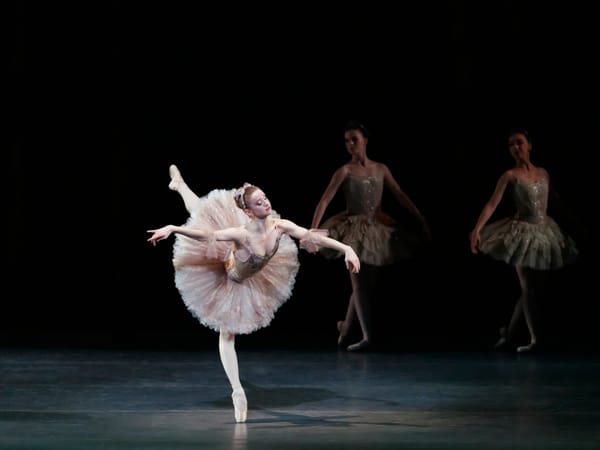
In the past, “Dances at a Gathering” has been programmed as the closing ballet, letting the audience drift out, luxuriating in the memory of Chopin and chiffon. However as time went on, it seemed that some in the audience used the final profound nocturne, where the dancers stand and let their thoughts flow through the music, as a signal for an early exit, disturbing everyone around them, so “Dances” has moved from the final spot. This does tend to unbalance the programming, since its emotional impact (when danced well) is hard to live up to, though “Diamonds”, or at least the incandescent pas de deux, does match it. Unfortunately, it appears the Rhinestone Fairy has flown into the costume shop and added what looks like LED lights and little wings to Karinska’s designs for the “Diamonds” costumes and the bling suggests “Swan Lake” on the Los Vegas strip; Balanchine certainly spent a lot of time wandering around Petipa’s various vision scenes, but he went far beyond the need of such literal references.
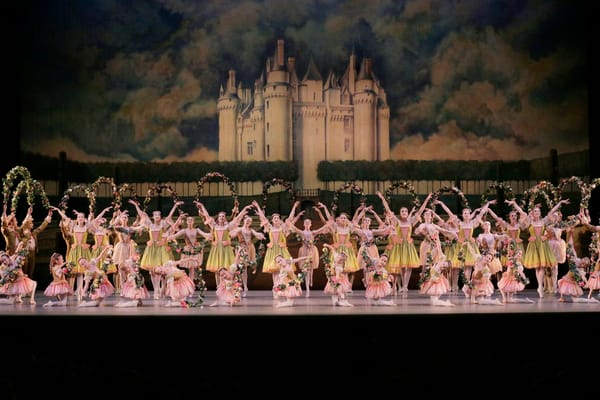
The pale, pastel colors of Robbins’ “Dances at a Gathering” costumes have not changed, though in many recent performances, despite fine individual dancers, the communal magic of the early years seemed diminished, as if the almost mystical beauty of “Dances” would become as legendary as Balanchine’s “Cotillon”, a memory trapped in the past. But these performances brought back much of the warmth and spontaneous individuality of earlier performances; it may have been the spark of the many debuts or careful preparation, though nothing looked over-rehearsed.
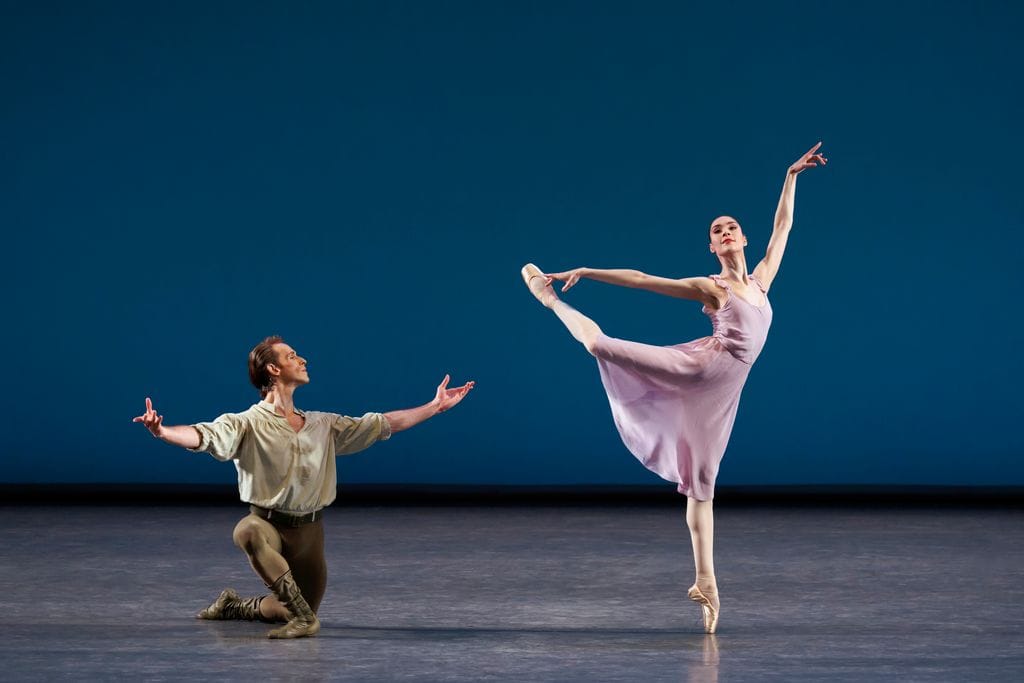
The February 26th performance featured Megan Fairchild in green, Ashley Hod in blue (debut), Mira Nadon in mauve ( debut), Tiler Peck in pink, Emma von Enck in apricot (debut), Adrian Danchig-Waring in green, David Gabriel in brick (debut), Roman Mejia in brow, Davide Riccardo in blue, and Ryan Tomash, recently promoted to principal, in purple (debut). Mejia was a comparatively young brown, and didn’t quite get the almost heavy air of a man thinking of times past, but his opening improvisational walk had a quiet calm, and his final slow, almost reverent acknowledgment of the stage was simple and grand. His dancing, of course, was airy, crisp, and clear, and, except for a brief moment in his final solo, when he paused ever so slightly after his turns a la seconde to enjoy the applause, he was submerged in the choreography.
Nadon was luminous, dancing with an unmannered rapture. She seemed lost in thought in her pas de deux with Danchig-Waring, as if they were having a private conversation. She has such a vivid, candid face, with every flickering emotion registering in her eyes; it was a stunning debut. So too was the bright, cheerful dancing of von Enck and Gabriel as they seemed to play with the music during the giggle dance, Gabriel tossing off a cartwheel with a smug one-upmanship. Von Enck was absolutely fearless in her final toss, seeming to float upside down into Riccardo’s arms; Nadon and Hod also threw themselves into their jumps with a confident, carefree flair that was exhilarating.
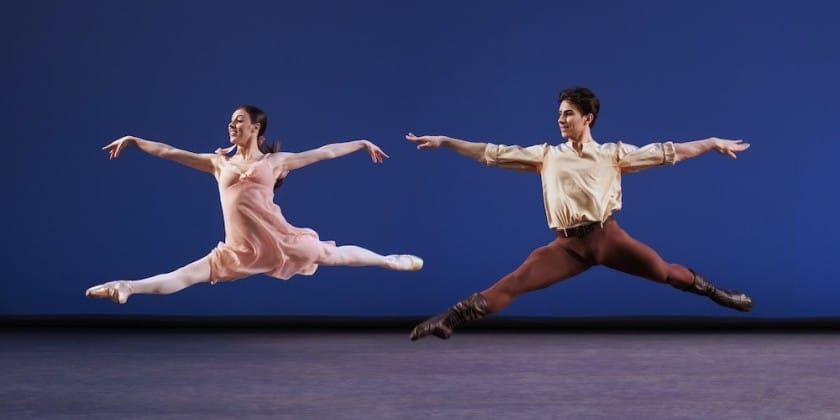
The male dance off by Tomash and Mejia was delightfully underplayed; I have read that Robbins had seen two dogs circling each other, and modeled the dance on their expressions. Certainly both dancers moved with a wary competition, one bark away from rolling on the ground. Tomash was all panache in his bounding tours into a deep plié, and showed a serene romanticism in the lyrical pas de deux with a rapturously restrained Peck. He is a dancer who seems to lead with his heart, and dance with his whole body. He can give simple gestures such significance, and walking next to Peck and offering her his hand was a glorious romantic statement.
There was little romance in Fairchild’s woman in green as she had a lighthearted charm, reliving past triumphs in her solo with fondness and only a touch of regret. She made the flirtatious dance look like a literal walk in the park, and she was determined to enjoy the spring come what may. And she, with all the other dancers, created a warm, generous world where connections survived no matter what storms might come.
The February 27th performance was equally moving, with Dominika Afanasenkov in blue, Emilie Gerrity in mauve, Isabella LaFreniere in green (debut), Olivia MacKinnon in apricot, Indiana Woodward in pink, Chun Wai Chan in purple, Harrison Coll in blue, Anthony Huxley in brown, Jules Mabie in green (debut), and Andres Zuniga in brick. Woodward’s lyrical, understated power and eloquent upper body shone throughout the performance. Afanasenkov, in the comparative minor blue role, too, was captivating—few dancers can look at their fellow dancers with such lively attention.
LaFreniere’s lady in green was an aristocrat remembering her kingdom with a slightly condescending air, a distinctive and very witty approach, as if she were mocking grand diva airs. She was almost aggressively flirtatious with the three men, who reacted accordingly; Chan’s deadpan imitation of her and Mabie’s almost desperate run off stage were perfectly timed and very funny. And so was her dismissive little wave as she danced off, presumably to look for someone else; LaFreniere, it turns out, is a fine comedienne.
So too were Chan and Huxley in their circling dance, as they stared at each other, fists lightly clinched, each man determined to get the final word; they made it all seem fresh and new. Huxley was a more experienced brown, and his final gesture, pressing the ground as if he didn’t want to let it go, taking his time to salute the stage, almost as if he were saying farewell to something.
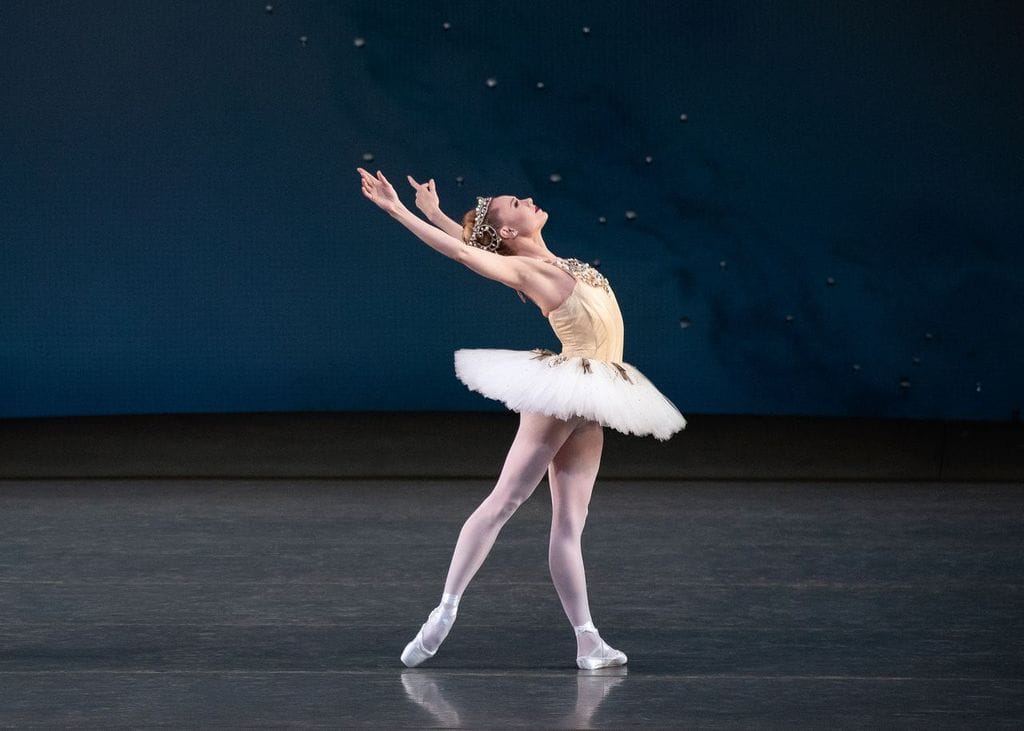
All dancers do eventually say farewell, and the audience knows it. The veterans Sara Mearns and Tyler Angle danced “Diamonds”, not for the last time, but their every performance is a small farewell. Though the corps gets a workout with some efficient but often generic patterns, the pas de deux is the heart and soul of “Diamonds”. Mearns, whose unique dramatic instincts usually heat up the stage with a rush of emotion that almost grabs the audience’s attention, was a cool, reserved Diamond who seemed not to see the gracious, deferential Tyler Angle. She moved as if she were dreaming of a time long past, and her performance was a lyrical, elegiac, melancholy poem, a haunting and misty vision.
Mira Nadon and Peter Walker, in their February 27th New York debuts in “Diamonds”, gave the pas de deux a calm, stately and formal air, luxuriating in the steps. It was a more youthful “Diamonds”, two people introducing themselves to each other. Nadon’s commanding arms, as she arched her hand behind her head, spoke, perhaps, of a freedom she wasn’t sure she wanted to give up, but by the finale, she was radiant, warm and happy. And who wouldn’t be happy with Walker’s partnering, so secure and protective. Nadon seemed to be welcoming the sunrise, while Mearns was looking at the sunset; both gave out a beautiful light, but the sunset did cast more interesting shadows.
© 2026 Mary Cargill