The Company They Keep
"Dances at a Gathering,” “Diamonds”
New York City Ballet
David H. Koch Theater
New York, NY
February 27, 2026
What a joy it must have been to be alive and a patron of New York City Ballet in the 1960s, the decade when the company premiered Jerome Robbins’s “Dances at a Gathering” and George Balanchine’s “Jewels.” Now, in 2026, as the company danced both works – the Robbins complete, the Balanchine represented by its final act, "Diamonds" – to close a whirlwind winter season of varied programming and debuts, there was a grounding feeling – a reminder of the quiet splendor that forged this troupe. Four debuts marked the evening, giving the season's end a worthy punctuation and a promise of more to come.
In the Robbins, both debuts came in the green roles, but their dancing was anything but. In the woman’s part, Isabella LaFreniere may have shown up to this gathering half-way through the ballet, but carried so much personality, she almost overshadowed the others. Infinitely alive in her solo, she grew more riveting in her exchanges with the men – why would they dare ignore her? They looked like they were wondering the same. Chun Wai Chan in purple may have playfully imitated her, but he looked like was eager to play along, and Jules Mabie, in the men’s debut, looked like his lack of interest was just for show. He may have ran away from her, but there was a sparkle in his eye that gave their exchange a charged new dimension.
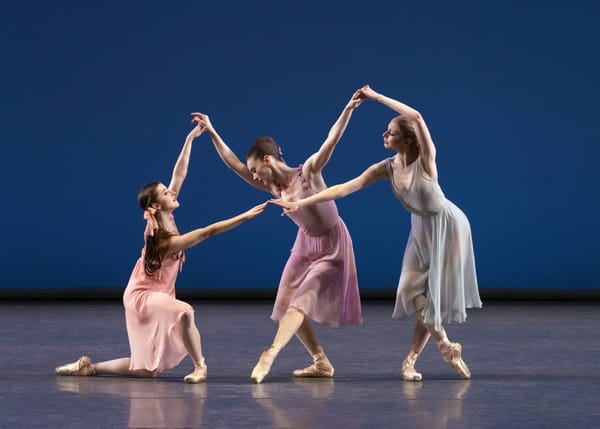
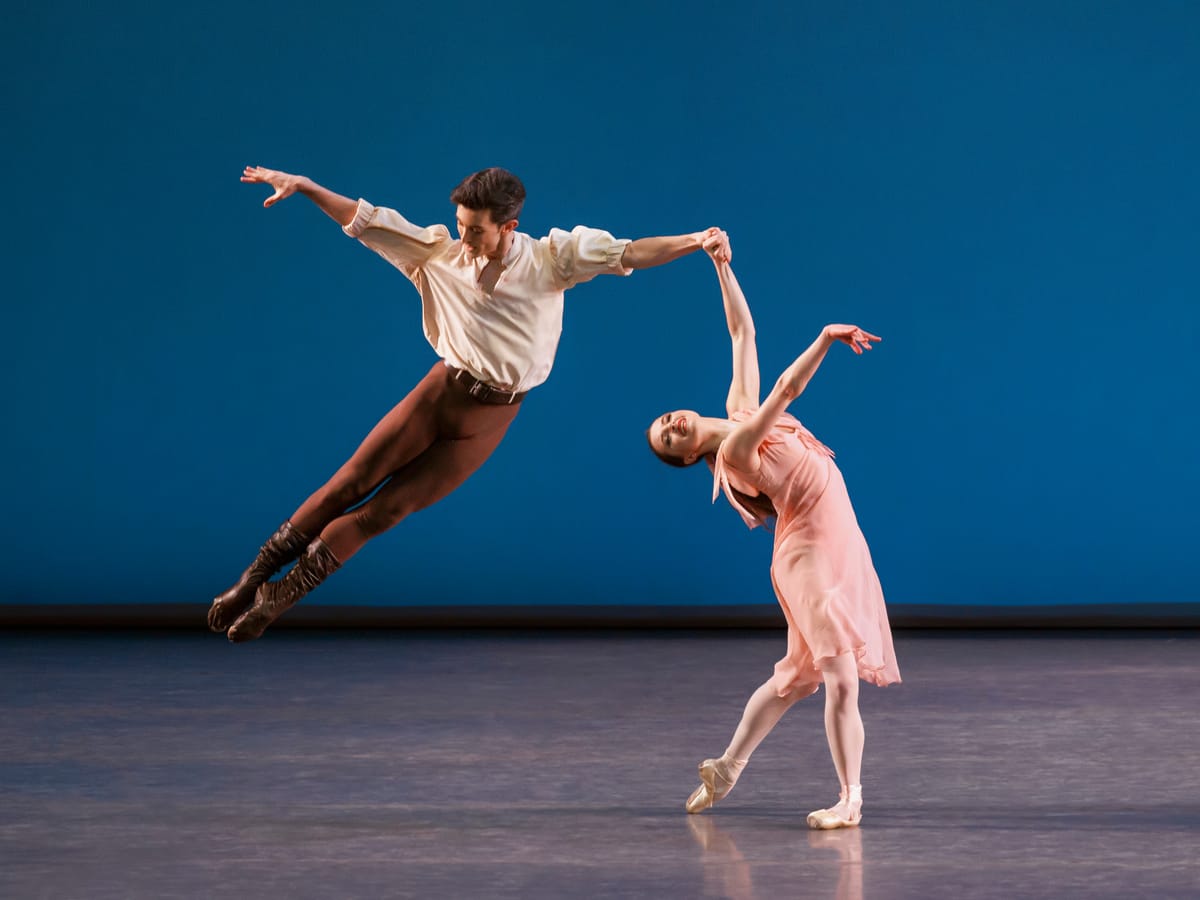
The woman he couldn't resist was Emilie Gerrity in mauve. Their pas de deux unfolded like an intricate conversation ranging from small talk to refined poetry, and Mabie was an attentive partner throughout. There was real connection, and Gerrity's leap into his arms at the close felt entirely inevitable. Another highlight was her trio with Dominika Afanasenkov in blue and Indiana Woodward in pink – three women of abundant richness and distinct personality. Whereas Afanasenkov was radiating joy, Woodward was a dainty, nuanced dancer, and paired with Gerrity’s expansive movement it made for a memorable scene.
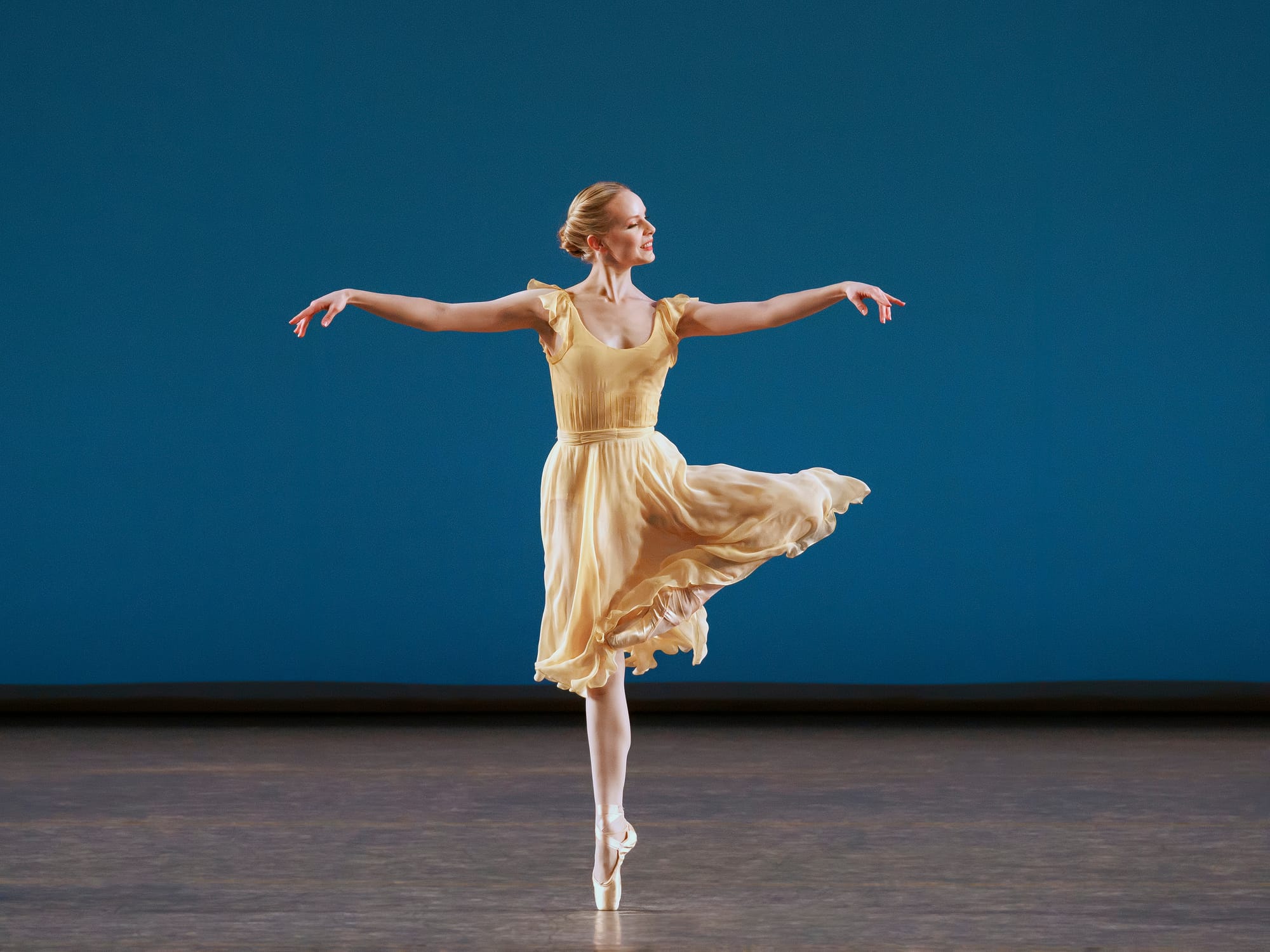
Olivia MacKinnon in apricot rounded out the female cast, and was a playful and fully in control presence. Every accent, every placement of the hands down to her fingers, projected the refined and warm persona of someone you'd want to befriend immediately at a party. No wonder Andres Zuniga, as the boy in brick, was practically floating in their duet, her light footwork buoying his every step. Of the other men, Anthony Huxley set the tone in his opening — dignified and clean, if short on passion — and Harrison Coll as the boy in blue had easy, playful chemistry with MacKinnon. With Hanna Hyunjung Kim's warm, lived-in playing at the piano, even though “Diamonds” was yet to come, the dancing at this gathering positively sparkled.
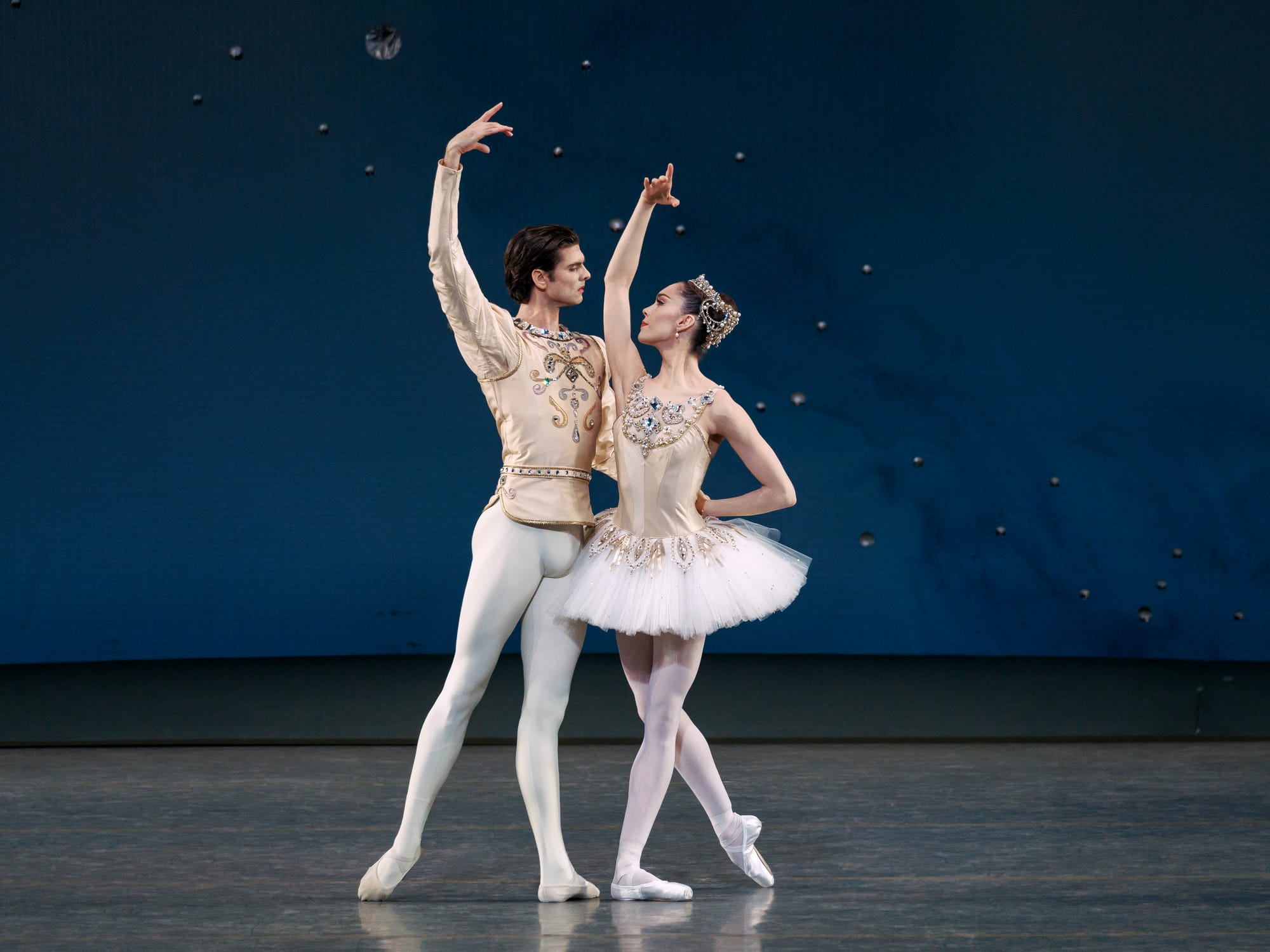
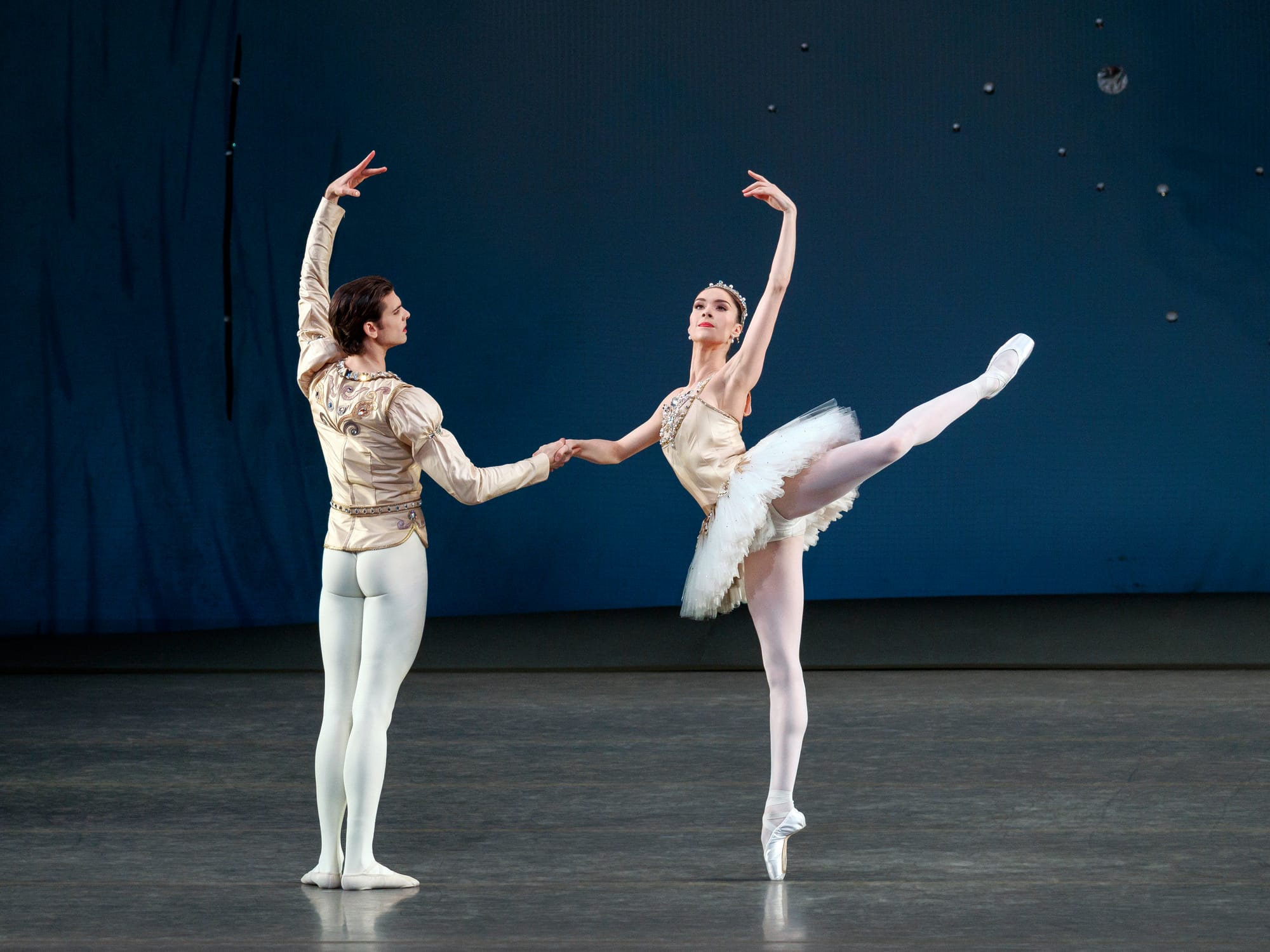
Which is not to say "Diamonds" didn't, though some corps work felt muddled, and the debuting leads, Mira Nadon and Peter Walker, got swallowed by the crowd in the coda. Before that, however, their first appearance in the ballet had some beautiful, defining moments. Nadon brought refinement: her upper body sang with every phrase of Pyotr Tchaikovsky's Symphony No. 3, and Walker carried himself with genuine princely bearing. Alas the whole wasn't fully fleshed out – the role asks for more than clean execution; it asks for the Russian soul at its core, that sense of longing and interior vastness that gives "Diamonds" its elegiac depth. The focus on footwork by Nadon sharpened that effect: each small step landing fastidiously in fifth position, so focused on placement that the dancing lost its shimmer. In the finale especially, she spent so much time polishing this diamond that it never quite dazzled — particularly alongside Walker's freer, more expansive gestures.
The corps had its own difficulties. The four lead women were of mismatched heights, breaking the ballet's delicate symmetry, and the dancing often felt worn — six weeks of season showing in the deflated polonaise, which needed far more grandeur than it received.
Still, few misses aside, it was difficult not to feel how truly fortunate this company is to carry these works in their repertory.
copyright © 2026 by Marianne Adams