On the Clock
"Sunset", "Eventide", "Piazzolla Caldera"
Paul Taylor's American Modern Dance
David H. Koch Theater
New York, NY
March 24, 2015
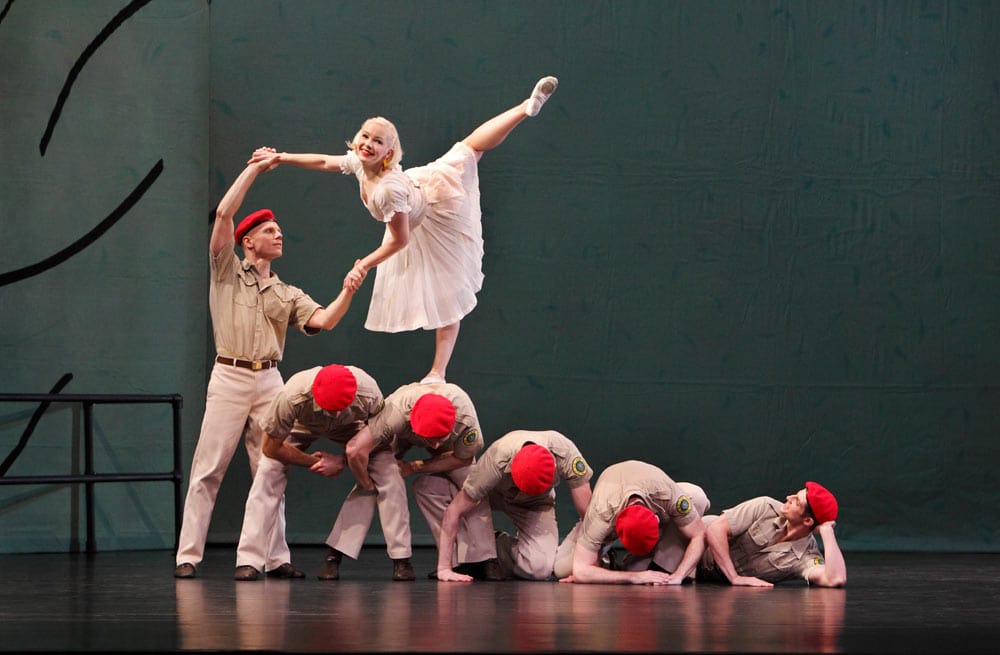
The newly named Paul Taylor's American Modern Dance looked, for tonight, very like the old Paul Taylor Dance Company, as the ensemble performed three of Taylor's haunting examinations human emotions, each anchored in a specific time; the first two, "Sunset" and "Eventide" make that clear in their titles, and the third, "Piazzolla Caldera" with its dark, dank atmosphere, is clearly set in a land of eternal midnight. "Sunset", choreographed in 1983, is a sympathetic look at a group of soldiers, who dance with a droughty innocence and underlying vulnerability--at one point Michael Trusnovec bends down to tie his show, and that simple, ordinary, and universal human gesture seemed to encapsulate the tragedy of young men sent off to war.
A group of women in bright summer dresses join in the fun, dancing with a redolent but fundamentally innocent femininity. Aileen Roehl, as the more knowing blond bombshell, was especially juicy. The Elgar music underlying the flirtatious fun was a hint that darker times were ahead, and the middle section, set to recorded loon cries, seemed to evoke the dangers of jungle fighting. (The Vietnamese War was still a persistent memory in 1983.) The women appeared in the battlefield as modern-day Valkyries, leading the ghosts of the men to some timeless haven. Again, a single simple moment summed up the waste of men dying too young, as one of the soldiers dropped his red beret, which was picked up by one of the women, the only link to those lost.
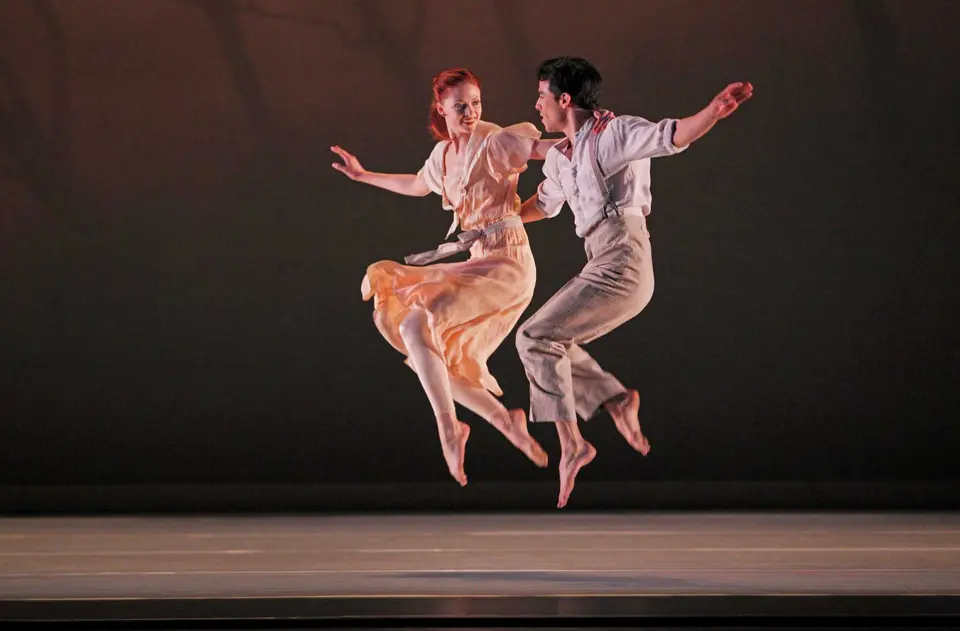
"Eventide", to elegiac Ralph Vaughan Williams music, is also about memories, as the five couples weave in and out of Santo Loquasto's misty bucolic backdrop like ghosts of Thomas Hardy characters. Michael Trusnovec and Parisa Khobdeh danced the resonant pas de deux originated by Patrick Corbin and Francie Huber, and caught, so poignantly, the hidden grief as the woman reached out to hold on to something (a lost lover or a dead child, perhaps) only to be brought back into the comforting arms of her partner. Trusnovec was simply breathtaking, a tender and gentle force; no one on the stage today can make merely touching a shoulder so powerful sensuous. Robert Kleinindorst and Eran Bugge danced the more fraught pas de demux. Kleinindorst seemed too nice to embody all the selfish swagger and hints of brutality that Andrew Asnes, its originator, gave the part, though Bugge had a needy vulnerability as the abandoned girl. Heather McGinley and Francisco Graciano danced their pas de deux, with its hints of English country dancing, with a boneless fluidity, youth and joy personified.
But youth and joy can't last, and the simple and powerful ending has the dancers walk sometimes separately and sometimes together before fading into the mist; one final dance for Trusnovec and Khobdeh seems to say that all the inevitable sorrow was worth the human connection.
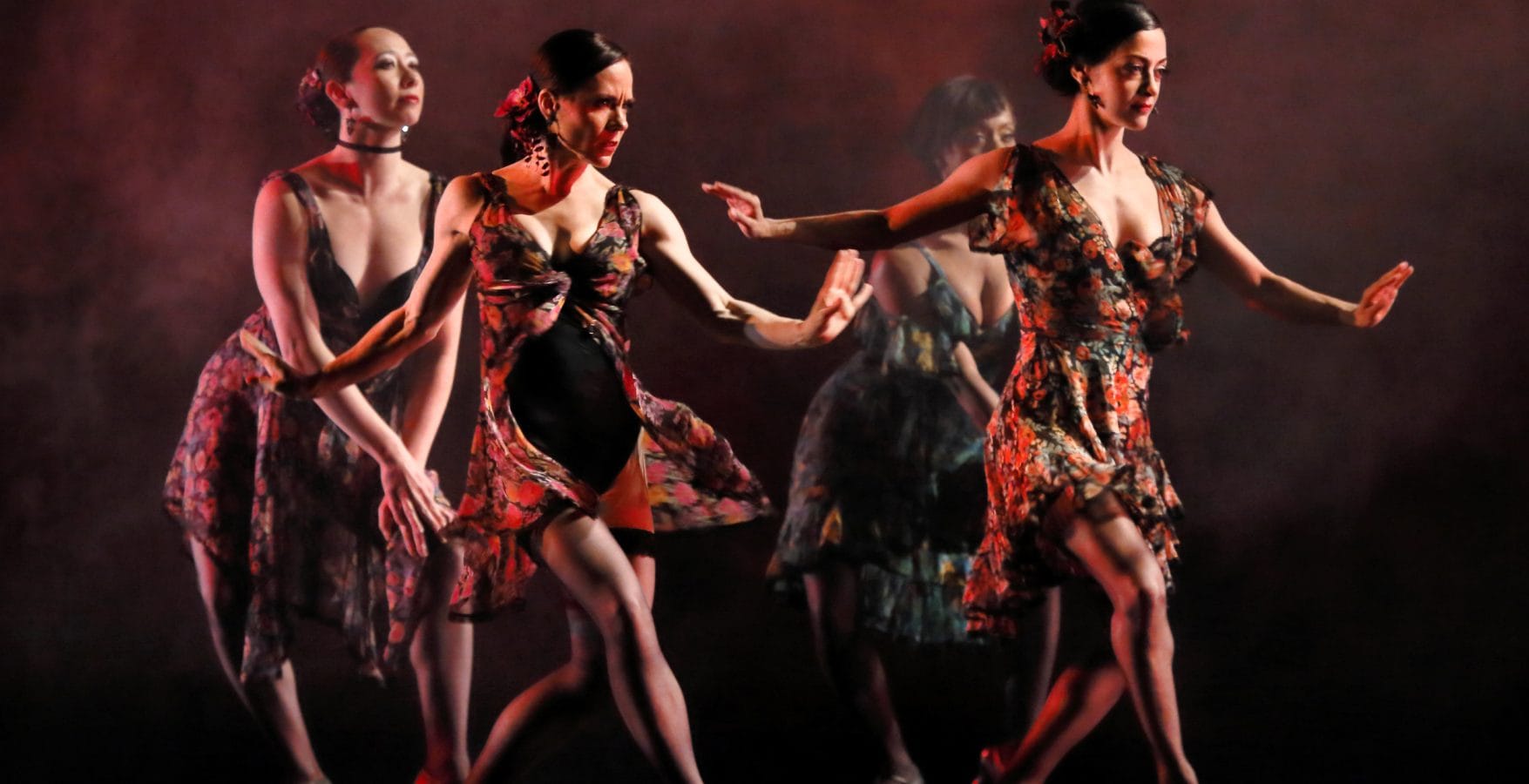
There is little connection in the dark and fascinating "Piazzolla Caldera", set to the raucous yet plaintive tangos of Astor Piazzolla; even the slightly tinny recorded music reinforces the emotional distance. Khobdeh again danced the Francie Huber role, a solitary figure of smokey desperation fighting for love in all the wrong places; she caught the sensuous desperation and passionate emptiness that make the solo so harrowing.
Francisco Graciano and Michael Apuzzo danced the drunken pair, fumbling between aggression and comradeship and failing at both. It was a technical tour de force, as their movements flowed into joint cartwheels and complicated lists but their dancing never became a stunt. Trusnovec, usually so open-hearted and generous, was almost frightening as a swaggering bully, full of inchoate anger. This work, for all its colorful swirl and musical appeal, in an incisive study of human emptiness, and it got a great performance.
copyright © 2015 by Mary Cargill