New Faces and Old Ballets
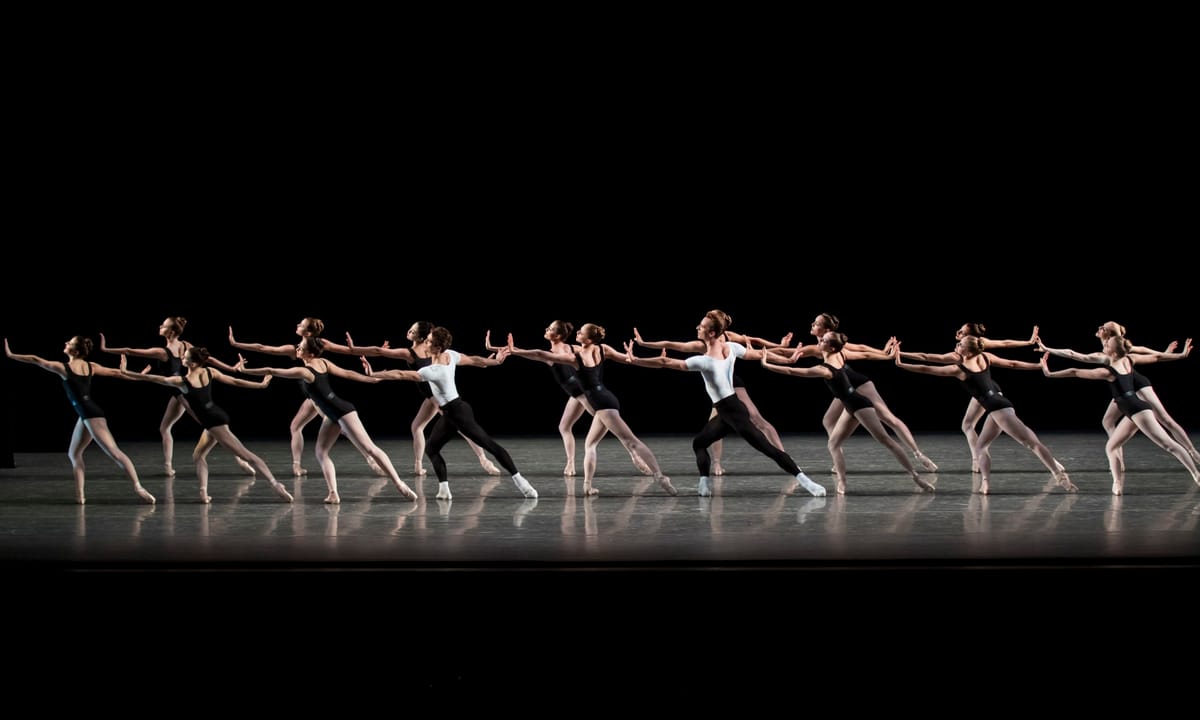
"The Four Temperaments", "Sonatine", "Black Swan Pas de Deux", "Swan Lake"
New York City Ballet
David H. Koch Theater
Lincoln Center
New York, New York
February 15 and February 19, matinee, 2022
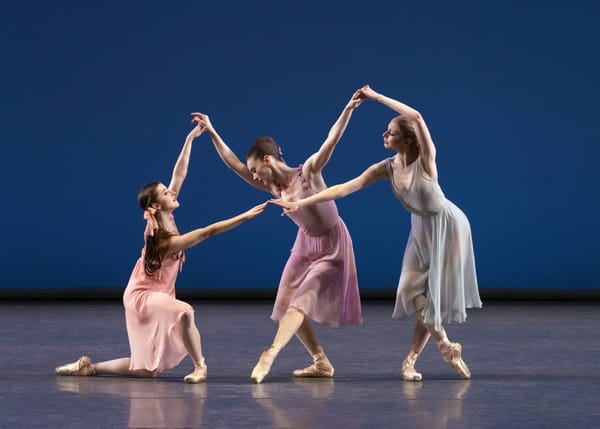
These two performances featured debuts of many of City Ballet's talented young dancers. Some, of course, were more successful than others but all of the dancers, new and old, looked comfortable, confident, and very well rehearsed, especially when dancing in pairs; the dancers seemed to be focused on each other, letting the stage disappear as the audience shared their feelings. The corps too looked sharp, energized, and synchronized, especially in the complex rhythms of "The Four Temperaments".
The dancers in the wry, witty, and very exposed opening themes of that evergreen ballet were almost all new, and all the themes were immaculately and musically performed. Of the debutants Jonathan Fahoury's first theme (February 15) stood out for his impersonal warmth, Kenneth Henson's second theme (February 15) for his jazzy, easy swing, and Claire Kretzschmar's second theme (February 19) for her elegant, deliberate feet. Of the relatively more seasoned dancers, Miriam Miller's serene flow and elegant legs in the third movement (February 15) were radiant.
Both Sanguinic couples were making their debuts, Ashley Hod and Peter Walker on February 15 and Isabelle LaFreniere and Gilbert Bolden III on February 19. Hod and Walker were the more powerful, soaring through the choreography, taking balances and daring gravity to do its worst. LaFreniere and Bolden were cooler and more elegant with effortless, soaring lifts. Both Melancholic and Phlegmatic were danced by more seasoned men; Melancholic by Gonzalo Garcia (February 15) and Sebastian Villarini-Velez (February 19) and Phlegmatic by Amar Ramasar (February 15) and Russell Janzen (February 19). Garcia was a bit too graceful, and his light, easy flow made the poor fellow's struggles seem comparatively minor, though his dancing as always had a juicy elegance. Villarini-Velez was a bit more awkward (in a good sense), with sudden bursts of energy, and the struggle was real. Ramasar's Phlegmatic was unusually delicate and he was a sad-faced clown, a black and white Petrushka, while Janzen had a quirky nobility. Though he didn't have all of Ramasar's boneless helplessness, his dancing had a wry wit.
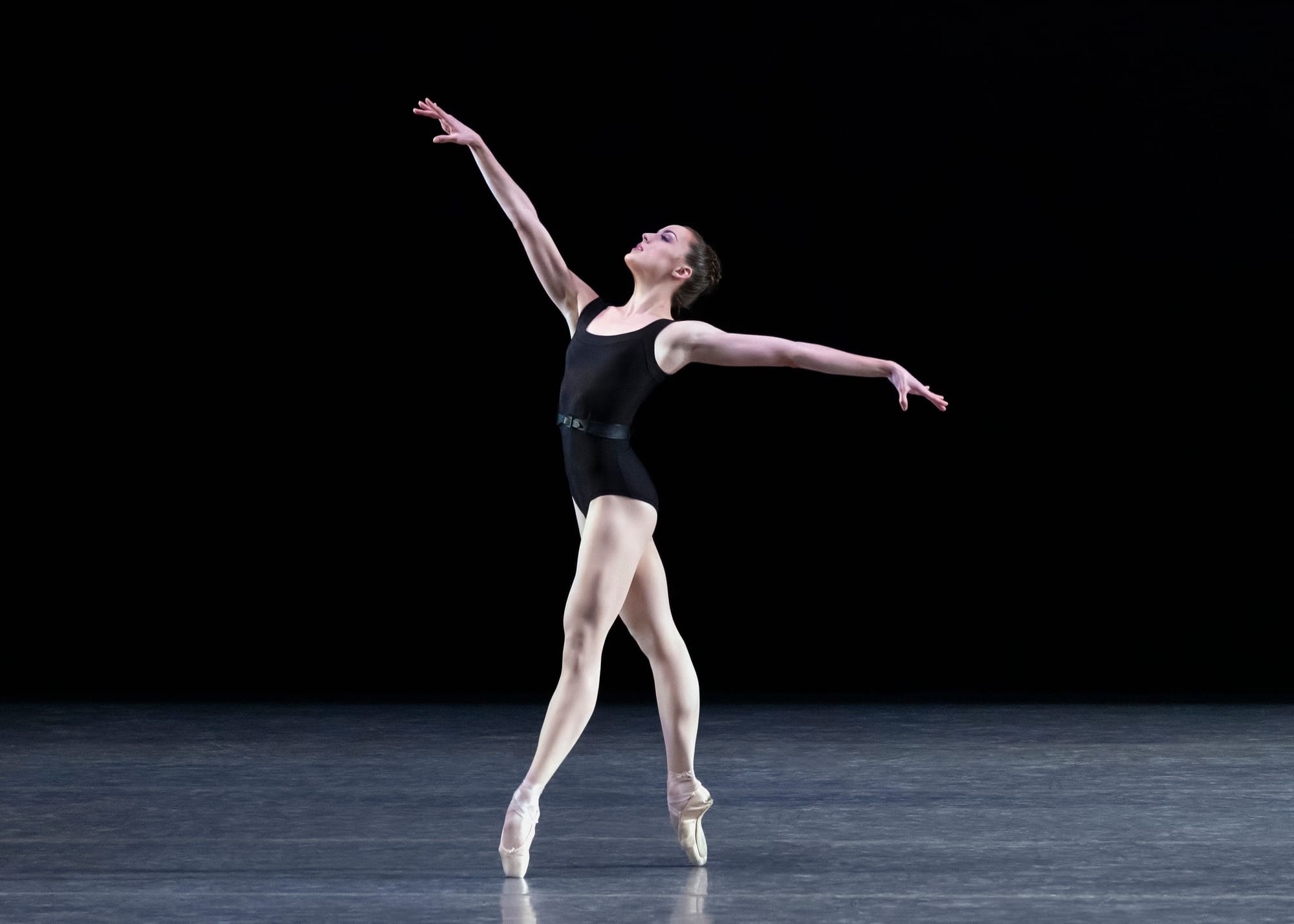
Both Emily Kikta (February 15) and Mira Nadon (February 19) were impressive new Cholerics. Kikta was especially powerful, using her legs like arrows and hers was an exciting performance, modulated by the final, serene lifts. Nadon, with her flaring eyes, was equally impressive, generating heat rather than pure strength. As she crouched on the ground, the four men seemed afraid to touch her, as if they thought they might burn their hands.
"The Four Temperaments" with its otherworldly ending, as the dancers seem to fly off into some other world, is an unusual opening ballet, as it sends the audience off into the distance. And a couple of pas de deux as a middle piece has a bit of a gala feel, unusual for City Ballet, but if the audience is coming to a program called Swan Lake II, then fouettés are called for. They got Balanchine's "Sonatine", choreographed in 1975 to Ravel's Sonatine for Piano, for Violette Verdy and the indestructible "Black Swan Pas de Deux" choreographed by Petipa, apparently to provide fireworks as needed; an unlikely pair, a combination of perfume and gunpowder.
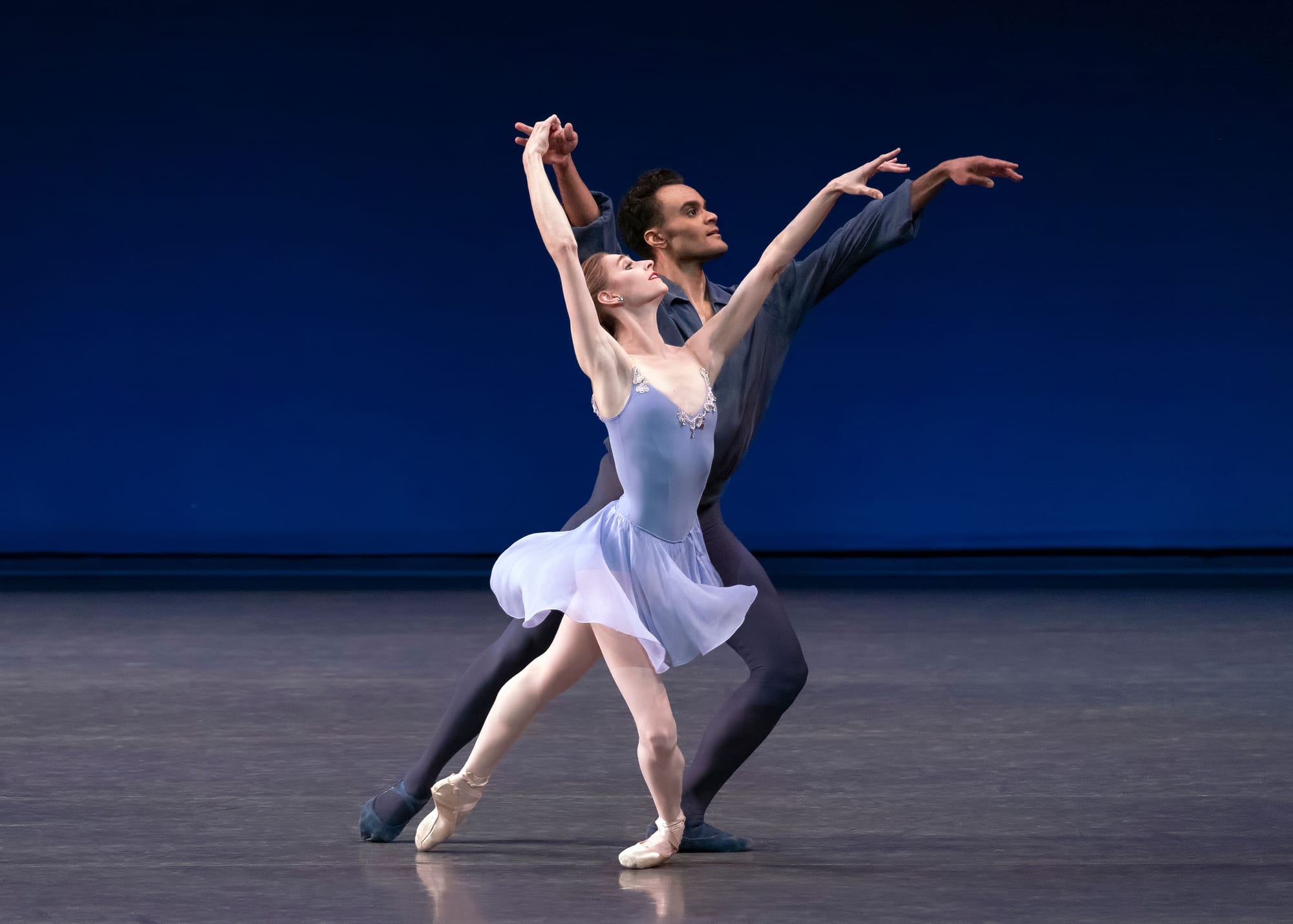
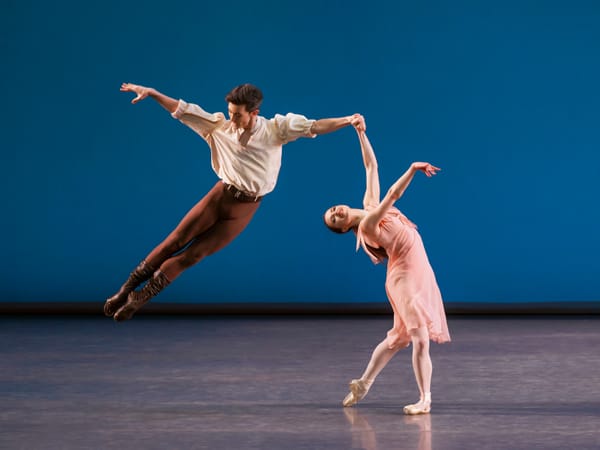
Both "Sonatine" couples, Ashley Laracey and Taylor Stanley (February 15) and Indiana Woodward and Anthony Huxley (February 19) gave gentle, subtle performances. The work has an episodic, conversational feel, as if the pair, listening to the on-stage piano, were sharing secrets. Laracey, an iridescent soap bubble and Stanley, smooth and more grounded, were a compelling couple. Huxley is a slighter dancer, but his quiet support complimented the lilting, musical and utterly captivating Woodward.
The "Black Swan" is in some ways more difficult to perform than the deceptively simple "Sonatine" and its quiet charm, unemphatic flow, and musical complexities, for it is quite a challenge to make something so familiar look free while the audience waits for those inevitable fouettés. Mira Nadon and Chun Wai Chan (debuting on February 15) and Tiler Peck and Jovani Furlan (February 19) managed well, generating excitement with barely a hint of ham.
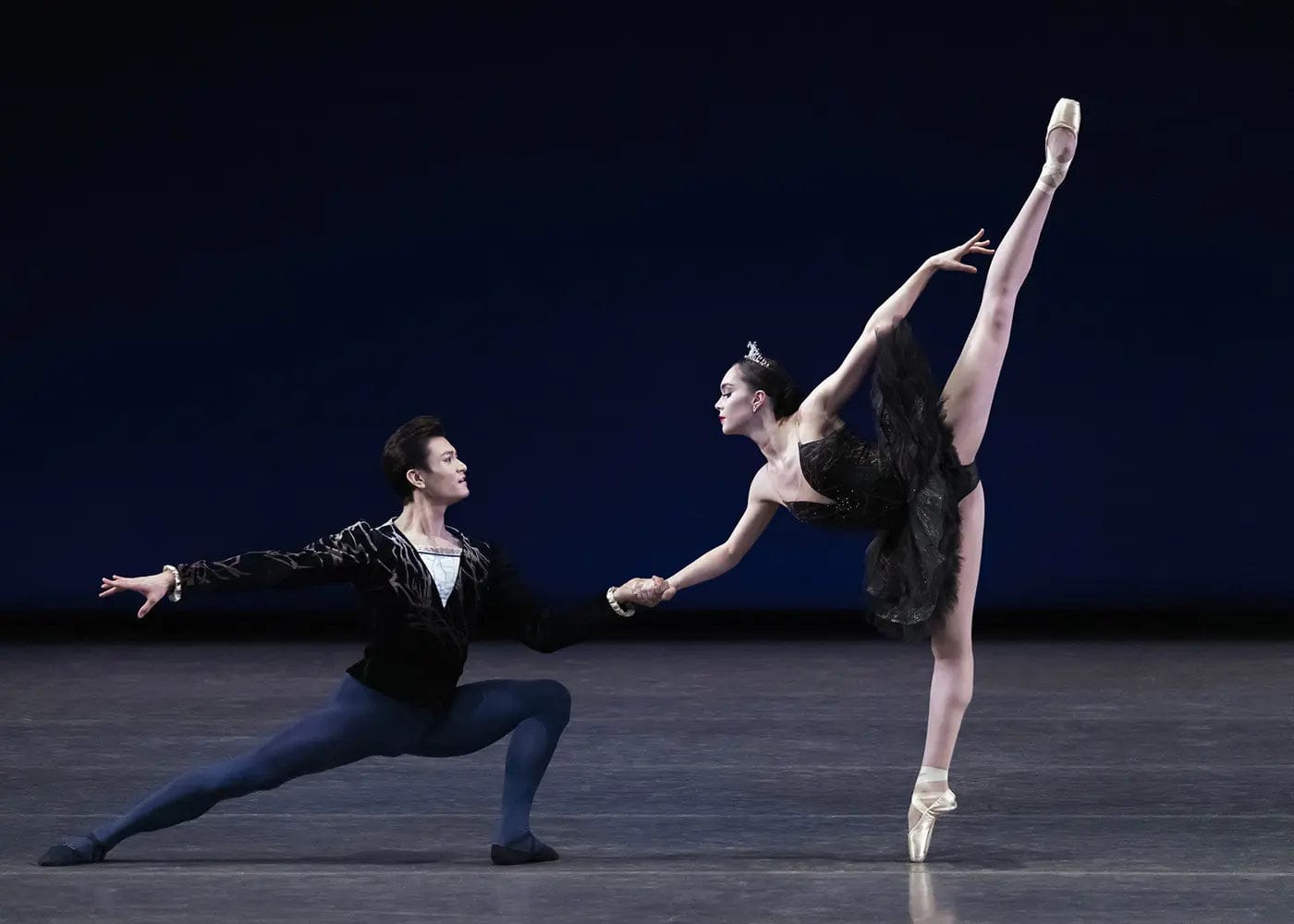
Nadon, haughty and contemptuous, used her legs with exquisite control, showing a beautiful line. The fouettés started brilliantly, with doubles mixed with fast, secure singles, but came unstuck at the end with an out of control double, and the backward chugs were a bit limp, with the working leg barely off the ground. But she stayed in character with professional aplomb, finishing with a triumphant sneer that captured both the audience and Siegfried.
The Chinese trained Chan who came to NYCB after ten years with Houston Ballet did a valiant job of creating a character, with courteous partnering and joyful dancing. He has a wonderfully plush jump and his double tours, ending in a secure, deep plié looked as if he had magnets in his feet; he is a welcome addition to the company.
Peck didn't vamp her Odette, dancing with a crisp, hard, and daring efficiency, leavened with musicality that made the steps seem fresh. The fouettés were fast and confident, and she used them so musically to build in excitement; the final diagonal was predatory, and the audience roared. Furlan was a captivated Siegfried, but he did get to show off his elegant line and space-eating grand jetés.
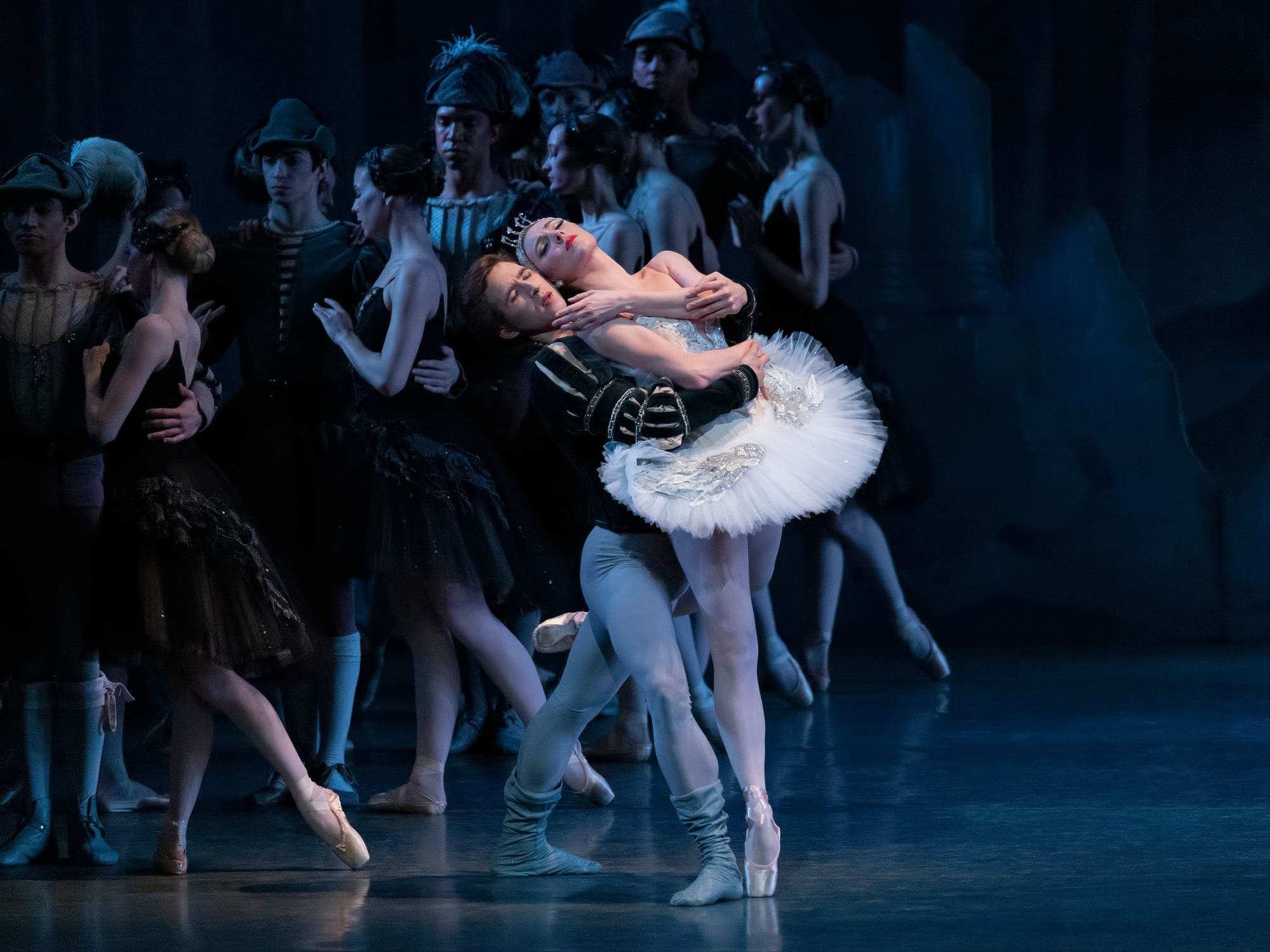
Though Peck has danced Peter Martins' full length "Swan Lake," February 15 was her debut in Balanchine's more abstract one-act version. She approached each differently, and her Balanchine Odette was quiet, silvery, and unmannered, a haunted echo of that poor girl rather than a retelling of the story, perfectly complemented by Joseph Gordon as her chivalrous Siegfried.
Megan Fairchild and Gonzalo Garcia (February 19), on the other hand, danced "Swan Lake" as if it this version really were a dramatic and compelling tragedy and had the power and imagination to convince the audience. Fairchild even managed to hint at some of the traditional mime, as she pleaded with the hunters to spare her sisters, or tried to explain to Siegfried that shooting von Rotbart would doom her forever. Fairchild used her arms and her body, not just her face, with a dramatic urgency; she was a frightened but determined Odette and the ending, where she seemed to fade away fighting every second to stay with Siegfried, was absolutely gripping. The conductor, Clotilde Otranto, seemed to take the music at a slower pace, allowing the dancers to luxuriate in the luminous melody as Garcia gently wrapped her in his arms. Moments like this show that there is life in the old bird yet, good news for the younger dancers.
copyright © 2022 by Mary Cargill