Duende in Chapters
Gala Flamenca
New York City Center
New York, NY
February 26, 2026
The Flamenco Festival opened its 25th year at City Center with a gala featuring four of the dance form's greats – Eva Yerbabuena, Manuel Liñán, El Farru, and the young Juan Tomás de la Molía – painting a story of rich traditions and deep passions over a series of individual vignettes. Running at over two hours with no intermission, it was a formidable tale poignantly punctuated by musical interludes from seven singers and musicians.
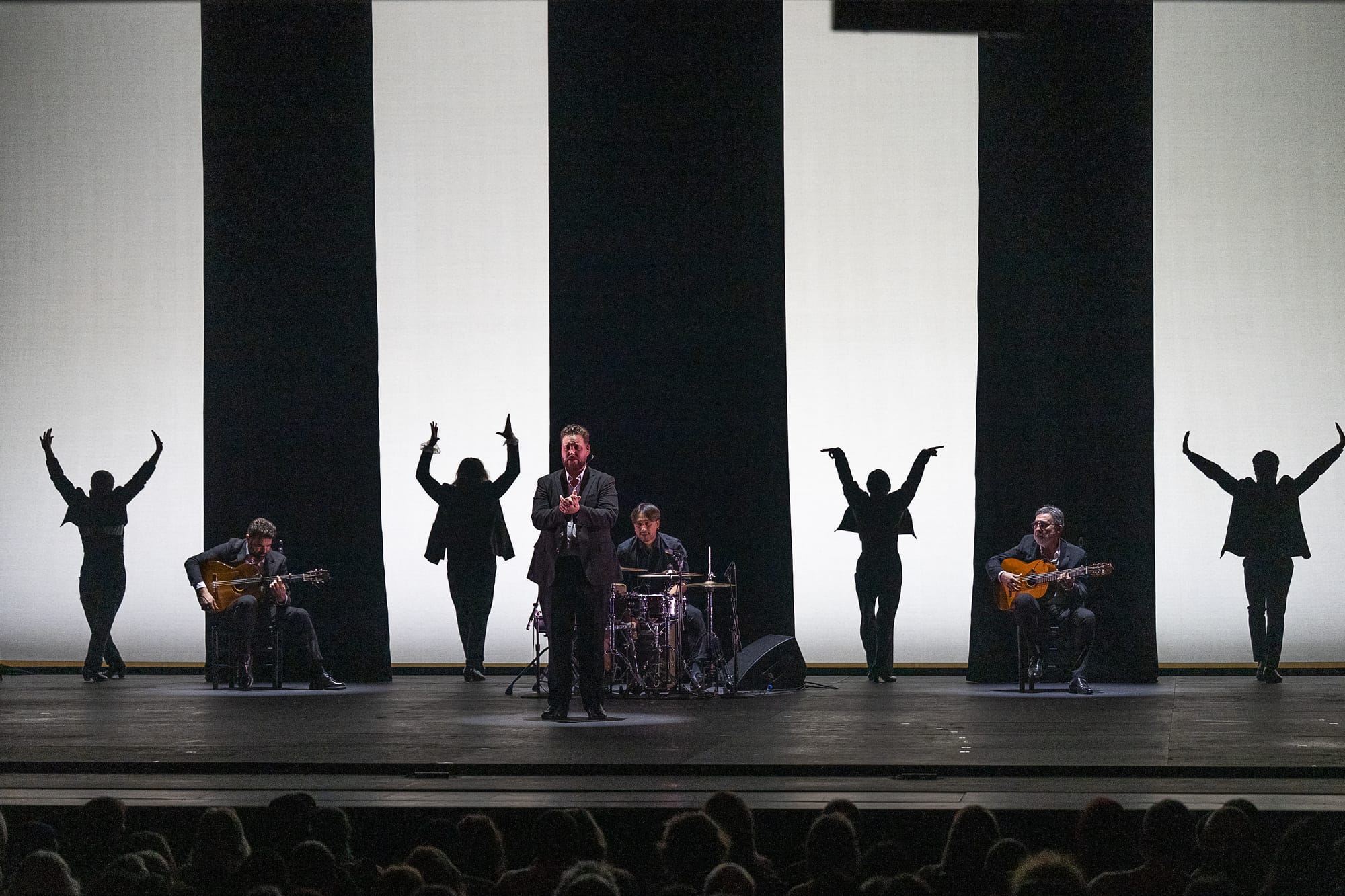
The prologue was dramatic: three men (Manuel de Gines, Juan de la María, and Sebastián Sánchez) singing with legs planted but voices full of energetic promise of things to come. Soon the stage revealed four columns with the dancers back-lit as striking silhouettes, and as the dancers moved forward, the anticipation of their footwork was growing in bounds. There was little interaction between them in this opener, foreshadowing the show to come, and their dancing here came in chapters, like the rest of the show – they would appear and disappear, and retreat into their panels of light – underscoring their individuality with equal time.
The first full chapter of this flamenco tale belonged to the genre's rising star, de la Molía. He entered in darkness, followed by three musicians whose steps and music were the first tangible presence of the performance. As light gently filled the stage, de la Molía had a cheeky, teasing exchange with them, daring a sonic challenge and finding it lacking: at one point he stretched his arms as if stifling a yawn, then launched into staccato footwork. There were playful, almost feminine elements to his movement: rocking hips, flicking wrists. His virtuosity danced circles around the singers, and when they surrounded him at the end, he kept challenging them with shifting rhythmic accents. Even as they all drifted offstage, he turned at the wing to offer one final, smiling provocation.
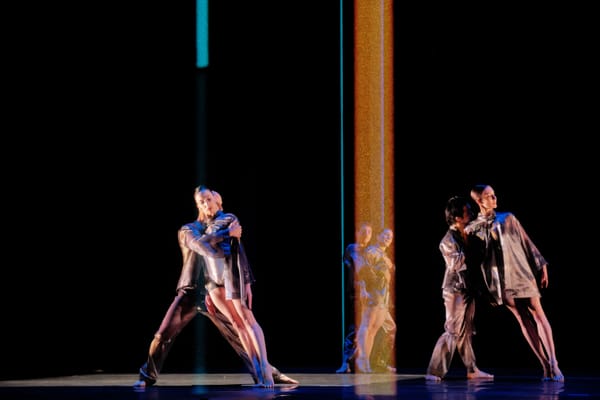
The second tale was more somber. Yerbabuena and Liñán appeared in matching outfits, taking turns dancing first as silhouettes, then side by side in dark focus. Liñán loomed like a shadow over Yerbabuena – a darker half of her – and as they switched places, stepping in front of and behind each other before finally turning to dance together. The tension simmered and broke in a piercing embrace: two halves of a damaged whole finding momentary respite. They departed as they had arrived, taking turns blocking each other, two sides of the same coin – or the same person.
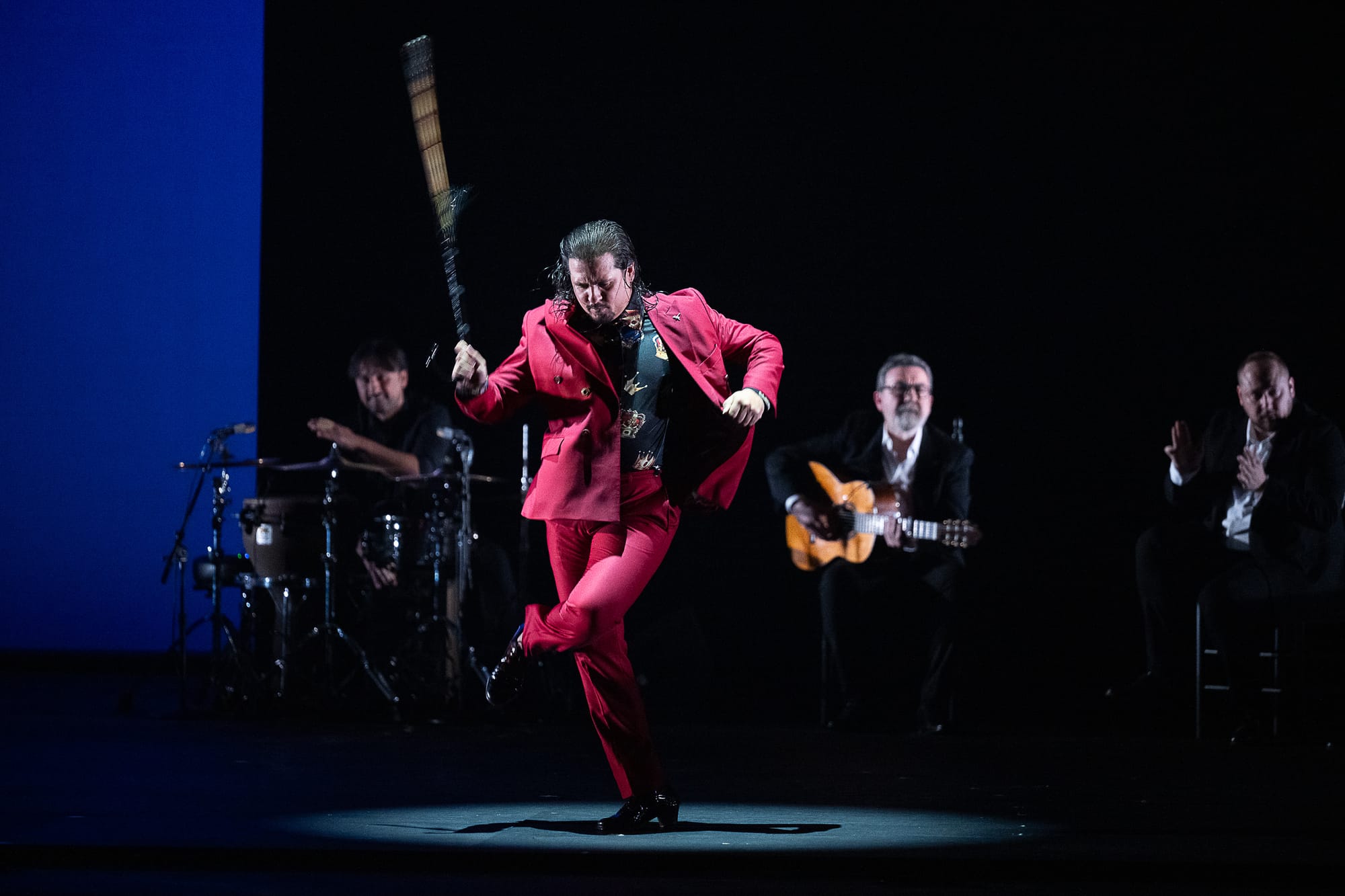
In yet another energy shift, El Farru's section opened slowly, with him in a refined bordeaux suit, cane in hand. He used the accessory for percussive accents, his foot taps paired with strikes of the cane, and it was forcing a silence around him, a stillness of harnessed energy that he then unleashed as his footwork accelerated. Once the dancing reached its target frequency, he rushed toward the musicians seated stage left, his energy half toreador, half bull, and the dancing became a dialogue. With the rhythm at its core, El Farru’s movement was preserved and centered, not taking up too much physical space, but generating impassioned power. For the final part of his chapter, he crossed the stage and found a guitar left on a chair by a musician. In an act of triumph – the claim of a new avenue for expression – he lifted it to the sky and proceeded to play. After a dizzying volley of strums between him and the seated guitarist, it all ended with a cannon-like accent.
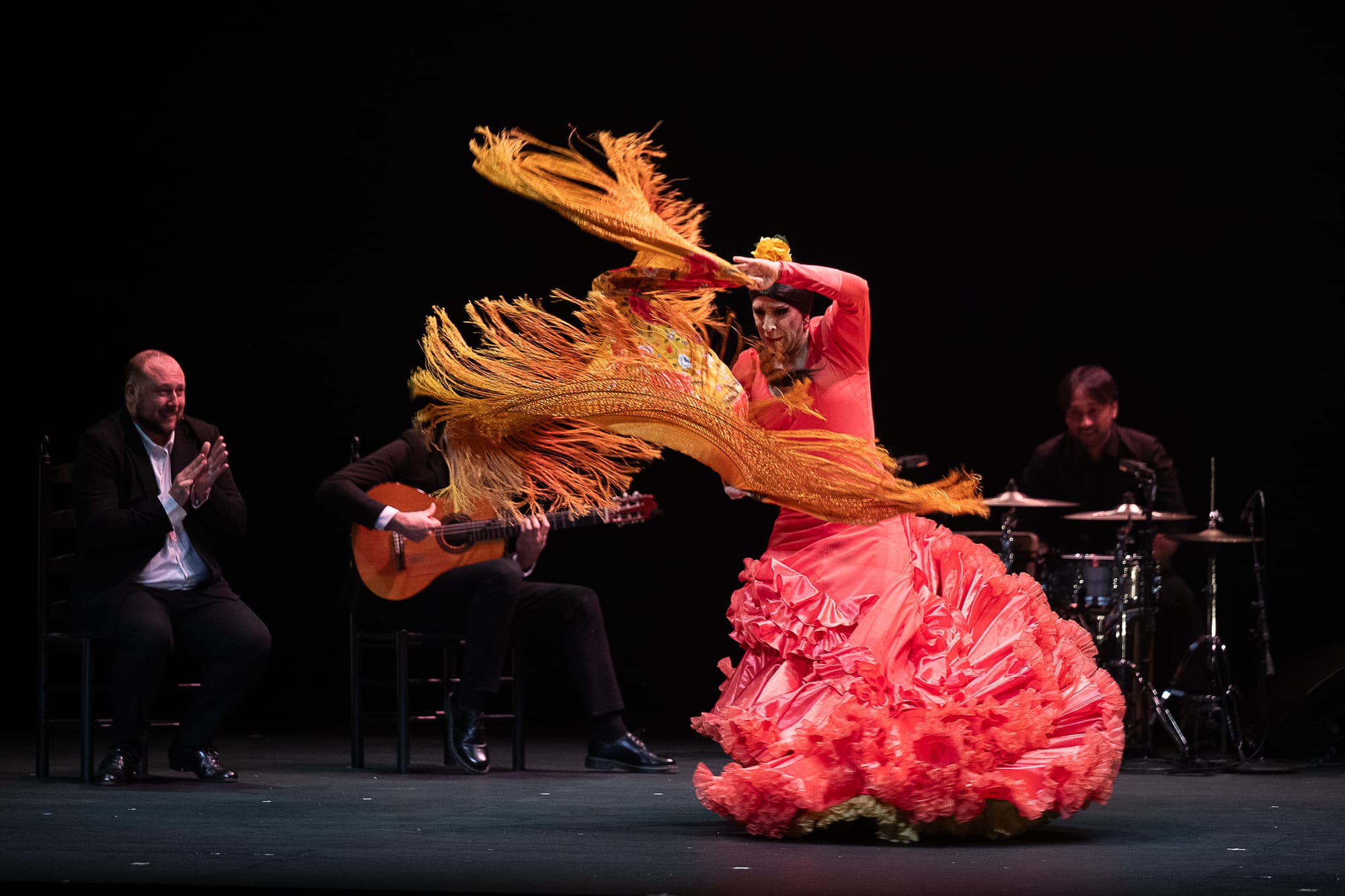
Liñán returned next, this time in an elaborate bata de cola with a mantón. In past interviews he has spoken of always dreaming of this, though it was only in 2019 that he began dancing in women’s style. His years of training in male flamenco were evident, but so was the separate, layered mastery that the female vocabulary demands. His dancing underscored it, as the portrayal didn't quite sustain the suspended promise and sensuality of the feminine form. Then, at moments he seemed tangled in the mantón, at others the manipulations of the dress appeared uncertain and almost comical, though whether by design -- in the spirit of Ballet Trocadéro -- was not always clear. To a purist it may have fallen short, but there was genuine freedom and joy in his movement, and that was special in its own way.
Before Yerbabuena's final chapter, a solo by singer Mara Rey offered a mirror image to El Farru's arc, played in reverse. Her heartrending singing was punctuated with spins and accents that sent the roses from her hair flying, and gradually the movement overtook the song. Dancing and singing alongside the musicians onstage, her performance felt like a tale told from somewhere deep. At the end, she returned to a small cluster with the musicians, her audible breathing bearing the full weight of her exhaustion – only to be left alone in darkness as they walked off.
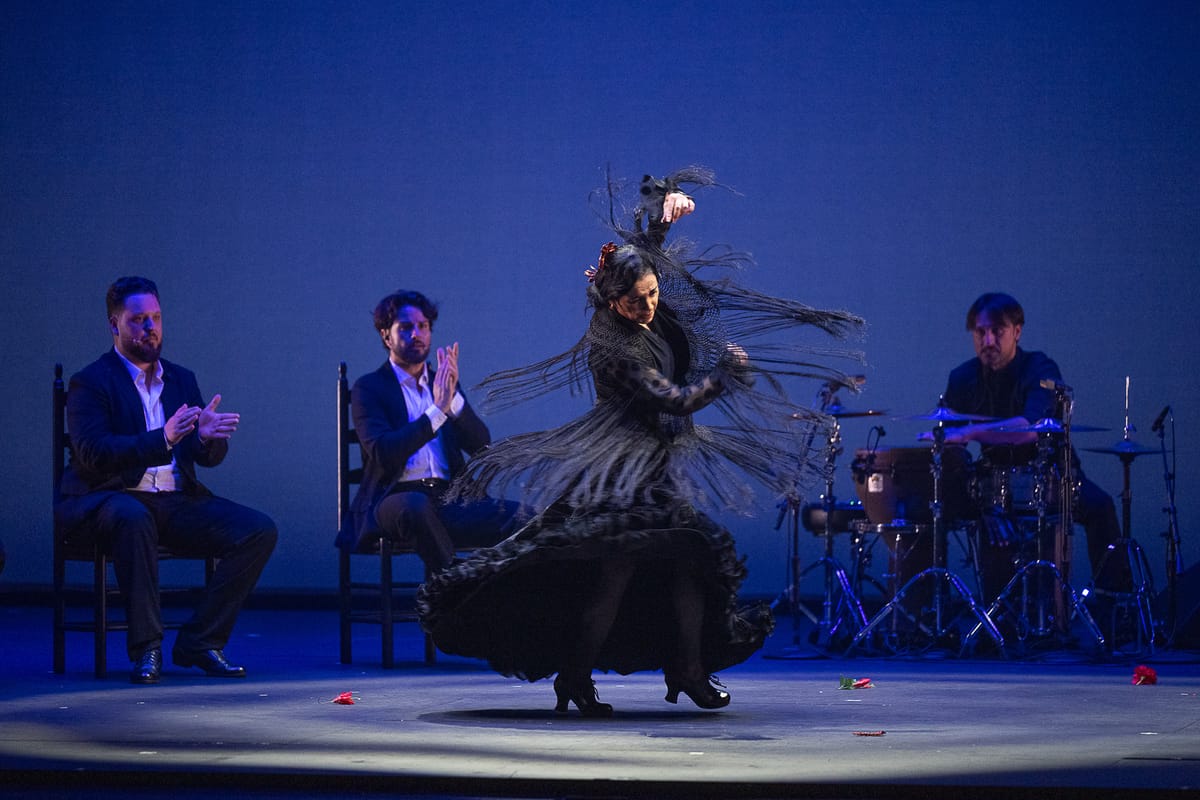
Rey opened the next scene too, still present to usher in Yerbabuena's similarly brokenhearted solo – a reminder that it is the fractures in the human spirit that endure and fuel art. The dancer’s entrance was slow, one deliberate step at a time, each millimeter of transition telling its own universe of stories. It was transfixing, and for the first time all evening it brought the house to complete, captivated silence. Dressed all in black – her dancing being all the color needed – she slowly raised her arms by the elbows, harnessing the attention before channeling it into dance.
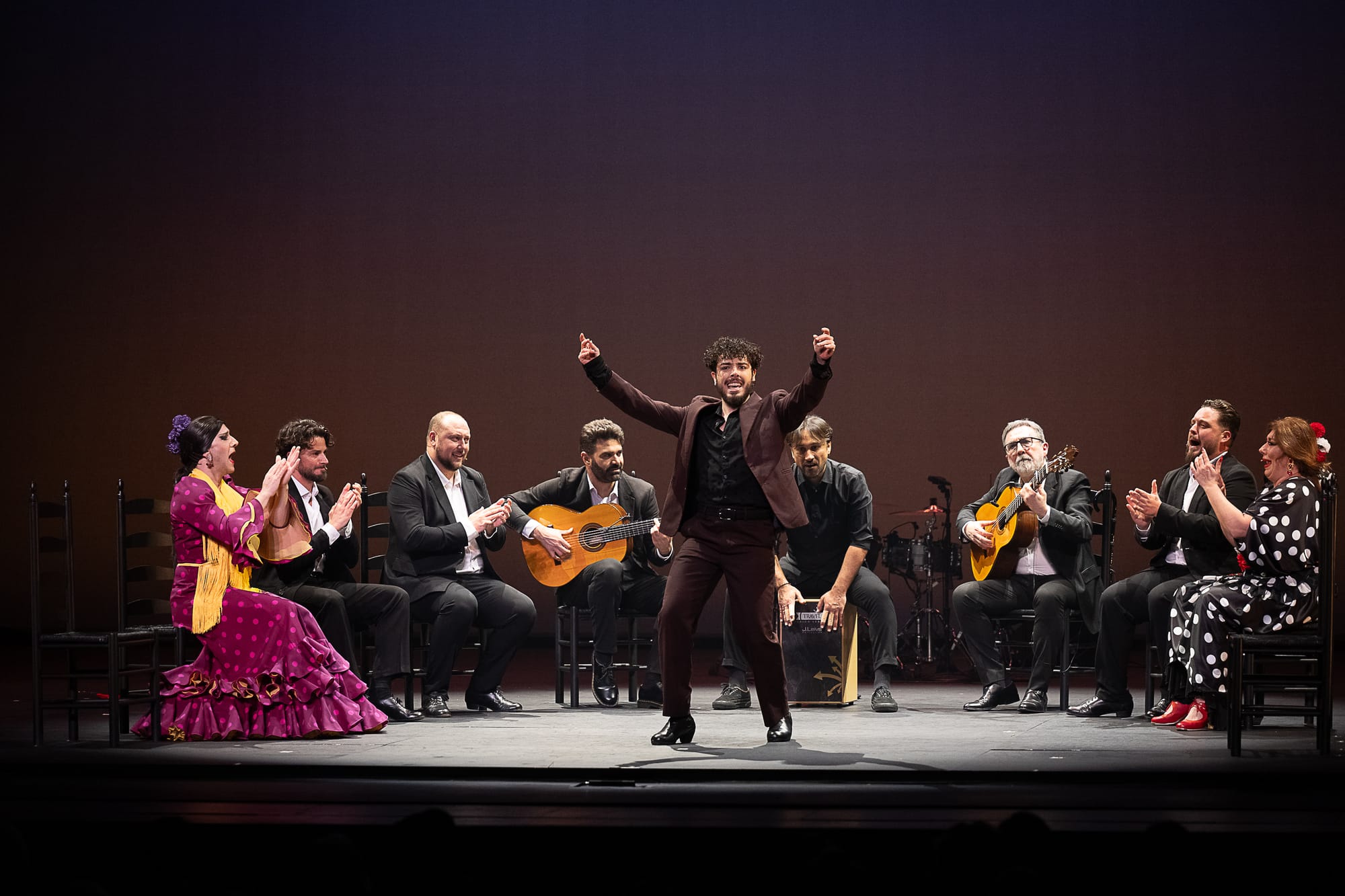
The finale brought all four dancers, Rey, and the full company of musicians together in the way flamenco demands at its close – everyone on stage, the individual chapters dissolving into something communal and unstoppable.
copyright © 2026 by Marianne Adams