A Story For Another Time
“Romeo & Juliet Suite”
L.A. Dance Project
Festival: Dance Reflections by Van Cleef & Arpels
Park Avenue Armory
New York, NY
March 2, 2026
You could see what Benjamin Millepied was going for with his version of “Romeo and Juliet.” An immersive, hybrid-medium reimagining of the greatest love story ever told – Sergei Prokofiev’s score abridged, every corner of Park Avenue Armory's Gothic grandeur weaponized, plot trimmed to its central characters and live performance spliced with real-time cinematography beamed onto a suspended screen. The idea was genuinely thrilling. But after 80 futile minutes the concept and execution themselves proved as tragically star-crossed as Shakespeare’s immortal heroes.
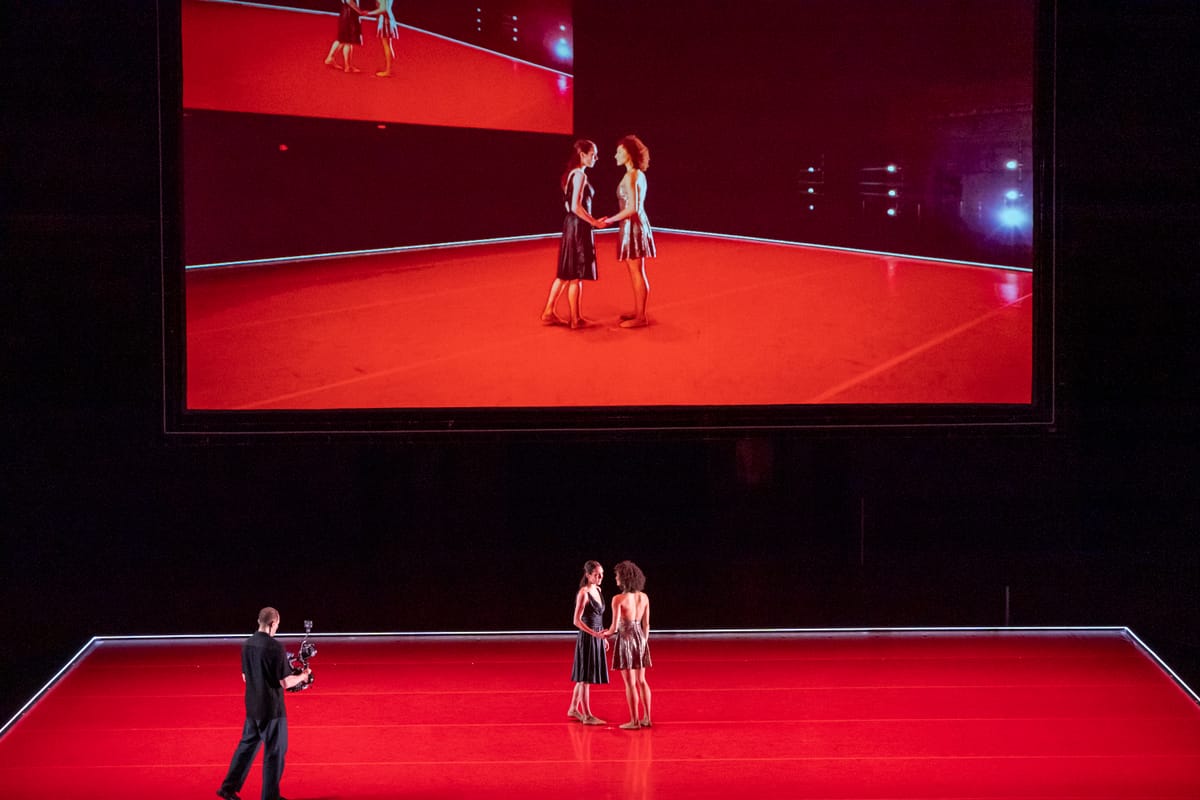
One of the evening's most persistent problems arrived early and never left. Although the work was uniquely adapted to this space – as Millepied did at the world premiere at La Seine Musicale in Paris in 2022, and later in Sydney and Los Angeles – that editing never addressed the very conspicuous cameraman. Sébastien Marcovici, former New York City Ballet principal turned Associate Artistic Director of L.A. Dance Project, chased dancers through the Armory like an enthusiastic film student. His presence was awkward and disruptive, forcing the eye away from the real dancing to the screen just to avoid the obstruction. There, the shaky framing made you understand, quickly, the skill and art of a cameraman's job.
Daphne Fernberger danced Romeo, Rachel Hutsell was Juliet – the casting on different nights featuring male-male, male-female, and female-female pairings. Millepied insists this is because he wanted to be representative of all love. Of course, same-sex casting is neither novel, rare, nor provocative today – and it shouldn't be. But Shakespeare's literary characters are not blank vessels. They are specific human beings embedded in a specific social order, and its crushing weight is precisely what kills them. The music used was written to express exactly that. By stripping their genders, along with their families and their feud, Millepied didn’t modernize Shakespeare. Instead, he distorted perfect, classic art in ways as unnecessary as putting lipstick on the Mona Lisa.
And it was not done in eloquent ways. The dancing never flourished. From the first introduction of Juliet, the steps failed at crafting character or scene – the playful, youthful music usually used for her interaction with the Nanny was accompanied by confused turns and turned-in, muscular jumps. Romeo's introduction was similarly cursed: Fernberger danced with the men, keeping up with their vocabulary which looked quite odd in a dress. There was camaraderie and good stamina, but not much else. Millepied's way of adding depth was through facial close-ups – Renan Cerdeiro (Tybalt) and Shu Kinouchi (Mercutio) delivering menacing stares to the lens. But these are dancers, not trained film actors whose gaze can rivet at close range, and mostly they landed as awkward, not foreboding. And so, by the time the epic conflict that begets the tragedy was presented, it looked like drama in a school quad, particularly given the families’ absence from the story. The wind instruments implied power and social hierarchies, strong familial factions – the dancing gave you frog poses and twisted turns.
In several interviews Millepied called Prokofiev's score "elevator music." He certainly treats it as such – and yet paradoxically relies on it completely to drive the story. Without knowing what scenes the music evokes, you seldom knew what was going on from the thin and repetitive choreography. So passage after passage became reference checks of the earlier works, and painful reminders of the better steps set to this score in the original by Leonid Lavrovsky, and then Frederick Ashton, and of course Kenneth MacMillan, whose encapsulation of this music in movement remains definitive.
Before the work continued its unraveling, it transfixed briefly with spatial design. Romeo alone on a couch in a closet-like room projected onto the screen, Juliet on stage, hands reaching for each other without knowing it, before they've met – inventive, and full of suggestion of destiny. Then the closet became a nightclub for the "Dance of the Knights," and the production got profoundly bad. Prokofiev's most thunderous, socially annihilating music – conjuring ancient families, immovable class structures, doom written into architecture – became the backdrop for disco-ball vogueing filmed in tight quarters. Somehow, it facilitated the meeting between Romeo and Juliet, who stepped out into the main space as if fleeing the volume for a smoking break in the Meatpacking District. The characters meandered around each other with echoing movements, then Juliet was left on stage alone, clearly wondering if Romeo would text.
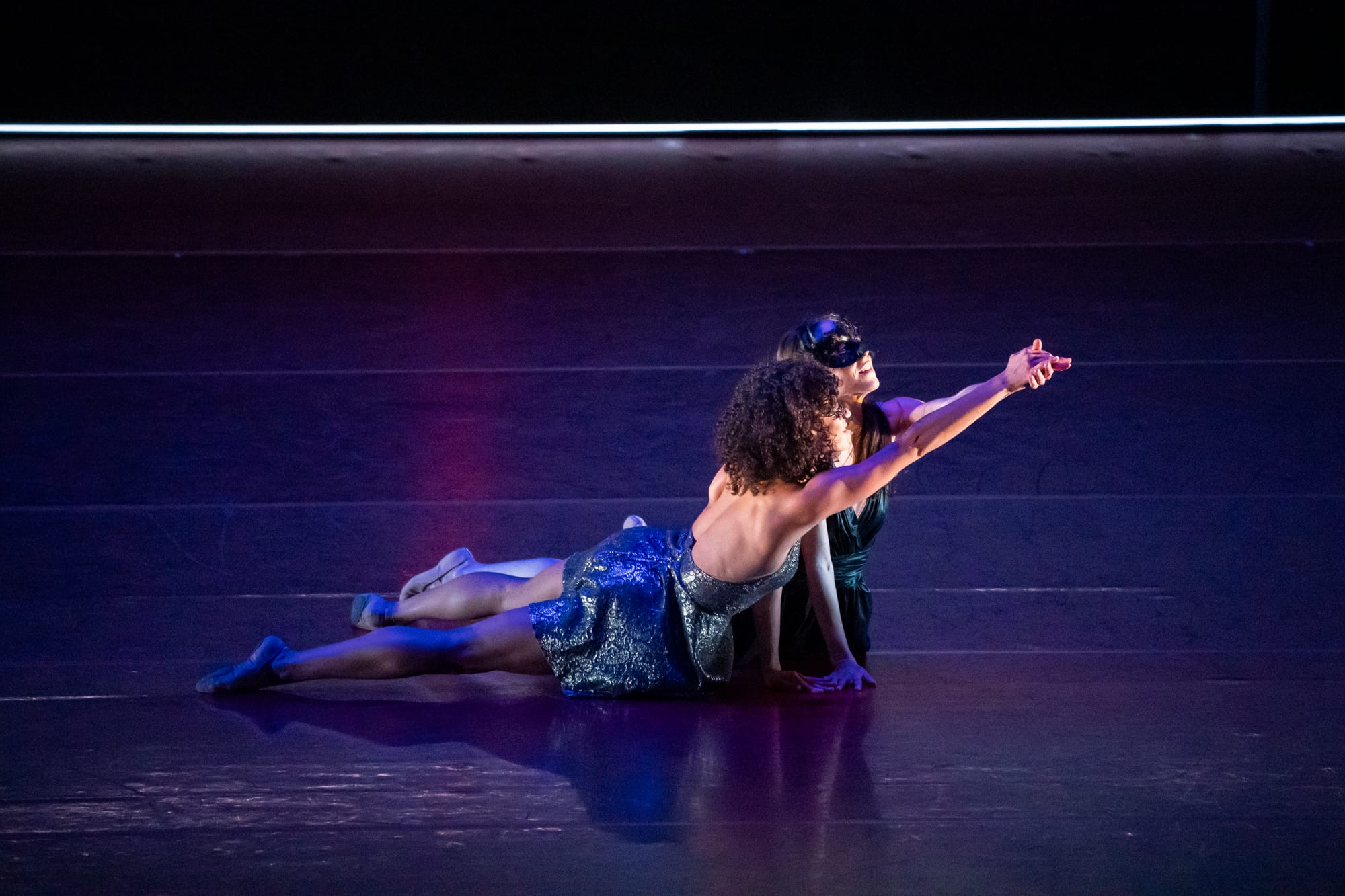
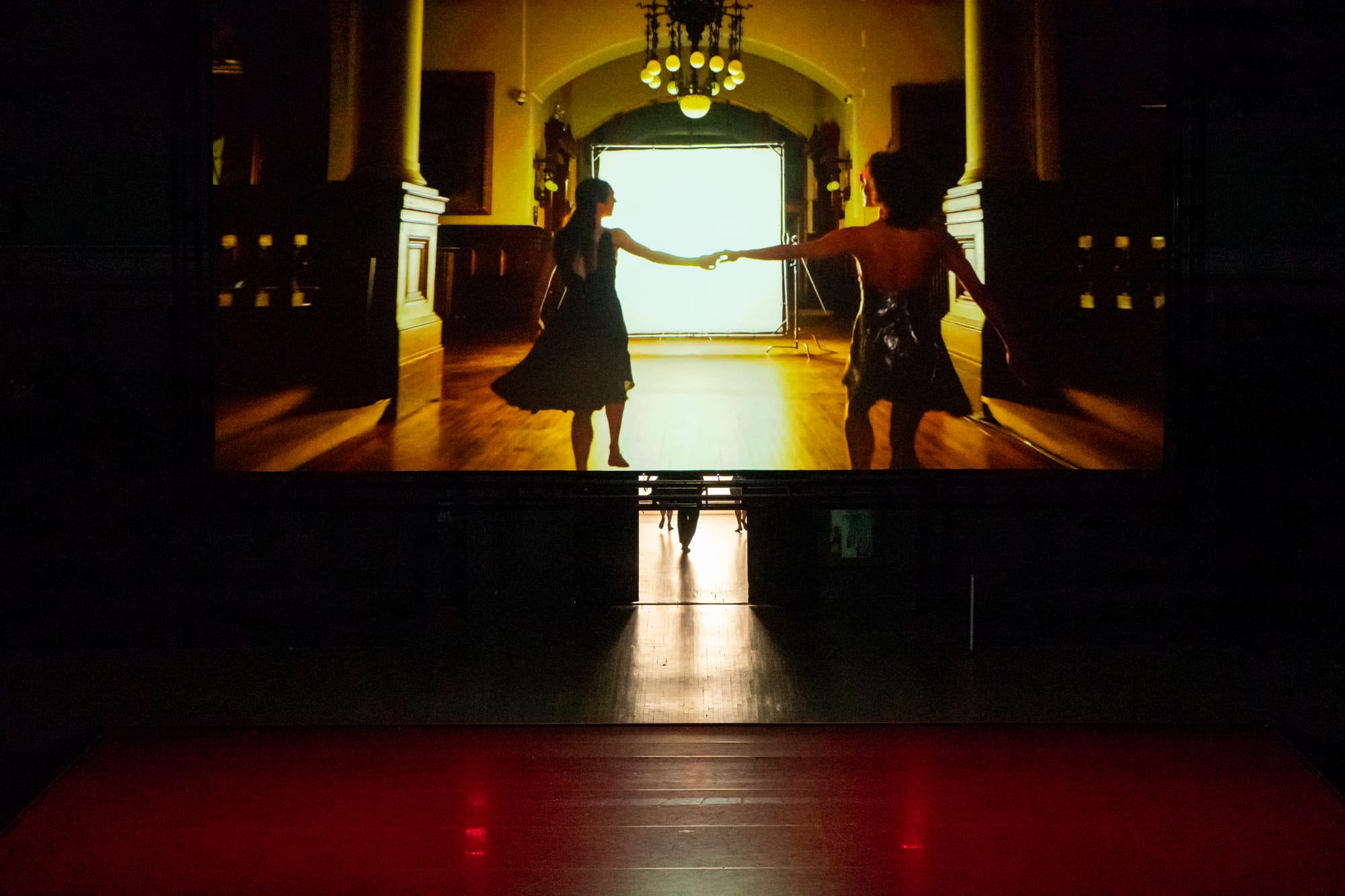
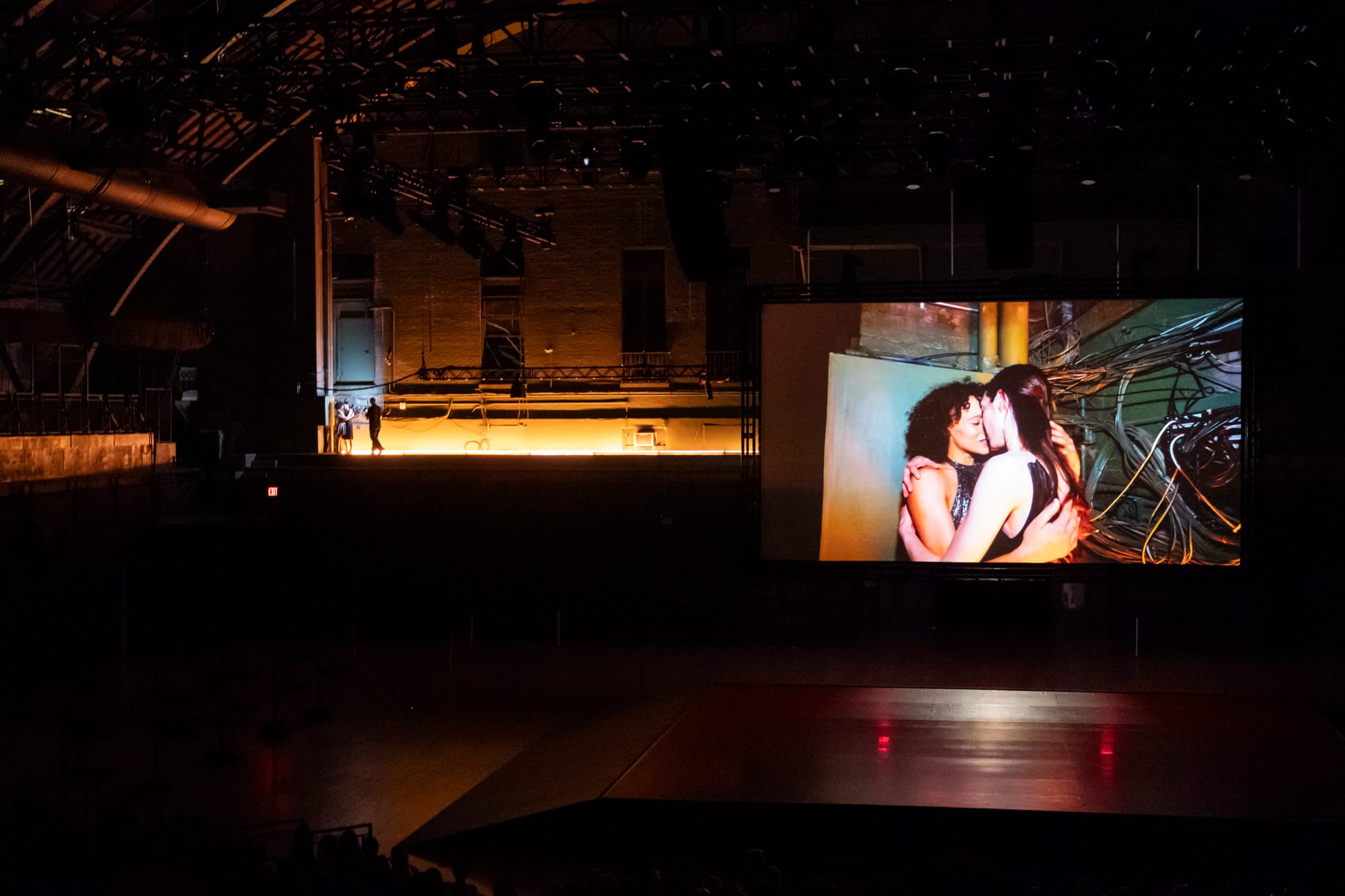
When Romeo finally appeared for what would be the Balcony Pas de Deux, you wished she hadn’t. After a brief moment on stage, the dancers simply… left. The audience got the story’s most romantic scene on screen, with Marcovici running after them through the Armory corridors. Not that the steps here offered much. Where in other productions the lovers come together, come apart, and are magnetically drawn back, imbuing the dance with largesse of poses and tender lifts – which is all in the score – here it was odd hormonal jubilation, spinning while holding hands and awkward embraces on the floor. The rich emotions of Shakespeare or the ballet’s past were gone. It ended with them returning to the hall on a ledge, in a close-up of what the program would generously call a kiss. One hopes this is not Millepied's thesis on romance in 2026 – though honestly, it might be the most accidentally honest thing in the evening.
Then came the men. Tybalt and Mercutio's rivalry was rendered with Cerdeiro brooding in the corner while Kinouchi commanded the stage – and here the production briefly found some visual wit: the camera caught the dancing man's reflection in a mirror as Cerdeiro's close-up filled the screen, two rivals sharing a frame they wouldn’t willingly occupy together. Then the filming drifted to fixate on a square of light made of reflections in the mirror's surface. Though intentional, it read like even Marcovici was getting weary of all this. Without families or feud behind them, when one of these men died in the Armory hallway it was a scene that looked more like a backstreet squabble than the death that unraveled a city. Romeo grieved over the body to the music of the mother's cries – a spare despair, understandable without the mother-child dynamic – and set off for revenge, walking under the hall’s bleacher seating in a wonderfully shot silhouetted way. The evening's second successful cinematic moment.
Back on-stage Juliet waited, giddy as a schoolgirl, to music that in every other production of this ballet carried weight of a night just spent and a dawn arriving too soon. Upon return and sharing the bad news, Fernberger tried and failed to distract Hutsell with dance. Distraught, our Juliet went back to the club, where someone offered her a pill that had her stumbling through the Armory halls and then collapsing. It is worth pausing here: this is based on a story that has broken hearts for four centuries and set to the same music that has accompanied some of the greatest dancing ever made. How could it read less like tragedy than a cautionary PSA?
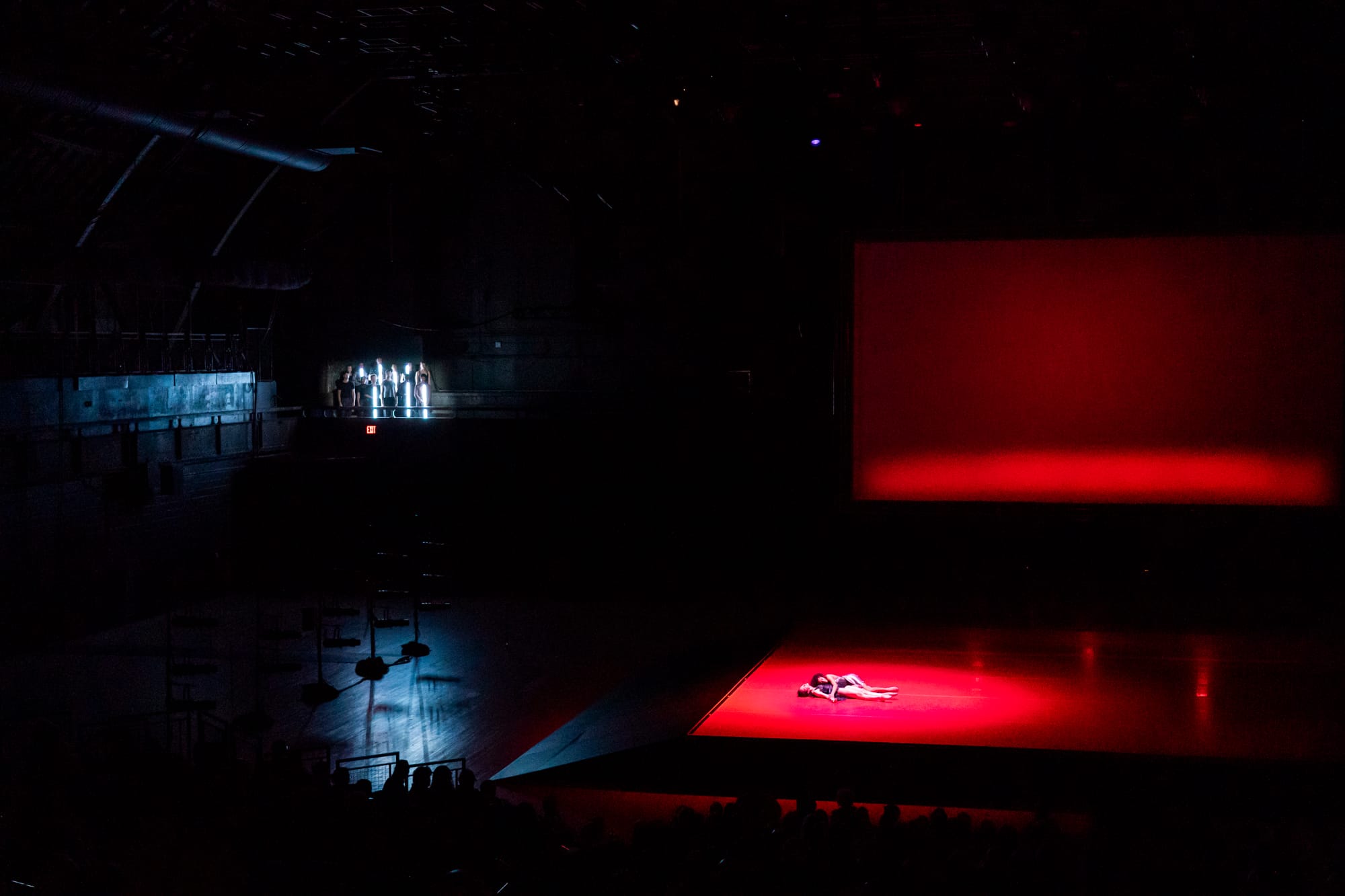
The finale returned to the stage. Romeo slitting her wrists and Juliet following suit.
Here's the uncomfortable question the production inadvertently raises: is this what love looks like now? Swipes and stumbles and not much else? Maybe Millepied hasn't cheapened Shakespeare so much as he's updated him — and the update is simply dispiriting. Or maybe it’s far simpler. Under a different title, stripped of its borrowed grandeur and depth, this work might be a modest contemporary dance piece with interesting spatial ideas. Under this title, carrying that music, it shoulders a weight it cannot bear and a search for meaning it doesn’t produce.
The Armory, at least, is magnificent. And credit where it's due: Van Cleef & Arpels, who have championed Millepied and L.A. Dance Project since 2012 and commissioned this very work, have once again put serious resources behind artistic ambition. That counts for something, and even when the work itself stumbles, the impulse to fund it and present it to an audience is valuable. Sometimes art has to fail to beget its better versions. This is one of those times.
copyright © 2026 by Marianne Adams